June Line Up

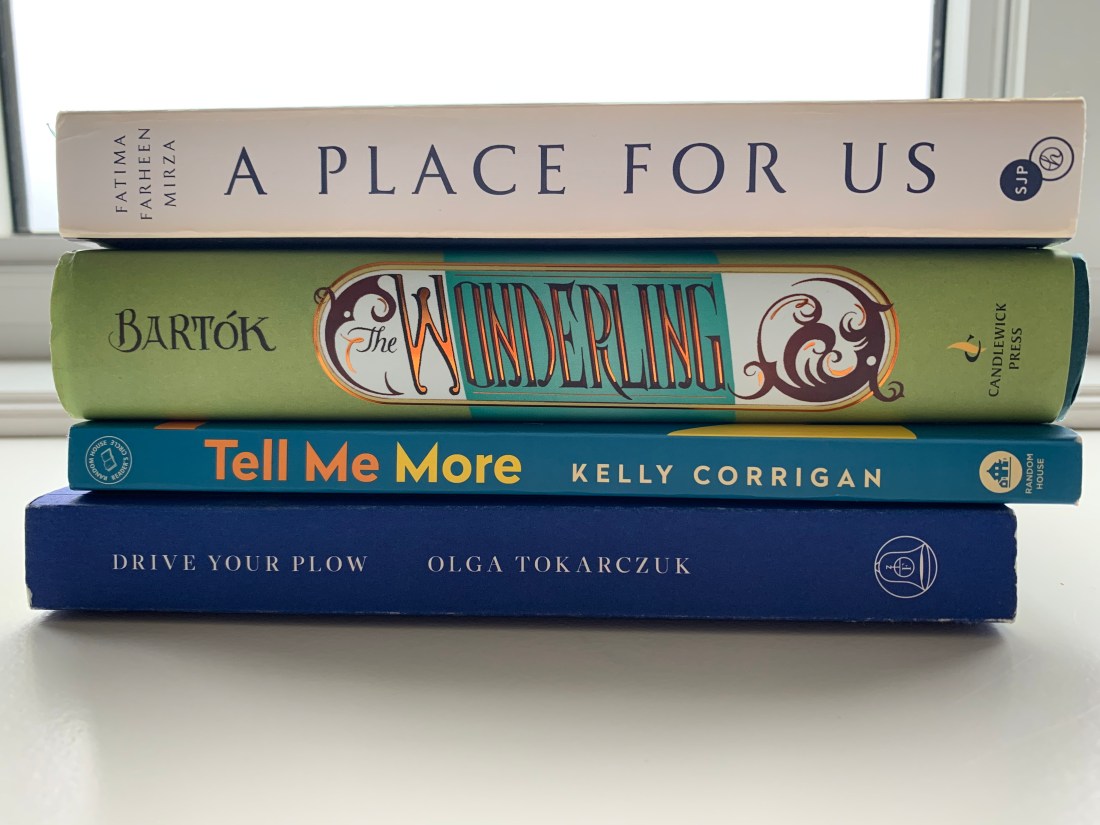
Okay, they say better late than never, right? Apologies for getting this post up after June has already begun but this month kind of crept up on me. When June comes around I usually start anticipating what I’m going to be reading over the summer. This year, I had a really hard time settling into what kind of books I felt like reading so I picked up a few with the idea that I would read a chapter or two and then make up my mind. It resulted it me reading five books at once, which is something I never do. Because I am rotating between books, the theme for this month is In No Particular Order. As I finish each book, I will post about it.

gods in Alabama by Joshilyn Jackson: This is the first audio book in my reading challenge (which is why it’s not in the picture). It’s another novel set in the South. The story follows the main character, Lena as she returns to her hometown in Alabama for the first time since she left it ten years before. The novel is contemporary fiction and mixes mystery with family drama. Listening to it adds an extra element of fun because the narrator has an Alabama accent so it really helps to capture the sense of place in a way that reading it in my head probably wouldn’t.

A Place for Us by Fatima Farheen Mirza: If you are keeping score at home, I was supposed to have read this book in May, that didn’t quite work out but I am enjoying it so far. It’s a fairly long novel and I don’t want to rush through it. Some books are page turners and some are meant to be savoured. I promise though – I will finish it this month.

The Wonderling by Mira Bartok: This is a middle grade novel. I confess to reading young adult and middle grade fiction on a fairly regular basis. There are a lot of great books written in these genres that I think adults pass over because they are marketed as being for younger audiences. The Wonderling is set in a world where there are humans and groundlings –  characters that are hybrids of humans and animals or animals and animals. The story begins with Number 13, a groundling who has lived his whole life at the Home for Wayward and Misbegotten Creatures. Number 13 manages to escape, and then sets off to find what happened to his real family. And so far, it’s good.

Tell Me More by Kelly Corrigan: I just learned about Kelly Corrigan recently. She writes memoirs but this is a collection of essays based on the twelve hardest things that Corrigan has learned to say. Things like, onward, and I was wrong, and I don’t know. She approaches each phrase with the stories from her own life that taught her the importance of having to say things even when you struggle for the words. She writes about her experiences in ways that are funny and heart-breaking on the same page. The essays are short enough that you can easily read one in a single sitting. Between Corrigan and Sedaris, I may be a convert to essays as a genre.

Drive Your Plow Over The Bones of the Dead by Olga Tokarczuk: I recently learned that compared to other parts of the world, North Americans read very few translated works. It made me wonder what kinds of things people were writing in other languages, and then I had a crippling case of FOMO (fear of missing out). I’ve started to look for more works in translation lately and this one caught my eye because of the title. It’s originally written in Polish and the main character, Janina, is an elderly woman living in a remote Polish village. When bodies start turning up, Janina is sure she knows who did it but no one will listen to her because of her reputation as cranky and maybe a little crazy. This is the first Tokarczuk novel I have ever read, but according to Google, she is a very big deal on the international writing scene.

So this is me for the month of June. If you have any recommendations for some great summer reads, I’d love to hear them! Until next time, happy reading!


The Almost Sisters by Joshilyn Jackson: A Review

“‘Things feel hard now, but it will pass. Everything passes, and something new comes along to fill the space … You can’t go around holding the worst thing you ever did in your hand, staring at it. You gotta cook supper, put gas in the car. You gotta plant more zinnias'” – Joshilyn Jackson, The Almost Sisters

I have never been to the South (unless you count Florida, and I’m pretty sure Southerners don’t) but I have always loved stories set there. Like in Fried Green Tomatoes at the Whistle Stop Cafe or The Divine Secrets of the Ya-Ya Sisterhood, the South feels more like a character than a setting in Jackson’s novel; it’s hard to imagine the events unfolding as they do anyplace else. The Almost Sisters takes place mainly in the tiny town of Birchville, Alabama – named after the Birch family. The last remaining Birch in Birchville is Leia’s beloved grandmother. When the novel opens, Leia is confronted with several family crises all at once: she finds out she is pregnant and the father is an anonymous Batman she slept with after a drunken encounter at a Comicon, her step-sister Rachel’s marriage has just fallen apart, and then she gets the call to go to Alabama to look after her grandmother, Birchie. Birchie has been hiding her progressing dementia from Leia and it has just outed itself in a very public – and scandalous – way at the local Baptist church’s Summer Fish Fry.

This book is contemporary fiction and I want to say it would make a great summer read, but not in a way that implies it is a marshmallow book by any means. Leia’s return to Birchville unearths family secrets and explores family dynamics in ways that keep the plot moving. It is alternately funny and moving by turns. One of the most poignant moments is when Leia comes face-to-face with the racism that she equates with what she calls ‘the Second South’ – one that white Southerners are aware of, but can never truly experience. Leia’s unborn child is biracial and she has to come to terms with the idea that he could never grow up in Birchville the same way she did as a child because his skin colour would make it impossible.

There are several plot lines that weave together in this novel. Birchie and her best friend Wattie are fighting to maintain their independence, Rachel is trying to pick up the pieces after her husband betrays her and Leia is trying to construct a future for her baby while meeting the deadline for the comic book she has been commissioned to write. Through these women, Jackson is exploring how we create families and how those families shape our own identities, but she does it in a way that is really accessible and keeps you turning the pages. The novel isn’t heavy-handed but Leia is a smart, interesting character and Jackson’s writing keeps the story from becoming sappy or sentimental.

If anyone has read gods in Alabama, another of Jackson’s novels, I would love to hear what you think. And if you are an audio book lover, Jackson is a former actor, and reads her novels herself on audio. I haven’t listened myself but I’ve heard she does a great job.

That wraps it up for this week. Until next time, happy reading!

The Library of Lost and Found by Phaedra Patrick: A Review

“Sometimes there’s no right decision. Just the one you make at the time.”                – Phaedra Patrick, The Library of Lost and Found

Martha Storm, the lead character in The Library of Lost and Found, is a bit lost herself. She gave up a life of her own to look after her ailing parents and after their deaths, she fills her time by helping out others in any way she can. Her house has become overcrowded with projects she has taken on for others and she is repeatedly overlooked at the one thing she loves – her volunteer position at the local library. One night, someone leaves a mysterious book for Martha outside the library. It appears to be written by her beloved grandmother, but was published years after her grandmother supposedly died. Martha sets out to unravel the mystery of the book’s publication and along the way makes unexpected friends and uncovers many family secrets.

Moving between Martha’s present and her childhood, the story reveals the ways that her life has been shaped by her sense of duty to her family. Discovering her grandmother’s book serves as an awakening to Martha who has become a doormat to almost everyone in her life. Her attempts to understand what happened to her grandmother bring her face-to-face with aspects of her family she was completely unaware of and force her to question her relationships and her sense of self.  This novel would likely make a good summer read because it’s not too heavy and it has a sense of charm about it but it follows a lot of the tropes of so many contemporary novels where the quirky main character experiences a series of unlikely events and makes equally quirky friends. It’s a pleasant story but not particularly original. I would have liked Patrick to develop the backstories of her secondary characters further to develop more depth and interest. I think I was hoping for a story that was either more laugh-out-loud funny or heart-wrenching but in the end, the novel doesn’t really deliver either. It’s cozy and sweet but not the kind of book that will stick with you years from now.

If you’ve read anything by Phaedra Patrick, drop me a line and let me know what you thought. Until next time, happy reading!

Daisy Jones and the Six by Taylor Jenkins Reid: A Review

“No matter who you choose to go down the road with, you’re gonna get hurt. That’s just the nature of caring about someone. No matter who you love, they will break your heart along the way.” – Taylor Jenkins Reid, Daisy Jones and the Six

Do I like 70s rock? No.

Do I really care about behind-the-band stories? No.

To be honest, I don’t even really like sex, drugs and rock’n’roll stories (and yes, I am aware of how square that sounds). So I wasn’t very confident that a novel about a 1970s stadium rock band would really be very appealing to me. But here is what surprised me:

Did I like Daisy Jones and the Six? Yes. Yes. Yes.

I read it in a day. Now granted, on this particular day I didn’t have to go to work but once I started it, I couldn’t put it down. The premise behind the novel follows two stories that eventually converge: Daisy Jones is the daughter of an artist and a model who are more interested in their work than they are in their daughter. She is stunningly beautiful, a natural talent and by her early teens, she is sneaking out to bars. She could have ended up a groupie, but her talent and desire to be a song-writer push her to take control of her own life. The Six is a rock band just starting out at the beginning of the book. They write and perform rock and dream of being the biggest band in the country. Eventually Daisy opens for them on tour, and then joins the band. At the height of their success, the band splits and no one ever knows why.

The book is written like an oral history where the band mates and others associated with Daisy and The Six are telling the story years later. Jenkins Reid’s writing style makes this a fast read but what I really like about it was how it allows for so much perspective. Each character is alone when they are being interviewed and then their stories are pieced together into more or less a chronology of the band’s rise and sudden end. Depending on which character is speaking, you get very different – and sometimes conflicting – takes on what happened. The feeling of a tell-all was so well developed that despite the fact that it clearly says, ‘a novel’ on the cover, I Googled it just to make sure that it wasn’t a real band.

Jenkin Reid includes a lot of details that will appeal to actual fans of 70s rock (like a all the lyrics of the band’s hit album Aurora at the back) but it is such a compelling story that you could know nothing about the music scene at the time and still really enjoy it. Jenkins Reid’s writing is so convincing of place and time and the story changes course in unexpected ways. The novel explores the nature of music and fame, the price of addiction and the power of relationships while still setting the story firmly in the 1970s music scene. It’s fun and smart which is a combination that I love. And while I won’t reveal the secret of why the band broke up – which Jenkins Reid makes you wait for until the very end – I will admit that I didn’t see it coming but found very satisfying.

Next week, a very different kind of mystery. Until then, happy reading!

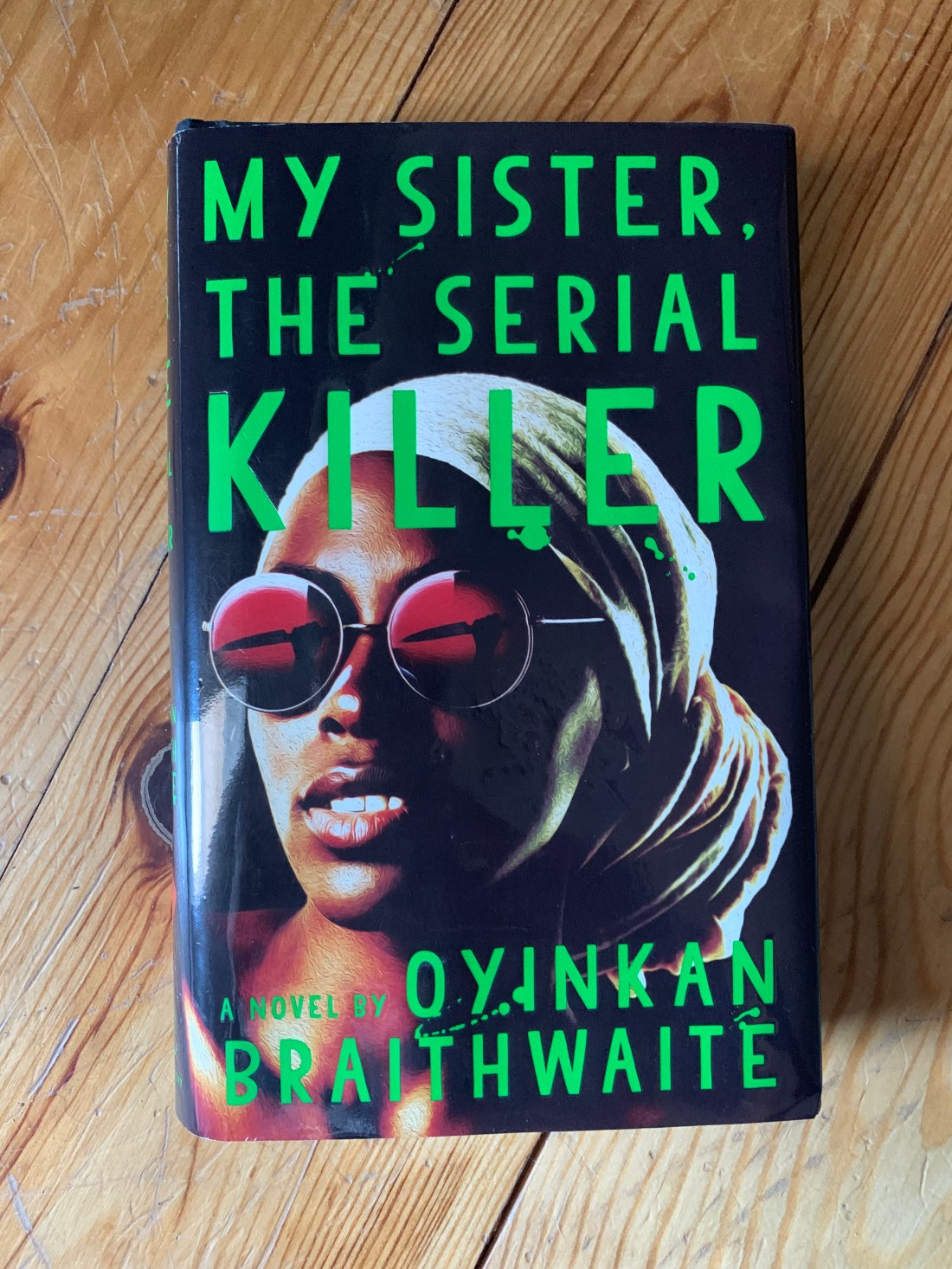
My Sister, the Serial Killer by Oyinkan Braithwaite: A Review

“Ayoola summons me with these words—Korede, I killed him.”
― Oyinkan Braithwaite, My Sister, the Serial Killer

I think I suffer from a kind of genre fatigue. I can never read too much of the same kind of book without itching for something different. This doesn’t seem to affect me with fiction in general (which I read way more than non-fiction) but I can’t read a whole lot of mysteries, or a whole lot of historical fiction or whatever in a row without feeling like I need a break. To cleanse my palette, so to speak, with something different. So after several weeks of reading novels that involved a lot of heavy lifting thematically and emotionally, I was ready for something lighter. If it seems odd that I am describing a novel about a serial killer as “light”, let me explain…

My Sister, the Serial Killer is the debut novel of Nigerian writer Oyinkan Braithwaite. The main character is Korede, a practical, no-nonsense nurse who lives at home with her mother and younger sister, Ayoola. Ayoola is beautiful and talented. She works as a clothing designer, and because of her beauty, everything in life comes easily to her. Korede is in love with a doctor who works at her hospital and she has hopes that their friendship might turn into something more – until he meets Ayoola. You could be excused for thinking what I’ve described so far sounds like a classic love triangle with a healthy dose of sibling rivalry on the side. But there is one critical difference. Ayoola murders her boyfriends. This is not a spoiler because the novel opens with Korede helping her seemingly “perfect” sister dispose of a body … for the third time. And according to Korede’s research, three murders is what defines a serial killer. From the beginning of the book, Korede seems resigned to the fact that there is no help for Ayoola and ultimately has to ask herself how far she is willing to go to protect her little sister, even when she knows her sister is entirely in the wrong.

Ayoola’s stunning levels of self-interest mean that she is largely unconcerned with the greater moral implications of what she has done and Korede is left to wrestle with the guilt and worry in the wake of their actions. While Korede is trying to comes to terms with her decision to help Ayoola cover up her crimes, her sister is posting selfies on Instagram and lining up her next date. Korede’s frustrations with Ayoola and her jealousy of her have a darkly comic effect in the novel. Braithwaite plays with many conventions of so-called “chick lit” novels but then adds in this completely unexpected element of making Ayoola a serial killer. It doesn’t seem like it should be funny and yet it is.

This novel is a very fast read and I found it pretty entertaining. The best way I can describe it is to say, think Bridget Jones meets Dexter. If that makes any kind of sense to you and sounds appealing, it’s worth picking up. Korede is a really good character and while her sister’s actions are extreme, in many ways Braithwaite juxtaposes this with completely relatable family dynamics that make you feel like you know this family. Except, you know, the bits where the younger sister stabs her ex-boyfriends.

Tomorrow I will post April’s Line Up. Until then, happy reading!