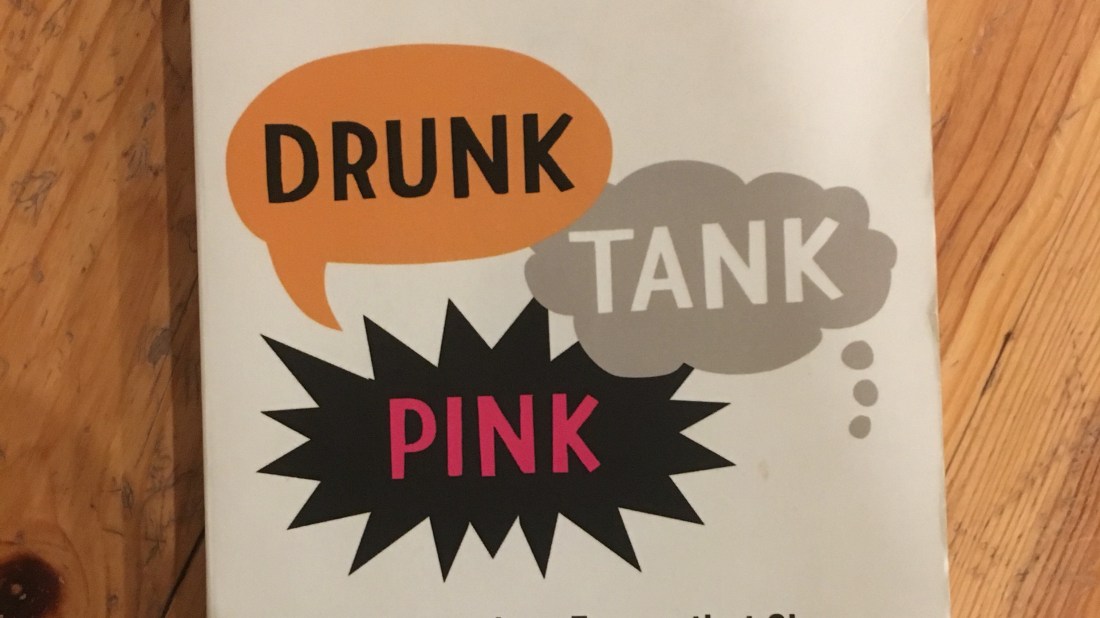
Drunk Tank Pink by Adam Alter: A Review

“Labels, like names, shape how we view the world … the people we label as “black”, “white”, “rich”, “poor”, “smart” and “simple” seem blacker, whiter, richer, poorer, smarter and simpler merely because we’ve labelled them so.” – Adam Alter, Drunk Tank Pink

Maybe this is going to sound a bit weird because it is a science book but reading Drunk Tank Pink was kind of well, … fun. Adam Alter reveals all kinds of brain-based phenomena that are interesting, quirky and ultimately enlightening. The book is divided into three sections: The World Within Us, The World Between Us and The World Around Us. Within each section, Alter further breaks down his themes into things big and small – culture, names, colours to name a few. The purpose of the book is to reveal how subconscious forces affect how we think, feel and behave. If you have ever wondered how someone’s name shapes their identity and maybe their future, if exposure to the colour red affects for academic abilities or what makes us feel more or less competitive, these are the kinds of things Alter tackles in his book. His background is an interesting combination of marketing and psychology and his research focuses on decision-making and social psychology. He uses research from his own studies and those of many other psychologists and social scientists to reveal some pretty unexpected ways in which our brains work.

If the science scares you, it shouldn’t. Alter’s writing style is very easy to read and he connects the science to everyday things like watching TV, playing chess and choosing a paint colour to make it relevant and clear (even to an arts major like me). While he describes numerous studies that have been performed in the last several decades, his writing is straightforward and clear – you certainly don’t need a PhD in psycology to understand where he is coming from.

What I found most compelling about this book was how Alter was able to tie seemingly unrelated studies together to comment on much broader social and cultural phenomena. The kinds of issues we address as a society in terms of race and class are actually to some extent linked to the ways our brains are primed to process information. And often its unconscious. We aren’t even aware of the associations we are making or the ways in which the beliefs we already hold are shaping (and sometimes even distorting) new information our brains are presented with. While reading Drunk Tank Pink may feel like a mashup of pop culture (why do more people prefer Coke to Pepsi?) and pop science (turns out men produce more testosterone and take more risks in the presence of a beautiful woman), Alter ends each section with some bigger comments about how the trends that social scientists are identifying in their studies speak to the trends we see in the wider world. If you like books like Freakonomics or the work of writers like Malcolm Gladwell, then you will enjoy Drunk Tank Pink.

And if you’ve been waiting this whole time for me to tell you what the heck ‘drunk tank pink’ even means, well, you should probably read the book too …

Are you planning on reading any of the October line up? Drop me a comment and let me know. Until next week, happy reading!
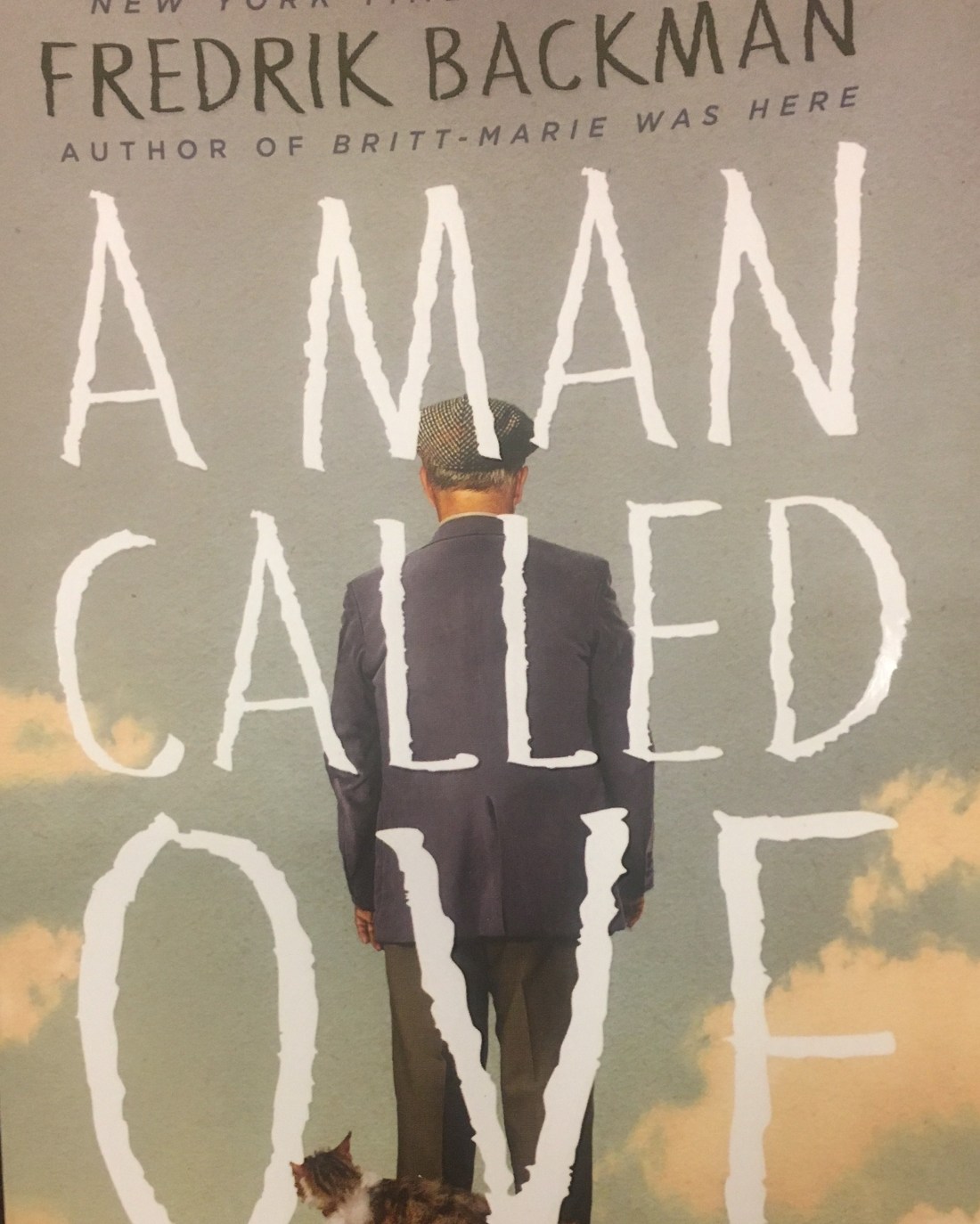
Bonus Book: A Man Called Ove by Fredrik Backman

Hello, hello, hello!

“Ove feels an instinctive skepticism towards all people taller than six feet; the blood can’t quite make it all the way up to the brain.” A Man Called Ove by Fredrik Backman

This. Book.

I loved this book. And I think you will too. Backman is a Swedish novelist but unlike all those dark, Nordic thrillers coming out of Sweden, his novels are hilarious and touching.  Ove is the classic grumpy old man. He lives his life by strict rules and he is not afraid to share his opinions with anyone who breaks them (he is the scourge of his residents’ association). He has a very short temper. He thinks everyone is an idiot. He is mean to the cat. In short, he is pretty unlikable. Except … he has just lost the love of his life, his wife, Sonja. Through his grief over her loss, we see a different side of Ove. Six months after her death, he prepares to take his own life.

Except he can’t.

Despite his careful preparations, the new next door neighbors back up their U-Haul improperly, flattening his mailbox and thus ruining his plan. He cannot leave this world with a flattened mailbox, especially one that has been flattened at the hands of idiots. What follows are a series of comic events that result in unlikely friendships. Backman had me laughing out loud at Ove’s antics and sometimes wondering what it would be like to be so free with my opinions. (Really, his manners are shocking). But the narrative also switches from the present to Ove’s backstory with Sonja which Backman describes with some beautiful images:

“Loving someone is like moving into a house,” Sonja used to say. “At first you fall in love with all the new things, amazed every morning that all this belongs to you, as if fearing that someone would suddenly come rushing in through the door to explain that a terrible mistake had been made, you weren’t actually supposed to live in a wonderful place like this. Then over the years the walls become weathered, the wood splinters here and there, and you start to love that house not so much because of all its perfection, but rather for its imperfections. You get to know all the nooks and crannies. How to avoid getting the key caught in the lock when it’s cold outside. Which of the floorboards flex slightly when one steps on them or exactly how to open the wardrobe doors without them creaking. These are the little secrets that make it your home.”

There is something about the way that Backman contrasts Ove’s gruff, cantankerous exterior with his tenderness for Sonja that makes his character so appealing. Backman strikes the perfect balance between comedy and sorrow in this novel. Like Eleanor Oliphant, Ove becomes an unexpected and unforgettable hero in his own small world. The novel explores grief but ultimately reveals how our connections to others helps us to heal.

So … I hope I’ve convinced you to read it. Go on, what’s one more book in your To Read Pile?

Have you read anything by Fredrik Backman? I’d love to hear your thoughts. Shoot me a comment or message. Until next time, happy reading!

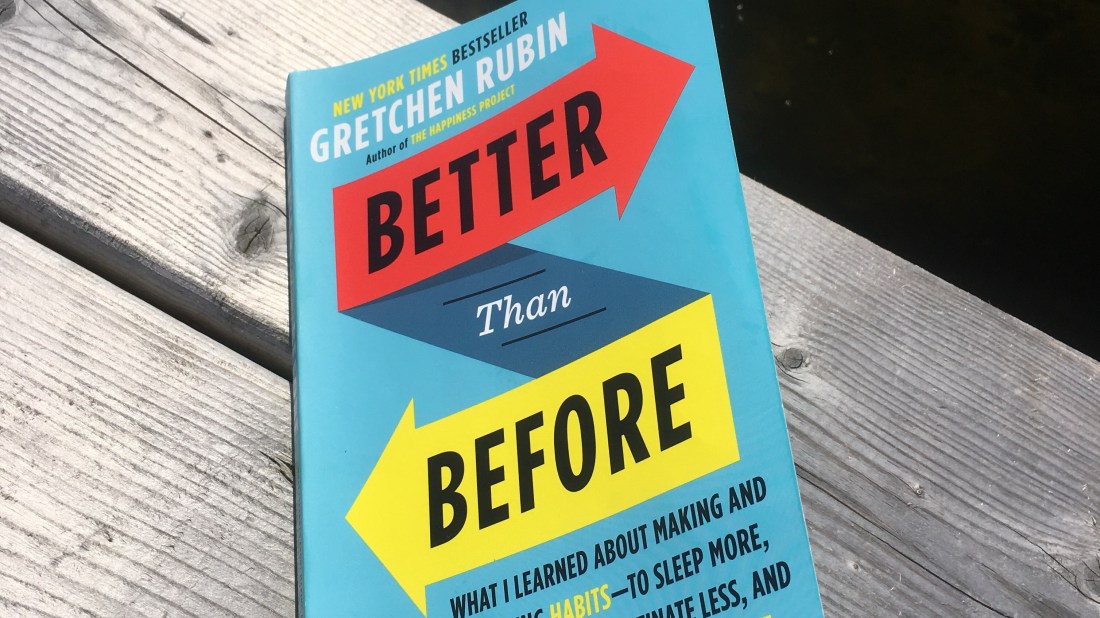
Better Than Before by Gretchen Rubin: A Review

Hello, hello, hello!

“There’s a magic in the beginning of anything. We want to begin right, and a good start feels auspicious.” – Better than Before, Gretchen Rubin

Recently, I became interested in habits. In my personal and professional life, I saw how habits, both good and bad, affect the success, confidence and happiness of those around me. And I am no exception. Like everyone else I know, my life is busy. I struggle to balance parenthood, work and finishing a degree with spending time with family and friends. The secret to maintaining this balance seems to be in cultivating good habits while the ditching bad ones. But after about a year of concerted effort when it comes to habits, I still have questions: why are some good habits easy to form but others always feel like a struggle? I can have the same healthy breakfast every morning without thinking, but I have to make myself get my workout in. Why is it so easy for some people to form certain habits when others find it so hard? A lot of people love to get up early but for me any alarm going off before 7:00 am feels like a punch in the face. The opposite is also true – why do I find it easy to manage the homework in the courses I’m taking when some of my students really struggle to hand work in on time?

Cue Gretchen.

Gretchen Rubin is like that friend who has it all together. Need to know how to carve out some time to yourself in an already hectic schedule? Wondering how to answer that tricky email at work? Trying to help your kids get more organized? Ask Gretchen. To Rubin, one of the keys to increasing happiness is simply habit. Making certain behaviors we value into habits (and avoiding pitfalls) frees us and allows us to use our energy to pursue other things. In this book, she addressed the question: how do we change our habits? And the answer, as in so many things is: it depends.

One of the strongest aspects of Better Than Before is Rubin’s framework for categorizing personalities which she calls the Four Tendencies. She claims that everyone falls into one of four very broad categories: Upholders, Questioners, Obligers and Rebels. These categories relate to how we respond to external and internal expectations. Throughout the book, Rubin uses this framework as a means of exploring why people form habits differently, and explains how understanding your own Tendency is helpful in terms of figuring out how to build or break habits. She uses research and anecdotal evidence from her own life and the lives of her family to support her ideas in ways that makes it easy for readers to relate.

Until reading this book, I didn’t think about most of the things I did on a regular basis (filling the dishwasher before leaving for work, regularly texting friends I don’t get to see very often) as habits. They were just things I did. Re-framing them as habits allows me a different perspective on the things I do and how they reflect (or sometimes fail to reflect) my values. Rubin stresses that to build a happier life, we need to build habits that reflect our values and priorities and in order to do this, we must understand ourselves better. She emphasizes that while we are more alike than we are different, the ways in which people are different are very important (she calls these Distinctions), especially when we’re talking about forming habits. She also introduces her Pillars of Habits: Monitoring, Foundation, Scheduling and Accountability as a means of helping readers establish good habits. She doesn’t shy away from acknowledging that forming habits takes energy and dedication but suggests that the use of her Pillars can help readers be more successful in meeting their habit goals.

So, what are the drawbacks? Remember when I said that Rubin is like that friend with all the answers? For the most part those answers are well thought-out and useful but sometimes she sounds a bit … relentless (which, to her credit, she acknowledges about herself) and that becomes tiresome at times. At one point she talks about going to an acquaintance’s apartment several times to help him clean up his space in order to help him with his writer’s block (she is a strong believer that an uncluttered space leads to mental clarity) and in the end he has to admit to her that the decluttering didn’t help at all. In her estimation, this is an example of how habits work differently for different people but it’s also a bit of a methaphor for the books itself. The central ideas are useful and interesting but in her quest to really get through to readers, the examples tend to get a bit repetative. At times found myself thinking, “Okay, Gretchen, I get it!”

The other thing that surprised me is that she doesn’t really consider emotional factors in the formation and maintenance of habits. This is probably because she is so disciplined herself but I think it’s an important aspect for a lot of people and it is left lacking in this book. She does give a lot of strategies for overcoming potential pitfalls – like abstaining or distracting yourself from temptations – but she doesn’t discuss the emotional connections people often have to their habits.

Overall, I think this is a book worth reading. It makes important points about the way we can connect habits to our own sense of well-being and provides practical tools to help readers work on their own habits.

Curious about which of the Four Tendencies describes you? Take this quiz from Gretchen Rubin’s site. I would love to hear what you find out – post a comment or message me and let me know. Until next week, happy reading!
Welcome!

Hello, hello, hello!

I’m so glad you’re here! If you are a reader (and I am hoping that you are), then you probably already have a “To Read Pile” overflowing on your night table or maybe your stack is tall enough now that it has become your night table. And despite this huge pile of reading material waiting for your attention, maybe you still come home from the bookstore or library with arms overflowing with new books. Or maybe your e-reader holds a library worthy of envy. Maybe you are a secret (or not-so-secret) book pusher, constantly foisting your new favorites onto your family and friends. Maybe when someone asks you what your favorite book is you think, people have just one favorite?  And maybe that thought blows your mind.  Maybe, just maybe hearing about a new, great read sends you scrambling to Amazon or Indigo even though you have at least ten (ok, dozens) of books waiting to be read at home. If this is you, I ask you, dear friend, what is a reader to do? There are literally not enough hours in the day … and the piles continue to grow.  In my case, I realized something needed to be done. I just wasn’t sure what. I am a full-time public school teacher, and my two kids keep my husband and I on the go all the time. It’s no wonder that my to read pile is out of control! I love to read, talk about books, share recommendations and hear about the books others love. And if it can all come with a huge mug of tea, even better. So…

This blog is my answer to the question, “what is a reader to do”? My hope is to read one book a week from my TRP for the next year and share my thoughts with you. Well, that is my current plan, but I may throw in some recommendations of other books that I am always bugging people to read, and I’ll share some Throw Back Thursday love on occasion with  picture books or YA that my kids or students love.

I realize 52 books is a lot, so I decided I am going to arrange each month by theme. While some people think of New Year’s or their birthdays as a time to set some new resolutions, the beginning of September is often that time for me. With summer ending and school starting again, there is just something about those freshly sharpened pencils and blank scribblers that makes me want to try something new. So September’s theme is going to be about trying new things, or at least thinking about some old things in new ways. In case you want to read along with me, the first book I’ll review is the non-fiction book, Better than Before by Gretchen Rubin (If you read The Happiness Project, this is the same author. In this book she tackles how people form good habits and examines why some methods work for some of us and fail for others. As a teacher, a mom, and someone who struggles with habits from time to time myself, this is near and dear to my heart. She also has a great podcast, Happier, if you want a taste of her style before diving into the book.)

img_2842
OK, confession: I started this one already. I also follow Reese Witherspoon’s book club on Instagram and love the ‘book in the wild’ pics, so here is my attempt: ‘On the dock on a glorious summer day’.

So, I hope that you will join me in this little adventure in reading. At the very least, I will make a substantial dent in my “to reads” but I am hoping that you will share your own love of reading here. The first review will be up on September 1 but between now and then, I would love to hear from you so please send me a little note and let me know what you’re reading this summer!