June Line Up

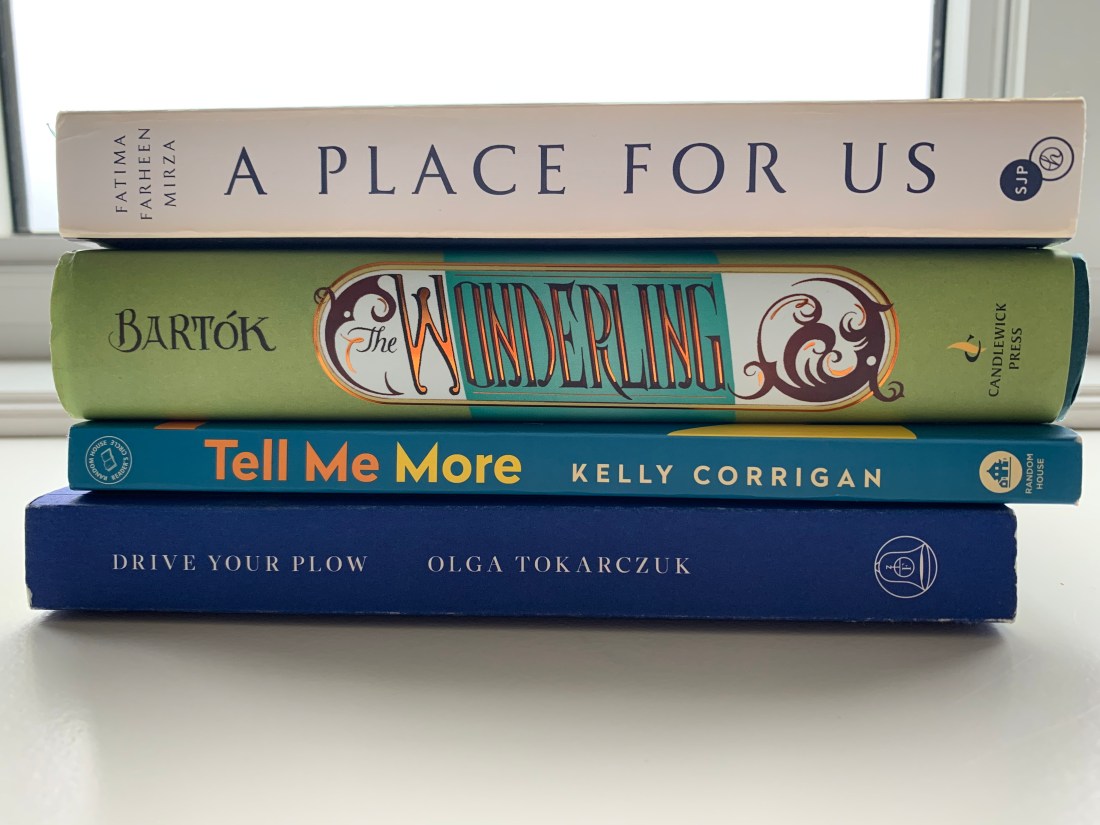
Okay, they say better late than never, right? Apologies for getting this post up after June has already begun but this month kind of crept up on me. When June comes around I usually start anticipating what I’m going to be reading over the summer. This year, I had a really hard time settling into what kind of books I felt like reading so I picked up a few with the idea that I would read a chapter or two and then make up my mind. It resulted it me reading five books at once, which is something I never do. Because I am rotating between books, the theme for this month is In No Particular Order. As I finish each book, I will post about it.

gods in Alabama by Joshilyn Jackson: This is the first audio book in my reading challenge (which is why it’s not in the picture). It’s another novel set in the South. The story follows the main character, Lena as she returns to her hometown in Alabama for the first time since she left it ten years before. The novel is contemporary fiction and mixes mystery with family drama. Listening to it adds an extra element of fun because the narrator has an Alabama accent so it really helps to capture the sense of place in a way that reading it in my head probably wouldn’t.

A Place for Us by Fatima Farheen Mirza: If you are keeping score at home, I was supposed to have read this book in May, that didn’t quite work out but I am enjoying it so far. It’s a fairly long novel and I don’t want to rush through it. Some books are page turners and some are meant to be savoured. I promise though – I will finish it this month.

The Wonderling by Mira Bartok: This is a middle grade novel. I confess to reading young adult and middle grade fiction on a fairly regular basis. There are a lot of great books written in these genres that I think adults pass over because they are marketed as being for younger audiences. The Wonderling is set in a world where there are humans and groundlings –  characters that are hybrids of humans and animals or animals and animals. The story begins with Number 13, a groundling who has lived his whole life at the Home for Wayward and Misbegotten Creatures. Number 13 manages to escape, and then sets off to find what happened to his real family. And so far, it’s good.

Tell Me More by Kelly Corrigan: I just learned about Kelly Corrigan recently. She writes memoirs but this is a collection of essays based on the twelve hardest things that Corrigan has learned to say. Things like, onward, and I was wrong, and I don’t know. She approaches each phrase with the stories from her own life that taught her the importance of having to say things even when you struggle for the words. She writes about her experiences in ways that are funny and heart-breaking on the same page. The essays are short enough that you can easily read one in a single sitting. Between Corrigan and Sedaris, I may be a convert to essays as a genre.

Drive Your Plow Over The Bones of the Dead by Olga Tokarczuk: I recently learned that compared to other parts of the world, North Americans read very few translated works. It made me wonder what kinds of things people were writing in other languages, and then I had a crippling case of FOMO (fear of missing out). I’ve started to look for more works in translation lately and this one caught my eye because of the title. It’s originally written in Polish and the main character, Janina, is an elderly woman living in a remote Polish village. When bodies start turning up, Janina is sure she knows who did it but no one will listen to her because of her reputation as cranky and maybe a little crazy. This is the first Tokarczuk novel I have ever read, but according to Google, she is a very big deal on the international writing scene.

So this is me for the month of June. If you have any recommendations for some great summer reads, I’d love to hear them! Until next time, happy reading!
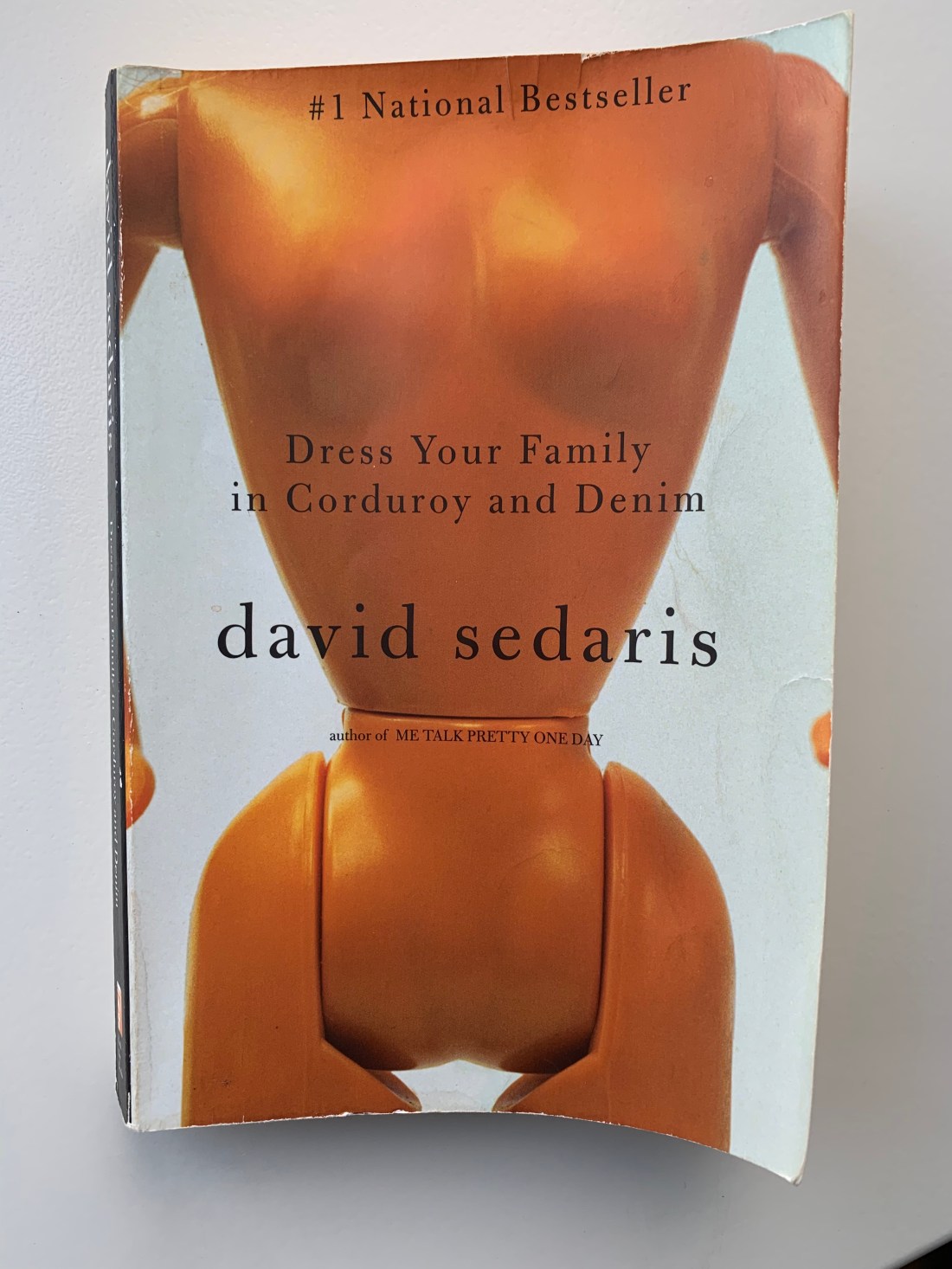


Dress Your Family in Corduroy and Denim by David Sedaris: A Review

“Boys who spent their weekends making banana nut muffins did not, as a rule, excel in the art of hand-to-hand combat.” – David Sedaris, Dress Your Family in Corduroy and Denim

As a Canadian, when I first heard that David Sedaris writes funny, true-to-life essays that he sometimes reads on NPR, I pictured Stuart McLean, – a fellow Canadian – who wrote funny, true-to-life stories and essays that he read on the CBC. I picked up Sedaris’ book expecting heart-warming and sweet with a side of contemplative musing because that is what Stuart McLean used to write.

David Sedaris is not Stuart McLean. Maybe the naked Barbie torso on the cover should have been my first clue.

In fact, he is more like Stuart McLean’s outrageous younger brother who always manages to shock your aunt at Thanksgiving dinner. Sedaris is funny and smart and also muses at times, but instead of sweet, he is snarky – really snarky. His essays are honest (sometimes painfully so) and self-deprecating but reading the whole collection, you also get a strong sense of how Sedaris’ identity emerged against the backdrop of a somewhat unconventional family. The essays range from stories about his parents, to ones about his partner, to times in his twenties when he was trying to find himself as an artist. Sometimes I found myself shocked by his honesty but mostly they read like a really good story your friend would tell you that starts, this one time …

I’m not usually a big non-fiction reader but I think this collection does a great job of exploring all the wonderful, terrible, wacky and just plain hilarious stories that come with growing up in a large family. I especially loved how Sedaris wrote about his mother, who was strong and forthright. He admits that his family doesn’t exactly love being the focus of his essays most of the time, but he also pokes fun at himself and at times drops the sarcasm long enough for you to see the tender heart inside.

And he’s a grown man who’s not afraid to admit that when he is alone in his house at night, his biggest fear is a zombie apocalypse. Like in a very real way that keeps him from sleeping. And I can’t help but kind of love that.

Next up, I will be posting about June’s TBR. Until then, happy reading, everybody!

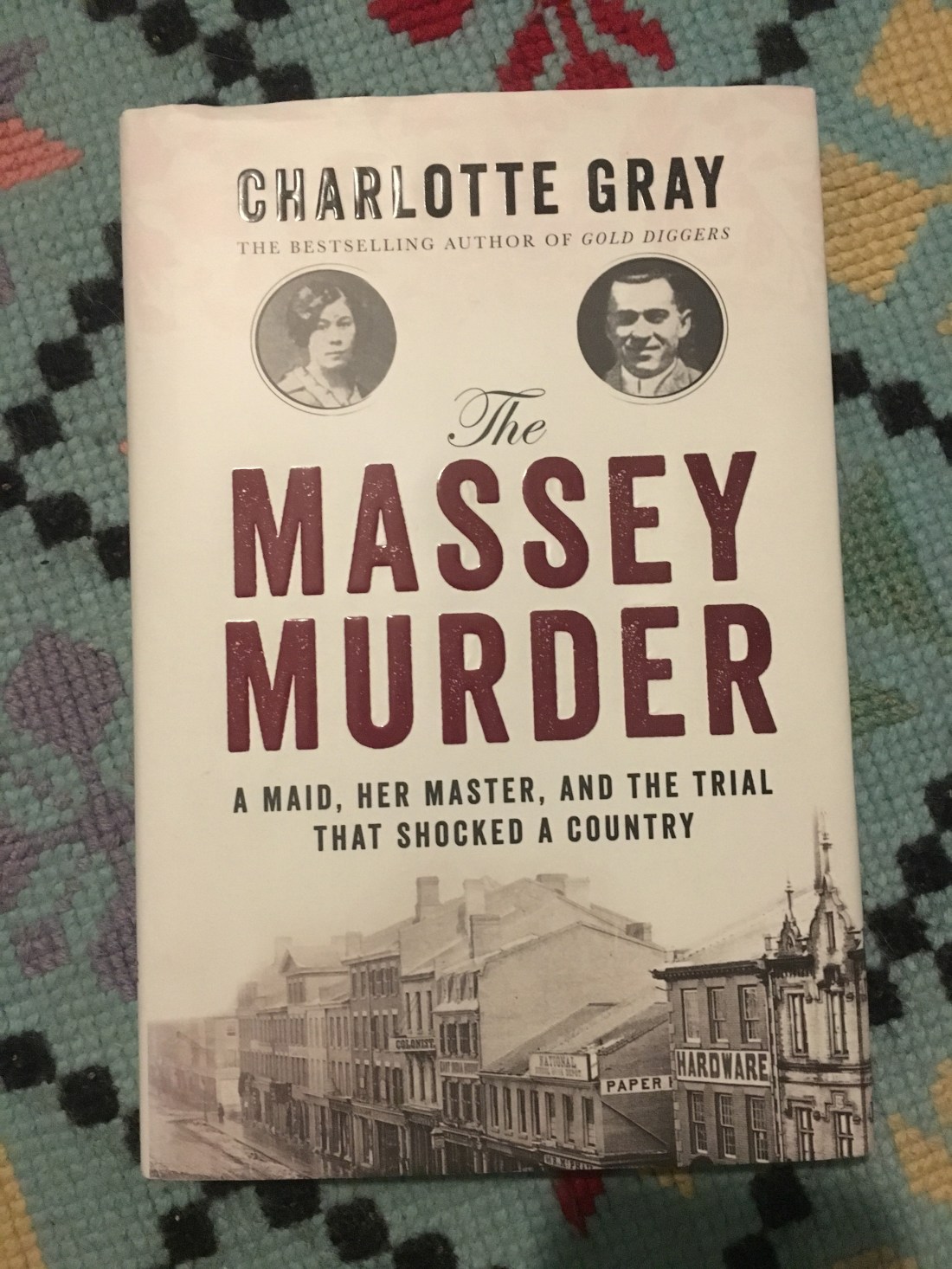
The Massey Murder by Charlotte Gray: A Review

“In the early twentieth century, most women and men believed that, while men committed crime, women committed sins.” – Charlotte Gray, The Massey Murder

This book really surprised me. As a rule, I don’t really like reading non-fiction books about history. The writing is often dry, in my opinion. So this one has been sitting in my To Read Pile for a few years and I decided that as part of my challenge this year, I would push myself to read something I wouldn’t normally pick up. I blew the dust off The Massey Murder and I am so glad now that I did.

The book is written by Canadian historian and biographer, Charlotte Gray. It recounts the murder of Bert Massey (of that Massey family in Toronto) by his eighteen-year-old maid in 1915. The book is not really so much about the murder as the public reaction to the murder – Gray brings together a lot of factors to demonstrate why the trial of the maid, Carrie Davies, became a media sensation. Gray exposes the ways in which the trial brought to the surface so much of what was happening in Toronto society at the time: opinions about gender politics, class, immigration, the role of the media in shaping public perceptions of current events, the First World War (which was raging in Europe at the time)  and the differences between the letter of the law and notions of justice. Through her research she was able to expose the relationship between business and political interests and the way news is reported. She demonstrates how people’s perceptions of women shaped their opinions of Davies’ innocence or guilt (despite irrefutable evidence that she did shoot and kill Massey). Despite the evidence, Davies would eventually plead not guilty on the grounds that Massey had allegedly attempted to rape her and she feared he would do it again – would her all-male jury agree that this was an act of self-defense despite the fact that Massey was returning home from work and unarmed when she shot him on his front step? Gray’s writing style is very engaging so her account unfolds like the plot of a good historical novel (although don’t be fooled, she has done her research).

What intrigued me most is that despite the fact that Gray is writing about a case that is now over 100 years old, our society is still debating so many of the same questions. When you consider the criticisms that our justice system does not serve the poor and marginalized, that women are still reporting sexual assaults at the hands of powerful male employers, that entanglements between media, politicians and business still allow people to question the validity of what is being reported, it almost seems that Gray could be writing about today. The context may have changed, but in many cases, the situation has not. The Massey Murder is a thought-provoking read, the story is so engrossing that I was looking forward to the chance to read it each night.

If you have read a really good historical book, drop me a line and let me know. Until next week, happy reading!

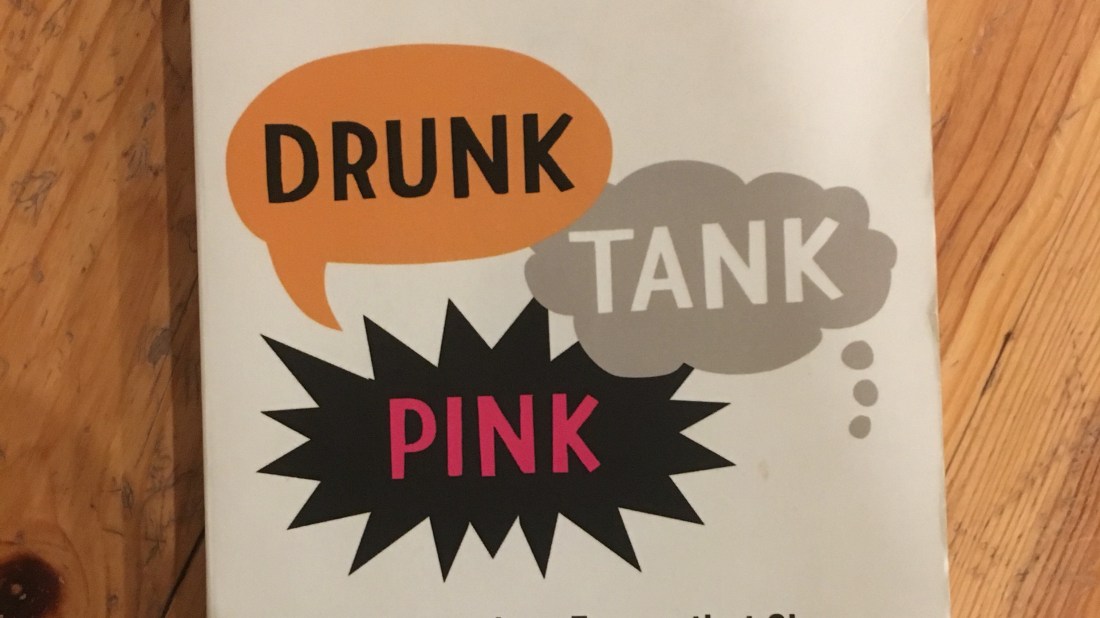
Drunk Tank Pink by Adam Alter: A Review

“Labels, like names, shape how we view the world … the people we label as “black”, “white”, “rich”, “poor”, “smart” and “simple” seem blacker, whiter, richer, poorer, smarter and simpler merely because we’ve labelled them so.” – Adam Alter, Drunk Tank Pink

Maybe this is going to sound a bit weird because it is a science book but reading Drunk Tank Pink was kind of well, … fun. Adam Alter reveals all kinds of brain-based phenomena that are interesting, quirky and ultimately enlightening. The book is divided into three sections: The World Within Us, The World Between Us and The World Around Us. Within each section, Alter further breaks down his themes into things big and small – culture, names, colours to name a few. The purpose of the book is to reveal how subconscious forces affect how we think, feel and behave. If you have ever wondered how someone’s name shapes their identity and maybe their future, if exposure to the colour red affects for academic abilities or what makes us feel more or less competitive, these are the kinds of things Alter tackles in his book. His background is an interesting combination of marketing and psychology and his research focuses on decision-making and social psychology. He uses research from his own studies and those of many other psychologists and social scientists to reveal some pretty unexpected ways in which our brains work.

If the science scares you, it shouldn’t. Alter’s writing style is very easy to read and he connects the science to everyday things like watching TV, playing chess and choosing a paint colour to make it relevant and clear (even to an arts major like me). While he describes numerous studies that have been performed in the last several decades, his writing is straightforward and clear – you certainly don’t need a PhD in psycology to understand where he is coming from.

What I found most compelling about this book was how Alter was able to tie seemingly unrelated studies together to comment on much broader social and cultural phenomena. The kinds of issues we address as a society in terms of race and class are actually to some extent linked to the ways our brains are primed to process information. And often its unconscious. We aren’t even aware of the associations we are making or the ways in which the beliefs we already hold are shaping (and sometimes even distorting) new information our brains are presented with. While reading Drunk Tank Pink may feel like a mashup of pop culture (why do more people prefer Coke to Pepsi?) and pop science (turns out men produce more testosterone and take more risks in the presence of a beautiful woman), Alter ends each section with some bigger comments about how the trends that social scientists are identifying in their studies speak to the trends we see in the wider world. If you like books like Freakonomics or the work of writers like Malcolm Gladwell, then you will enjoy Drunk Tank Pink.

And if you’ve been waiting this whole time for me to tell you what the heck ‘drunk tank pink’ even means, well, you should probably read the book too …

Are you planning on reading any of the October line up? Drop me a comment and let me know. Until next week, happy reading!

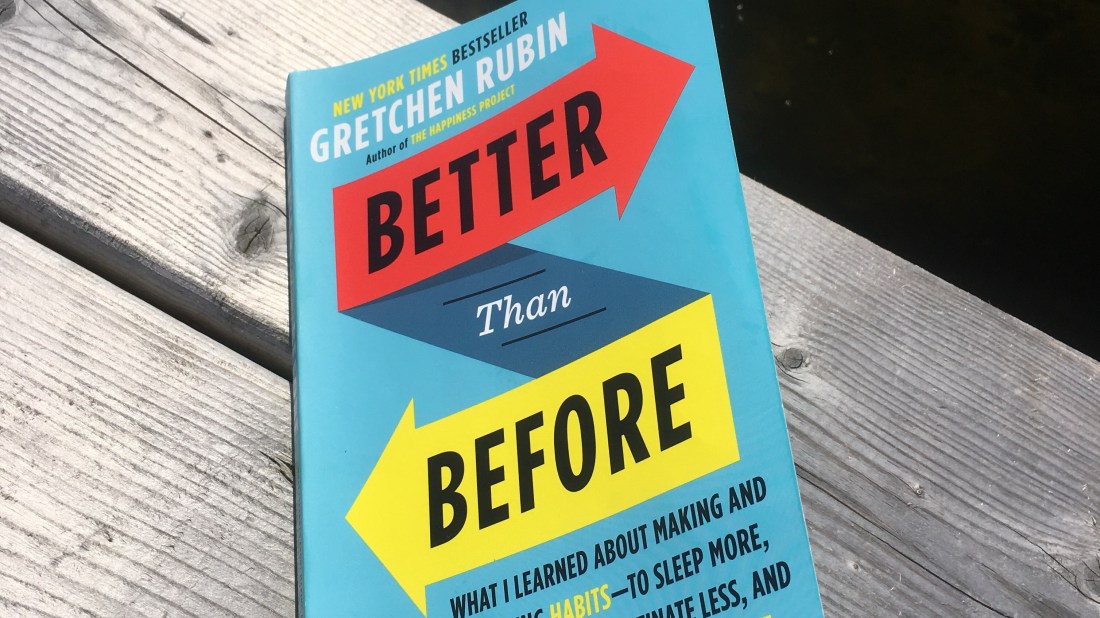
Better Than Before by Gretchen Rubin: A Review

Hello, hello, hello!

“There’s a magic in the beginning of anything. We want to begin right, and a good start feels auspicious.” – Better than Before, Gretchen Rubin

Recently, I became interested in habits. In my personal and professional life, I saw how habits, both good and bad, affect the success, confidence and happiness of those around me. And I am no exception. Like everyone else I know, my life is busy. I struggle to balance parenthood, work and finishing a degree with spending time with family and friends. The secret to maintaining this balance seems to be in cultivating good habits while the ditching bad ones. But after about a year of concerted effort when it comes to habits, I still have questions: why are some good habits easy to form but others always feel like a struggle? I can have the same healthy breakfast every morning without thinking, but I have to make myself get my workout in. Why is it so easy for some people to form certain habits when others find it so hard? A lot of people love to get up early but for me any alarm going off before 7:00 am feels like a punch in the face. The opposite is also true – why do I find it easy to manage the homework in the courses I’m taking when some of my students really struggle to hand work in on time?

Cue Gretchen.

Gretchen Rubin is like that friend who has it all together. Need to know how to carve out some time to yourself in an already hectic schedule? Wondering how to answer that tricky email at work? Trying to help your kids get more organized? Ask Gretchen. To Rubin, one of the keys to increasing happiness is simply habit. Making certain behaviors we value into habits (and avoiding pitfalls) frees us and allows us to use our energy to pursue other things. In this book, she addressed the question: how do we change our habits? And the answer, as in so many things is: it depends.

One of the strongest aspects of Better Than Before is Rubin’s framework for categorizing personalities which she calls the Four Tendencies. She claims that everyone falls into one of four very broad categories: Upholders, Questioners, Obligers and Rebels. These categories relate to how we respond to external and internal expectations. Throughout the book, Rubin uses this framework as a means of exploring why people form habits differently, and explains how understanding your own Tendency is helpful in terms of figuring out how to build or break habits. She uses research and anecdotal evidence from her own life and the lives of her family to support her ideas in ways that makes it easy for readers to relate.

Until reading this book, I didn’t think about most of the things I did on a regular basis (filling the dishwasher before leaving for work, regularly texting friends I don’t get to see very often) as habits. They were just things I did. Re-framing them as habits allows me a different perspective on the things I do and how they reflect (or sometimes fail to reflect) my values. Rubin stresses that to build a happier life, we need to build habits that reflect our values and priorities and in order to do this, we must understand ourselves better. She emphasizes that while we are more alike than we are different, the ways in which people are different are very important (she calls these Distinctions), especially when we’re talking about forming habits. She also introduces her Pillars of Habits: Monitoring, Foundation, Scheduling and Accountability as a means of helping readers establish good habits. She doesn’t shy away from acknowledging that forming habits takes energy and dedication but suggests that the use of her Pillars can help readers be more successful in meeting their habit goals.

So, what are the drawbacks? Remember when I said that Rubin is like that friend with all the answers? For the most part those answers are well thought-out and useful but sometimes she sounds a bit … relentless (which, to her credit, she acknowledges about herself) and that becomes tiresome at times. At one point she talks about going to an acquaintance’s apartment several times to help him clean up his space in order to help him with his writer’s block (she is a strong believer that an uncluttered space leads to mental clarity) and in the end he has to admit to her that the decluttering didn’t help at all. In her estimation, this is an example of how habits work differently for different people but it’s also a bit of a methaphor for the books itself. The central ideas are useful and interesting but in her quest to really get through to readers, the examples tend to get a bit repetative. At times found myself thinking, “Okay, Gretchen, I get it!”

The other thing that surprised me is that she doesn’t really consider emotional factors in the formation and maintenance of habits. This is probably because she is so disciplined herself but I think it’s an important aspect for a lot of people and it is left lacking in this book. She does give a lot of strategies for overcoming potential pitfalls – like abstaining or distracting yourself from temptations – but she doesn’t discuss the emotional connections people often have to their habits.

Overall, I think this is a book worth reading. It makes important points about the way we can connect habits to our own sense of well-being and provides practical tools to help readers work on their own habits.

Curious about which of the Four Tendencies describes you? Take this quiz from Gretchen Rubin’s site. I would love to hear what you find out – post a comment or message me and let me know. Until next week, happy reading!