
One has to tell people what to think. There’s no alternative. Otherwise someone else will do it.
Olga Tokarczuk
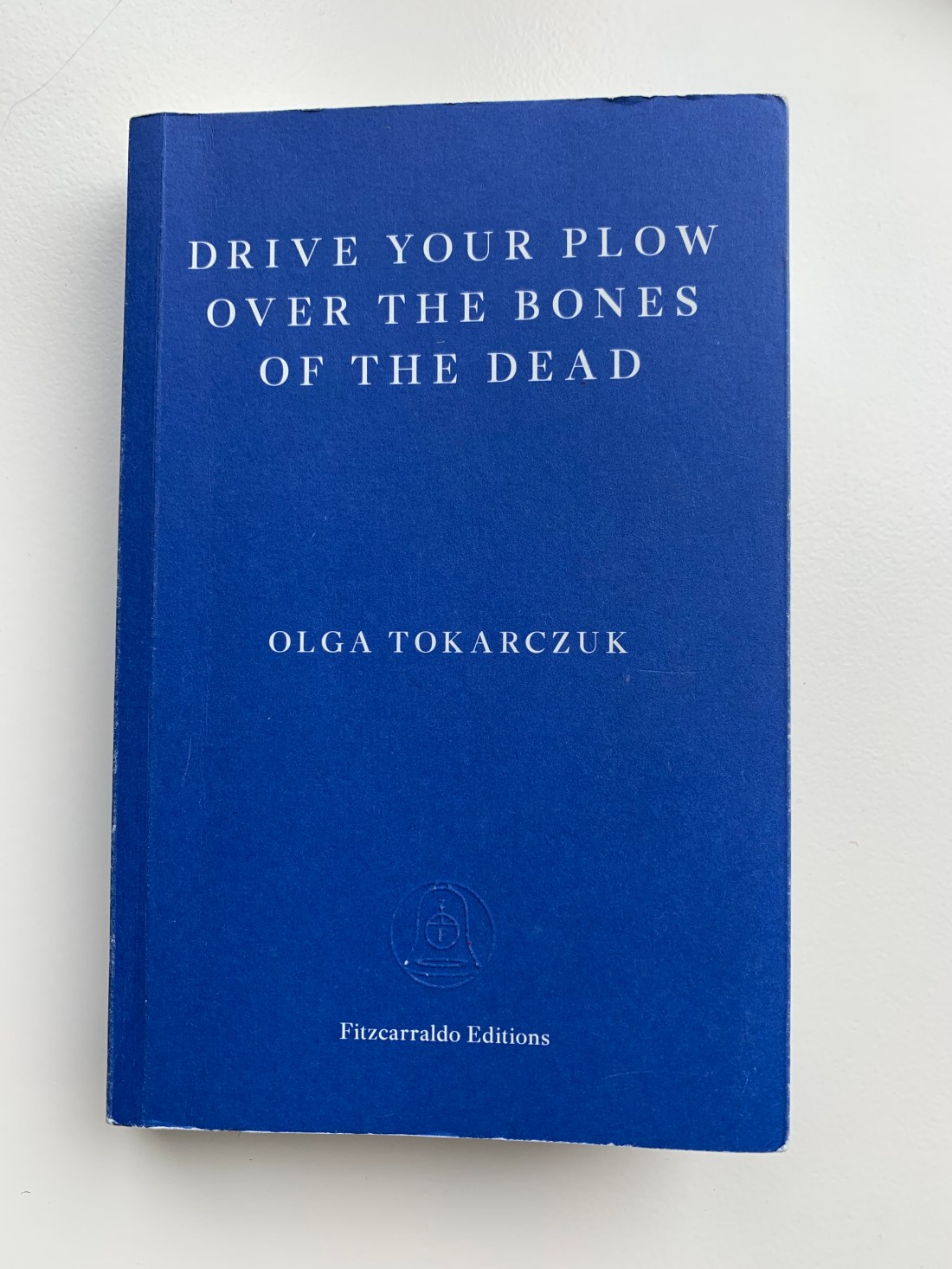
Set in a remote Polish village, Drive Your Plow is a dark comedy wherein the protagonist, Janina Duszejko, an eccentric woman in her sixties, tries to convince her fellow villagers of her Theories. Mrs Duszejko is a firm believer in astrology, the idea that most humans are insufferable and the sanctity of animals. When several men in the village are found dead under suspicious circumstances, Mrs Duszejko believes it is the result of animals taking revenge against humans – particularly hunters – for their cruelty. Some people in the village consider her mad, others see her as an old busybody to be ignored or ridiculed for her beliefs and yet there is a very small group who look past her eccentricities to see her intelligence and keen wit and consider her a friend. This is not a murder mystery in the conventional sense, although solving the murders of the three dead men is central to the plot.
Tokarczuk is a literary superstar in her native Poland. This is the first novel I have read by her. She covers a lot of ground in this book, examining everything from perceptions of madness to animal rights to religious hypocrisy. The story was very original compared to other novels that I have read in that it was part thriller, part dark comedy and part political and social commentary. At times, I found the text to be dense and had to reread passages on more than one occasion. As sometimes is the case with works in translation, I’m not sure if it is how the novel was originally written, or if it is a function of translating Polish into English. Mrs Duszejko and her friend Dizzy deal with this issue themselves to some extent as they struggle to translate the poetry of William Blake (from whose work the book gets its title) from English into Polish. The nuance and challenge of expressing oneself clearly to another is repeatedly examined in the novel.
Despite the somewhat heavy subject matter, the novel is truly funny. Mrs Duszejko refuses to refer to most of the local villagers by their actual names and instead calls them by names she has given them – her neighbours, for example are Oddball and Big Foot. She has a forceful personality and refuses to be put aside by those who would laugh at her or scorn her. It is also in many ways a novel about friendship and holding on to what you value, despite the rules of society. While I did struggle through it at times, I was glad to have read it.
I’ll be putting up posts more frequently this month and next so I am skipping the monthly line-ups and giving myself the freedom to read whatever I feel like next but in case you are missing knowing what is up-coming, I will be posting about The Wonderling, Station Eleven, The Saturday Night Ghost Club, The Care and Feeding of Ravenously Hungry Girls and The Seven Husbands of Evelyn Hugo in the next week or so.
I’d love to hear what is on your summer reading list – let me know what you’ve been reading!
 Little Ms Word Smith