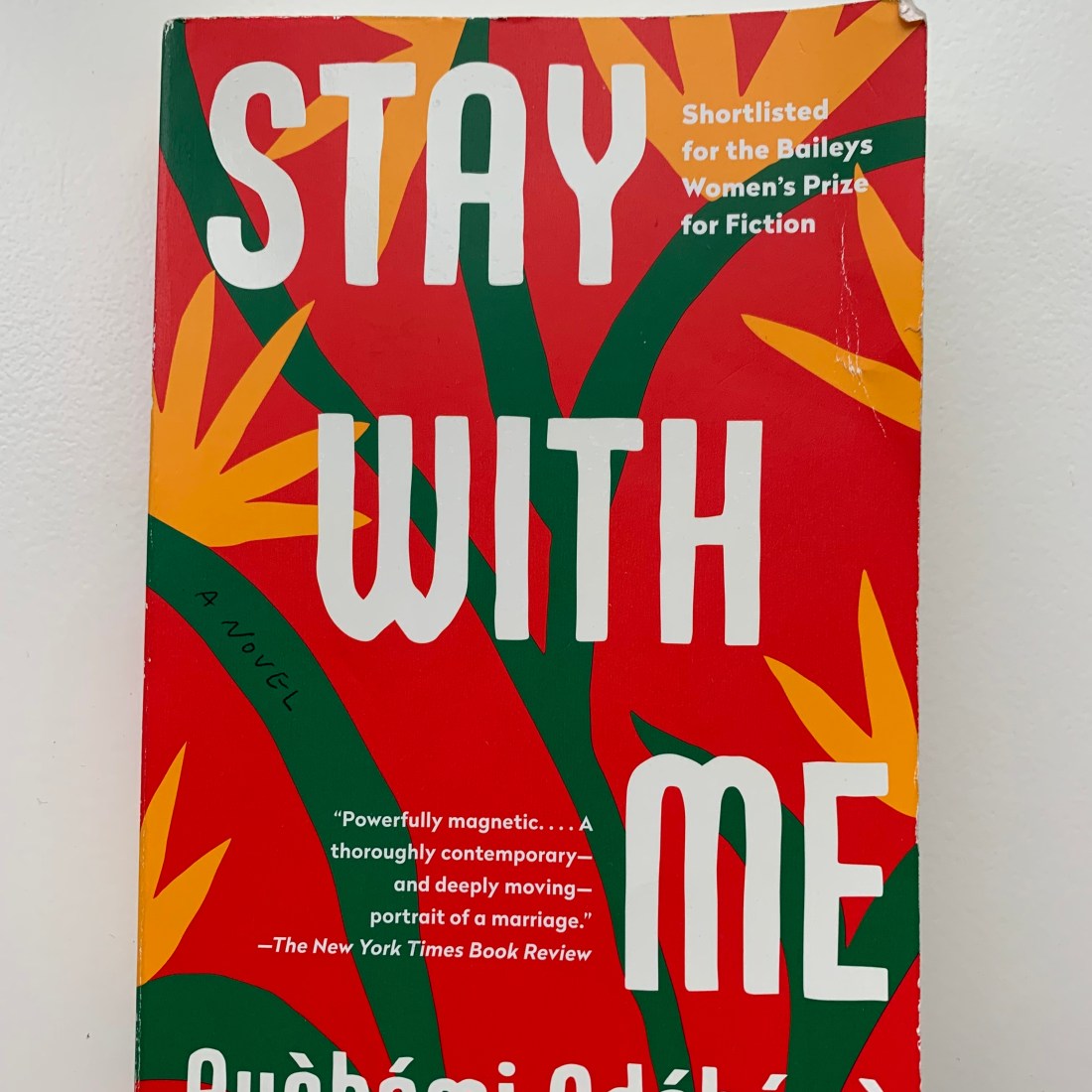
Stay With Me by Ayọ̀bámi Adébáyọ̀: A Review

“Besides, what would be left of love without truth stretched beyond its limits, without those better versions of ourselves that we present as the only ones that exist?”
― Ayọ̀bámi Adébáyọ̀, Stay With Me

Adébáyọ̀’s novel opens with a premise few North Americans could imagine: Yejide’s family has come to present her with her husband’s second wife – a woman and a marriage that Yejide knew nothing about until this woman showed up in her living room.

Yejide and her husband, Akin, married for love. They were professionally successful and happy in their relationship. But four years into their marriage, Yejide has not borne any children. Presuming her barren (despite medical tests to the contrary) Yejide and Akin’s families conspire to marry him to another woman. In Nigeria in the 1980s, where the novel is set, polygamy was no longer the norm but it was also not unheard of. It is amid this cultural context that Adébáyọ̀ begins a story that will go back and forth over the decades of Yejide and Akin’s relationship to examine the price that people will pay for love.

Before I started this novel, I assumed it would center around the introduction of a second wife and how that impacted Yejide and Akin’s marriage, but the book is about so much more than that. (If you are looking for a novelization of Big Love or Sister Wives, you have come to the wrong place.) The couple is committed to saving their marriage but the pressures put on them by their families and their society drive them to increasingly desperate acts that eventually warp and twist their relationship out of all recognition. Most affected is Yejide, who is blamed for the couple’s barrenness and manipulated by people she believed cared about her and her well-being. Neither spouse is blameless in the events that unfold and Adébáyọ̀ is careful to make their reasoning understandable, even as they make choices that are difficult to defend. It’s an emotionally powerful novel that could be compared to An American Marriage in the sense that the corruption of marriage in both books is used as a vehicle to critique society’s prejudices.

Ultimately, the Stay With Me asks difficult questions about how far we are willing to go for love. Often the characters make choices that they tell themselves out of love for another but are actually self-serving and at times cruel. It examines the role of the individual within family and asks how far an individual should be willing to reshape themselves for the sake of duty.  Adébáyọ̀ also takes aim at particular aspects of Nigerian culture – especially as they apply to women and expectations of motherhood.

If you like Chimamanda Ngoza Adiche or Tayari Jones, Adébáyọ̀’s writing has a similar quality and her subject matter evokes that same unblinking intimacy between the reader and the characters. 

Next week, we are off to Alabama! Until then, happy reading!


May Line Up

This month, the theme is Family Matters. I think family dynamics make for great reading and it’s interesting to read about situations that can be similar enough to your own to feel familiar yet different enough to make you feel like you’ve stepped into another life for a while. Regardless of how you define your family, it is often through these relationships that we learn to navigate our world and understand ourselves in relation to others. For May I have tried to choose works that explore notions of family in unexpected ways.

If you look at the list and it seems like I’ve added an extra weekend to May (I wish), I am trying to make up for lost time. There have been two weeks since I started this challenge that I didn’t make my reading goal, so I am going to add a book this month and next to get back on track (32 down … 20 more to go). Wish me luck.

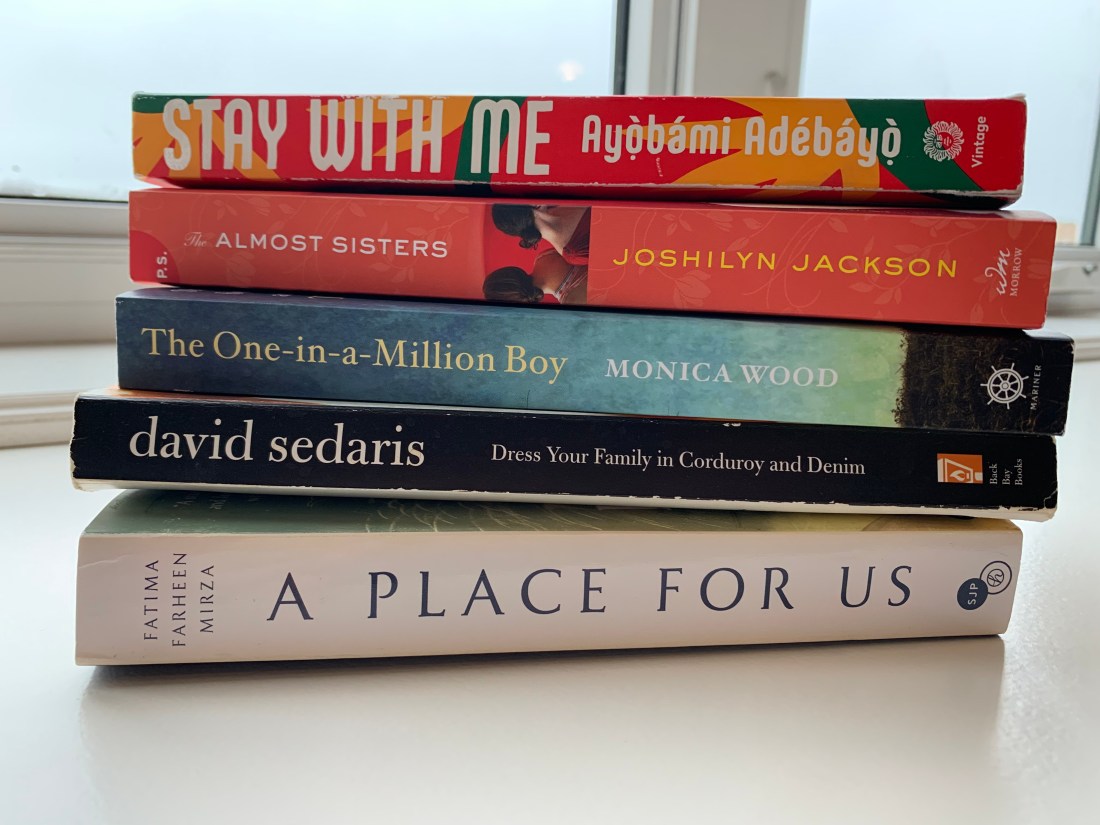
May 4, 2019: Stay With Me by Ayobami Adebayo

Since discovering Chimamanda Adiche, I feel like my eyes have been opened to all this great fiction coming out of Nigeria. Recommended by one of my colleagues, Adebayo is a new author to me. The novel is set in Ilesa, Nigeria and follows the relationship of a couple who seem like they should be happy and secure in their marriage. Despite being deeply in love, Yejide and Akin are unable to have a child. The increasing pressure put on the couple to have a family begins to test the strength of the marriage. When Akin is coerced into taking a second wife, Yejide knows that she must get pregnant at any cost in order to save her marriage. Before picking up this book I hadn’t realized that polygamy used to be common practice in Nigeria; although it doesn’t seem to have had the same religious connection that it has in other cultures and I will admit that I am very curious about how it plays out on the page.

May 11, 2019: The Almost Sisters by Joshilyn Jackson

Leia Birch Briggs is a comic book artist. She is also 38 and pregnant for the first time. The father is an anonymous Batman she met at a comi-con. Before Leia can tell her traditional Alabama family about her impending single-motherhood, her stepsister Rachel’s marriage falls apart. To add to the chaos, Leia’s beloved grandmother begins suffering from dementia and Leia must return home to help her put her affairs in order. Jackson’s writing sounds witty and has that wry sense of humour that I like with the added bonus of inter-generational family drama.

May 18, 2019: The One-in-a-Million Boy by Monica Wood

Ona is 104 years old. Every Saturday morning, an eleven year old boy comes to help her out. As he goes about his chores, Ona finds herself telling him the story of her life including secrets she’s held on to for years. One morning, the boy doesn’t show up and Ona thinks perhaps he wasn’t the person she believed him to be. But then the boy’s father arrives, determined to finish his son’s work, and his mother isn’t far behind. I have a feeling this one is going to be a bit of a heart breaker…

May 25, 2019: Dress Your Family in Corduroy and Denim by David Sedaris

Despite hearing his name probably dozens of times, I’ve never read anything by David Sedaris. He’s a regular contributor to NPR’s This American Life (again, heard great things but I’ve never listened myself). In this collection of essays, he recounts stories from his own family that show the absurdity in the everyday. Sedaris is one of the most renowned humour writers in America today so if you love to laugh, you might want to read along with this one.

May 31, 2019: A Place for Us by Fatima Farheen Mirza

A wedding is often a time for families to come together and it serves as the linchpin for Mirza’s debut novel. Hadia, the daughter of an Indian Muslim family, is getting married but as everyone gathers for the wedding, the focus is not on Hadia so much as her estranged younger brother, Amar, who is returning to the family fold for the first time in three years. The novel delves into the family’s tensions and secrets that drove a wedge between them as they struggle to try to find their way back to each other.

One of my favourite things about blogging about books is the conversations I get to have with other readers. I love hearing what others are reading. So now that you know what I’ll be reading for May, it’s your turn – what’s next in your TBR pile? Let me know if there is anything you think I should add to my summer reading list!

 

The Seven Deaths of Evelyn Hardcastle by Stuart Turton: A Review

“How lost do you have to be to let the devil lead you home?”
― Stuart Turton, The Seven Deaths of Evelyn Hardcastle

First of all I have to say, the whole time I was reading The Seven Deaths of Evelyn Hardcastle I was thinking, ‘Stuart Turton is so much smarter than me.’ In this novel, Turton surprised me again and again with the ways he was able to weave a very intricate and intelligent story line into compulsively readable fiction. I love books with interesting narrative structures and I’ve never really read a book like this before. I will try very hard not to reveal anything about the plot that you couldn’t glean from the dust jacket but this book is so page-turning that I just want to shove it into everyone’s hands and say: “read this next!” Turton is able to take genres that feel really familiar and combine them in ways that make his novel fresh and unique. There are big twists in the plot but they never feel gimmicky or unnecessary. There are a lot of lose threads in the story and when they are brought together at the end it just made me sit back and marvel at how Turton was able to do that.

So, no spoilers but how is this for an opening: you suddenly find yourself in the woods with no idea how you got there or who you are. The only thing you think you know for sure is that there are two other people in the forest – a woman named Anna and someone who is trying to kill her. You are terrified and lost. And then the murderer gives you the means to find your way out of the woods and back to the manor house where you are staying. That night, the daughter of the house, Evelyn Hardcastle, will be killed during a lavish party. You have to figure out who her killer is. And you will wake up every day and live the events leading up to Evelyn’s murder over and over until you know who did it.

What made The Seven Deaths of Evelyn Hardcastle so interesting is that Turton moves it beyond a genre-bending murder mystery. As the main character, Aiden, is forced to live the same day again and again, the novel really makes the reader start to question the forces that shape our lives and actions: how much is down to our nature? Can we change or are we following prescribed paths laid out by fate? How far can we trust other people and to what extent should we rely only on ourselves?

I love when a novel can manage to feel suspenseful and smart all at once. Seven Deaths is certainly one I would recommend, especially if like me, you love mysteries and old manor houses and books that take you by surprise. Until next week, happy reading everybody!

Homegoing by Yaa Gyasi: A Review

“This is the problem of history. We cannot know that which we were not there to see and hear and experience for ourselves. We must rely upon the words of others.”  -Yaa Gyasi, Homegoing

Homegoing is a novel that reads like a series of vignettes. It spans eight generations, beginning in Ghana in the late 1700s with the stories of Effia and Esi – two sisters who don’t even know the other exists. Effia is forced to marry a British officer stationed at the notorious Cape Coast Castle, where people were imprisoned before being sold on into the slave markets of the Americas. Esi is captured in a raid on her village and sold as a slave, eventually ending up on a plantation in America. The novel alternates between tracing the experiences of Effia and Esi’s descendents – one family in Ghana and the other in America. Each chapter sheds light on a moment in time in a single character’s life, although sometimes there is intersection between the stories of parents and children. Although it is a relatively short novel, it has the feeling of a sweeping epic because Gyasi covers so much ground in terms of both Ghanan and African American experiences from the height of the slave trade until the present day.

What struck me the most in reading Homegoing was how Gyasi was exploring choice and consequences through her characters. Although each character is only part of the novel for a brief time, their choices often impact their children and their children’s children. Gyasi examines the role of choice – or lack of choice – in shaping her character’s lives that moves beyond family relationships to much broader issues, like the decision of Fante leaders to traffic slaves for the British, and the impact of the slave trade on those sent to the Americas but also on those who remained in west Africa. In many ways, it is a novel about power and how people are forced to conform to the expectations of those in power or face the consequences of their choices. Another major theme in the novel is the search for identity within both families and larger cultures and the desire to belong. Effia is forced from her family, where she was always treated differently, and into a marriage with a man she didn’t choose; her son, Quey does not belong in London, his father’s home, but neither does he truly belong in his mother’s Ghanan village. Being “other” in the worlds Gyasi contructs is dangerous – but conforming often comes at too high a cost.

While Gyasi ends the novel with a sense of hope for reconcilation despite the painful history the families have endured, much of the writing is haunting in its descriptions of the inhumanity that marginalized people face. Whether it was because of race, gender, sexual orientation or class, the weight of being disempowered is felt throughout the novel. Gyasi doesn’t pull back from the historical realities her characters face and I think she is playing to some degree with our expectations as readers – each chapter opens and closes on a single character and we keep waiting for a happy ending that doesn’t come. As I read, I kept waiting for it to “work out” for one of the characters and then I realized:  there weren’t going to be happy endings. And that was the point.

I have heard some people say that Homegoing is the best book they have read in recent years and while I wouldn’t say that’s true for me, it’s worth picking up. I like to “sit” with my characters for a while so the format of the novel was challenging because just as I felt I was getting to know a character, we were on to the next one. That being said, I know other people really liked that about the book’s style.

After what feels like weeks of pretty serious novels, the next one on my list, My Sister the Serial Killer should be a dose of something completely different. Drop me a line and let me know what you’re reading lately! Until next time, happy reading!


Where the Crawdads Sing by Delia Owens: A Review

“The marsh did not confine them but defined them and, like any sacred ground, kept their secrets deep.” – Delia Owens, Where the Crawdads Sing

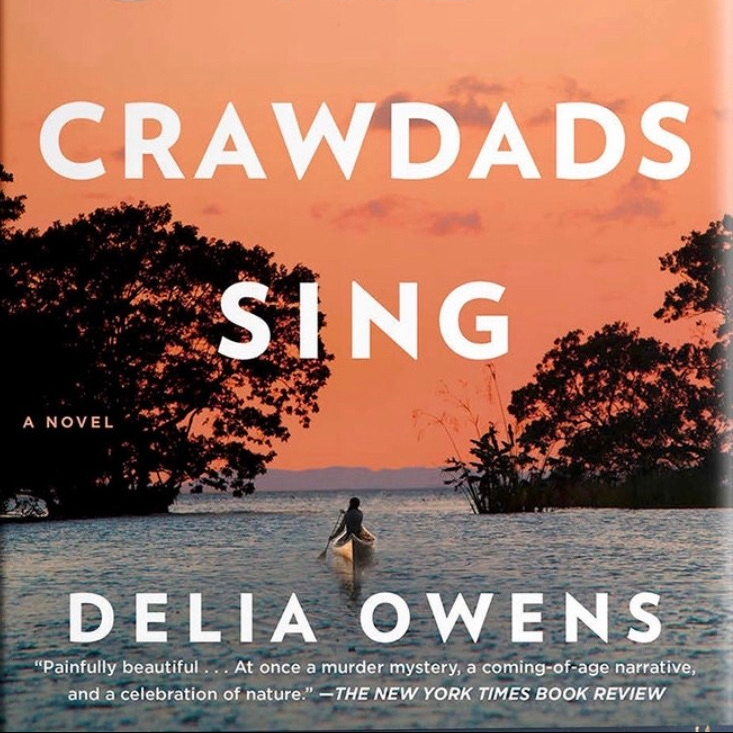
Sorry for the stock photo on this post, folks, but I already lent my copy of Where the Crawdads Sing away before I remembered to snap a picture for the blog. I guess it speaks to how good the novel is that I was handing it over to a friend before I even got my review done. The story opens with the discovery of the body of Chase Andrews, a local hero – handsome, star of his football team back in high school, heir to a properous family business – his death becomes the source of speculation and gossip. The circumstances of Chase’s death don’t add up, and quickly the sheriff starts to suspect foul play. The town’s eyes turn to Kya Clark, known by residents as the ‘Marsh Girl’. The narrative moves back and forth between the on-going police investigation into Chase’s death and Kya’s experiences growing up alone in the marsh.

Most of  Where the Crawdads Sing is set in a coastal marsh in North Carolina in the 1960s where Kya makes her home. It is a story of isolation and loss, but also of redemption and hope. As a child, Kya is poor and ends up abandoned by her family. Having lost everyone she loves and terrified of ending up in foster care and taken from her beloved marsh, Kya fends for herself and shies away from the company of others. Living in her family’s shack on the edge of a lagoon, her experiences are largely coloured by loneliness and isolation as she struggles to survive. Her greatest desire is to connect to other people but her unconventional life and the prejudices of the town against the ‘marsh people’ make it seemingly impossible for her to develop relationships. Despite the adversity of her circumstances, in many ways Kya is able to triumph and seems on the verge of finally making a life for herself when Chase’s body was found.

While the framework of the novel seems to be a basic murder mystery in the beginning, this book is so much more. Owens writes poignently about the marsh that sustains Kya over the years and rather than just the setting, the marsh seems to permeate every aspect of the novel. I am not someone normally drawn to nature writing, but Owens’ depictions of the marsh are beautifully handled and evoke a deep sense of place and time. The novel centers around big themes like love, hope and betrayal without becoming sentimental or sacchrine. Owens grounds the reader so well in Kya’s world that you are pulling for her right from the beginning and the novel’s turns mean that the storyline continues to surprise.

I originally bought my copy of Where the Crawdads Sing months ago and then kind of relegated it to my To Read Pile because the blurb made it sound a bit trite. I am so glad that a recommendation encouraged me to bump it up on my reading list because I thouroughly enjoyed it. It’s a really interesting exploration of human nature in all its cruelty and kindness but mostly, I think it’s Owens love letter to the landscape in which the book is set. If you read Where the Crawdads Sing, let me know what you thought. Also, if you, like me, weren’t one hundred percent sure what a crawdad is, they’re crayfish (and they don’t really sing, but they do kind of make a clicking sound). Thanks, Google.


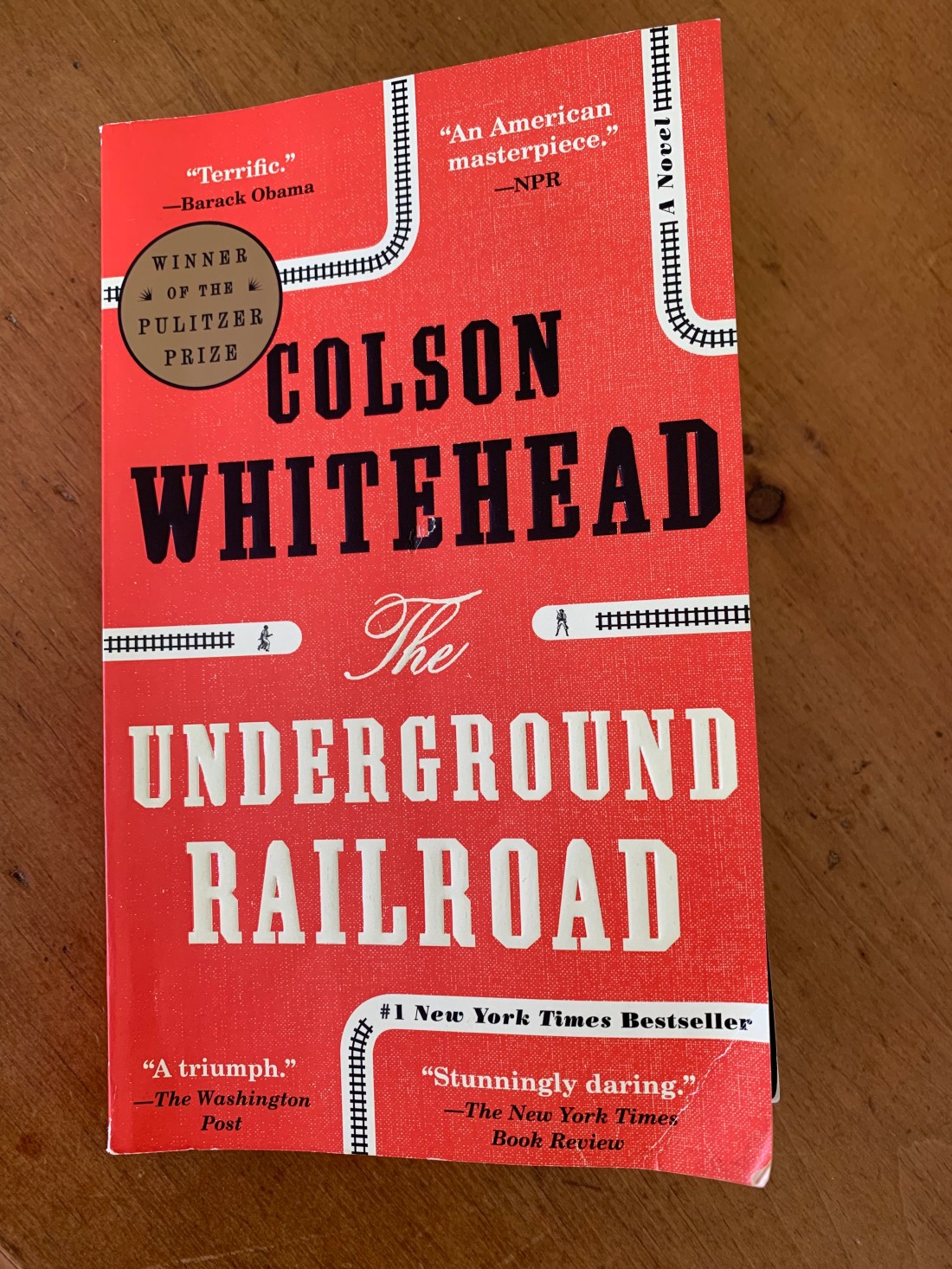
The Underground Railroad by Colson Whitehead: A Review

“If you want to see what this nation is all about, you have to ride the rails. Look outside as you speed through, and you’ll find the true face of America. It was a joke, then, from the start. There was only darkness outside the windows on her journeys, and only ever would be darkness.” – Colson Whitehead, The Underground Railroad

Most of us know the history of the underground railroad, but not as Colson Whitehead has reimagined it. The novel opens on a cotton plantation in Georgia. Cora is a third-generation slave; her grandmother is dead and her mother ran off years ago, meaning that Cora has grown up a ‘stray’ – a child with no family around her – and has had to learn to protect her own interests. Whitehead’s rendering of the plantation where Cora lives is bleak and heartbreaking. She is without prospects or hope until Caesar, another slave, talks her into running north with him.

What follows is an escape that leads through South Carolina, North Carolina and eventually into Tennessee and Indiana. There are many things that make the novel unique. Whitehead has chosen to make the underground railroad an actual set of tunnels and tracks running beneath the South where free blacks and sympathetic whites risk their lives to help enslaved people escape to freedom. This fantastic element in the novel means that the reader’s focus is more on the individual states where Cora surfaces, rather than on the journeys between states. In Colson Whitehead’s America, each state is unique in trying to “deal” with its black population – South Carolina invests in what it calls “negro uplift” to try to integrate black Americans into white society; North Carolina introduces race laws to drive black people from the state and replace them with cheap white labor from Europe. In Indiana, black people have gained a degree of freedom and prosperity but their security is always threatened by the shadow of racism. While the railroad that ferries Cora away from the plantation is the stuff of imagination, many of the other seemingly fantastical elements Whitehead introduces are not: there were attempts by health agencies in the US to sterilize members of the black community (and others) in order to reduce the numbers of black children being born; black men were unknowingly a part of studies on the impact of syphilis but led to believe they were receiving free health care from the US government. Black people were regularly lynched by mobs who went largely unpunished for their murders. Whitehead meddles with history in terms of locations and time frames so that each state Cora flees to represents an amalgam of ways in which white America tried to use, manipulate and sometimes terrorize the black population.

Given its heavy subject matter, it may be surprising to learn how readable this novel is. It is fast-paced and the characters are sympathetic and their sacrifices are many. Whitehead reveals how black and white Americans came together in unexpected ways to reinforce or fight against the systems of oppression that America was built on. While it covers much of the history dealt with in other novels, like Lawrence Hill’s Book of Negroes, Whitehead’s feels like a commentary on the racial undercurrents of contemporary American society. The book poses compelling questions about the country’s past and its present; according to one of Whitehead’s characters, America is a delusion but, “sometimes a useful delusion is better than a useless truth.” Despite the suffering and injustice the novel reveals, there is always hope. The number of people who help Cora along her journey at significant risk to themselves reinforces that the system can be beaten, and may someday finally be broken.

If fantasy isn’t your genre, I wouldn’t let it deter you from The Underground Railroad. It reads far more like historical fiction and the railroad itself is a negligible part of the plot, despite its significance as a metaphor. Cora is a character to root for and Whitehead’s writing is powerful and page-turning. If you read this novel, I’d love to hear what you think. Until next time, happy reading!


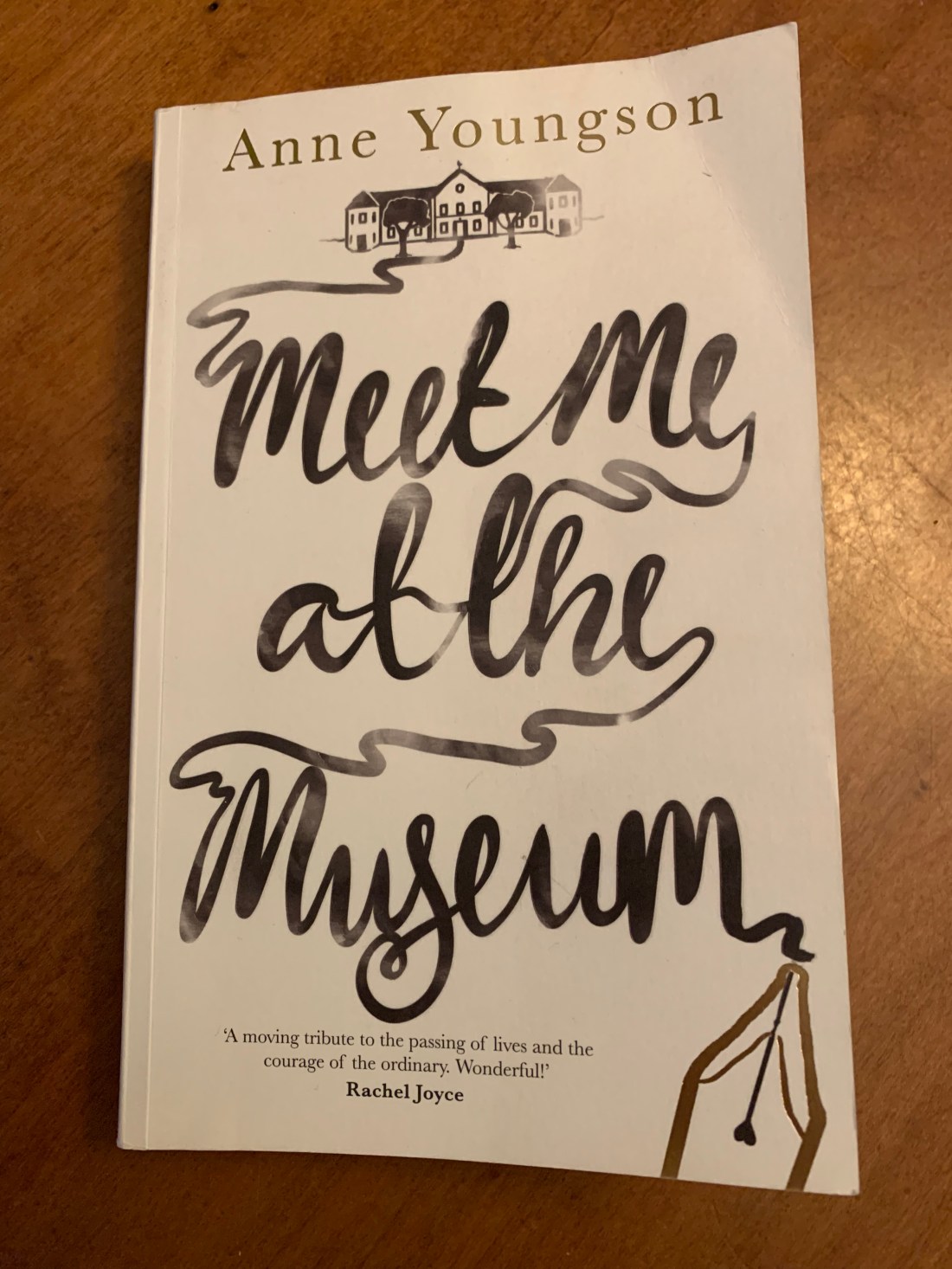
Meet Me at the Museum by Anne Youngson: A Review

“It is so long since the sacrifice was made, I was so young at the time, it took so many years for me to realize I had made it, that I can no longer say what, exactly, it was that I sacrificed; what it was that would have given me the satisfaction Edward feels every day. Perhaps it was the trip to Denmark—that could have been enough. But the blank space in my life feels too great to be overwritten by so slight an act.” – Anne Youngson, Meet Me at the Museum

Sometimes, I just like a book about ordinary lives. There is something about connecting to characters’ experiences that could be those of relatives or neighbours that I find oddly soothing.  Meet Me at the Museum is told through an exchange of letters between Tina, a farmer’s wife in East Anglia, and Anders, a Danish museum curator. When Tina’s best friend dies of breast cancer, she feels compelled to send a letter of regret to a Danish professor they wrote to as girls. The professor’s specialty was the Tollund Man – an Iron Age man found almost perfectly preserved in Danish peat – which fascinated Tina and Bella from their youth. They had always planned to go and see Tollund Man but life got in the way, then Bella died and Tina is left filled with regret and loss. The professor, of course, is long dead when Tina writes to him and so her letter is answered by Anders, who also seeks to answer some of the questions she posed. Anders too, is suffering a loss and as the letters go back and forth between England and Denmark, the pair are able to express more about their feelings and their views on life than either ever would with their friends or families.

The plot of this novel is deceivingly simple and the characters are forthright with each other in a way that means there is no guile or intrigue to the story. Both characters are older and as they put it, have more of their lives behind than in front of them.  What makes Youngson’s book so relatable is that the characters are searching for the meaning in their own lives. Neither is famous, nor rich, nor powerful. In their youth, both made choices that set their lives on trajectories they didn’t imagine at the time. It is a slow read in the sense that there is almost a meditative quality to it – I think you are supposed to stop and turn the questions over in your mind along with the characters. There is much in the novel that you could call quaint or charming, but not in a way that is clichéd. Youngson adds in these lovely elements – like scraps of Seamus Heaney poems, a story told by a mother to her daughter and an extended metaphor of picking raspberries – that add layers of depth and keep the story from seeming trite. Tina and Anders both come across as real people who hold sometimes surprising – and sometimes clashing – opinions. Toward the end of the novel when Tina faces a personal crisis that causes her to stop writing, the reader cannot help but think that it is only Anders – someone she has never met – who can help her navigate the situation.

The novel includes an interesting (but not overbearing) dose of Iron Age history as the Tollund Man is Tina and Anders’ touchstone. Tollund Man’s story is surprisingly moving. The museum where Anders works actually exists and if you are curious (like I was) you can visit the Museum Silkeborg to find out more about how Tollund Man died … so I guess I did meet them at the museum, at least virtually.

If you are looking for a novel where not very much happens with a heartwarming story, Meet Me at the Museum might be your next read.

Until next time, happy reading!


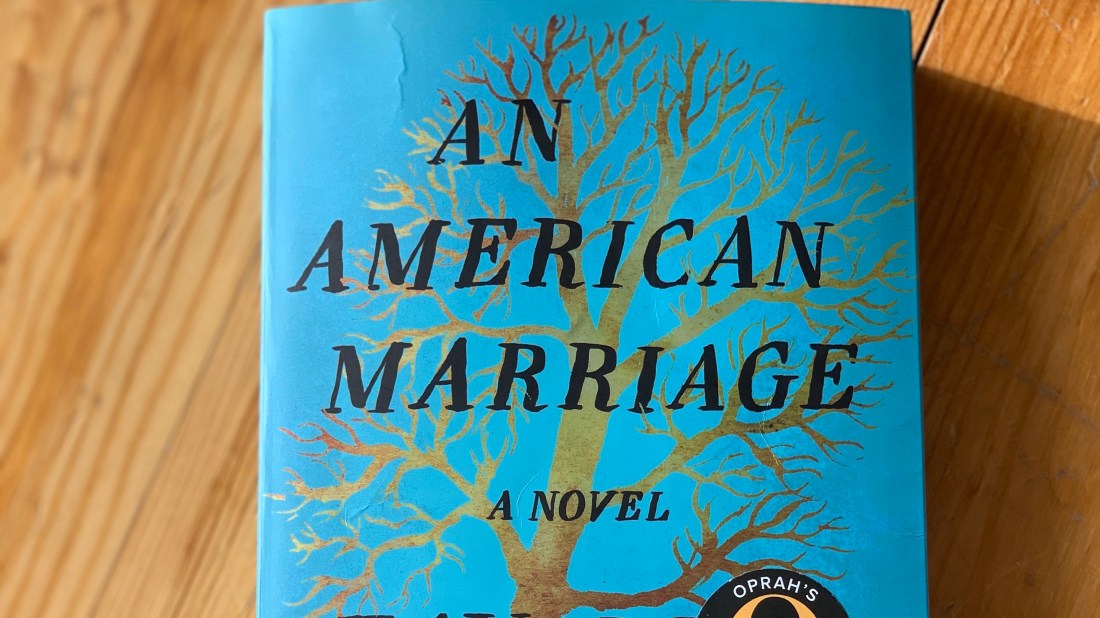
An American Marriage by Tayari Jones: A Review

“Someone always pays. Bullet don’t have nobody’s name on it, that’s what people say. I think the same is true for vengeance. Maybe even for love. It’s out there, random and deadly, like a tornado.” – Tayari Jones, An American Marriage

This is an incredible novel. It is told through the voices of Roy, Celestial and Andre. Celestial and Andre are childhood best friends who grew up in a black, middle class neighborhood in Atlanta. In college, Andre introduces Celestial to Roy, a young man from rural Louisiana with a lot of ambition. When the novel opens, Celestial and Roy are already newlyweds; there are indications of cracks forming in their marriage. Then Roy is convicted of a violent crime he didn’t commit and sent to prison for twelve years.

The story becomes a love triangle between Celestial and Roy, who try to hold their relationship together, and Celestial and Andre, the best friend she turns to when she can no longer fit her life dreams inside her role of being an inmate’s wife. Five years into his jail term, when Roy’s sentence is overturned and he is unexpectedly released, he heads back to Atlanta to see what, if anything, remains of his marriage. Celestial is left to choose between her husband and the man who has always been there for her. The love story is heartbreaking in its complexity. Through their voices, Jones’s depicts the strengths and flaws of her characters so that they read like real people. Jones’s use first-person narration for each character means that their desires and motivations are stripped raw – the reader understands the events unfolding from all three perspectives and this heightens the emotional tensions Jones creates. Jones has crafted the three narrator’s voices together so seamlessly in places that it is almost like you are able to understand the obstacles that confront the characters through a layering of perspective that resonates in terms of its complexity. It creates a strong sense of what each stands to lose or gain – but even the gains will come at the expense of each other and there is no easy path out.

Jones’s examination of the impact of race, class and gender roles on the black community in the American south runs like a harmony beneath the love story. So many of the decisions the characters make are informed by what is expected of someone who is black, or female, or wealthy. They are never free of those expectations and choosing to buck them comes with consequence. Celestial’s marriage becomes political even within her own family – her father sees her choice to begin a relationship with Andre as a betrayal not only of her marriage vows, but of her community. Roy is a wrongfully convicted black man in a state and a country that disproportionately convicts people of African descent. To her father, Celestial’s decision means turning her back on the injustices that black men face in America and on her role as a black woman where the expectation is to support her man despite the personal cost. The book is a powerful reminder about the vulnerability of people in a society where race and class can determine your fate and the system doesn’t protect you.

If I had to describe this novel in one word it would be powerful. At times the emotional suffering of the characters weighs heavy but Jones’s writing is so compelling and the characters she creates are so real that pacing never slows. I read this book really quickly. I think if you like Celeste Ng’s novels, then Jones is likely an author who will speak to you.

Have you read An American Marriage? Drop me a line and let me know. Until next week, happy reading!

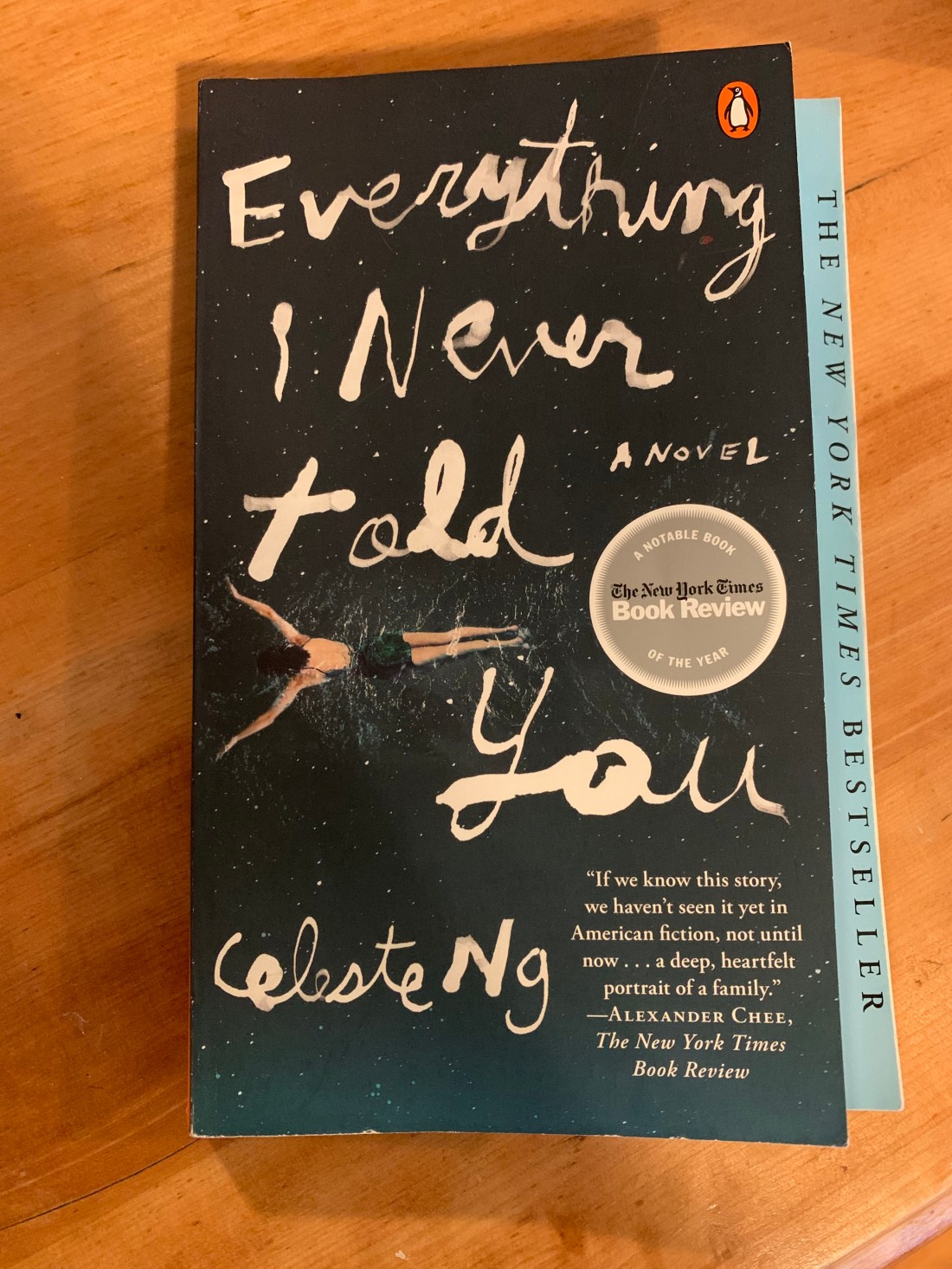
Everything I Never Told You by Celeste Ng: A Review

“Later – and for the rest of his life – James will struggle to piece words to this feeling, and he will never quite manage to say, even to himself, what he really means. At this moment he can think only one thing: how was it possible, he wonders, to have been so wrong.”  – Celeste Ng, Everything I Never Told You

In this novel, Celeste Ng explores what happens to a family when one of the children, Lydia, dies. The circumstances of Lydia’s death are unclear – she left the house in the middle of the night, and later she was found, drowned in the local lake. The family struggles to come to terms with her death – was it murder? An accident? Suicide? And in seeking the answers, they begin to tear apart their bonds as a family. The parents, Marilyn and James Lee, and Lydia’s two remaining siblings, Nath and Hannah, are left protecting their secrets – and each other’s – as they struggle with their grief.

Ng excels at writing work that is both page-turning and deeply sympathetic to her characters. The tension created by Lydia’s death and the resulting reactions of her family developed so much tension that my chest actually felt tight as I read this book. It was only near the end, when Ng reveals the truth about what actually happened to Lydia that I felt like I was able to breathe again. Her writing evokes the vulnerability, loss and pain of her characters so realistically that at times I found it hard to keep reading. Marilyn and James, both thwarted in their own ambitions through circumstance, seek to realize their dreams through their children. The ambitions the Lees have – especially for Nath and Lydia, the two oldest – come from a place of love and the desire to create a better life for them, but result in both children hiding their true selves in an attempt to match themselves to the visions their parents have of them. Only Hannah, the youngest and often ignored child, notices all the small things the others miss: a significant look, a forgotten item, the sound of the front door opening and closing in the middle of the night.

The novel is an exploration of the ways in which families can both save and surrender us. They are the keepers of the deepest secrets, creators of the sharpest cuts. The Lee family clearly loves each other and this makes the story even more painful as the loss of Lydia drives them apart. Ng mingles perception, memory and truth to examine how complicated it is to truly see another, even those we think we know the best.

I have to say between this book and Little Fires Everywhere, any new novels by Celeste Ng will likely go straight to the top of my TRP. Have you read Everything I Never Told You? Drop me a line and let me know what you think. Until next time, happy reading!

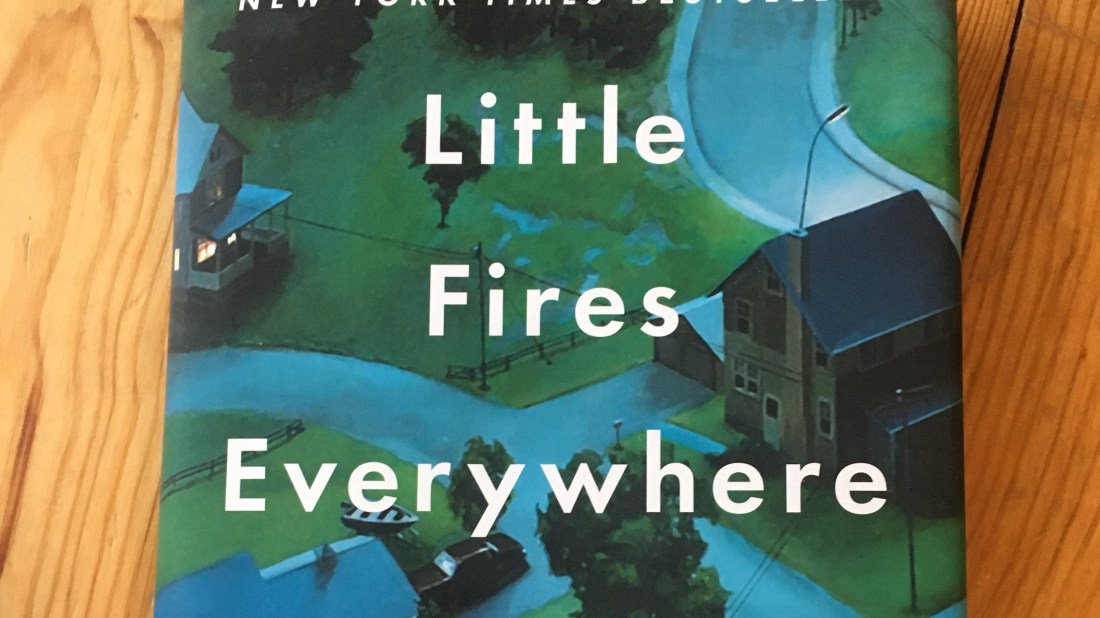
Little Fires Everywhere by Celeste Ng: A Review

“One had followed the rules, and one had not. But the problem with rules… was that they implied a right way and a wrong way to do things. When, in fact, most of the time they were simply ways, none of them quite wrong or quite right, and nothing to tell you for sure what side of the line you stood on.” – Celeste Ng, Little Fires Everywhere

I really, really liked this book. Set in the community of Shaker Heights, Little Fires Everywhere follows the story of two families: the Richardsons – a wealthy family with four teenaged children and their tenant, Mia Warren and her daughter, Pearl. Shaker Heights is a planned community where everything from the layout of the streets to the colours of the houses is carefully designed. The families of Shaker are rich, their children go on to prestigious universities, they give to the right charities, they help those in need. They follow the rules. They do what is right. Nobody embodies Shaker more than Elena Richardson, who was raised in the community and returned there to raise her own family. When Mia moves to Shaker, Elena sees the artist and her shy daughter as an opportunity to help someone deserving. Very quickly the two families become entwined via the children; Pearl becomes a fixture in the Richardson home while Izzy, Elena’s challenging youngest child, comes to idolize Mia. When a white couple in Shaker attempts to adopt a Chinese-American baby who was abandoned by her mother, a custody battle ensues that divides the community, and puts Elena and Mia on opposite sides.

One of the things I most enjoyed about this book was how unexpected so much of it was.  As the novel progresses, secrets are revealed that threaten to pull both families apart. The narrative moves between Elena, Mia and each of the five children. Ng’s writing is like a slow burn. I found myself drawn in almost without noticing, and then I couldn’t stop reading. Ng reveals the complexities of family, especially the relationships between mothers and their children. She also examines what it means to follow the rules, and what it means to break them. Both Elena and Mia are strong characters with faith that their actions are the right ones and this sets them on a path that will eventually result in heartbreak for both of them. I think the reason the novel works so well is because Ng is careful not to create heroes or villains. Each character’s choices and feeling are understandable given their circumstances and this makes the events that unfold – some of them shocking – feel inevitable. Ng’s writing creates an immersive world in the suburbs of Cleveland that feels both familiar and alien as she pushes the readers’ boundaries about who is right and who is wrong in the conflicts she creates.

If you are looking for a book to read in the new year, you should pick up Little Fires Everywhere. I would really love to hear what you think about it and if you loved it as much as I did! Until next time, happy reading!