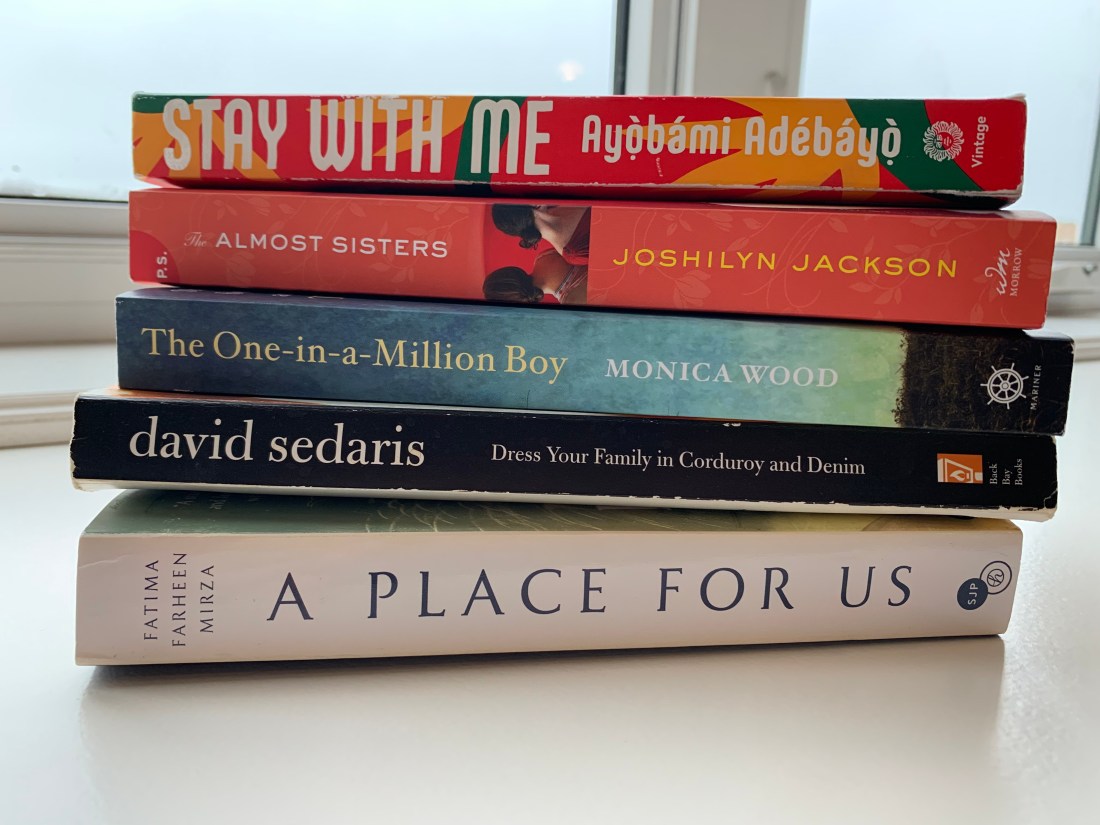
May Line Up

This month, the theme is Family Matters. I think family dynamics make for great reading and it’s interesting to read about situations that can be similar enough to your own to feel familiar yet different enough to make you feel like you’ve stepped into another life for a while. Regardless of how you define your family, it is often through these relationships that we learn to navigate our world and understand ourselves in relation to others. For May I have tried to choose works that explore notions of family in unexpected ways.

If you look at the list and it seems like I’ve added an extra weekend to May (I wish), I am trying to make up for lost time. There have been two weeks since I started this challenge that I didn’t make my reading goal, so I am going to add a book this month and next to get back on track (32 down … 20 more to go). Wish me luck.

May 4, 2019: Stay With Me by Ayobami Adebayo

Since discovering Chimamanda Adiche, I feel like my eyes have been opened to all this great fiction coming out of Nigeria. Recommended by one of my colleagues, Adebayo is a new author to me. The novel is set in Ilesa, Nigeria and follows the relationship of a couple who seem like they should be happy and secure in their marriage. Despite being deeply in love, Yejide and Akin are unable to have a child. The increasing pressure put on the couple to have a family begins to test the strength of the marriage. When Akin is coerced into taking a second wife, Yejide knows that she must get pregnant at any cost in order to save her marriage. Before picking up this book I hadn’t realized that polygamy used to be common practice in Nigeria; although it doesn’t seem to have had the same religious connection that it has in other cultures and I will admit that I am very curious about how it plays out on the page.

May 11, 2019: The Almost Sisters by Joshilyn Jackson

Leia Birch Briggs is a comic book artist. She is also 38 and pregnant for the first time. The father is an anonymous Batman she met at a comi-con. Before Leia can tell her traditional Alabama family about her impending single-motherhood, her stepsister Rachel’s marriage falls apart. To add to the chaos, Leia’s beloved grandmother begins suffering from dementia and Leia must return home to help her put her affairs in order. Jackson’s writing sounds witty and has that wry sense of humour that I like with the added bonus of inter-generational family drama.

May 18, 2019: The One-in-a-Million Boy by Monica Wood

Ona is 104 years old. Every Saturday morning, an eleven year old boy comes to help her out. As he goes about his chores, Ona finds herself telling him the story of her life including secrets she’s held on to for years. One morning, the boy doesn’t show up and Ona thinks perhaps he wasn’t the person she believed him to be. But then the boy’s father arrives, determined to finish his son’s work, and his mother isn’t far behind. I have a feeling this one is going to be a bit of a heart breaker…

May 25, 2019: Dress Your Family in Corduroy and Denim by David Sedaris

Despite hearing his name probably dozens of times, I’ve never read anything by David Sedaris. He’s a regular contributor to NPR’s This American Life (again, heard great things but I’ve never listened myself). In this collection of essays, he recounts stories from his own family that show the absurdity in the everyday. Sedaris is one of the most renowned humour writers in America today so if you love to laugh, you might want to read along with this one.

May 31, 2019: A Place for Us by Fatima Farheen Mirza

A wedding is often a time for families to come together and it serves as the linchpin for Mirza’s debut novel. Hadia, the daughter of an Indian Muslim family, is getting married but as everyone gathers for the wedding, the focus is not on Hadia so much as her estranged younger brother, Amar, who is returning to the family fold for the first time in three years. The novel delves into the family’s tensions and secrets that drove a wedge between them as they struggle to try to find their way back to each other.

One of my favourite things about blogging about books is the conversations I get to have with other readers. I love hearing what others are reading. So now that you know what I’ll be reading for May, it’s your turn – what’s next in your TBR pile? Let me know if there is anything you think I should add to my summer reading list!

 

The Seven Deaths of Evelyn Hardcastle by Stuart Turton: A Review

“How lost do you have to be to let the devil lead you home?”
― Stuart Turton, The Seven Deaths of Evelyn Hardcastle

First of all I have to say, the whole time I was reading The Seven Deaths of Evelyn Hardcastle I was thinking, ‘Stuart Turton is so much smarter than me.’ In this novel, Turton surprised me again and again with the ways he was able to weave a very intricate and intelligent story line into compulsively readable fiction. I love books with interesting narrative structures and I’ve never really read a book like this before. I will try very hard not to reveal anything about the plot that you couldn’t glean from the dust jacket but this book is so page-turning that I just want to shove it into everyone’s hands and say: “read this next!” Turton is able to take genres that feel really familiar and combine them in ways that make his novel fresh and unique. There are big twists in the plot but they never feel gimmicky or unnecessary. There are a lot of lose threads in the story and when they are brought together at the end it just made me sit back and marvel at how Turton was able to do that.

So, no spoilers but how is this for an opening: you suddenly find yourself in the woods with no idea how you got there or who you are. The only thing you think you know for sure is that there are two other people in the forest – a woman named Anna and someone who is trying to kill her. You are terrified and lost. And then the murderer gives you the means to find your way out of the woods and back to the manor house where you are staying. That night, the daughter of the house, Evelyn Hardcastle, will be killed during a lavish party. You have to figure out who her killer is. And you will wake up every day and live the events leading up to Evelyn’s murder over and over until you know who did it.

What made The Seven Deaths of Evelyn Hardcastle so interesting is that Turton moves it beyond a genre-bending murder mystery. As the main character, Aiden, is forced to live the same day again and again, the novel really makes the reader start to question the forces that shape our lives and actions: how much is down to our nature? Can we change or are we following prescribed paths laid out by fate? How far can we trust other people and to what extent should we rely only on ourselves?

I love when a novel can manage to feel suspenseful and smart all at once. Seven Deaths is certainly one I would recommend, especially if like me, you love mysteries and old manor houses and books that take you by surprise. Until next week, happy reading everybody!

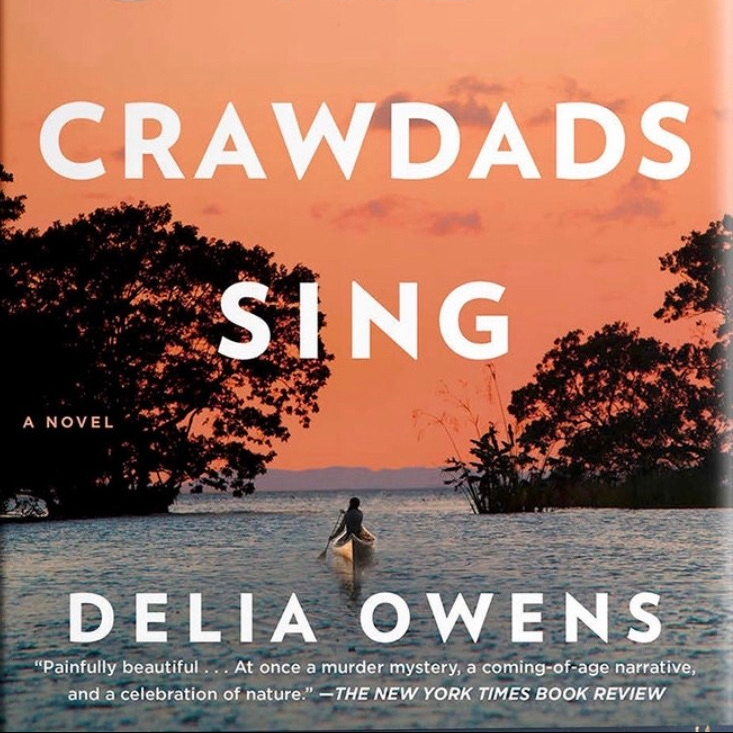
Where the Crawdads Sing by Delia Owens: A Review

“The marsh did not confine them but defined them and, like any sacred ground, kept their secrets deep.” – Delia Owens, Where the Crawdads Sing

Sorry for the stock photo on this post, folks, but I already lent my copy of Where the Crawdads Sing away before I remembered to snap a picture for the blog. I guess it speaks to how good the novel is that I was handing it over to a friend before I even got my review done. The story opens with the discovery of the body of Chase Andrews, a local hero – handsome, star of his football team back in high school, heir to a properous family business – his death becomes the source of speculation and gossip. The circumstances of Chase’s death don’t add up, and quickly the sheriff starts to suspect foul play. The town’s eyes turn to Kya Clark, known by residents as the ‘Marsh Girl’. The narrative moves back and forth between the on-going police investigation into Chase’s death and Kya’s experiences growing up alone in the marsh.

Most of  Where the Crawdads Sing is set in a coastal marsh in North Carolina in the 1960s where Kya makes her home. It is a story of isolation and loss, but also of redemption and hope. As a child, Kya is poor and ends up abandoned by her family. Having lost everyone she loves and terrified of ending up in foster care and taken from her beloved marsh, Kya fends for herself and shies away from the company of others. Living in her family’s shack on the edge of a lagoon, her experiences are largely coloured by loneliness and isolation as she struggles to survive. Her greatest desire is to connect to other people but her unconventional life and the prejudices of the town against the ‘marsh people’ make it seemingly impossible for her to develop relationships. Despite the adversity of her circumstances, in many ways Kya is able to triumph and seems on the verge of finally making a life for herself when Chase’s body was found.

While the framework of the novel seems to be a basic murder mystery in the beginning, this book is so much more. Owens writes poignently about the marsh that sustains Kya over the years and rather than just the setting, the marsh seems to permeate every aspect of the novel. I am not someone normally drawn to nature writing, but Owens’ depictions of the marsh are beautifully handled and evoke a deep sense of place and time. The novel centers around big themes like love, hope and betrayal without becoming sentimental or sacchrine. Owens grounds the reader so well in Kya’s world that you are pulling for her right from the beginning and the novel’s turns mean that the storyline continues to surprise.

I originally bought my copy of Where the Crawdads Sing months ago and then kind of relegated it to my To Read Pile because the blurb made it sound a bit trite. I am so glad that a recommendation encouraged me to bump it up on my reading list because I thouroughly enjoyed it. It’s a really interesting exploration of human nature in all its cruelty and kindness but mostly, I think it’s Owens love letter to the landscape in which the book is set. If you read Where the Crawdads Sing, let me know what you thought. Also, if you, like me, weren’t one hundred percent sure what a crawdad is, they’re crayfish (and they don’t really sing, but they do kind of make a clicking sound). Thanks, Google.


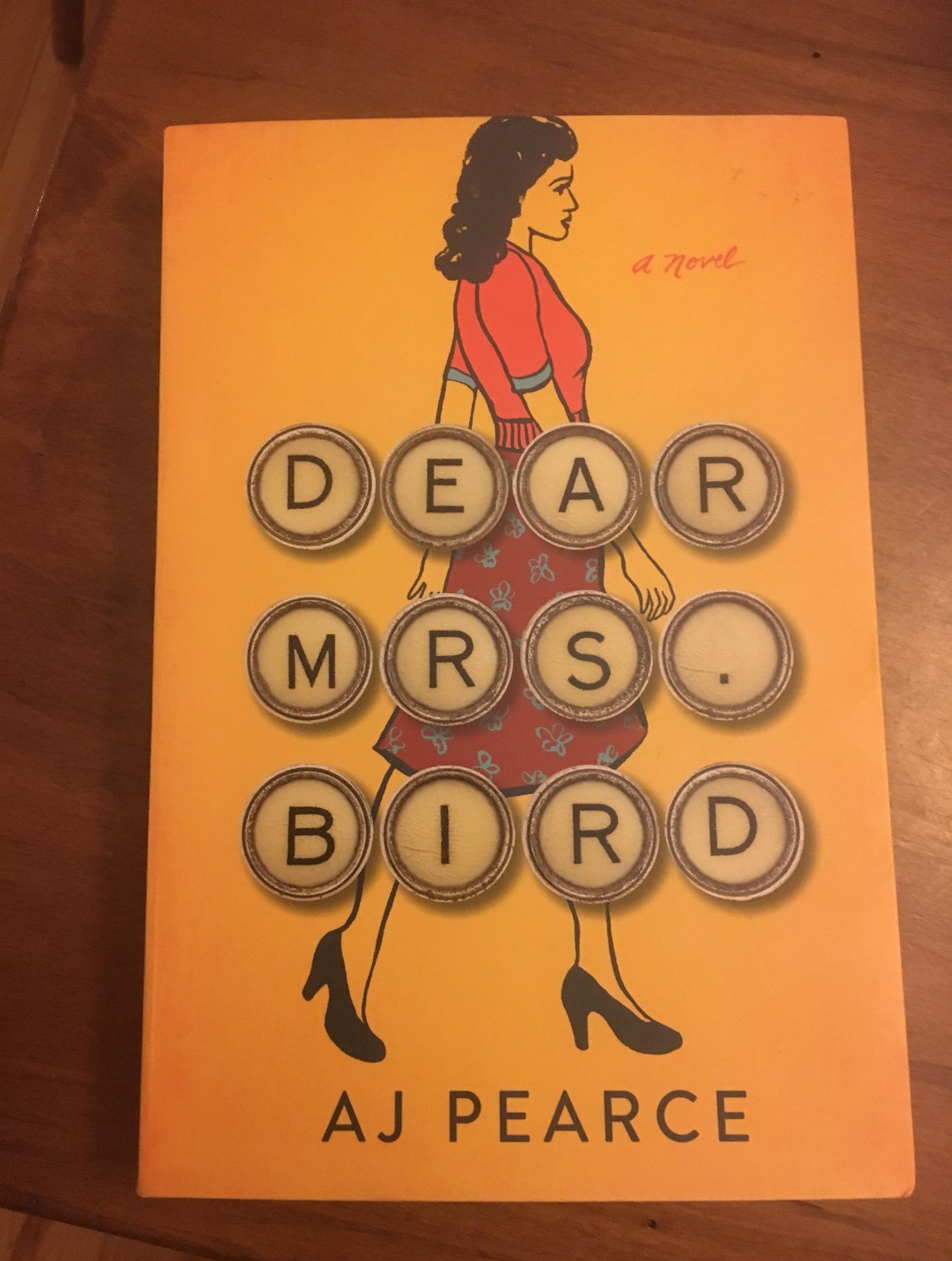
Dear Mrs. Bird by AJ Pearce: A Review

“I tried to take a deep breath and be British and brave, but it didn’t work, and instead, the tears began. Masses of them. Where did tears like that come from and how did they get there so fast? Were they always there, just waiting for something dreadful to happen? What a horrible job they had.” – AJ Pearce, Dear Mrs. Bird


This was a surprisingly touching novel to me. Dear Mrs. Bird‘s main character, Emmy, is living in London during the Blitz with her best friend Bunty, at a time when the German Luftwaffe bombed British cities regularly in an attempt to force Britain out of the war. With dreams of becoming a Lady War Correspondent, Emmy accidentally takes a job as a junior typist working for an advice column, “Henrietta Helps”, in Woman’s Friend magazine. On top of the initial embarrassment of realizing her new job is not going to have her reporting from the front lines of the war, it turns out “Henrietta” is Mrs. Bird, a woman who shouts a lot and has a long list of things that she refuses to respond to when readers write in requesting help (Affair, Amorous, Ardent, Bed, Bedroom, Bed jacket, Berlin … and it goes on). Emmy can’t stand the idea of these poor readers, many of whom are struggling with very difficult personal situations that are compounded by the war, being ignored completely by Mrs. Bird and so she begins to write back in secret, posing as Mrs. Bird. But this is only her day job; anxious to do her part in supporting the war effort, Emmy volunteers several nights a week in the Auxiliary Fire Service, dispatching fire fighters across London to deal with the fires set by the Luftwaffe’s bombs. She often gets only an hour or two of sleep between leaving the fire station and heading off to work again.

Emmy is a comedic heroine; often her big heart and a short-sighted desire to help get her into a lot of trouble but she never loses her desire to improve her own situation or help those around her in any way she can. I described this book to a friend as a 1940s Bridget Jones but with the emotional vibe of a Christmas movie (another way to say this is that I really liked it). Often it is Pearce’s funny elements that offset the tragedies of the war, like when Emmy is set up on a date with a soldier from a bomb disposal unit who constantly shouts because of the ringing in his ears. Other times, like through the letters Emmy receives at “Henrietta Helps”, characters’ fears and desperation come to the forefront, highlighting the incredibly difficult circumstances people faced on a daily basis. There were times reading this novel when I laughed out loud and other times when I had tears in my eyes.

One of the important things this novel does is to emphasize the roles of women on the British home front during the war, not just in terms of the work they did to support the war effort, but also in terms of the challenges they faced: falling out of love with husbands who had been gone for months, trying to decide whether to send children away or keep them with you and risking the bombings, having sweethearts leave you for someone they met overseas. Many of these women worked long hours in very uncertain circumstances and yet they were expected to keep their fears to themselves, the keep their chins up, a stiff upper lip and to smile, smile, smile. They were told that to do otherwise was unpatriotic and weak; that they needed to show Hitler that they could not be defeated.

Pearce’s inspiration for the novel began when she came across a copy of a women’s magazine from 1939. She was most struck by the Problem Page and she went on to read many letters from readers in wartime magazines during her research. The novel really is a tribute to the experiences of these women, told through Emmy and Bunty’s stories in a way that makes them relatable even though we are so far removed from wartime London. Pearce writes,

Many of the readers’ letters in Dear Mrs. Bird were inspired by the letters and advice, articles and features printed in those wartime magazines. I found them thought-provoking, moving, and inspirational, and my admiration for the women of that time never stops growing. Our mothers, grandmothers, great-grandmothers, and friends, some of whom I hope may even read and enjoy Emmy and Bunty’s story. It is a privilege to look into their world and remember what incredible women and girls they all were.

I would recommend Dear Mrs. Bird in a heartbeat. It is charming and touching and funny without glossing over the difficulties of the war. At its heart, it is really about friendship and finding the strength to push on, if not for yourself, then for those you love. If you read Dear Mrs. Bird, (and I know some of you plan to) I would love to know if you liked it as much as I did. Until next week, happy reading!