
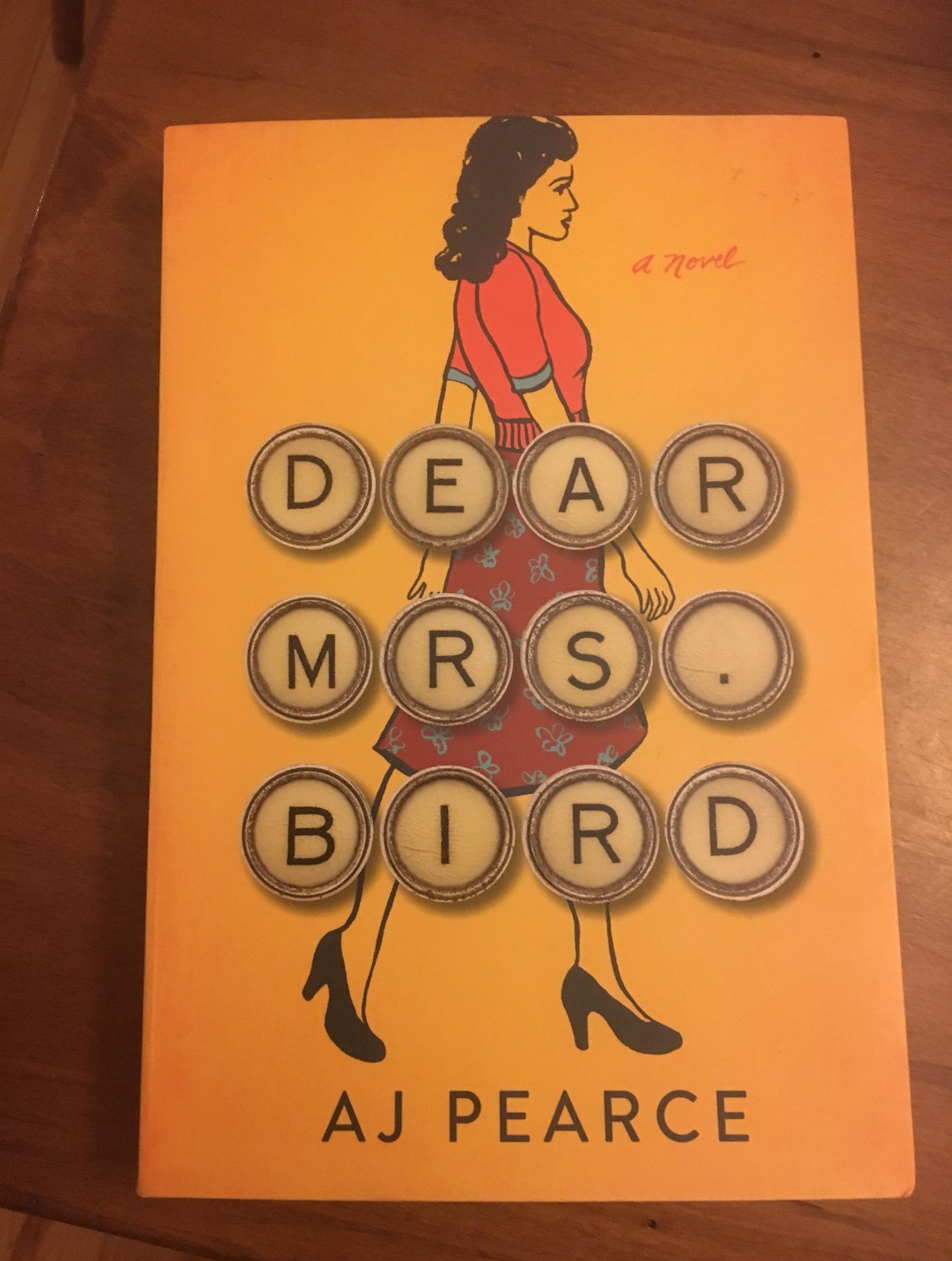
“I tried to take a deep breath and be British and brave, but it didn’t work, and instead, the tears began. Masses of them. Where did tears like that come from and how did they get there so fast? Were they always there, just waiting for something dreadful to happen? What a horrible job they had.” – AJ Pearce, Dear Mrs. Bird
This was a surprisingly touching novel to me. Dear Mrs. Bird‘s main character, Emmy, is living in London during the Blitz with her best friend Bunty, at a time when the German Luftwaffe bombed British cities regularly in an attempt to force Britain out of the war. With dreams of becoming a Lady War Correspondent, Emmy accidentally takes a job as a junior typist working for an advice column, “Henrietta Helps”, in Woman’s Friend magazine. On top of the initial embarrassment of realizing her new job is not going to have her reporting from the front lines of the war, it turns out “Henrietta” is Mrs. Bird, a woman who shouts a lot and has a long list of things that she refuses to respond to when readers write in requesting help (Affair, Amorous, Ardent, Bed, Bedroom, Bed jacket, Berlin … and it goes on). Emmy can’t stand the idea of these poor readers, many of whom are struggling with very difficult personal situations that are compounded by the war, being ignored completely by Mrs. Bird and so she begins to write back in secret, posing as Mrs. Bird. But this is only her day job; anxious to do her part in supporting the war effort, Emmy volunteers several nights a week in the Auxiliary Fire Service, dispatching fire fighters across London to deal with the fires set by the Luftwaffe’s bombs. She often gets only an hour or two of sleep between leaving the fire station and heading off to work again.
Emmy is a comedic heroine; often her big heart and a short-sighted desire to help get her into a lot of trouble but she never loses her desire to improve her own situation or help those around her in any way she can. I described this book to a friend as a 1940s Bridget Jones but with the emotional vibe of a Christmas movie (another way to say this is that I really liked it). Often it is Pearce’s funny elements that offset the tragedies of the war, like when Emmy is set up on a date with a soldier from a bomb disposal unit who constantly shouts because of the ringing in his ears. Other times, like through the letters Emmy receives at “Henrietta Helps”, characters’ fears and desperation come to the forefront, highlighting the incredibly difficult circumstances people faced on a daily basis. There were times reading this novel when I laughed out loud and other times when I had tears in my eyes.
One of the important things this novel does is to emphasize the roles of women on the British home front during the war, not just in terms of the work they did to support the war effort, but also in terms of the challenges they faced: falling out of love with husbands who had been gone for months, trying to decide whether to send children away or keep them with you and risking the bombings, having sweethearts leave you for someone they met overseas. Many of these women worked long hours in very uncertain circumstances and yet they were expected to keep their fears to themselves, the keep their chins up, a stiff upper lip and to smile, smile, smile. They were told that to do otherwise was unpatriotic and weak; that they needed to show Hitler that they could not be defeated.
Pearce’s inspiration for the novel began when she came across a copy of a women’s magazine from 1939. She was most struck by the Problem Page and she went on to read many letters from readers in wartime magazines during her research. The novel really is a tribute to the experiences of these women, told through Emmy and Bunty’s stories in a way that makes them relatable even though we are so far removed from wartime London. Pearce writes,
Many of the readers’ letters in Dear Mrs. Bird were inspired by the letters and advice, articles and features printed in those wartime magazines. I found them thought-provoking, moving, and inspirational, and my admiration for the women of that time never stops growing. Our mothers, grandmothers, great-grandmothers, and friends, some of whom I hope may even read and enjoy Emmy and Bunty’s story. It is a privilege to look into their world and remember what incredible women and girls they all were.
I would recommend Dear Mrs. Bird in a heartbeat. It is charming and touching and funny without glossing over the difficulties of the war. At its heart, it is really about friendship and finding the strength to push on, if not for yourself, then for those you love. If you read Dear Mrs. Bird, (and I know some of you plan to) I would love to know if you liked it as much as I did. Until next week, happy reading!
 Little Ms Word Smith