
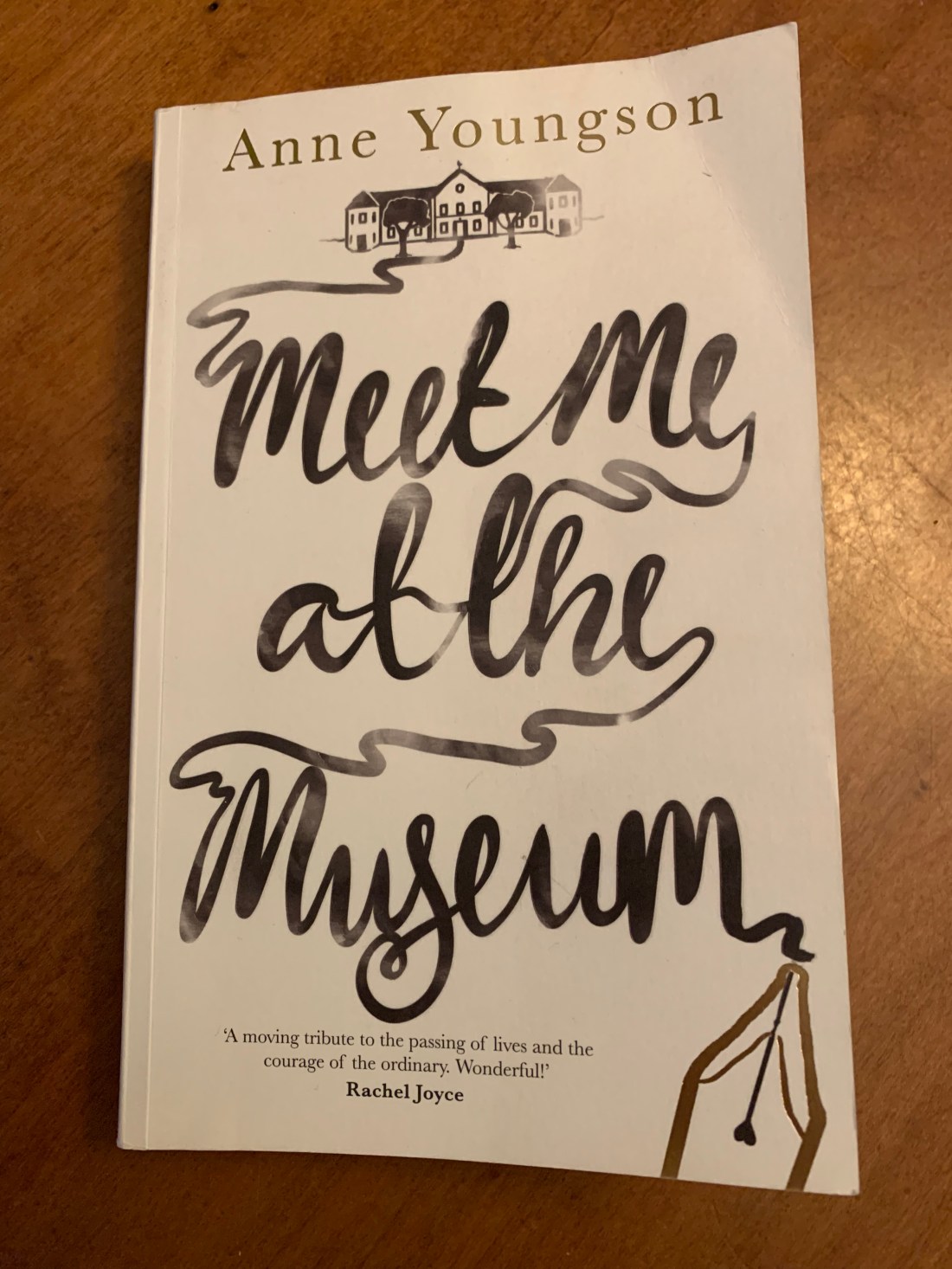
“It is so long since the sacrifice was made, I was so young at the time, it took so many years for me to realize I had made it, that I can no longer say what, exactly, it was that I sacrificed; what it was that would have given me the satisfaction Edward feels every day. Perhaps it was the trip to Denmark—that could have been enough. But the blank space in my life feels too great to be overwritten by so slight an act.” – Anne Youngson, Meet Me at the Museum
Sometimes, I just like a book about ordinary lives. There is something about connecting to characters’ experiences that could be those of relatives or neighbours that I find oddly soothing. Meet Me at the Museum is told through an exchange of letters between Tina, a farmer’s wife in East Anglia, and Anders, a Danish museum curator. When Tina’s best friend dies of breast cancer, she feels compelled to send a letter of regret to a Danish professor they wrote to as girls. The professor’s specialty was the Tollund Man – an Iron Age man found almost perfectly preserved in Danish peat – which fascinated Tina and Bella from their youth. They had always planned to go and see Tollund Man but life got in the way, then Bella died and Tina is left filled with regret and loss. The professor, of course, is long dead when Tina writes to him and so her letter is answered by Anders, who also seeks to answer some of the questions she posed. Anders too, is suffering a loss and as the letters go back and forth between England and Denmark, the pair are able to express more about their feelings and their views on life than either ever would with their friends or families.
The plot of this novel is deceivingly simple and the characters are forthright with each other in a way that means there is no guile or intrigue to the story. Both characters are older and as they put it, have more of their lives behind than in front of them. What makes Youngson’s book so relatable is that the characters are searching for the meaning in their own lives. Neither is famous, nor rich, nor powerful. In their youth, both made choices that set their lives on trajectories they didn’t imagine at the time. It is a slow read in the sense that there is almost a meditative quality to it – I think you are supposed to stop and turn the questions over in your mind along with the characters. There is much in the novel that you could call quaint or charming, but not in a way that is clichéd. Youngson adds in these lovely elements – like scraps of Seamus Heaney poems, a story told by a mother to her daughter and an extended metaphor of picking raspberries – that add layers of depth and keep the story from seeming trite. Tina and Anders both come across as real people who hold sometimes surprising – and sometimes clashing – opinions. Toward the end of the novel when Tina faces a personal crisis that causes her to stop writing, the reader cannot help but think that it is only Anders – someone she has never met – who can help her navigate the situation.
The novel includes an interesting (but not overbearing) dose of Iron Age history as the Tollund Man is Tina and Anders’ touchstone. Tollund Man’s story is surprisingly moving. The museum where Anders works actually exists and if you are curious (like I was) you can visit the Museum Silkeborg to find out more about how Tollund Man died … so I guess I did meet them at the museum, at least virtually.
If you are looking for a novel where not very much happens with a heartwarming story, Meet Me at the Museum might be your next read.
Until next time, happy reading!
 Little Ms Word Smith