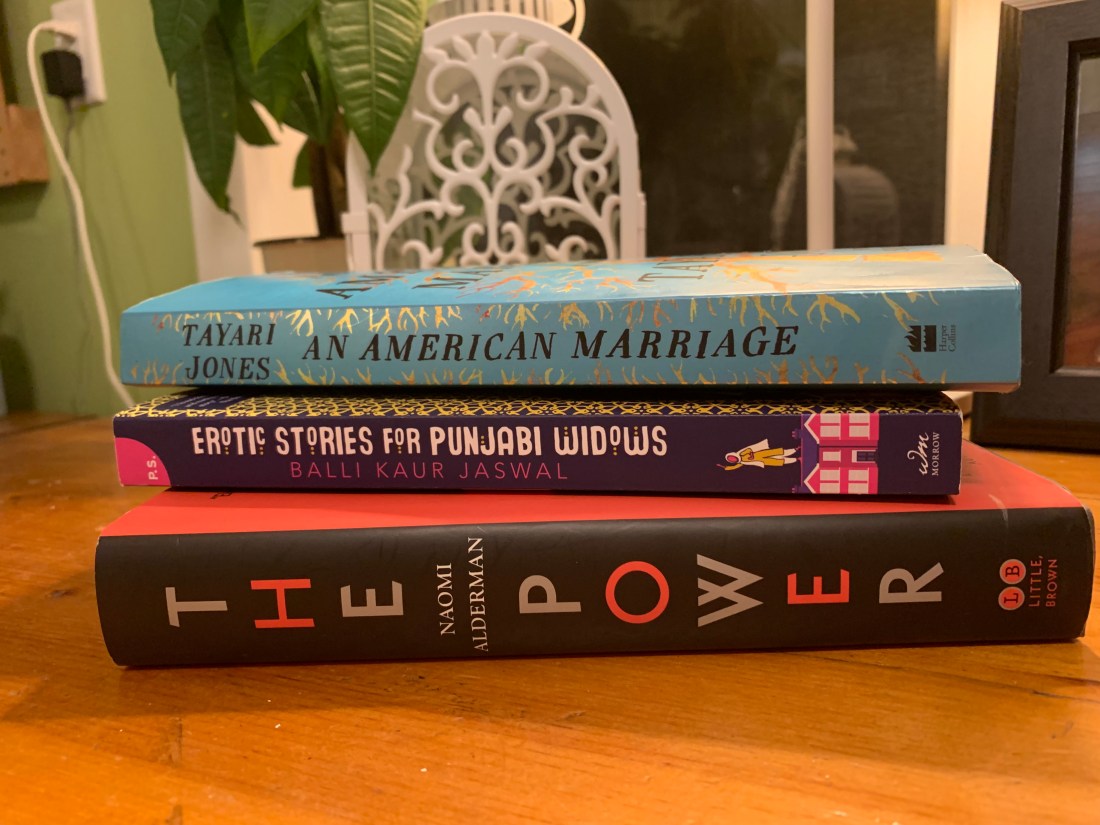
February Line Up

Since it’s February, the theme this month will be “love” in honor of Valentine’s Day but before you go breaking out the Harlequins, you should know that I am not exactly a roses and chocolates kind of gal so I tried to choose books that would avoid all the cliched bodice ripping and come at the theme in unique ways.

February 9, 2019: An American Marriage by Tayari Jones

This book appeared on just about every “best of 2018” list I came across. Set in contemporary Atlanta, it is the story of newlyweds Celestial and Roy. While their marriage is troubled from the beginning, they seem passionately in love. Then Roy is convicted of a crime he didn’t commit and sent to prison. After five years, Roy’s sentence is overturned and he is free but when he returns, it is uncertain whether Celestial still considers herself his wife. Her career as an artist has taken off and she is in a relationship with her childhood best friend, Andre. When Roy arrives on her doorstep a free man, Celestial is left to choose between continuing to build a life with Andre, or trying to save her marriage.

February 16, 2019: Erotic Stories for Punjabi Widows by Balli Kaur Jaswal

This novel is about a group of women who join a writing class in London’s Punjabi community. The main character, Nikki, realizes that her students, mostly Sikh widows, have a wealth of memories and fantasies to share and their little community begins to express their creativity and secrets within the confines of the class. But a group called the Brothers threatens to expose their scandalous stories in reaction to what they see as the failings of the women’s morality. The book speaks to the power of women’s communities and stories while remaining heart-warming and funny.

February 23, 2019: The Power by Naomi Alderman

This is another book that made a lot of “best of” lists when it was published in 2016. The Power is a little nod to those of you who might be looking for something a little anti-Valentine’s to read this February. It was recommended to me by a couple of friends who said they couldn’t get through it fast enough. Set in a world that seems like ours, a new force emerges  – women and teenage girls have suddenly developed incredible strength and they can cause pain or even death with only the slightest effort. With this one change, everything we recognize shifts drastically. I find speculative fiction like this interesting because in inventing a new world, it often provokes questions about our own.

So here they are, the February reads for 2019 and not a Danielle Steele to be seen. If you are planning to read any of these, or have already beat me to them, I would love to hear your thoughts. Until next time, happy reading!
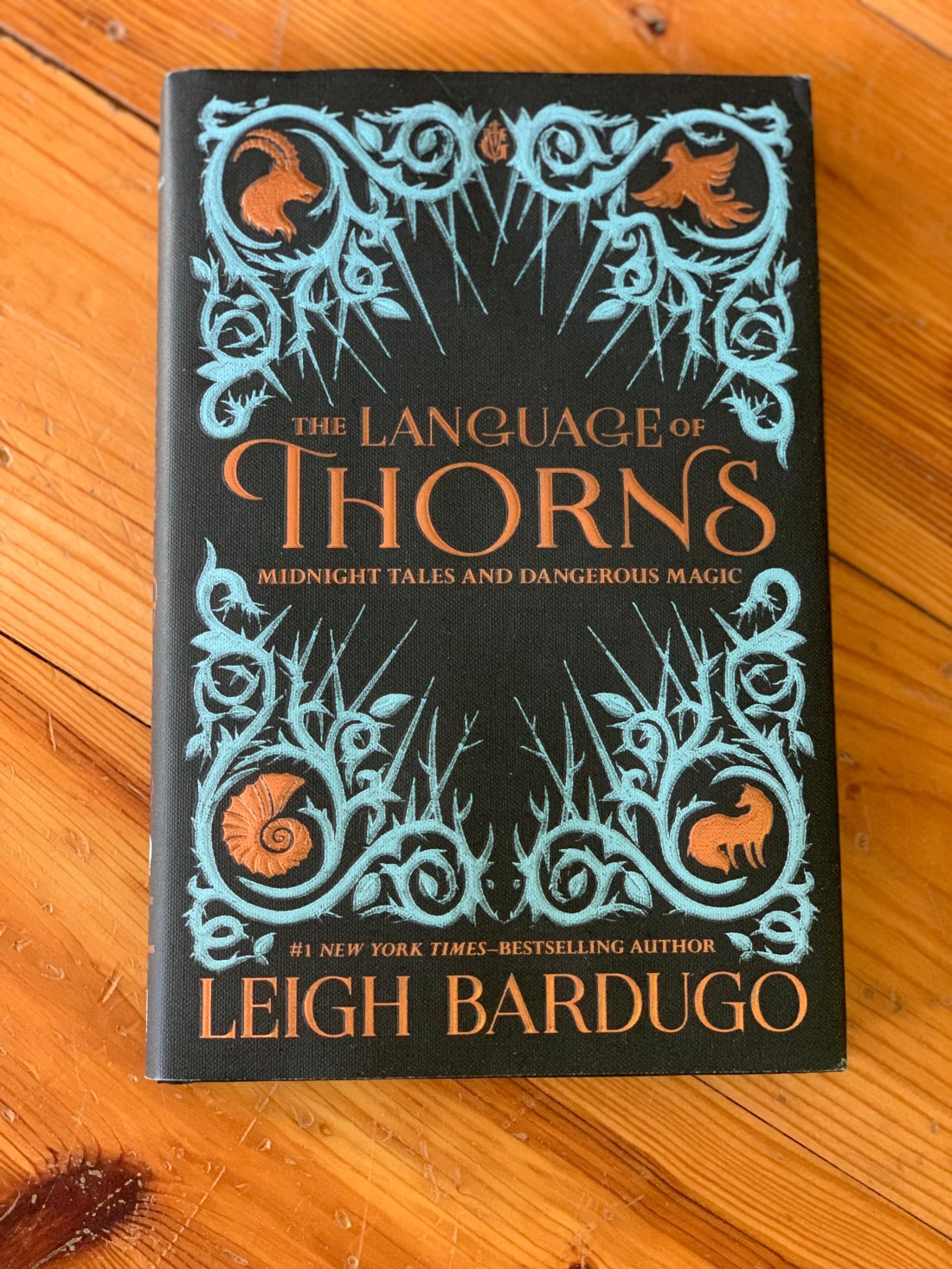
The Language of Thorns by Leigh Bardugo: A Review

“Love speaks in flowers. Truth requires thorns.” – Leigh Bardugo, The Language of Thorns: Midnight Tales and Dangerous Magic

Readers, do you believe in fairy tales? Not the Disney version with the pretty princesses and the sweet little birds and the happily ever after. You remember the ones – the kind where it is dark and the woods might be haunted; something is coming and you are alone. If you like the old fairy tales, before they were tamed and made gentle for little ears, if the Brothers Grimm or Hans Christian Andersen is more to your taste, then I think you will like Bardugo’s collection. Originally approached by her publisher to write a prequel to her series, the Grisha Chronicles, she ended up writing the kinds of fairy tales that she thought her characters would have grown up listening to around the fire in the cold of winter. The result is a collection of stories that borrows a little here and there from traditional folk and fairy tales, but is also representative of Bardugo’s style. Things are rarely what they seem and each story is like a little treat to be devoured in a single sitting.

I read these at night and at times I could feel the hairs on the back of my neck rising. They are definitely not stories for little ones, but they capture everything compelling about the old tales while reinventing them in new ways that keep them fresh and interesting. The text is accompanied by beautiful illustrations that contribute to the growing sense of tension Bardugo’s writing evokes. Characteristic of her novels, the line between heroes and villains is seldom clear in these stories, and characters should be very careful what they wish for.

I really loved this book. Bardugo strikes a perfect balance between the familiar and the novel. Each story builds tension and suspense to keep you turning pages late into the night. So, reader, to return to where I began: if you like fairy tales, this is a collection worth picking up.

If you read The Language of Thorns, let me know what you thought! Have you read any other modern fairy tales that captured your imagination? I would love to hear about them. Until next time, happy reading!
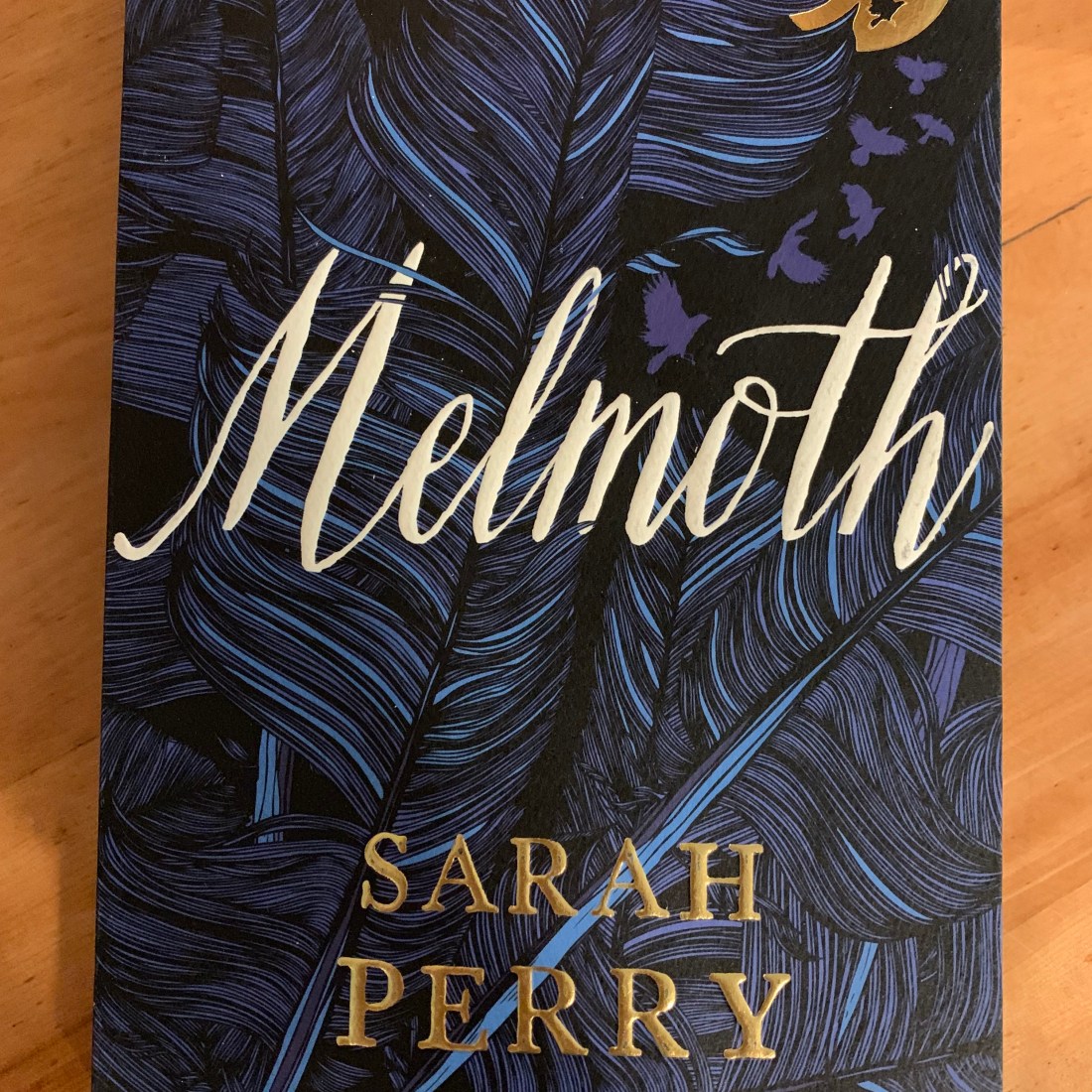
Melmoth by Sarah Perry: A Review

“No librarians yet at their post, the ranks of desks miserably empty, like sockets from which teeth had been pulled.” – Sarah Perry, Melmoth

Well everyone, it finally happened. I wondered when I started this little project when I would start a book I couldn’t finish. This was the one. I was so excited to read Melmoth. The reviews were outstanding and I loved the idea behind the story but readers, I have to be honest, I could not get through this book. I debated making myself finish it since I chose it for the blog, but years ago a wise librarian convinced me that life is too short to make yourself finish reading books you don’t like. So I didn’t. Besides, I decided that explaining why I couldn’t get through it is a review of a sort, so here were go:

Keeping in mind I only made it as far as page 80, I have to say I had a really hard time connecting to this novel. The narrative style is overly wordy in a way that seems like Perry is trying to mimic earlier Gothic writers (think Poe: words, words, words) but to me it felt artificial. The novel is set in modern times so at best it was unnecessary but at worst it felt like Perry was trying too hard to evoke Gothic tropes. The characters were really flat. They seldom express much emotion and when they do, they are kind of awful – one of the characters longs to get away from his wife because she has been paralyzed by a stroke and looking after her depresses him; another rejects other children who try to befriend him because they are nice. I am not kidding. I have read books before where the characters are purposefully unlikable but these ones were also oddly devoid of interesting traits. Even in their pettiness or jealousy or cruelty, they failed to elicit enough of a reaction for me to even care if Melmoth the Witness came and devoured them all in the end (or whatever it is Melmoth does, I guess I’ll never know). I couldn’t like them enough to worry for them or hate them enough to root for their destruction. Characters the reader doesn’t care about is never a good sign.

Before giving up entirely, I went back and read some reviews. I thought there had to be something I was missing. Certainly in the past, I have had to take a couple of running starts at a book before I really got into it and I was hoping the reviews would spur me into action. But as a I scrolled down past all the 5 star reviews that called Perry’s work “sublime” or “masterful”, I found my people. The 1 star reviews that said what I was thinking. The characters in this book are not people I would ever want to sit next to at a dinner party. The writing, while beautiful in places is also really boring at times. And according to the intrepid reviewers who made it all the way to the end, that doesn’t change. There was one common descriptor: depressing.

And with that, suspicions confirmed, I firmly shut the book. There are too many other books I want to read.

Have you ever given up on a book or do you finish whatever you start? I know readers tend to fall into one category or the other so I would love to hear from you. And if you read and loved (or hated) Melmoth, I would be interested to hear that too. Until next time, happy reading!
 

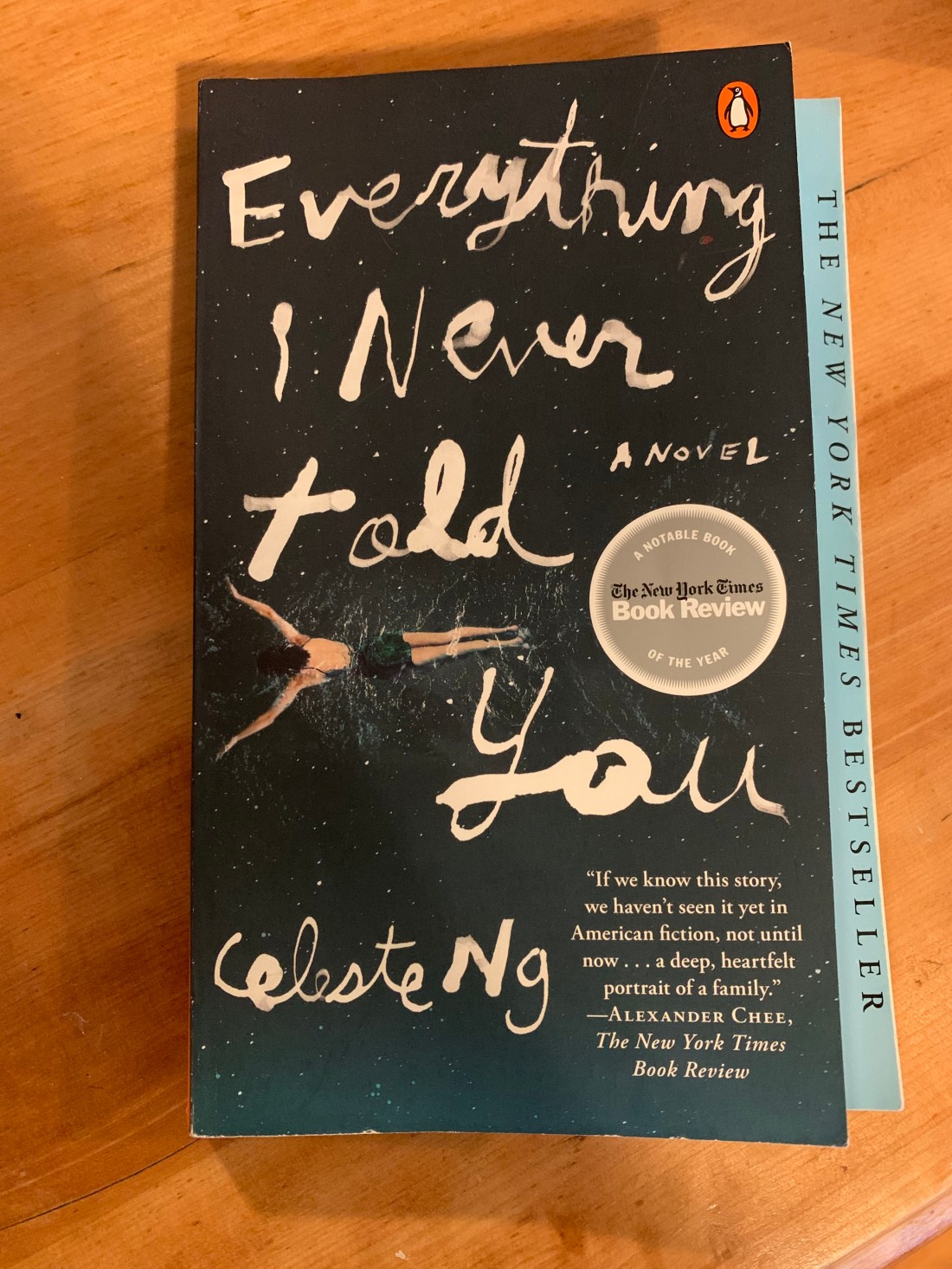
Everything I Never Told You by Celeste Ng: A Review

“Later – and for the rest of his life – James will struggle to piece words to this feeling, and he will never quite manage to say, even to himself, what he really means. At this moment he can think only one thing: how was it possible, he wonders, to have been so wrong.”  – Celeste Ng, Everything I Never Told You

In this novel, Celeste Ng explores what happens to a family when one of the children, Lydia, dies. The circumstances of Lydia’s death are unclear – she left the house in the middle of the night, and later she was found, drowned in the local lake. The family struggles to come to terms with her death – was it murder? An accident? Suicide? And in seeking the answers, they begin to tear apart their bonds as a family. The parents, Marilyn and James Lee, and Lydia’s two remaining siblings, Nath and Hannah, are left protecting their secrets – and each other’s – as they struggle with their grief.

Ng excels at writing work that is both page-turning and deeply sympathetic to her characters. The tension created by Lydia’s death and the resulting reactions of her family developed so much tension that my chest actually felt tight as I read this book. It was only near the end, when Ng reveals the truth about what actually happened to Lydia that I felt like I was able to breathe again. Her writing evokes the vulnerability, loss and pain of her characters so realistically that at times I found it hard to keep reading. Marilyn and James, both thwarted in their own ambitions through circumstance, seek to realize their dreams through their children. The ambitions the Lees have – especially for Nath and Lydia, the two oldest – come from a place of love and the desire to create a better life for them, but result in both children hiding their true selves in an attempt to match themselves to the visions their parents have of them. Only Hannah, the youngest and often ignored child, notices all the small things the others miss: a significant look, a forgotten item, the sound of the front door opening and closing in the middle of the night.

The novel is an exploration of the ways in which families can both save and surrender us. They are the keepers of the deepest secrets, creators of the sharpest cuts. The Lee family clearly loves each other and this makes the story even more painful as the loss of Lydia drives them apart. Ng mingles perception, memory and truth to examine how complicated it is to truly see another, even those we think we know the best.

I have to say between this book and Little Fires Everywhere, any new novels by Celeste Ng will likely go straight to the top of my TRP. Have you read Everything I Never Told You? Drop me a line and let me know what you think. Until next time, happy reading!
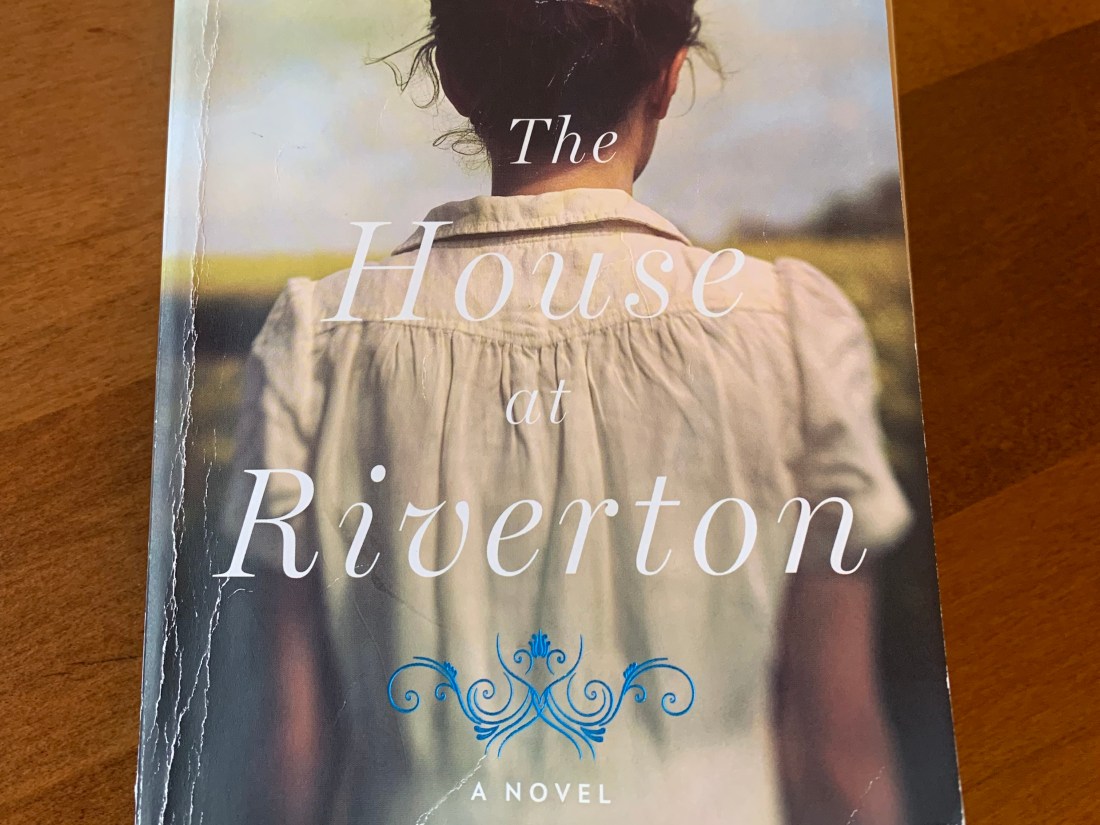
The House at Riverton by Kate Morton: A Review

“‘That’s why nobody talks about it,’ he said. ‘They know that if they do, people will see them for what they really are. Members of the devil’s party moving amid the regular people as though they still belong. As if they’re not monsters returned from a murderous rampage.'” – Kate Morton, The House at Riverton

The House at Riverton spans two eras; Grace, the main character, is aging and near death. In her last months, she records a series of audio cassettes for her beloved grandson that tell the tale of her youth as a maid and the terrible secret she has kept for her former mistress all her life. Grace’s recollections bring the reader back to 1914, just before the outbreak of the First World War. Set in Riverton, an English country manor, the novel follows the lives of Grace, and Hannah and Emmeline, the two daughters of the house. Despite coming from such different words, the lives of the girls, especially those of Grace and Hannah, who are the same age, often mirror each other as they struggle to understand their roles in society, which often conflict with their sense of self.

If you like historical fiction, this is a book worth reading. Morton’s novel is incredibly well researched. She examines class privilege in Edwardian England, the limits imposed on women at the time, and the impact the war had on so many returning soldiers, and the impact on families whose sons and husbands never came home. Morton also plays with tropes of the Victorian Gothic: a house haunted both literally and metaphorically, characters driven to madness, doppelgängers and ultimately, a tragedy that destroys the family.

Without spilling any secrets of The House at Riverton, I should say what a pivotal role they play in the novel. As secret after secret is revealed, they drive the characters’ thoughts and actions to a breath-taking conclusion but Morton also explores the way secrets can drive people apart or bond them together. For  Grace, who has no status or wealth of her own, her ability to keep a secret is what allows her to show her devotion to Hannah, who never truly understands Grace as an individual in her own right. At the end of her life, Grace unburdens her long-held secrets to her grandson, and in so doing, gives him an opportunity to pursue a new path.

There is a lot to recommend about The House at Riverton. The characters are beautifully written and the settings in Riverton and London almost become characters themselves. I often found it troubling how seldom those of higher status ever saw Grace as more than a competent servant (let alone considered her a person own hopes and dreams), but Morton’s choice to set the novel across two time periods allows the reader to see that after Riverton, Grace is able to follow her own dreams and even recapture some that eluded her in her youth. Morton’s writing is compelling and, despite borrowing from Gothics, it is not predictable. Right up until the end, I thought I had the angles all figured out and then she would surprise me again. And despite Grace and Hannah and Emmeline coming from very different worlds, Morton is effective in showing how class and gender roles of the early twentieth century narrowly defined their lives, making all three women sympathetic. When the final secret is revealed in the conclusion, my heart broke for all three of them.

Have you ever read any of Kate Morton’s novels? Drop me a line and let me know! Until next week, happy reading!

January Line Up

Happy 2019 everybody! I hope you rang in the New Year in style. Thank you for all the comments and support in December – I was way behind schedule and you were very patient as I got back on track. It has been incredibly cool to hear all the people who have been reading and sharing the blog and I am really grateful to you for following along with me and sharing the books you are excited about.

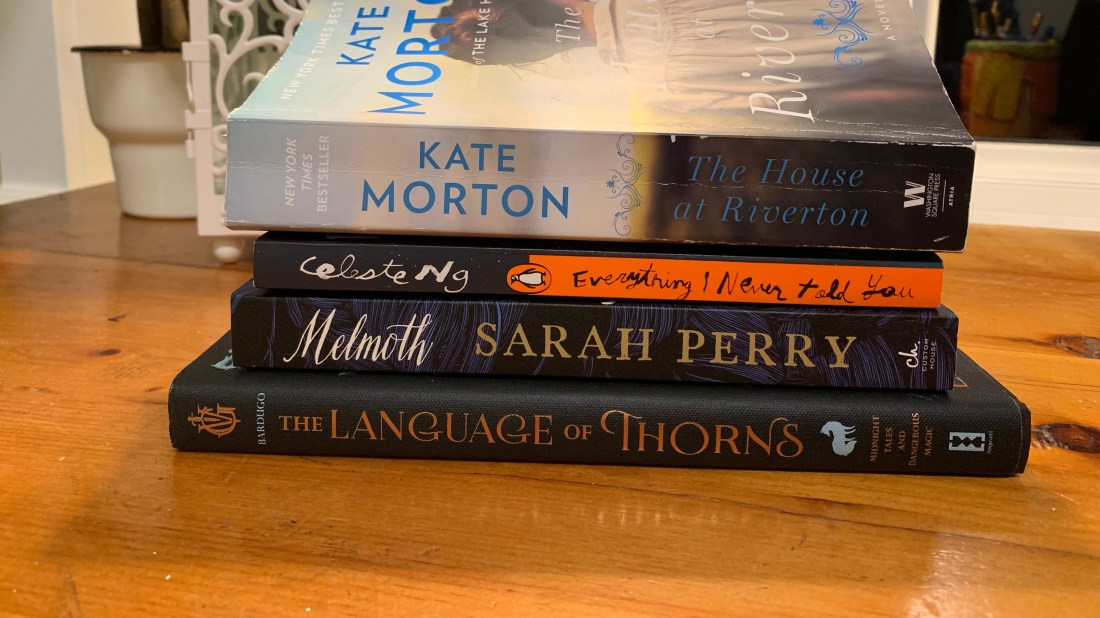
I really enjoyed a lot of the books I reviewed last month and I hope my luck holds out for January. The theme for this month is going to be “keeping secrets” for no reason other than that all the books I really want to read next have secrets as a common feature. If you have read any of them, I would love to hear from you!

January 5, 2019 – The House at Riverton by Kate Morton

If you are following along at home, you might be thinking, “hey, she was supposed to review that last month.” And you would be right dear reader, but December was a month with 5 Saturdays and the novel is 471 pages long (I already started and it’s really good by the way) and well, I just couldn’t get through it all on time. Luckily, this is my blog and I get to make up the rules as I go along so I am reviewing it as my first book of 2019. (And I will catch up. I promise. Probably not until July though.)

January 12, 2019 – Everything I Never Told You by Celeste Ng

I enjoyed Little Fires Everywhere so much that when I dug Ng’s other novel out of my pile, I couldn’t resist adding it to the January list. The story centers around the death of Lydia, the favorite child of the Lee family. Her death brings secrets to the surface and unravels the bonds that hold the Lees together.

January 19, 2019 – Melmoth by Sarah Perry

This novel is set in Prague but also jumps time and space to 1930s Cairo, the Ottoman Empire during the First World War, Nazi-occupied Czechoslovakia, Manila, central Africa and London. It is modern Gothic (which, if you haven’t noticed yet, I kind of have a weakness for) but seriously – there is a mysterious letter found in a Czech library, a surprise confession, the legend of Melmoth, a dark creature who seeks out the cowardly and complicit across history and a sudden disappearance – how can I resist all that? It seems like a perfect dark story for such a dark month.

January 26 – The Language of Thorns: Midnight Tales and Dangerous Magic by Leigh Bardugo

I am normally not a fan of short stories but I have read Bardugo’s YA fiction and she is a first-rate story teller. Her work infuses elements of fairy tales, folk lore, religion and magic in a world of her own creation. This new book is a collection of modern fairy tales influenced by the stories Bardugo read in her youth. While her subject matter is very different from Ami McKay’s, their writing shares that same quality of stories told by firelight with darkness all around.

I hope there is something here that inspires you to pick up one of these books this month. If you plan on reading any of them along with me, comment and let everything know your thoughts.

Now I have to go – there are still 300 more pages of The House at Riverton to get through before Saturday! Until then, happy reading!


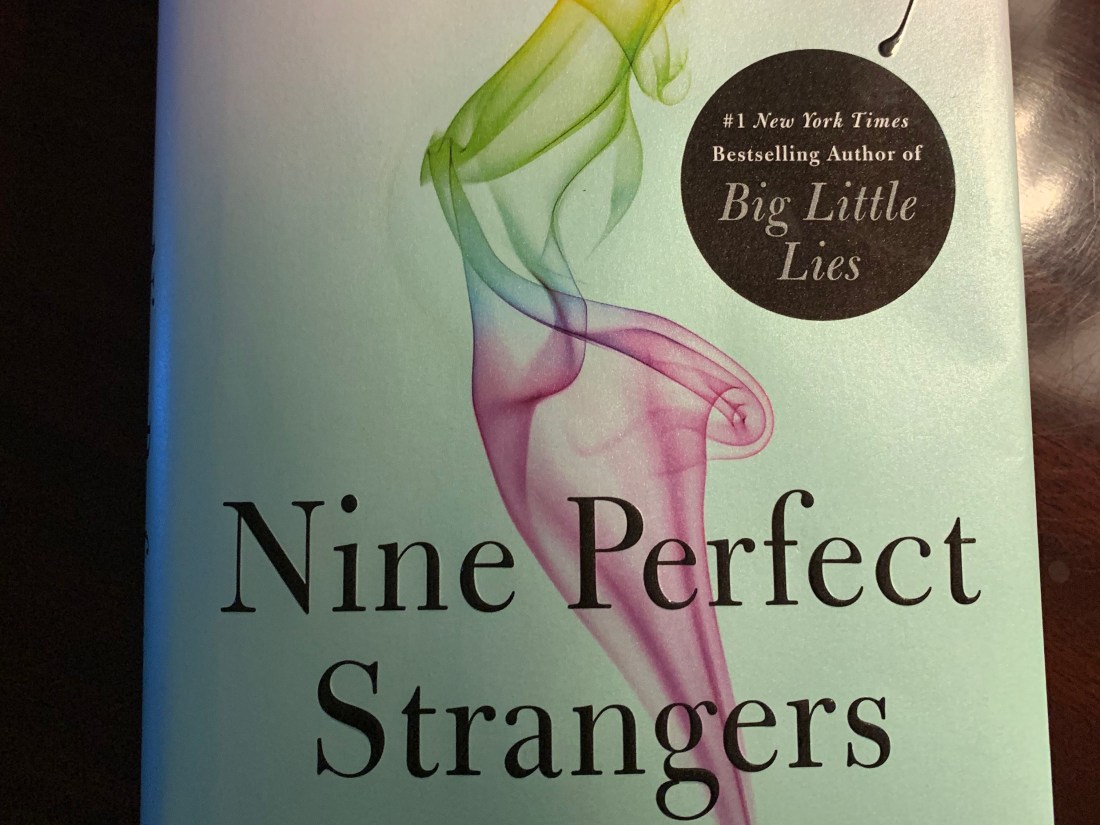
Nine Perfect Strangers by Liane Moriarty: A Review

“I don’t get the obsession with strangers, her first husband, Sol, once said to her, and Frances had struggled to explain that strangers were by definition interesting. It was their strangeness. The not-knowing. Once you knew everything there was to know about someone, you were generally ready to divorce them.” – Liane Moriarty, Nine Perfect Strangers

Nine strangers. Ten days at a remote health resort. All of them are looking to transform their lives at the hands of Masha, the resort’s owner who promises to help them achieve their potential. Each guest arrives with their own hopes and goals, but within days, they are questioning the wisdom of having given themselves over to Masha and her unorthodox “treatments” in their desire to change their lives.

This novel follows the style of Moriarty’s other books. There is a sharp sense of wit as Moriarty takes tongue-in-cheek aim at health resorts, romance novels and our desire for “happily every after” endings but beneath the surface runs a dark undercurrent of obsession, loss and madness. I always enjoy the way that Moriarty is able to take everyday characters – in this case, a novelist, a lawyer, or a teacher – and put them in circumstances that are exceptional to create tension and suspense. Her books are fun, scary and clever.

Nine Perfect Strangers is not my favorite of Moriarty’s novels (although I know some people who think it’s her best so far). I liked the characters and I’m not going to spoil any surprises but I will say that there is a point in the novel for me where the plot came very close to jumping the shark. Regardless, this book was a page-turner and all of the characters do leave Tranquillum House transformed, just not in the ways they expected. The novel is about change – what drives us to change and what holds us back. Moriarty examines how much of life is what happens to us, and how much is shaped by how we handle those events.  But don’t expect this novel to leave you with positive affirmations or new yoga poses … the changes the characters experience come through adversity, not meditation or spa massages.

If you are looking for a novel that is pure entertainment, then this would be a good choice. Until next time, happy reading!

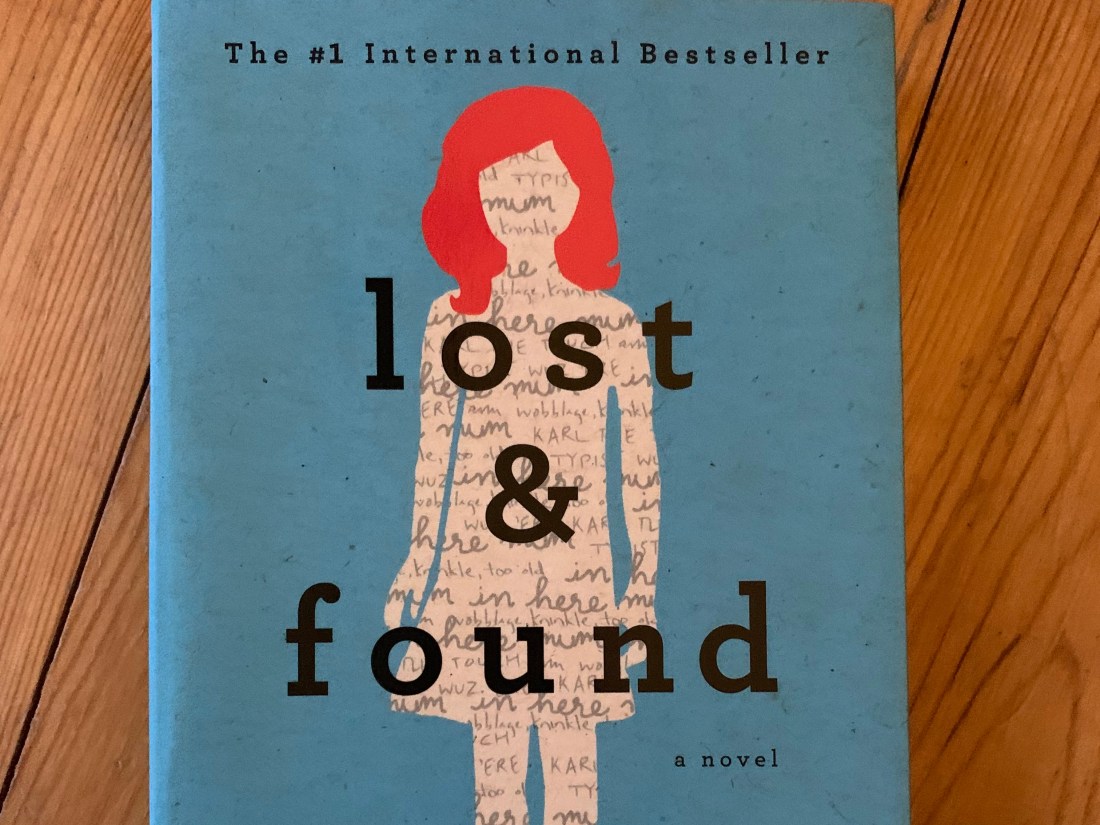
Bonus Book: Lost & Found by Brooke Davis

“The start date and the end date are always the important bits on the gravestones, written in big letters. The dash in between is always so small you can barely see it. Surely the dash should be big and bright and amazing, or not, depending on how you had lived.” – Brooke Davis, Lost and Found

This novel opens with three characters: seven-year old Millie Bird has red hair and wears red rain boots and is otherwise a pretty normal kid until her mother abandons her in a department store.  Agatha Pantha is eighty-two and hasn’t left her home since she was widowed seven years ago. She fills her days following a strict schedule and yelling her criticisms of passers-by from her living room window. Karl the Touch Typist is eighty-seven and escapes from a nursing home. This unlikely trio are brought together in search of Millie’s mother and a kind of coming-of-age road trip ensues.

I looked at some reviews for this book and some people criticized it because it’s not realistic. I want to be clear from the start – the story line isn’t meant to be particularly realistic. I mean, who expects a story of a seven-year old and her two octogenarian sidekicks taking off across Australia to find a mother who left her own daughter under a rack of ginormous women’s underwear in a local store to be realistic? But I digress.

This novel is heart-warming and funny and sad. In their search for Millie’s mom, all three characters learn more about themselves and the value of friendship than they anticipated.  The chapters move between the three main characters and through their narration, the reader gets a sense of Millie’s fear and loss, Karl’s kindness and Agatha’s fierce, cranky determination. Their voices come together to weave a quirky story about all things lost and found.

Is it too late to pick it up as a belated Jolabokaflod gift to yourself? I think not. I hope you read it and enjoy it as much as I did.

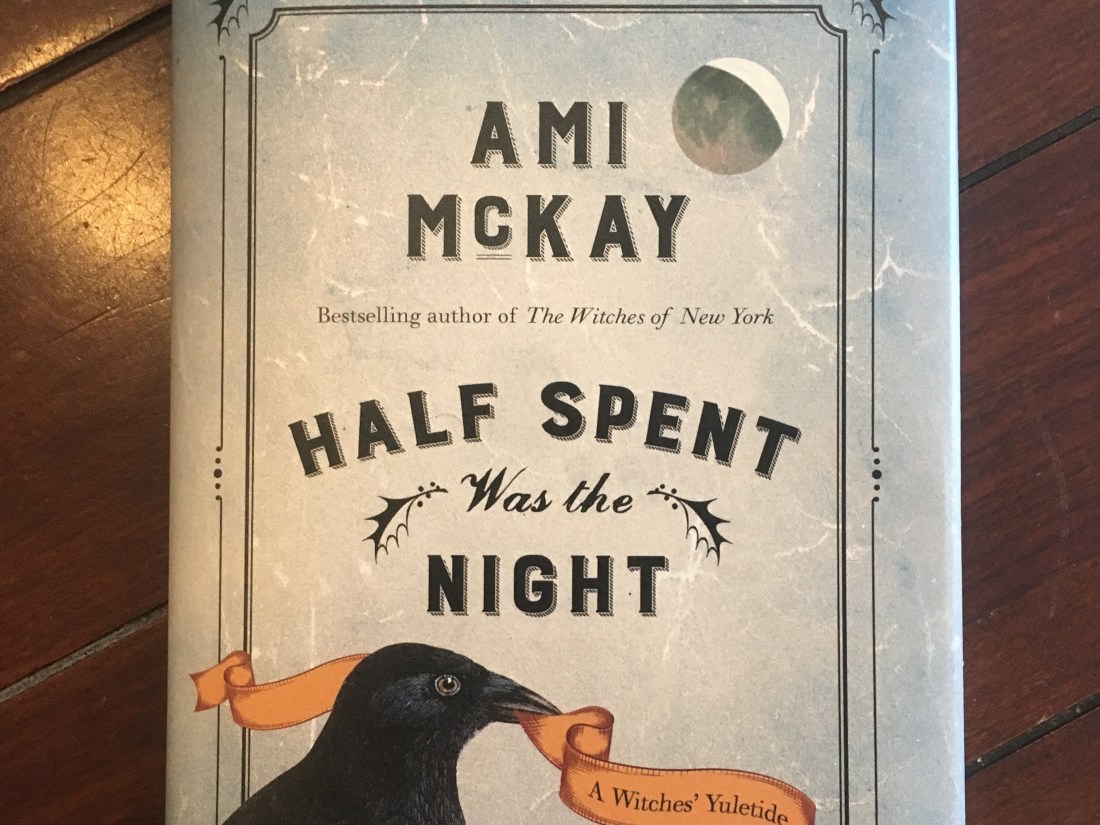
Half Spent was the Night by Ami McKay: A Review

“Christmas Day has come and gone, the New Year lies ahead. Strange things happen Between the Years, in the days outside of time. Minutes go wild, hours vanish. Idleness becomes a clever thief, stealing the names of the days of the week, muting the steady tick of watches and clocks. These are the hours when angels, ghosts, demons and meddlers ride howling wind and flickering candlelight, keen to stir unguarded hearts and restless minds.” Ami McKay, Half Spent was the Night: A Witches’ Yuletide

It is fitting to be posting about this book now as it is set in the “dead days” between Christmas and New Year’s Eve. If you have read McKay’s novels The Virgin Cure or Witches of New York, then you will already be familiar with the three witches, Adelaide, Eleanor and Beatrice. The novella is a bit of a Christmas ghost story that includes divinations, a mysterious Baroness, a New Year’s ball, a demon and some “ghosts” from the witches’ past that they would rather forget. The story is charming and full of fun touches like recipes that McKay includes of her characters’ Christmas dishes. I like how McKay is able to create an atmosphere that is both cozy and mysterious at times. There are a lot of beautiful details in this story (not to mention that the book itself is gorgeous – I am a sucker for fancy end papers).

I read The Virgin Cure but Witches of New York is still hanging out in my TRP and I wish I had read it first. There are a lot of references to the witches’ backstories from the other novels and I think the story would be more meaningful if I had more understanding of those events. Someone told me (after I read Half Spent was the Night) that the novella finishes a lot of plot developments that McKay started in Witches so I guess that’s what I get for jumping ahead. For me, the plot moved too fast, especially when it came to the events of the ball. It felt like McKay was trying to wrap up several story lines as quickly as she could and I would have preferred a longer book to give the story a chance to develop a little further. Especially as the plot reached it’s climax, it felt like the clock struck midnight, the story ended and I was thinking, “that’s it? But I wanted more!” The character of the baroness is really interesting and I would have loved to see McKay develop her story further.

If you are a fan of McKay’s writing, I think you will like this book. It has all the richness you associate with her novels and evokes that feeling of hearing stories around the fire on a winter’s night. Let me know your thoughts if you read it!

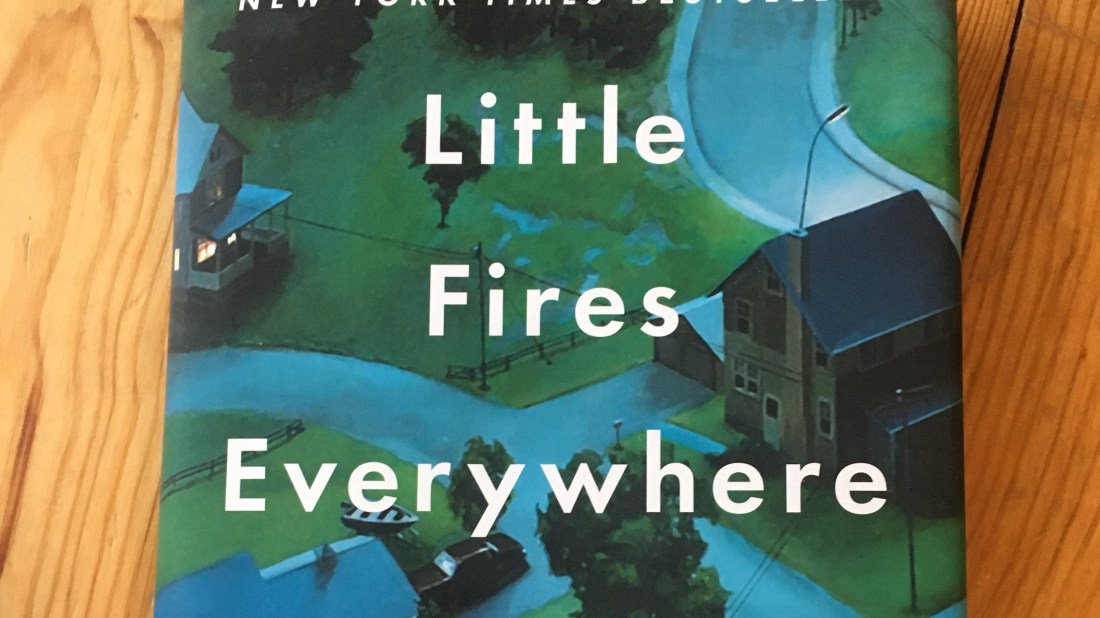
Little Fires Everywhere by Celeste Ng: A Review

“One had followed the rules, and one had not. But the problem with rules… was that they implied a right way and a wrong way to do things. When, in fact, most of the time they were simply ways, none of them quite wrong or quite right, and nothing to tell you for sure what side of the line you stood on.” – Celeste Ng, Little Fires Everywhere

I really, really liked this book. Set in the community of Shaker Heights, Little Fires Everywhere follows the story of two families: the Richardsons – a wealthy family with four teenaged children and their tenant, Mia Warren and her daughter, Pearl. Shaker Heights is a planned community where everything from the layout of the streets to the colours of the houses is carefully designed. The families of Shaker are rich, their children go on to prestigious universities, they give to the right charities, they help those in need. They follow the rules. They do what is right. Nobody embodies Shaker more than Elena Richardson, who was raised in the community and returned there to raise her own family. When Mia moves to Shaker, Elena sees the artist and her shy daughter as an opportunity to help someone deserving. Very quickly the two families become entwined via the children; Pearl becomes a fixture in the Richardson home while Izzy, Elena’s challenging youngest child, comes to idolize Mia. When a white couple in Shaker attempts to adopt a Chinese-American baby who was abandoned by her mother, a custody battle ensues that divides the community, and puts Elena and Mia on opposite sides.

One of the things I most enjoyed about this book was how unexpected so much of it was.  As the novel progresses, secrets are revealed that threaten to pull both families apart. The narrative moves between Elena, Mia and each of the five children. Ng’s writing is like a slow burn. I found myself drawn in almost without noticing, and then I couldn’t stop reading. Ng reveals the complexities of family, especially the relationships between mothers and their children. She also examines what it means to follow the rules, and what it means to break them. Both Elena and Mia are strong characters with faith that their actions are the right ones and this sets them on a path that will eventually result in heartbreak for both of them. I think the reason the novel works so well is because Ng is careful not to create heroes or villains. Each character’s choices and feeling are understandable given their circumstances and this makes the events that unfold – some of them shocking – feel inevitable. Ng’s writing creates an immersive world in the suburbs of Cleveland that feels both familiar and alien as she pushes the readers’ boundaries about who is right and who is wrong in the conflicts she creates.

If you are looking for a book to read in the new year, you should pick up Little Fires Everywhere. I would really love to hear what you think about it and if you loved it as much as I did! Until next time, happy reading!