Bonus Book: A Man Called Ove by Fredrik Backman

Hello, hello, hello!

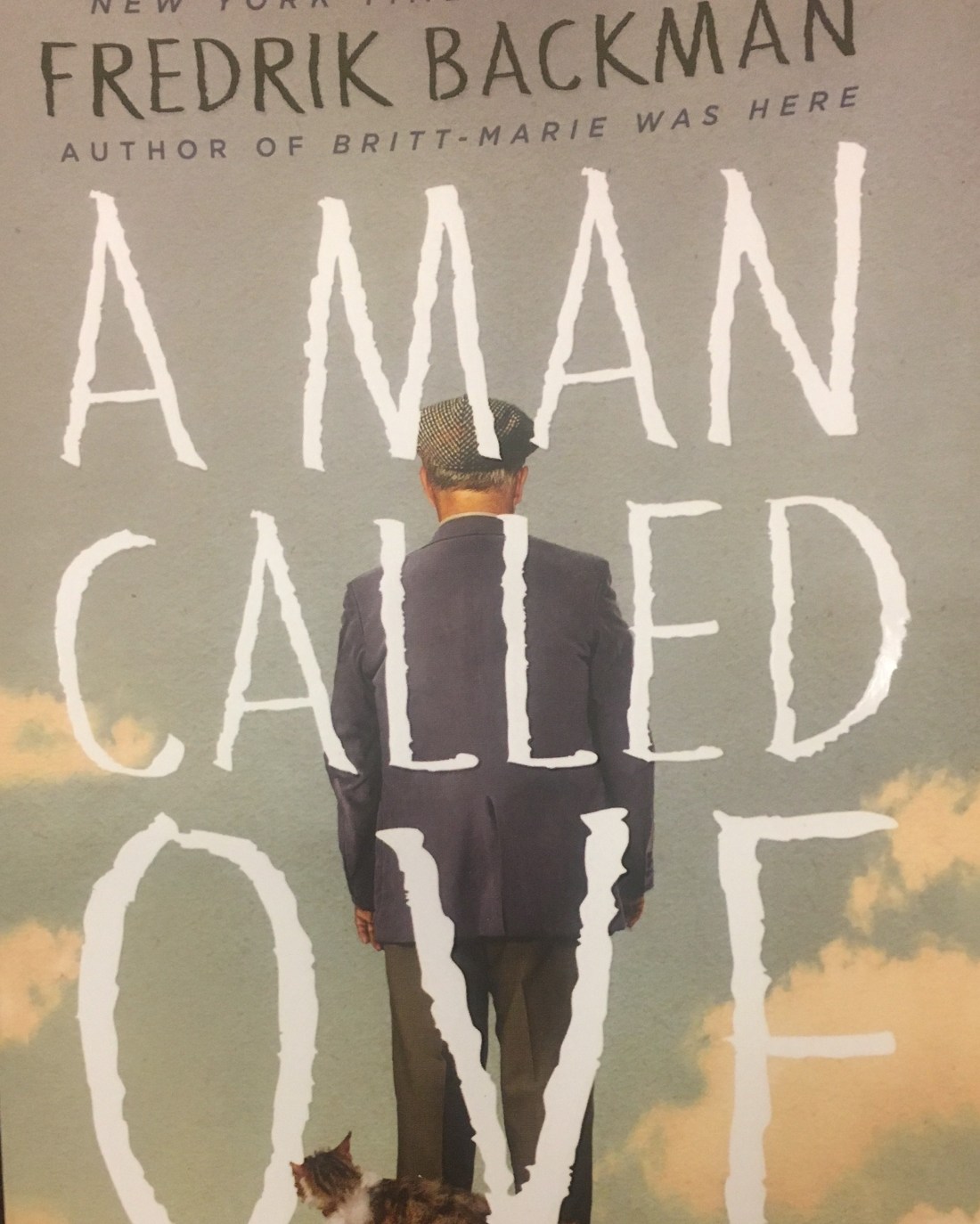
“Ove feels an instinctive skepticism towards all people taller than six feet; the blood can’t quite make it all the way up to the brain.” A Man Called Ove by Fredrik Backman

This. Book.

I loved this book. And I think you will too. Backman is a Swedish novelist but unlike all those dark, Nordic thrillers coming out of Sweden, his novels are hilarious and touching.  Ove is the classic grumpy old man. He lives his life by strict rules and he is not afraid to share his opinions with anyone who breaks them (he is the scourge of his residents’ association). He has a very short temper. He thinks everyone is an idiot. He is mean to the cat. In short, he is pretty unlikable. Except … he has just lost the love of his life, his wife, Sonja. Through his grief over her loss, we see a different side of Ove. Six months after her death, he prepares to take his own life.

Except he can’t.

Despite his careful preparations, the new next door neighbors back up their U-Haul improperly, flattening his mailbox and thus ruining his plan. He cannot leave this world with a flattened mailbox, especially one that has been flattened at the hands of idiots. What follows are a series of comic events that result in unlikely friendships. Backman had me laughing out loud at Ove’s antics and sometimes wondering what it would be like to be so free with my opinions. (Really, his manners are shocking). But the narrative also switches from the present to Ove’s backstory with Sonja which Backman describes with some beautiful images:

“Loving someone is like moving into a house,” Sonja used to say. “At first you fall in love with all the new things, amazed every morning that all this belongs to you, as if fearing that someone would suddenly come rushing in through the door to explain that a terrible mistake had been made, you weren’t actually supposed to live in a wonderful place like this. Then over the years the walls become weathered, the wood splinters here and there, and you start to love that house not so much because of all its perfection, but rather for its imperfections. You get to know all the nooks and crannies. How to avoid getting the key caught in the lock when it’s cold outside. Which of the floorboards flex slightly when one steps on them or exactly how to open the wardrobe doors without them creaking. These are the little secrets that make it your home.”

There is something about the way that Backman contrasts Ove’s gruff, cantankerous exterior with his tenderness for Sonja that makes his character so appealing. Backman strikes the perfect balance between comedy and sorrow in this novel. Like Eleanor Oliphant, Ove becomes an unexpected and unforgettable hero in his own small world. The novel explores grief but ultimately reveals how our connections to others helps us to heal.

So … I hope I’ve convinced you to read it. Go on, what’s one more book in your To Read Pile?

Have you read anything by Fredrik Backman? I’d love to hear your thoughts. Shoot me a comment or message. Until next time, happy reading!
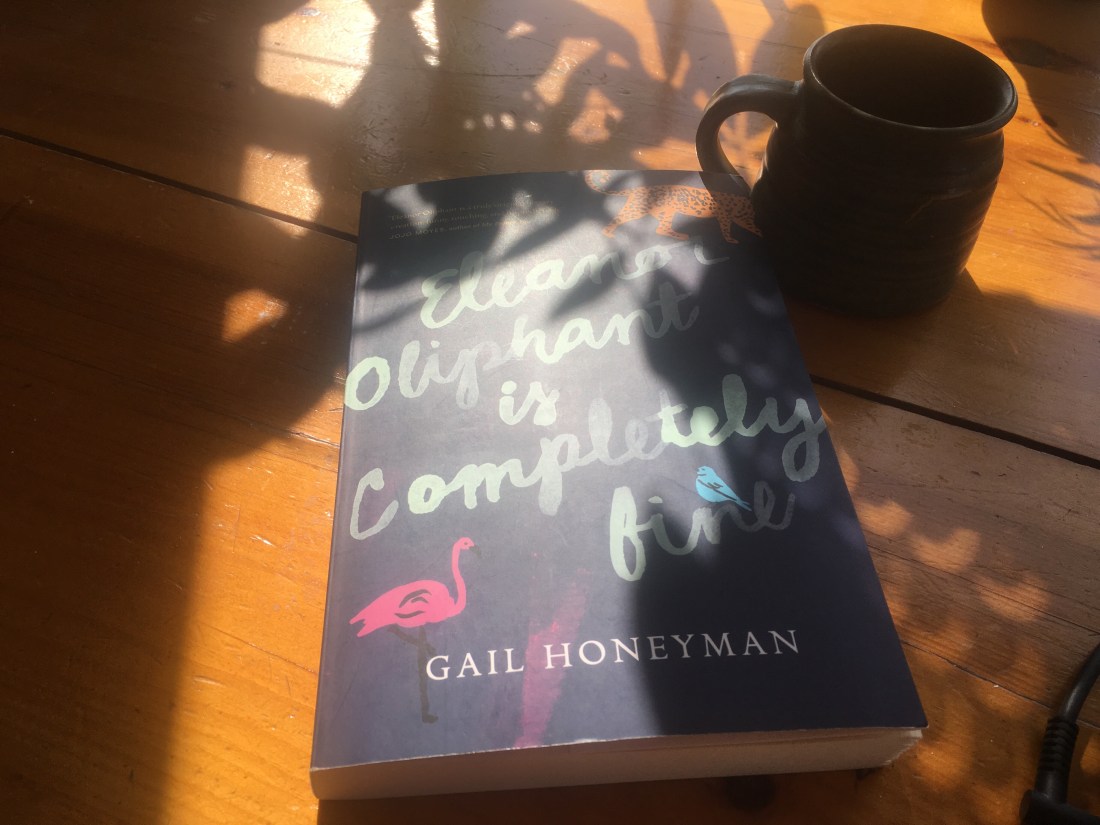
Eleanor Oliphant is Completely Fine by Gail Honeyman: A Review

Hello, hello, hello!

“‘How brave are you prepared to be, Eleanor?’ Laura asked. This was the correct question. I am brave. I am brave, courageous, Eleanor Oliphant.” Eleanor Oliphant by Gail Honeyman

Thanks for stopping by! Some of you have been kind enough to share my blog with your book clubs so maybe today I can return the favour by giving you a good recommendation. If you are looking for a book to read this fall, I think it should be Eleanor Oliphant in Completely Fine by Gail Honeyman. The story follows Eleanor Oliphant, an entirely original main character. From the beginning, Honeyman hooked me with Eleanor’s dry wit. Her character is socially awkward to say the least but often Honeyman’s depictions of Eleanor’s attempts to puzzle out social situations had me laughing out loud (there is one scene with dancing … you’ll know it when you see it. I read it three times it was so funny).

At first, Eleanor’s character brought to mind The Rosie Project or maybe Sheldon from “The Big Bang Theory” but Honeyman creates a backstory for Eleanor that makes the novel more powerful than just laughing along at Eleanor’s social faux pas. Eleanor was raised in foster care and aside from her job and biannual visits from her social worker, she lives her life alone. She has no family, no friends. Eleanor’s frank voice reveals a tragedy in her past that in her own quirky and sometimes startling way, she attempts to overcome. Honeyman’s use of humour provides a sharp contrast to the events of Eleanor’s past in a way that allows the reader to develop a deep empathy for the character. In her attempts to find true love, make friends and carve out a little community around her, I found myself rooting for Eleanor as an unlikely anti-heroine.

Honeyman populates the little world of her novel with characters who feel familiar without being stale. One of my favourite things about Honeyman’s characters is that with the exception of Eleanor herself, they are so well, ordinary. But it is through these ordinary,  everyday people that Honeyman is able to reveal the power that simple acts of kindness can have. Helping Sammy, an old man who falls in the street, brings Eleanor together with Raymond, an IT guy from her office, and this chance encounter becomes the catalyst for change.  This, along with Eleanor’s off-beat observations about those around her and her attempt to transform herself, serve to create a narrative that is at times funny, and at other times heart-breaking. Ultimately, Honeyman explores how what we perceive to be true shapes everything around us and how others can act as a mirror to help us understand ourselves more clearly.

There is a lot to recommend about Eleanor Oliphant is Completely Fine – Honeyman’s writing is tight, the plot is unpredictable, and Eleanor is a character who will stay with you long after you’ve put down the book. And without giving anything away, I don’t think I will ever look at “Y.M.C.A.” by the Village People quite the same way again …

If you read Eleanor Oliphant, post a comment and let me know what you thought. Until next week, happy reading!

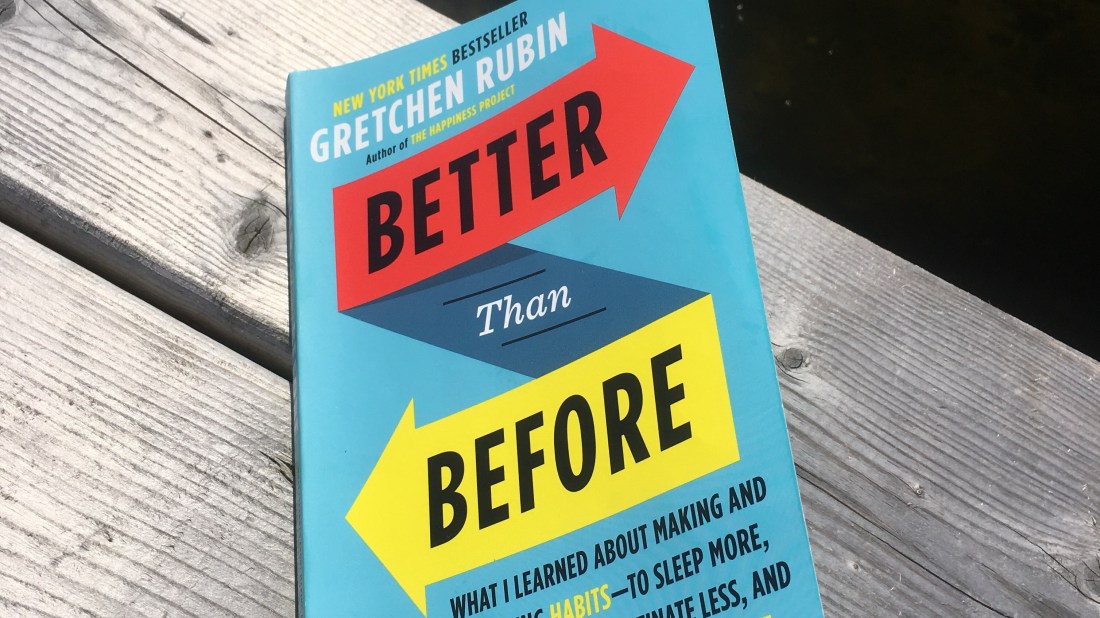
Better Than Before by Gretchen Rubin: A Review

Hello, hello, hello!

“There’s a magic in the beginning of anything. We want to begin right, and a good start feels auspicious.” – Better than Before, Gretchen Rubin

Recently, I became interested in habits. In my personal and professional life, I saw how habits, both good and bad, affect the success, confidence and happiness of those around me. And I am no exception. Like everyone else I know, my life is busy. I struggle to balance parenthood, work and finishing a degree with spending time with family and friends. The secret to maintaining this balance seems to be in cultivating good habits while the ditching bad ones. But after about a year of concerted effort when it comes to habits, I still have questions: why are some good habits easy to form but others always feel like a struggle? I can have the same healthy breakfast every morning without thinking, but I have to make myself get my workout in. Why is it so easy for some people to form certain habits when others find it so hard? A lot of people love to get up early but for me any alarm going off before 7:00 am feels like a punch in the face. The opposite is also true – why do I find it easy to manage the homework in the courses I’m taking when some of my students really struggle to hand work in on time?

Cue Gretchen.

Gretchen Rubin is like that friend who has it all together. Need to know how to carve out some time to yourself in an already hectic schedule? Wondering how to answer that tricky email at work? Trying to help your kids get more organized? Ask Gretchen. To Rubin, one of the keys to increasing happiness is simply habit. Making certain behaviors we value into habits (and avoiding pitfalls) frees us and allows us to use our energy to pursue other things. In this book, she addressed the question: how do we change our habits? And the answer, as in so many things is: it depends.

One of the strongest aspects of Better Than Before is Rubin’s framework for categorizing personalities which she calls the Four Tendencies. She claims that everyone falls into one of four very broad categories: Upholders, Questioners, Obligers and Rebels. These categories relate to how we respond to external and internal expectations. Throughout the book, Rubin uses this framework as a means of exploring why people form habits differently, and explains how understanding your own Tendency is helpful in terms of figuring out how to build or break habits. She uses research and anecdotal evidence from her own life and the lives of her family to support her ideas in ways that makes it easy for readers to relate.

Until reading this book, I didn’t think about most of the things I did on a regular basis (filling the dishwasher before leaving for work, regularly texting friends I don’t get to see very often) as habits. They were just things I did. Re-framing them as habits allows me a different perspective on the things I do and how they reflect (or sometimes fail to reflect) my values. Rubin stresses that to build a happier life, we need to build habits that reflect our values and priorities and in order to do this, we must understand ourselves better. She emphasizes that while we are more alike than we are different, the ways in which people are different are very important (she calls these Distinctions), especially when we’re talking about forming habits. She also introduces her Pillars of Habits: Monitoring, Foundation, Scheduling and Accountability as a means of helping readers establish good habits. She doesn’t shy away from acknowledging that forming habits takes energy and dedication but suggests that the use of her Pillars can help readers be more successful in meeting their habit goals.

So, what are the drawbacks? Remember when I said that Rubin is like that friend with all the answers? For the most part those answers are well thought-out and useful but sometimes she sounds a bit … relentless (which, to her credit, she acknowledges about herself) and that becomes tiresome at times. At one point she talks about going to an acquaintance’s apartment several times to help him clean up his space in order to help him with his writer’s block (she is a strong believer that an uncluttered space leads to mental clarity) and in the end he has to admit to her that the decluttering didn’t help at all. In her estimation, this is an example of how habits work differently for different people but it’s also a bit of a methaphor for the books itself. The central ideas are useful and interesting but in her quest to really get through to readers, the examples tend to get a bit repetative. At times found myself thinking, “Okay, Gretchen, I get it!”

The other thing that surprised me is that she doesn’t really consider emotional factors in the formation and maintenance of habits. This is probably because she is so disciplined herself but I think it’s an important aspect for a lot of people and it is left lacking in this book. She does give a lot of strategies for overcoming potential pitfalls – like abstaining or distracting yourself from temptations – but she doesn’t discuss the emotional connections people often have to their habits.

Overall, I think this is a book worth reading. It makes important points about the way we can connect habits to our own sense of well-being and provides practical tools to help readers work on their own habits.

Curious about which of the Four Tendencies describes you? Take this quiz from Gretchen Rubin’s site. I would love to hear what you find out – post a comment or message me and let me know. Until next week, happy reading!

The Countdown is ON!

Hello, hello, hello!

So, it is almost time for my little book project to begin. I started this as a way to motivate me to get through some of my ever-growing To Read Pile. In all honesty, it is getting out of control. I have mixed feelings about the TRP: on one hand, I really love the feeling of abundance of having all these books waiting to be read. When I choose a new book to read, I feel a bit like a kid in a candy store – I pull a bunch out and look through them and wait for one to pique my interest before putting the rest back. Sometimes, (like right now) I can’t choose and so I will have two (okay, three) books on the go at the same time.

On the other hand, sometimes my TRP makes me feel, well, guilty. Why do I keep buying books faster than I can read them? There are so many in there that I’m pretty sure reading through them could be my full-time job (which, sadly, of course, it isn’t). If someone lends me a book, I feel compelled to read it immediately because otherwise it may end up lost in all the others waiting to be read. (Once I had a friend’s book for so long that she gave up waiting for me to return it and bought herself another copy. Oops … lesson learned.) I admit that it seems a bit self-indulgent (maybe greedy?) on some level to have amassed so many unread books.

Of course, I know why I do these things. Shopping for a book is a pleasure in itself. And I’m not picky. I am equally likely to pick up a stack at a big box store, Costco, a local second-hand book shop or a flea market. The possibility of all those new stories is the opening of just as many new adventures. And I love to lend and borrow books. There is a lot of great conversation to be had about books you’ve read and why you love them. It’s nice to get personal recommendations from family and friends and I think that reading a book someone else recommends tells you a little bit more who they are and what makes them tick.

Or maybe these are just excuses to allow me to carry on with my book addiction.

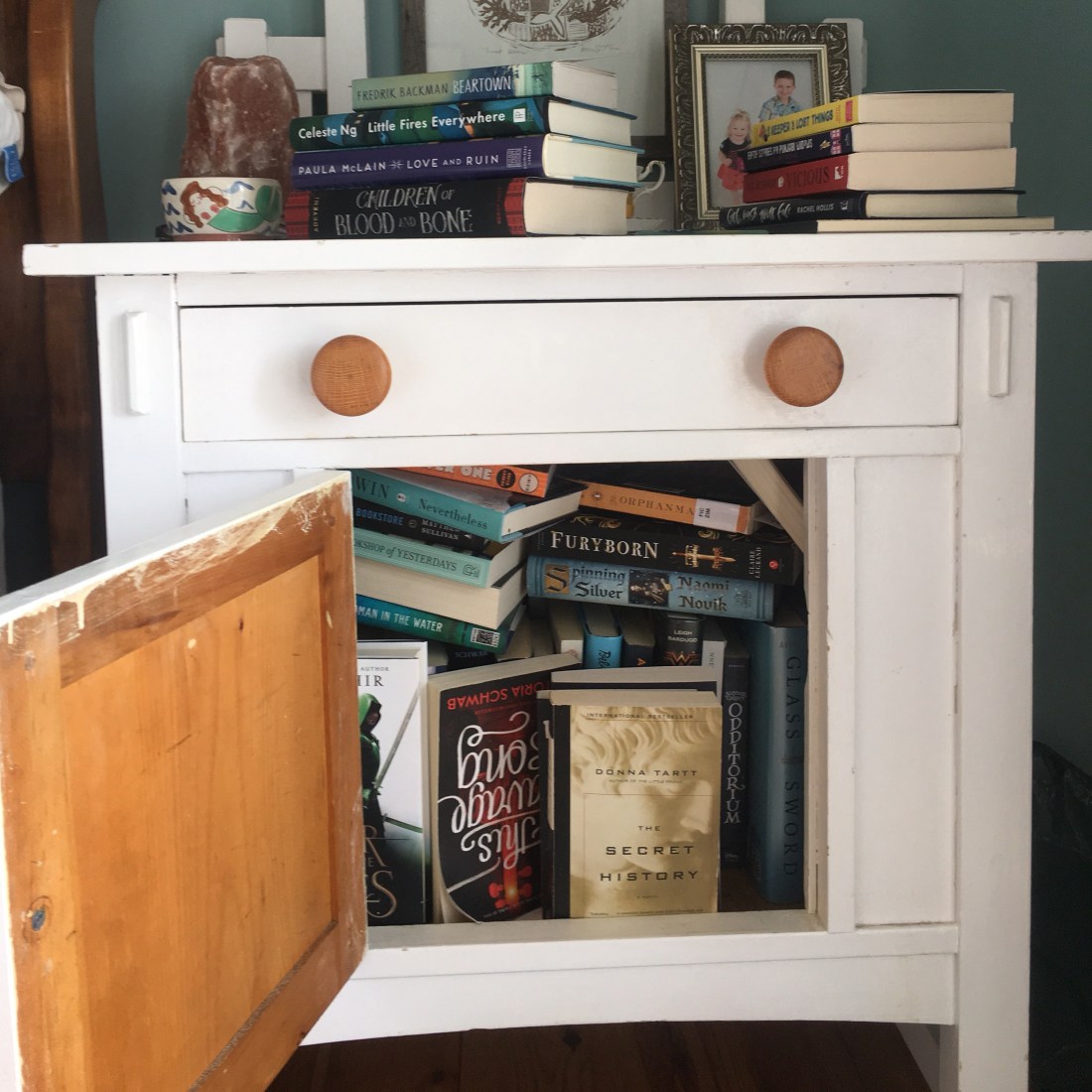
Addiction or not, I thought it might be fun to start this project by introducing you to my To Read Pile. Don’t judge me…

To Read Pile

I realize that my washstand-turned-night-table-turned-treasure-trove-of-books might offend some people’s sensibilities. Yes, there are so many that I can’t get them stacked in any neater. And yes, there are books in there that are upside down or backwards or both. But when I open that little cupboard door, I get so much joy out of seeing them all piled in there, waiting to be read. (Really, I’ve got to get a handle on myself. I know this.)

And now the fun begins …

My first review (for Better than Before) comes out on Saturday morning. I am going to imagine you drinking a leisurely cup of coffee while you read it because that also brings me joy. But feel free to go for tea or orange juice if that’s your preference. I really hope you will visit the blog throughout the year (after all, someone’s got to keep me accountable). If you like, you can follow my blog and get automatic notifications right to your inbox when a new post is up.

What’s the state of your To Read Pile? Send me a comment or post a picture! Until next time, happy reading!

Bonus Book: The Language of Flowers by Vanessa Diffenbaugh

Hello, hello, hello!

“I’m more of a thistle-peony-basil kind of girl.” – The Language of Flowers, Vanessa Diffenbaugh

Thank you for stopping by to check out the first-ever Bonus Book post on my blog!  These are the books that I have read, loved and end up recommending to people over and over again. I hope that you find something here that appeals to you so you can add it to your own “To Read Pile”. Bonus Book posts will be short – they are essentially my elevator pitch to convince (or beg) you to read these books. So, here goes…

Why I love The Language of Flowers (and you should too):

My favorite novels usually have unusual main characters or story lines – this book has both. The protagonist, Victoria, has aged-out of the foster care system and the novel traces her experiences trying to navigate the world on her own. Victoria’s interest in the Victorian practice of using flowers to express emotion connects the reader to the characters and creates a surprisingly beautiful juxtaposition to the often difficult situations she has to overcome. The shifts in narrative from Victoria’s past to present are compelling and Diffenbaugh’s writing immersed me in the story from the first chapter. This is a novel about healing, human connection and struggling to overcome the past. By choosing to have Victoria grow up in foster care, Diffenbaugh also gives voice to that experience, often overlooked in our society, in a way that is deeply empathetic. When I first picked up The Language of Flowers, I could not get through it fast enough; Victoria’s story has stayed with me for years and I think it’s because through her, Diffenbaugh creates an unexpected story of strength and redemption that is both unique and ultimately very human.

So there it is – my pitch to you. I hope some of you go pick up The Language of Flowers and if you do, please let me know what you think!

I’d would really like to hear which books you love to recommend to others – maybe one will appear in another Bonus Book post. Post a comment or message me and let me know. Until next time, happy reading!

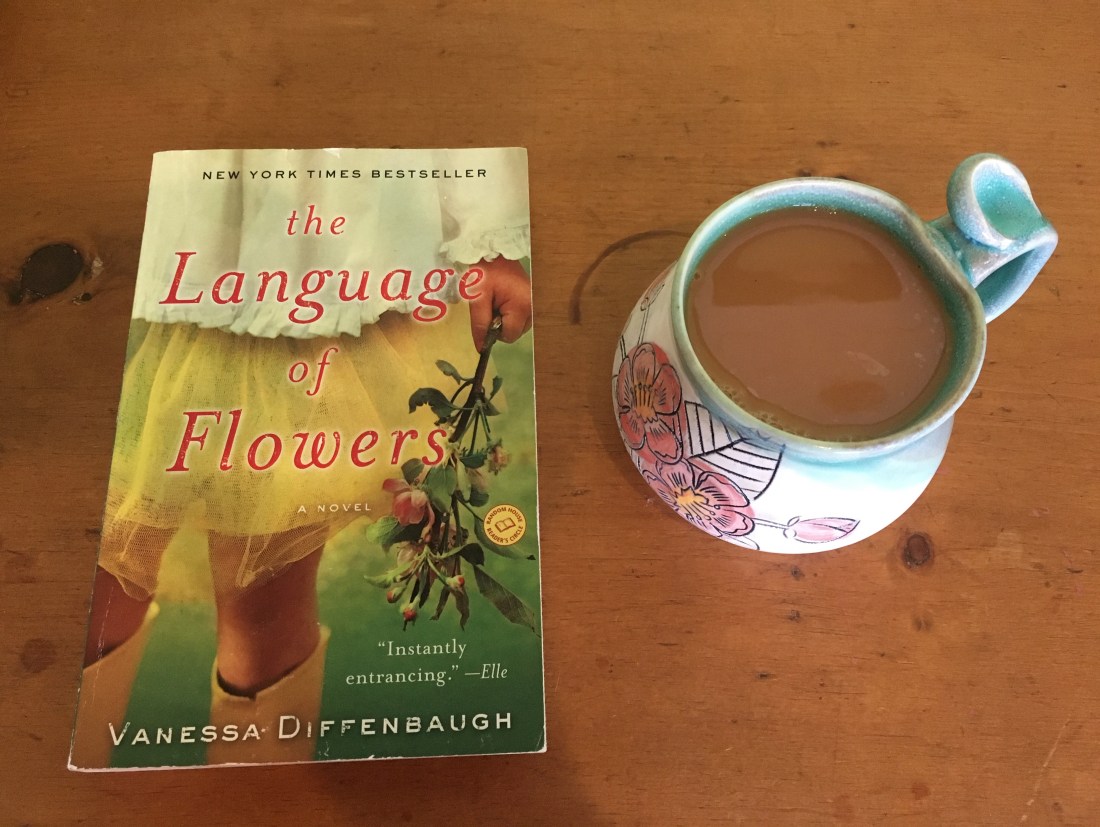
P.S. Pottery mugs are the other thing I just can’t resist. The one pictured above is one of my favourites created by Wabi Scotia Pottery.