The Library of Lost and Found by Phaedra Patrick: A Review

“Sometimes there’s no right decision. Just the one you make at the time.”                – Phaedra Patrick, The Library of Lost and Found

Martha Storm, the lead character in The Library of Lost and Found, is a bit lost herself. She gave up a life of her own to look after her ailing parents and after their deaths, she fills her time by helping out others in any way she can. Her house has become overcrowded with projects she has taken on for others and she is repeatedly overlooked at the one thing she loves – her volunteer position at the local library. One night, someone leaves a mysterious book for Martha outside the library. It appears to be written by her beloved grandmother, but was published years after her grandmother supposedly died. Martha sets out to unravel the mystery of the book’s publication and along the way makes unexpected friends and uncovers many family secrets.

Moving between Martha’s present and her childhood, the story reveals the ways that her life has been shaped by her sense of duty to her family. Discovering her grandmother’s book serves as an awakening to Martha who has become a doormat to almost everyone in her life. Her attempts to understand what happened to her grandmother bring her face-to-face with aspects of her family she was completely unaware of and force her to question her relationships and her sense of self.  This novel would likely make a good summer read because it’s not too heavy and it has a sense of charm about it but it follows a lot of the tropes of so many contemporary novels where the quirky main character experiences a series of unlikely events and makes equally quirky friends. It’s a pleasant story but not particularly original. I would have liked Patrick to develop the backstories of her secondary characters further to develop more depth and interest. I think I was hoping for a story that was either more laugh-out-loud funny or heart-wrenching but in the end, the novel doesn’t really deliver either. It’s cozy and sweet but not the kind of book that will stick with you years from now.

If you’ve read anything by Phaedra Patrick, drop me a line and let me know what you thought. Until next time, happy reading!

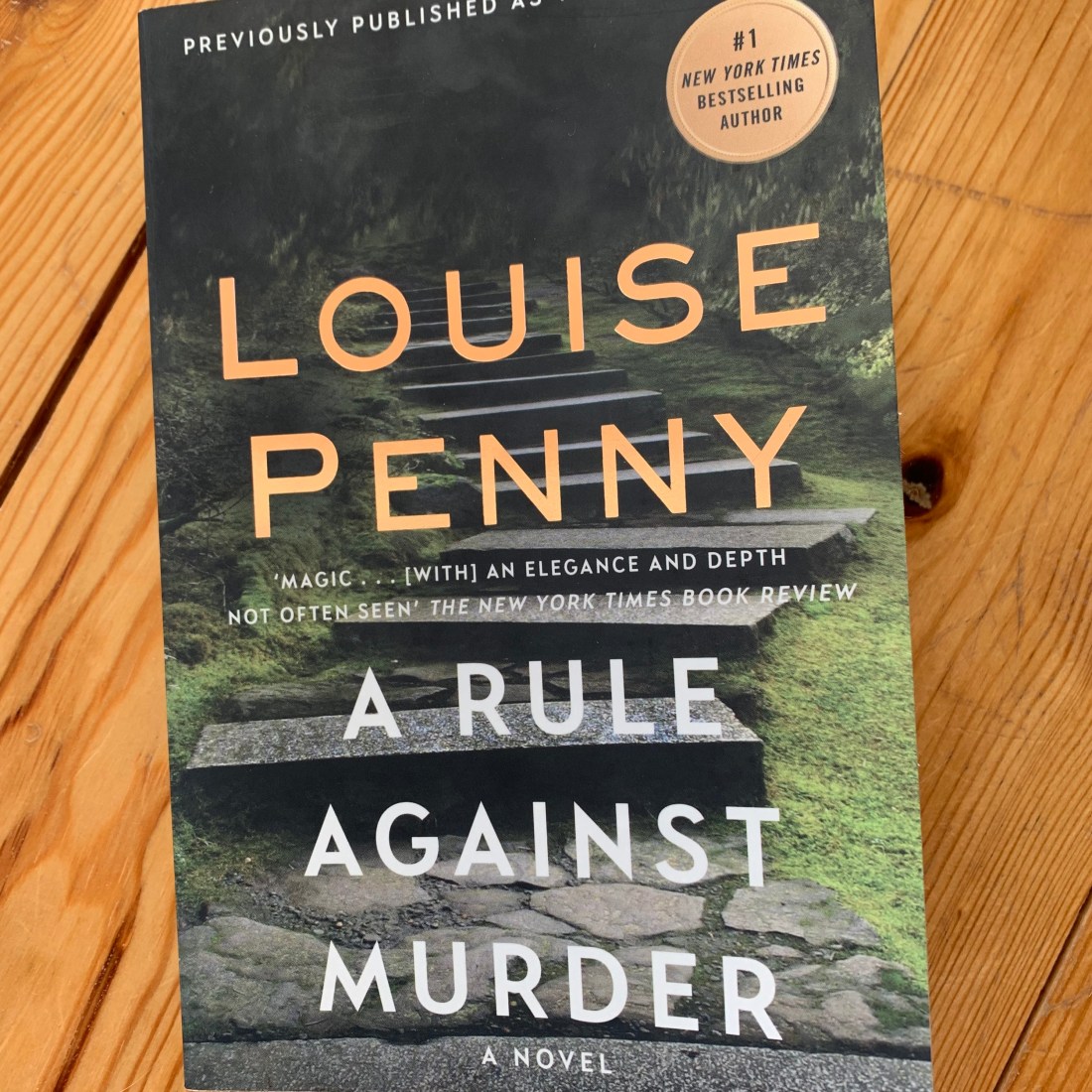
A Rule Against Murder by Louise Penny: A Review

“Not everything needed to be brought into the light, he knew. Not every truth needed to be told. And he knew she was right. He’d seen their faces as she’d fled. She’d said too much. He didn’t understand it, couldn’t see it, but he knew something foul had just come to light, come to life.” – Louise Penny, A Rule Against Murder

When I referred to Penny’s novels as ‘cozy’ mysteries back in the April Line Up post, I didn’t realize that was an actual thing. Cozy mysteries are apparently mystery stories that are not too graphic or too dark, which is an apt description for this series. The main character is Inspector Gamache; head of the homicide team for the Surete du Quebec, Gamache is intelligent and a refined. The novels are set primarily in Quebec, usually alternating between Montreal and the tiny village of Three Pines. While Penny certainly creates intricate plots, her writing does not embrace many tropes of typical mystery series: there are lots of references to art and poetry and music in her books. The female characters are strong and savvy. But what I love most about Penny’s writing is the sense of atmosphere she is able to develop. There is a strong sense of place in her novels and she contextualizes the setting with smatterings of Quebec’s (and Canada’s) culture, history and politics without it overshadowing the story. These are the novels I come back to when I need a break and just want to settle in with characters who feel as familiar as friends.

A Rule Against Murder is set at a remote country manoir where Gamache and his wife are staying. The other guests are members of the Morrow family – wealthy, English and Québécois – all there for a reunion. The Morrows are a family fraught with malice and secrets and when one of them is murdered, it brings to the surface things that have been hidden for years.  The murder and subsequent investigation play out in ways that keep you guessing. One of Penny’s strengths is her ability to create characters that have depth and she uses this depth to add the intrigue in the plot.

I think that her writing really takes off after this book. While this is a good novel, the ones that come later in the series are stronger, in my opinion. I particularly like the later ones set in the village of Three Pines. If you like mysteries and haven’t picked up one of her novels, her fifth, The Brutal Telling might be a good place to start.

If you are reading something you love this spring, drop me a line and let me know. I love hearing other people talk about books they are passionate about. Until next week, happy reading!

April Line Up

This month’s theme is, ‘can you keep a secret?’ Each of the novels for April center around secrets. One of them is a mystery in the conventional sense, but the rest are novels where secrets drive the story in other ways. There is something delicious about a good secret and as a reader, I find it so compelling to try to unravel them. I hope some of these secrets appeal to you and you find something in this month’s line up to read along with me.

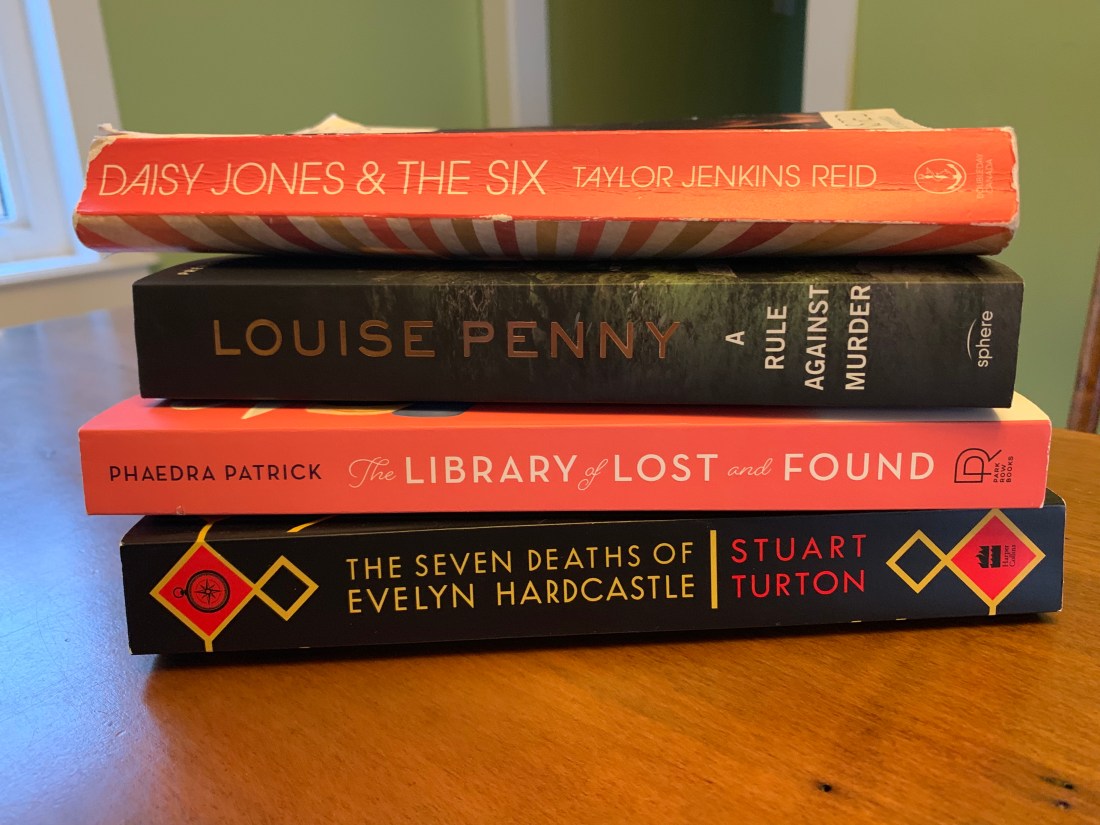
April 6, 2019: Daisy Jones & the Six by Taylor Jenkins Reid

I’ve never read any novels by Taylor Jenkins Reid and I wasn’t too sure about this one – it’s set in the 1970s and follows a rock band as they make music and go on tour. No one knows why the group split after their last show in Chicago in 1979 at the height of their popularity but the secret is revealed over the course of the novel. I was on the fence about reading this one, but a new friend gave it the thumbs up so I decided to put it on the list for this month and happily borrowed her copy.

April 13, 2019: A Rule Against Murder by Louise Penny

Penny is a Canadian novelist and A Rule Against Murder is part of her Three Pines series (I think there are fourteen of them now). All of the novels are set in Quebec and I love them for the sense of atmosphere Penny creates and the cast of quirky characters that populate her fictional world of Three Pines. You don’t need to read the series in order, each mystery can stand alone although there are over-arching plots. In this one, family secrets lead to murder at a isolated Manior and Chief Inspector Gamache must solve the case.

April 20, 2019: The Library of Lost and Found by Phaedra Patrick

I’m a sucker for a book about books, which is what first led me to pick up Patrick’s latest novel. If you are a book nerd like me, how is this for a story line? The main character is Martha Storm, an awkward but kindhearted librarian. One day, a mysterious book of fairy tales arrives on her doorstep and the dedication is written by her grandmother, Zelda, who died mysteriously years before. Martha comes to believe her grandmother may still be alive and starts to follow the clues that ultimately reveal family secrets.

April 27, 2019: The Seven Deaths of Evelyn Hardcastle by Stuart Turton

At the end of the ball, Evelyn Hardcastle is murdered. But it doesn’t look like a murder, so the murderer doesn’t get caught. Until Aiden, one of the guests at the party, can solve the murder the day will repeat itself, over and over again and Evelyn will be killed each night. I really like it when authors take a genre you think you know and push its boundaries. This is Turton’s debut and I am really excited to see how this story unfolds.

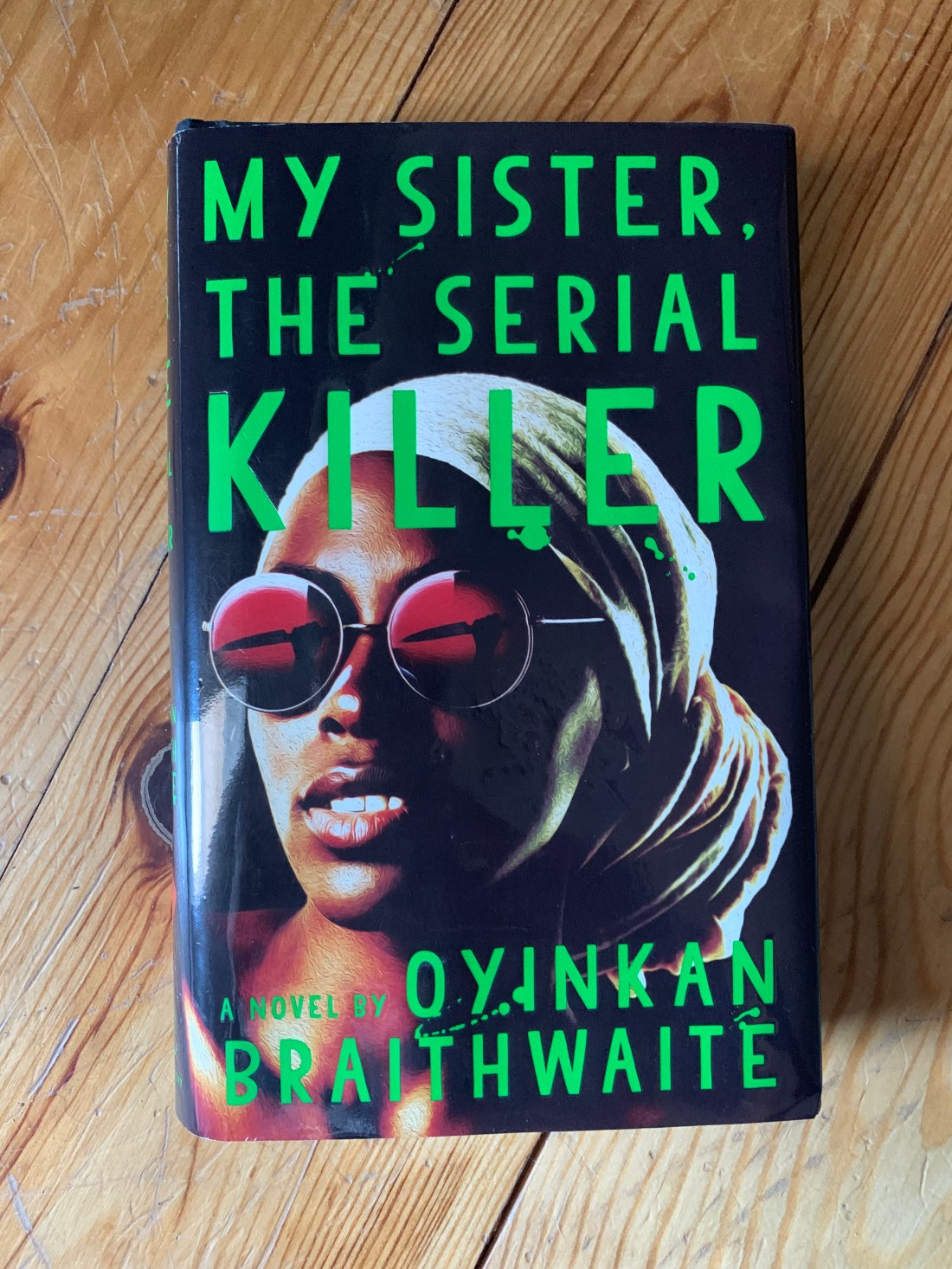
My Sister, the Serial Killer by Oyinkan Braithwaite: A Review

“Ayoola summons me with these words—Korede, I killed him.”
― Oyinkan Braithwaite, My Sister, the Serial Killer

I think I suffer from a kind of genre fatigue. I can never read too much of the same kind of book without itching for something different. This doesn’t seem to affect me with fiction in general (which I read way more than non-fiction) but I can’t read a whole lot of mysteries, or a whole lot of historical fiction or whatever in a row without feeling like I need a break. To cleanse my palette, so to speak, with something different. So after several weeks of reading novels that involved a lot of heavy lifting thematically and emotionally, I was ready for something lighter. If it seems odd that I am describing a novel about a serial killer as “light”, let me explain…

My Sister, the Serial Killer is the debut novel of Nigerian writer Oyinkan Braithwaite. The main character is Korede, a practical, no-nonsense nurse who lives at home with her mother and younger sister, Ayoola. Ayoola is beautiful and talented. She works as a clothing designer, and because of her beauty, everything in life comes easily to her. Korede is in love with a doctor who works at her hospital and she has hopes that their friendship might turn into something more – until he meets Ayoola. You could be excused for thinking what I’ve described so far sounds like a classic love triangle with a healthy dose of sibling rivalry on the side. But there is one critical difference. Ayoola murders her boyfriends. This is not a spoiler because the novel opens with Korede helping her seemingly “perfect” sister dispose of a body … for the third time. And according to Korede’s research, three murders is what defines a serial killer. From the beginning of the book, Korede seems resigned to the fact that there is no help for Ayoola and ultimately has to ask herself how far she is willing to go to protect her little sister, even when she knows her sister is entirely in the wrong.

Ayoola’s stunning levels of self-interest mean that she is largely unconcerned with the greater moral implications of what she has done and Korede is left to wrestle with the guilt and worry in the wake of their actions. While Korede is trying to comes to terms with her decision to help Ayoola cover up her crimes, her sister is posting selfies on Instagram and lining up her next date. Korede’s frustrations with Ayoola and her jealousy of her have a darkly comic effect in the novel. Braithwaite plays with many conventions of so-called “chick lit” novels but then adds in this completely unexpected element of making Ayoola a serial killer. It doesn’t seem like it should be funny and yet it is.

This novel is a very fast read and I found it pretty entertaining. The best way I can describe it is to say, think Bridget Jones meets Dexter. If that makes any kind of sense to you and sounds appealing, it’s worth picking up. Korede is a really good character and while her sister’s actions are extreme, in many ways Braithwaite juxtaposes this with completely relatable family dynamics that make you feel like you know this family. Except, you know, the bits where the younger sister stabs her ex-boyfriends.

Tomorrow I will post April’s Line Up. Until then, happy reading!

Homegoing by Yaa Gyasi: A Review

“This is the problem of history. We cannot know that which we were not there to see and hear and experience for ourselves. We must rely upon the words of others.”  -Yaa Gyasi, Homegoing

Homegoing is a novel that reads like a series of vignettes. It spans eight generations, beginning in Ghana in the late 1700s with the stories of Effia and Esi – two sisters who don’t even know the other exists. Effia is forced to marry a British officer stationed at the notorious Cape Coast Castle, where people were imprisoned before being sold on into the slave markets of the Americas. Esi is captured in a raid on her village and sold as a slave, eventually ending up on a plantation in America. The novel alternates between tracing the experiences of Effia and Esi’s descendents – one family in Ghana and the other in America. Each chapter sheds light on a moment in time in a single character’s life, although sometimes there is intersection between the stories of parents and children. Although it is a relatively short novel, it has the feeling of a sweeping epic because Gyasi covers so much ground in terms of both Ghanan and African American experiences from the height of the slave trade until the present day.

What struck me the most in reading Homegoing was how Gyasi was exploring choice and consequences through her characters. Although each character is only part of the novel for a brief time, their choices often impact their children and their children’s children. Gyasi examines the role of choice – or lack of choice – in shaping her character’s lives that moves beyond family relationships to much broader issues, like the decision of Fante leaders to traffic slaves for the British, and the impact of the slave trade on those sent to the Americas but also on those who remained in west Africa. In many ways, it is a novel about power and how people are forced to conform to the expectations of those in power or face the consequences of their choices. Another major theme in the novel is the search for identity within both families and larger cultures and the desire to belong. Effia is forced from her family, where she was always treated differently, and into a marriage with a man she didn’t choose; her son, Quey does not belong in London, his father’s home, but neither does he truly belong in his mother’s Ghanan village. Being “other” in the worlds Gyasi contructs is dangerous – but conforming often comes at too high a cost.

While Gyasi ends the novel with a sense of hope for reconcilation despite the painful history the families have endured, much of the writing is haunting in its descriptions of the inhumanity that marginalized people face. Whether it was because of race, gender, sexual orientation or class, the weight of being disempowered is felt throughout the novel. Gyasi doesn’t pull back from the historical realities her characters face and I think she is playing to some degree with our expectations as readers – each chapter opens and closes on a single character and we keep waiting for a happy ending that doesn’t come. As I read, I kept waiting for it to “work out” for one of the characters and then I realized:  there weren’t going to be happy endings. And that was the point.

I have heard some people say that Homegoing is the best book they have read in recent years and while I wouldn’t say that’s true for me, it’s worth picking up. I like to “sit” with my characters for a while so the format of the novel was challenging because just as I felt I was getting to know a character, we were on to the next one. That being said, I know other people really liked that about the book’s style.

After what feels like weeks of pretty serious novels, the next one on my list, My Sister the Serial Killer should be a dose of something completely different. Drop me a line and let me know what you’re reading lately! Until next time, happy reading!


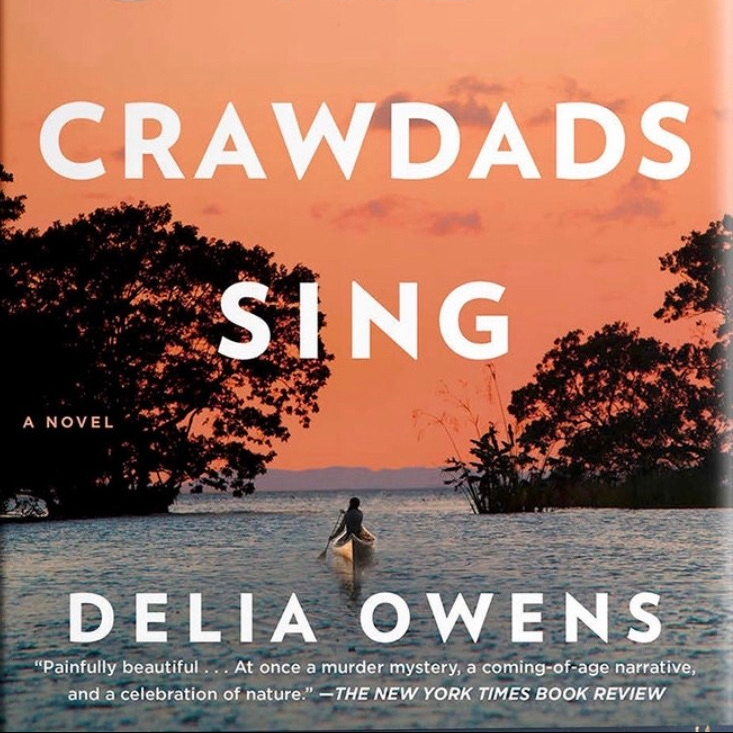
Where the Crawdads Sing by Delia Owens: A Review

“The marsh did not confine them but defined them and, like any sacred ground, kept their secrets deep.” – Delia Owens, Where the Crawdads Sing

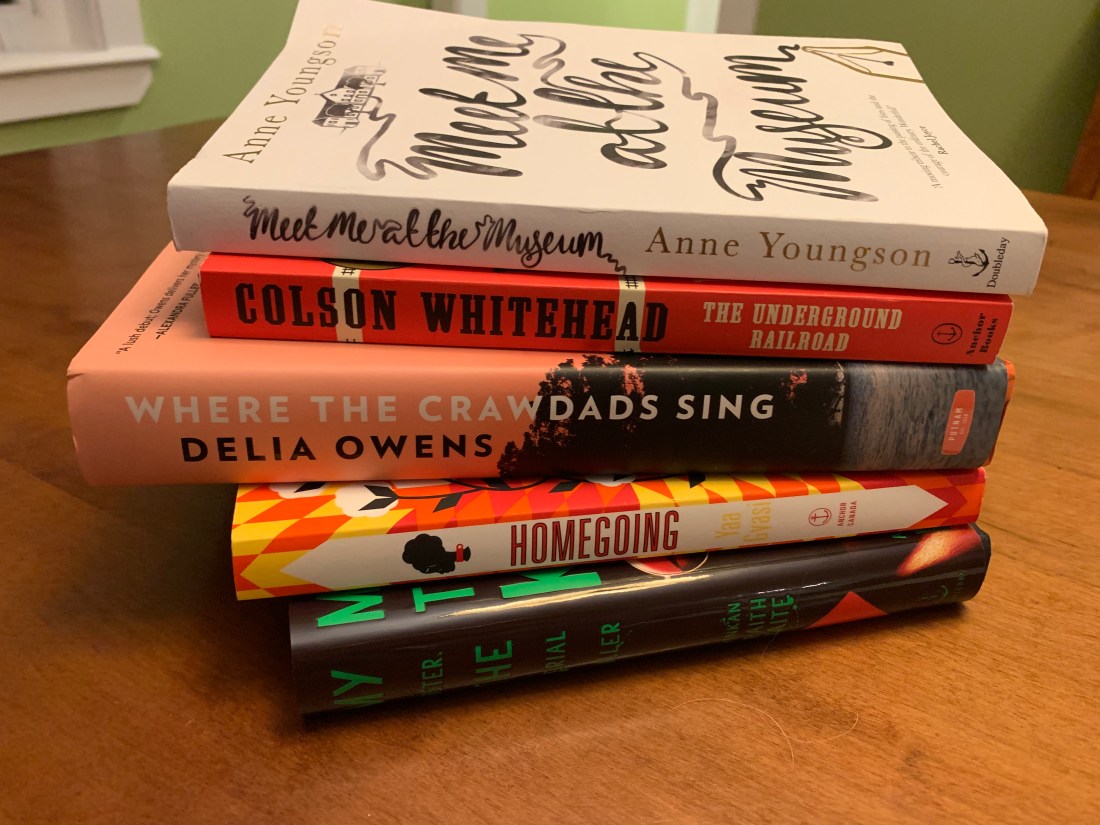
Sorry for the stock photo on this post, folks, but I already lent my copy of Where the Crawdads Sing away before I remembered to snap a picture for the blog. I guess it speaks to how good the novel is that I was handing it over to a friend before I even got my review done. The story opens with the discovery of the body of Chase Andrews, a local hero – handsome, star of his football team back in high school, heir to a properous family business – his death becomes the source of speculation and gossip. The circumstances of Chase’s death don’t add up, and quickly the sheriff starts to suspect foul play. The town’s eyes turn to Kya Clark, known by residents as the ‘Marsh Girl’. The narrative moves back and forth between the on-going police investigation into Chase’s death and Kya’s experiences growing up alone in the marsh.

Most of  Where the Crawdads Sing is set in a coastal marsh in North Carolina in the 1960s where Kya makes her home. It is a story of isolation and loss, but also of redemption and hope. As a child, Kya is poor and ends up abandoned by her family. Having lost everyone she loves and terrified of ending up in foster care and taken from her beloved marsh, Kya fends for herself and shies away from the company of others. Living in her family’s shack on the edge of a lagoon, her experiences are largely coloured by loneliness and isolation as she struggles to survive. Her greatest desire is to connect to other people but her unconventional life and the prejudices of the town against the ‘marsh people’ make it seemingly impossible for her to develop relationships. Despite the adversity of her circumstances, in many ways Kya is able to triumph and seems on the verge of finally making a life for herself when Chase’s body was found.

While the framework of the novel seems to be a basic murder mystery in the beginning, this book is so much more. Owens writes poignently about the marsh that sustains Kya over the years and rather than just the setting, the marsh seems to permeate every aspect of the novel. I am not someone normally drawn to nature writing, but Owens’ depictions of the marsh are beautifully handled and evoke a deep sense of place and time. The novel centers around big themes like love, hope and betrayal without becoming sentimental or sacchrine. Owens grounds the reader so well in Kya’s world that you are pulling for her right from the beginning and the novel’s turns mean that the storyline continues to surprise.

I originally bought my copy of Where the Crawdads Sing months ago and then kind of relegated it to my To Read Pile because the blurb made it sound a bit trite. I am so glad that a recommendation encouraged me to bump it up on my reading list because I thouroughly enjoyed it. It’s a really interesting exploration of human nature in all its cruelty and kindness but mostly, I think it’s Owens love letter to the landscape in which the book is set. If you read Where the Crawdads Sing, let me know what you thought. Also, if you, like me, weren’t one hundred percent sure what a crawdad is, they’re crayfish (and they don’t really sing, but they do kind of make a clicking sound). Thanks, Google.


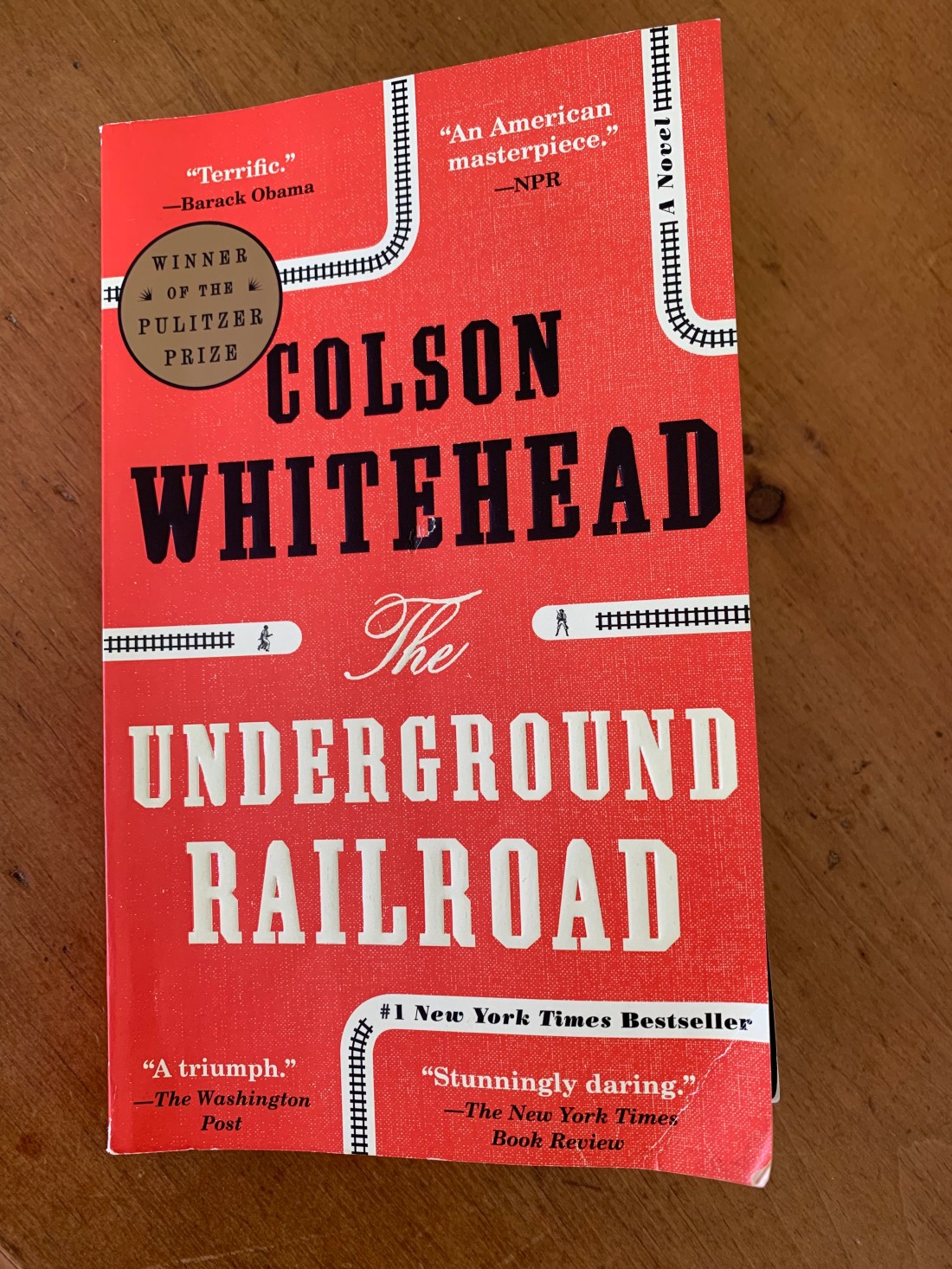
The Underground Railroad by Colson Whitehead: A Review

“If you want to see what this nation is all about, you have to ride the rails. Look outside as you speed through, and you’ll find the true face of America. It was a joke, then, from the start. There was only darkness outside the windows on her journeys, and only ever would be darkness.” – Colson Whitehead, The Underground Railroad

Most of us know the history of the underground railroad, but not as Colson Whitehead has reimagined it. The novel opens on a cotton plantation in Georgia. Cora is a third-generation slave; her grandmother is dead and her mother ran off years ago, meaning that Cora has grown up a ‘stray’ – a child with no family around her – and has had to learn to protect her own interests. Whitehead’s rendering of the plantation where Cora lives is bleak and heartbreaking. She is without prospects or hope until Caesar, another slave, talks her into running north with him.

What follows is an escape that leads through South Carolina, North Carolina and eventually into Tennessee and Indiana. There are many things that make the novel unique. Whitehead has chosen to make the underground railroad an actual set of tunnels and tracks running beneath the South where free blacks and sympathetic whites risk their lives to help enslaved people escape to freedom. This fantastic element in the novel means that the reader’s focus is more on the individual states where Cora surfaces, rather than on the journeys between states. In Colson Whitehead’s America, each state is unique in trying to “deal” with its black population – South Carolina invests in what it calls “negro uplift” to try to integrate black Americans into white society; North Carolina introduces race laws to drive black people from the state and replace them with cheap white labor from Europe. In Indiana, black people have gained a degree of freedom and prosperity but their security is always threatened by the shadow of racism. While the railroad that ferries Cora away from the plantation is the stuff of imagination, many of the other seemingly fantastical elements Whitehead introduces are not: there were attempts by health agencies in the US to sterilize members of the black community (and others) in order to reduce the numbers of black children being born; black men were unknowingly a part of studies on the impact of syphilis but led to believe they were receiving free health care from the US government. Black people were regularly lynched by mobs who went largely unpunished for their murders. Whitehead meddles with history in terms of locations and time frames so that each state Cora flees to represents an amalgam of ways in which white America tried to use, manipulate and sometimes terrorize the black population.

Given its heavy subject matter, it may be surprising to learn how readable this novel is. It is fast-paced and the characters are sympathetic and their sacrifices are many. Whitehead reveals how black and white Americans came together in unexpected ways to reinforce or fight against the systems of oppression that America was built on. While it covers much of the history dealt with in other novels, like Lawrence Hill’s Book of Negroes, Whitehead’s feels like a commentary on the racial undercurrents of contemporary American society. The book poses compelling questions about the country’s past and its present; according to one of Whitehead’s characters, America is a delusion but, “sometimes a useful delusion is better than a useless truth.” Despite the suffering and injustice the novel reveals, there is always hope. The number of people who help Cora along her journey at significant risk to themselves reinforces that the system can be beaten, and may someday finally be broken.

If fantasy isn’t your genre, I wouldn’t let it deter you from The Underground Railroad. It reads far more like historical fiction and the railroad itself is a negligible part of the plot, despite its significance as a metaphor. Cora is a character to root for and Whitehead’s writing is powerful and page-turning. If you read this novel, I’d love to hear what you think. Until next time, happy reading!


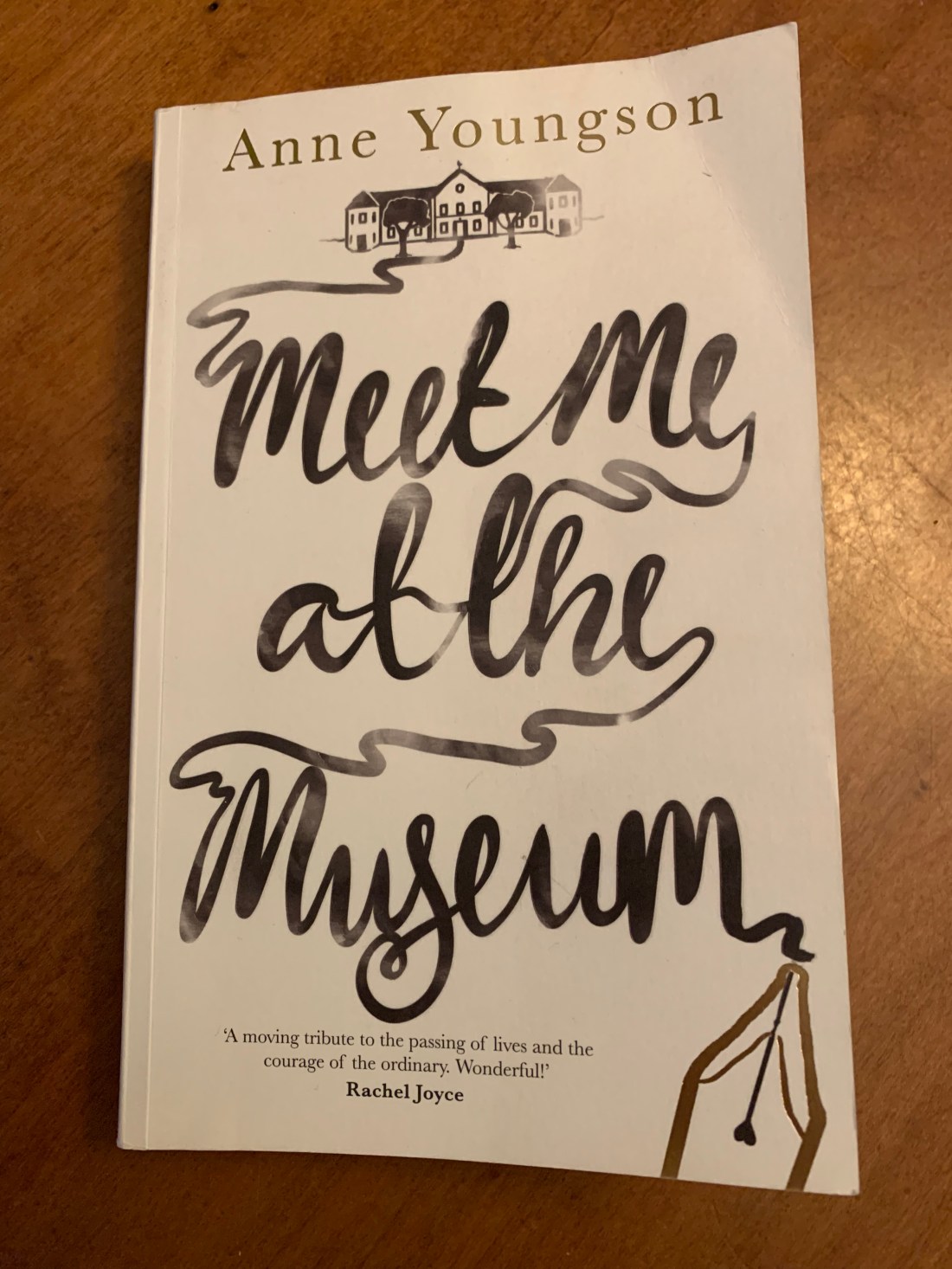
Meet Me at the Museum by Anne Youngson: A Review

“It is so long since the sacrifice was made, I was so young at the time, it took so many years for me to realize I had made it, that I can no longer say what, exactly, it was that I sacrificed; what it was that would have given me the satisfaction Edward feels every day. Perhaps it was the trip to Denmark—that could have been enough. But the blank space in my life feels too great to be overwritten by so slight an act.” – Anne Youngson, Meet Me at the Museum

Sometimes, I just like a book about ordinary lives. There is something about connecting to characters’ experiences that could be those of relatives or neighbours that I find oddly soothing.  Meet Me at the Museum is told through an exchange of letters between Tina, a farmer’s wife in East Anglia, and Anders, a Danish museum curator. When Tina’s best friend dies of breast cancer, she feels compelled to send a letter of regret to a Danish professor they wrote to as girls. The professor’s specialty was the Tollund Man – an Iron Age man found almost perfectly preserved in Danish peat – which fascinated Tina and Bella from their youth. They had always planned to go and see Tollund Man but life got in the way, then Bella died and Tina is left filled with regret and loss. The professor, of course, is long dead when Tina writes to him and so her letter is answered by Anders, who also seeks to answer some of the questions she posed. Anders too, is suffering a loss and as the letters go back and forth between England and Denmark, the pair are able to express more about their feelings and their views on life than either ever would with their friends or families.

The plot of this novel is deceivingly simple and the characters are forthright with each other in a way that means there is no guile or intrigue to the story. Both characters are older and as they put it, have more of their lives behind than in front of them.  What makes Youngson’s book so relatable is that the characters are searching for the meaning in their own lives. Neither is famous, nor rich, nor powerful. In their youth, both made choices that set their lives on trajectories they didn’t imagine at the time. It is a slow read in the sense that there is almost a meditative quality to it – I think you are supposed to stop and turn the questions over in your mind along with the characters. There is much in the novel that you could call quaint or charming, but not in a way that is clichéd. Youngson adds in these lovely elements – like scraps of Seamus Heaney poems, a story told by a mother to her daughter and an extended metaphor of picking raspberries – that add layers of depth and keep the story from seeming trite. Tina and Anders both come across as real people who hold sometimes surprising – and sometimes clashing – opinions. Toward the end of the novel when Tina faces a personal crisis that causes her to stop writing, the reader cannot help but think that it is only Anders – someone she has never met – who can help her navigate the situation.

The novel includes an interesting (but not overbearing) dose of Iron Age history as the Tollund Man is Tina and Anders’ touchstone. Tollund Man’s story is surprisingly moving. The museum where Anders works actually exists and if you are curious (like I was) you can visit the Museum Silkeborg to find out more about how Tollund Man died … so I guess I did meet them at the museum, at least virtually.

If you are looking for a novel where not very much happens with a heartwarming story, Meet Me at the Museum might be your next read.

Until next time, happy reading!


March Line Up

The theme this month is, “Might I Recommend?” I love book recommendations because often the books that get recommended to me are not ones I would have picked up on my own. I’m lucky to have friends, family and coworkers with great taste in reading so I never have to look very far for my next read. Lately (and against my better judgement) I have also started listening to the podcast, What Should I Read Next? Somehow, the host, Anne Bogel, is living my best life. On her show, she interviews people who engage in what she calls, “the reading life”. At the end of each interview – and this is the part where I should really hit stop but I never do – she asks her guests for three books they loved and one book they hated and from there, she recommends other books she thinks they would enjoy. And I literally sit there listening with my Amazon app open. It’s not a good scene. Well, with those personal demons unleashed, here is this month’s line up:

March 2, 2019: Meet Me at the Museum by Anne Youngson

Anne Bogol has recommended Meet Me at the Museum twice in recent episodes. It is a novel written in letters between Tina Hopgood, an elderly farmer’s wife from England, and Anders Larsen, a Danish museum curator. When Tina sends a letter to a man now long dead, she gets an unexpected response from Anders. Both of them are searching to make sense of their lives – Tina married young and never did the things she dreamed of as a girl; Anders has lost his wife, as well as his hopes for the future. Through their exchange of letters, their friendship grows and then Tina’s letters suddenly stop.  Oddly, their friendship begins with their mutual interest in The Tollund Man, a preserved body unearthed in a peat bog in Denmark in 1950. This novel seems to have just the right amount of quirkiness to pique my interest right now.

March 9, 2019: The Underground Railroad by Colson Whitehead

This book won the Pulitzer and the National Book Award (and about half a dozen other major awards) but it is also recommended by  Oprah, Barack Obama and one of my best friends. So who could ask for more than that? The Underground Railroad tells the story of a runaway slave, Cora, and her flight through the Underground Railroad with one key difference – in Whitehead’s novel, the underground railroad isn’t a metaphor, it’s a series of secret tunnels and tracks that run beneath the lands of the South. This isn’t a novel I would have naturally gravitated towards but I am trying to expand my own reading life a little more and I’m interested to see how Whitehead combines history and fantasy to examine the antebellum era.

March 16, 2019: Where the Crawdads Sing by Delia Owens

This novel is set on the coast of North Carolina. In late 1969, a man is found dead and locals suspect “Marsh Girl”, a young woman who has survived for years alone in the marshes. The book jacket doesn’t give much more away but it was recommended to me by a co-worker who hasn’t steered me wrong yet, and it was one of Reese Witherspoon’s book club picks (Reese is a bit more hit and miss than my co-worker). It’s also a debut novel and I am a bit of a sucker for a good debut so I am looking forward to chasing some gray March skies away with this one.

March 23, 2019: Homegoing by Yaa Gyasi

Another debut, Homegoing begins in eighteenth-century Ghana. Two half sisters, Effia and Esi are born in different villages and fate takes them in very different directions: one marries an Englishman and lives in relative luxury in the notorious Cape Coast Castle, the other is captured by slavers and shipped off from the same castle to America to be sold into slavery. The novels follow the families of the sisters through eight generations and examines the impact of slavery on those who were taken and those who stayed. It made a lot of “best book of the year” lists in 2016 and since then several people have told me how much they loved it. It’s been on my shelf for a while so it’s time to read it, I think.

March 30, 2019: My Sister, the Serial Killer by Oyinkan Braithwaite

When I first heard about this novel on What Should I Read Next?, I couldn’t resist (damn you, Amazon app!) Here is the premise: the main character, Korede’s sister is beautiful and the favorite child. She might also be a serial killer who murders her boyfriends rather than just breaking up with them. And then Korede, the dutiful sister, must help her cover up her crimes. Korede is in love with a local doctor, but when he asks her for her sister’s number, she has to reckon with what her sister has become. Part thriller, part dark comedy My Sister, the Serial Killer was originally published in Nigeria and its yet another debut. I’m thinking a mix between a romantic comedy and Dexter?

I love the idea of having people tell you three books they love and one they hated. Listening to people tell you why they loved particular books is so much fun. Where do you get your book recommendations? If you’ve read any in this month’s line up, drop me a line and let me know! I’d ask for your recommendations but honestly, this To Read Pile is out of control.


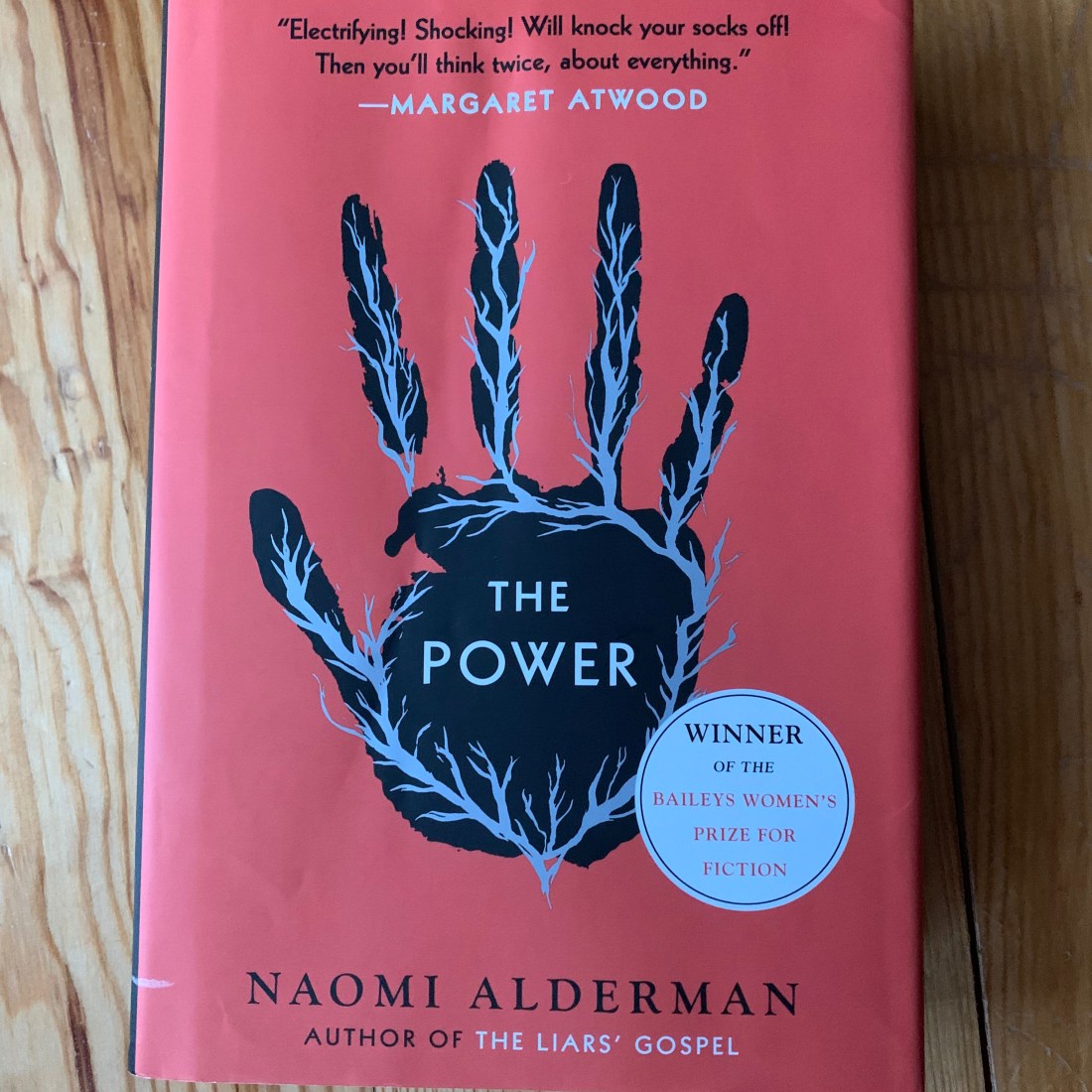
The Power by Naomi Alderman: A Review

“These things are happening all at once. These things are one thing. They are the inevitable result of all that went before. The power seeks its outlet. These things have happened before; they will happen again. These things are always happening.” – Naomi Alderman, The Power

It’s not often that you read a book that scares you and makes you laugh and think, “something about this book makes it feel important” all at the same time. The Power is the rare combination of thought-provoking and thoroughly entertaining. The story is mainly told through the voices of four main protagonists in the wake of an earth-changing event: teenage girls, and then women, are able to shoot electricity through their hands. Almost overnight, women become more physically powerful than men. There is an almost joyous sense in the beginning of the book as women who have been oppressed and exploited are able to defend and free themselves from the men who victimize them. As their power grows, there are even indications that there may be entire nations led by women, policed by women and free of the old ways of doing business. And then things, well … they kind of take a turn, but I don’t want to spoil it for you.

There are so many things to recommend The Power. It is by turns frightening and sad and thrilling and funny. Alderman is so smart – as someone with an English background, there were times when I would pause and think, “wait, how did she just do that?” and then have to go back and read through the section again. If it sounds like I’m gushing, it’s because I am. The writing has a cinematic quality to it and you can see Alderman’s descriptions unfolding in front of you. Although the novel covers a decade, the pacing is strong and there was never a point where I felt the story lag. What was most compelling to me was how real the alternative present Aldermen created felt. The ability of women to shoot electricity out of their hands aside, everything in the novel felt like it could be happening right now because by and large, it is. Alderman pulls from politics and religion, history and Internet forms, media and academia to hold a mirror up to society. As women grow more powerful in the book, some of them also grow to abuse that power. Scenes where men are attacked or afraid to walk alone at night were terrifying but with the roles were reversed, it also made me realize how desensitized we are to hearing these same stories from women. As the novel progresses it slowly becomes clear that everyone wants the same thing: to be safe; but not everyone can have what they want.

This is not a book about gender wars, nor is it casting blame on one side or another. Through the novel, Alderman seeks to explore what power does to our humanity and ultimately sees power and the desire to wield it as part of what it means to be human.

I normally don’t read a lot of speculative fiction but several people recommended this book to me and I am glad that they did. Sometimes I think as readers we need a nudge out of our comfort zones – it’s easy to run the risk of letting the genre determine what you read and what you avoid. For what it’s worth, I think The Power is worth picking up. Beyond Alderman’s clear abilities as a storyteller, the story she is telling is an important one for our times.

Until next time, happy reading!