June Line Up

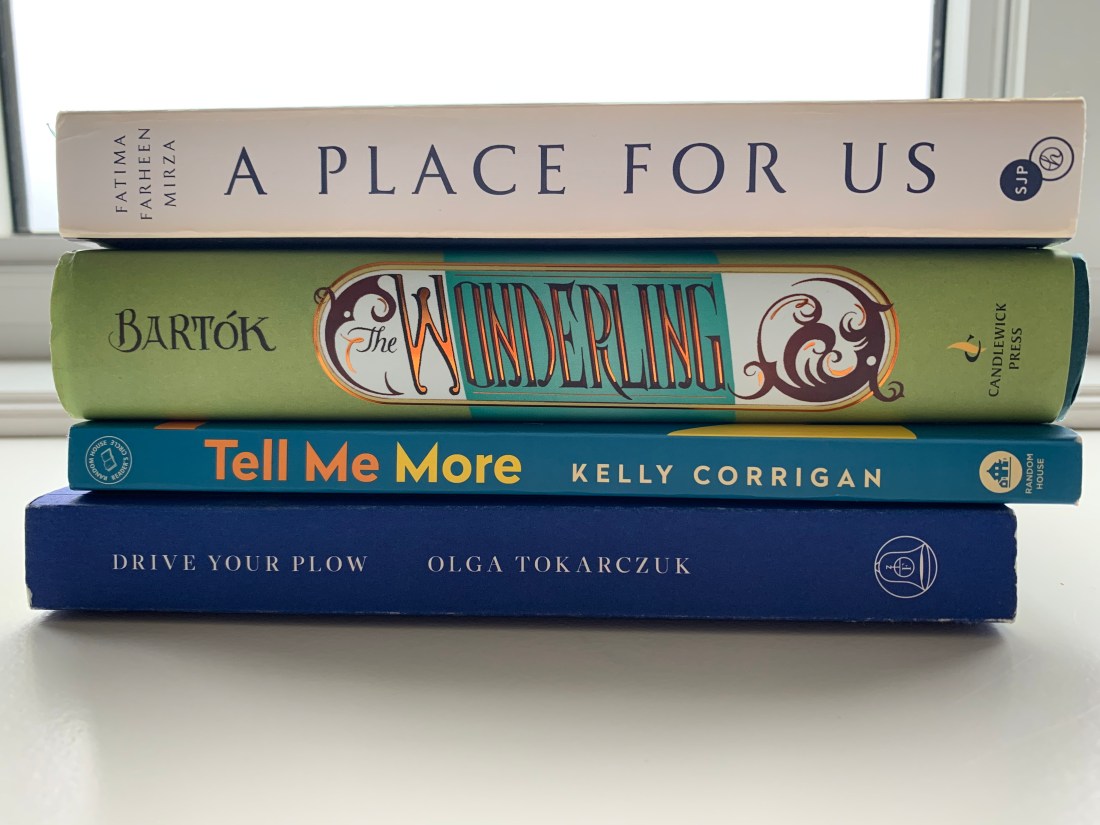
Okay, they say better late than never, right? Apologies for getting this post up after June has already begun but this month kind of crept up on me. When June comes around I usually start anticipating what I’m going to be reading over the summer. This year, I had a really hard time settling into what kind of books I felt like reading so I picked up a few with the idea that I would read a chapter or two and then make up my mind. It resulted it me reading five books at once, which is something I never do. Because I am rotating between books, the theme for this month is In No Particular Order. As I finish each book, I will post about it.

gods in Alabama by Joshilyn Jackson: This is the first audio book in my reading challenge (which is why it’s not in the picture). It’s another novel set in the South. The story follows the main character, Lena as she returns to her hometown in Alabama for the first time since she left it ten years before. The novel is contemporary fiction and mixes mystery with family drama. Listening to it adds an extra element of fun because the narrator has an Alabama accent so it really helps to capture the sense of place in a way that reading it in my head probably wouldn’t.

A Place for Us by Fatima Farheen Mirza: If you are keeping score at home, I was supposed to have read this book in May, that didn’t quite work out but I am enjoying it so far. It’s a fairly long novel and I don’t want to rush through it. Some books are page turners and some are meant to be savoured. I promise though – I will finish it this month.

The Wonderling by Mira Bartok: This is a middle grade novel. I confess to reading young adult and middle grade fiction on a fairly regular basis. There are a lot of great books written in these genres that I think adults pass over because they are marketed as being for younger audiences. The Wonderling is set in a world where there are humans and groundlings –  characters that are hybrids of humans and animals or animals and animals. The story begins with Number 13, a groundling who has lived his whole life at the Home for Wayward and Misbegotten Creatures. Number 13 manages to escape, and then sets off to find what happened to his real family. And so far, it’s good.

Tell Me More by Kelly Corrigan: I just learned about Kelly Corrigan recently. She writes memoirs but this is a collection of essays based on the twelve hardest things that Corrigan has learned to say. Things like, onward, and I was wrong, and I don’t know. She approaches each phrase with the stories from her own life that taught her the importance of having to say things even when you struggle for the words. She writes about her experiences in ways that are funny and heart-breaking on the same page. The essays are short enough that you can easily read one in a single sitting. Between Corrigan and Sedaris, I may be a convert to essays as a genre.

Drive Your Plow Over The Bones of the Dead by Olga Tokarczuk: I recently learned that compared to other parts of the world, North Americans read very few translated works. It made me wonder what kinds of things people were writing in other languages, and then I had a crippling case of FOMO (fear of missing out). I’ve started to look for more works in translation lately and this one caught my eye because of the title. It’s originally written in Polish and the main character, Janina, is an elderly woman living in a remote Polish village. When bodies start turning up, Janina is sure she knows who did it but no one will listen to her because of her reputation as cranky and maybe a little crazy. This is the first Tokarczuk novel I have ever read, but according to Google, she is a very big deal on the international writing scene.

So this is me for the month of June. If you have any recommendations for some great summer reads, I’d love to hear them! Until next time, happy reading!


Dress Your Family in Corduroy and Denim by David Sedaris: A Review

“Boys who spent their weekends making banana nut muffins did not, as a rule, excel in the art of hand-to-hand combat.” – David Sedaris, Dress Your Family in Corduroy and Denim

As a Canadian, when I first heard that David Sedaris writes funny, true-to-life essays that he sometimes reads on NPR, I pictured Stuart McLean, – a fellow Canadian – who wrote funny, true-to-life stories and essays that he read on the CBC. I picked up Sedaris’ book expecting heart-warming and sweet with a side of contemplative musing because that is what Stuart McLean used to write.

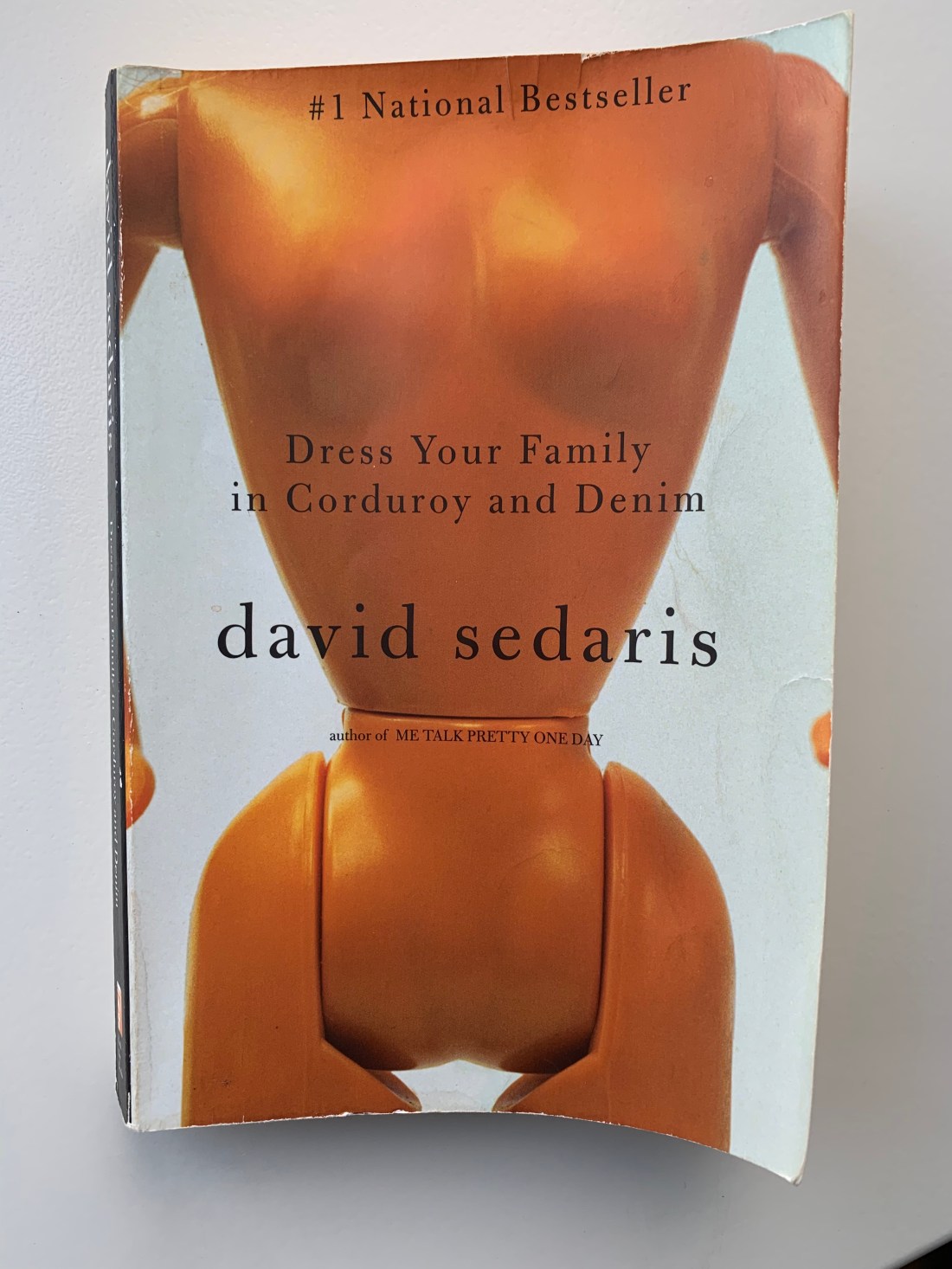
David Sedaris is not Stuart McLean. Maybe the naked Barbie torso on the cover should have been my first clue.

In fact, he is more like Stuart McLean’s outrageous younger brother who always manages to shock your aunt at Thanksgiving dinner. Sedaris is funny and smart and also muses at times, but instead of sweet, he is snarky – really snarky. His essays are honest (sometimes painfully so) and self-deprecating but reading the whole collection, you also get a strong sense of how Sedaris’ identity emerged against the backdrop of a somewhat unconventional family. The essays range from stories about his parents, to ones about his partner, to times in his twenties when he was trying to find himself as an artist. Sometimes I found myself shocked by his honesty but mostly they read like a really good story your friend would tell you that starts, this one time …

I’m not usually a big non-fiction reader but I think this collection does a great job of exploring all the wonderful, terrible, wacky and just plain hilarious stories that come with growing up in a large family. I especially loved how Sedaris wrote about his mother, who was strong and forthright. He admits that his family doesn’t exactly love being the focus of his essays most of the time, but he also pokes fun at himself and at times drops the sarcasm long enough for you to see the tender heart inside.

And he’s a grown man who’s not afraid to admit that when he is alone in his house at night, his biggest fear is a zombie apocalypse. Like in a very real way that keeps him from sleeping. And I can’t help but kind of love that.

Next up, I will be posting about June’s TBR. Until then, happy reading, everybody!

The One-in-a-Million Boy by Monica Wood: A Review

“These signs of care made him careful. He wanted to be generous – no to appear generous, but to be so.” – Monica Wood, The One-in-a-Million Boy


The One-in-a-Million Boy defines the word bittersweet. In many ways, this novel is about grieving but ultimately it is about how through a life remembered, we can become more than who we were before.

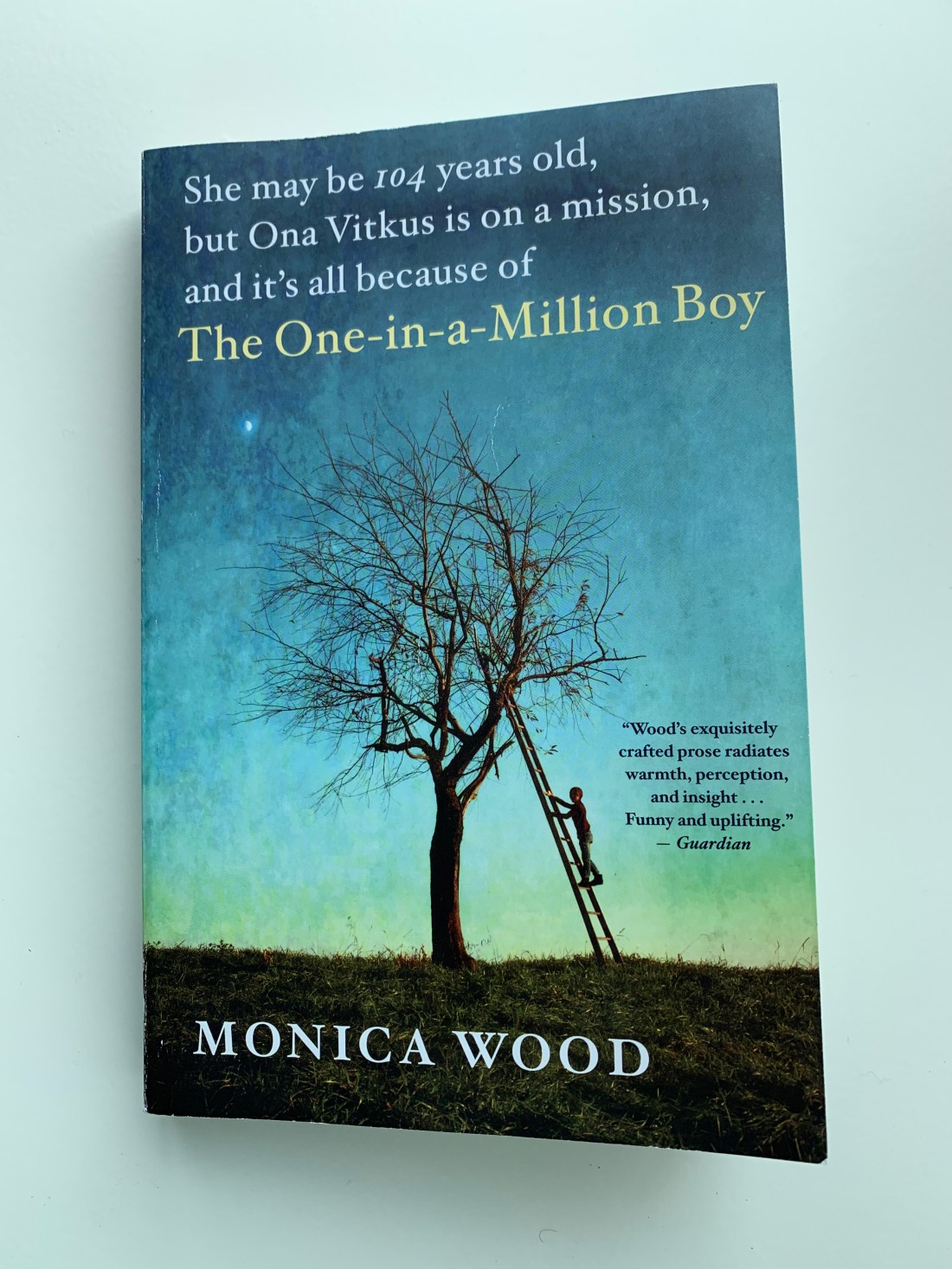
The boy, who is never named, dies of a one-in-a-million complication with his medication. Left behind are a 104 year-old woman named Ona, who had befriended the boy just months before his death, and his twice-divorced parents, Belle and Quinn. In case your are worried about the premise of this novel, I will say right off the bat that I am not interested in books that use the death of a child as a kind of cheap trick to invoke an emotional response in the reader.

But this is not that kind of book.

Although Woods is certainly using the boy’s death as a way of exploring heavy subject like grief and regret, she does this with a high degree of sensitivity and at no point did I feel that she was trying to exploit the reader’s emotions. On the contrary, I think the book does an excellent job of making the reader understand why the boy was so special to the adults in his life in ways that felt very real. The boy dies before the novel opens, but he feels very present throughout because of the people who cared about him. Wood uses his loss to gently probe the ways her characters react to their grief: Ona becomes determined to see through the plans she and the boy had made to get her into his beloved Guinness Book of World Records, Belle is completely undone by the loss of her son and Quinn feels he has no right to grieve because he was a largely absent father who struggled to connect to his quirky son while he was alive.

A novel like this risks tipping into sentimentality but Woods keeps this from happening by using moments of humor and sadness in equal measure. We get a sense of the boy through Ona’s memories of him, and the meticulous lists he kept to help him navigate his world. Ona is first introduced to the boy as a Scout who is tasked to help her around her house for 10 Saturdays. When the boy doesn’t show up one week, his father arrives instead, dedicated to seeing his son’s task through to completion. The relationship that develops between Ona and Quinn is the driving force behind the plot, but the boy’s influence is a constant undercurrent as the events of the novel unfold.

If heart-warming stories appeal to you, then I think it’s hard to go wrong with The One-in-a-Million Boy. It will have you laughing and crying, sometimes on the same page. Until next time, happy reading!

The Almost Sisters by Joshilyn Jackson: A Review

“‘Things feel hard now, but it will pass. Everything passes, and something new comes along to fill the space … You can’t go around holding the worst thing you ever did in your hand, staring at it. You gotta cook supper, put gas in the car. You gotta plant more zinnias'” – Joshilyn Jackson, The Almost Sisters

I have never been to the South (unless you count Florida, and I’m pretty sure Southerners don’t) but I have always loved stories set there. Like in Fried Green Tomatoes at the Whistle Stop Cafe or The Divine Secrets of the Ya-Ya Sisterhood, the South feels more like a character than a setting in Jackson’s novel; it’s hard to imagine the events unfolding as they do anyplace else. The Almost Sisters takes place mainly in the tiny town of Birchville, Alabama – named after the Birch family. The last remaining Birch in Birchville is Leia’s beloved grandmother. When the novel opens, Leia is confronted with several family crises all at once: she finds out she is pregnant and the father is an anonymous Batman she slept with after a drunken encounter at a Comicon, her step-sister Rachel’s marriage has just fallen apart, and then she gets the call to go to Alabama to look after her grandmother, Birchie. Birchie has been hiding her progressing dementia from Leia and it has just outed itself in a very public – and scandalous – way at the local Baptist church’s Summer Fish Fry.

This book is contemporary fiction and I want to say it would make a great summer read, but not in a way that implies it is a marshmallow book by any means. Leia’s return to Birchville unearths family secrets and explores family dynamics in ways that keep the plot moving. It is alternately funny and moving by turns. One of the most poignant moments is when Leia comes face-to-face with the racism that she equates with what she calls ‘the Second South’ – one that white Southerners are aware of, but can never truly experience. Leia’s unborn child is biracial and she has to come to terms with the idea that he could never grow up in Birchville the same way she did as a child because his skin colour would make it impossible.

There are several plot lines that weave together in this novel. Birchie and her best friend Wattie are fighting to maintain their independence, Rachel is trying to pick up the pieces after her husband betrays her and Leia is trying to construct a future for her baby while meeting the deadline for the comic book she has been commissioned to write. Through these women, Jackson is exploring how we create families and how those families shape our own identities, but she does it in a way that is really accessible and keeps you turning the pages. The novel isn’t heavy-handed but Leia is a smart, interesting character and Jackson’s writing keeps the story from becoming sappy or sentimental.

If anyone has read gods in Alabama, another of Jackson’s novels, I would love to hear what you think. And if you are an audio book lover, Jackson is a former actor, and reads her novels herself on audio. I haven’t listened myself but I’ve heard she does a great job.

That wraps it up for this week. Until next time, happy reading!