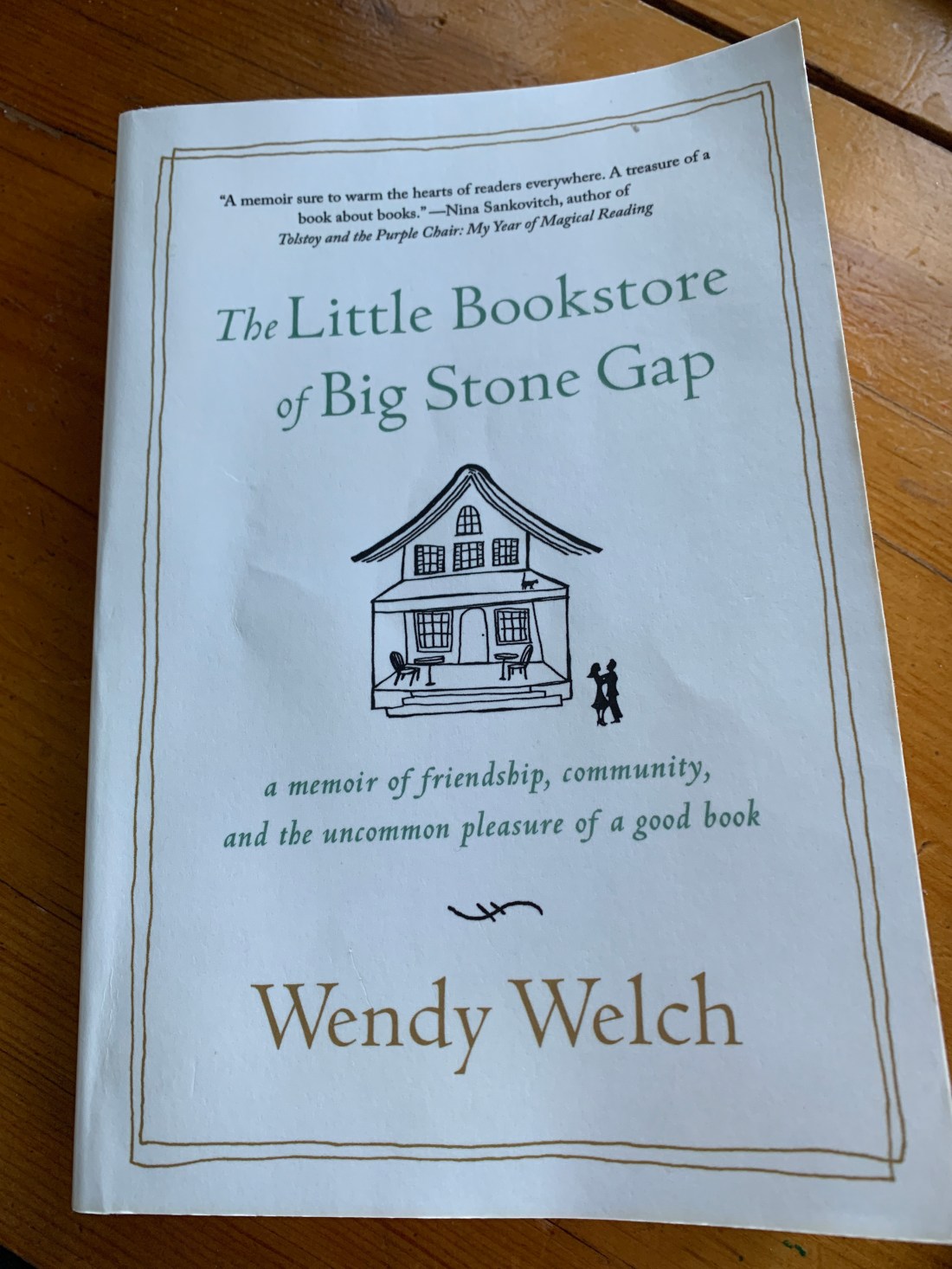
The Little Bookstore of Big Stone Gap by Wendy Welch: A Review

“Third places are those needed spaces, neither home nor work, where we are known by our names and valued for being whatever we decide to be — the clown, the intellectual, the quiet person. Being part of a family is a wonderful thing, and I’m all for team-building at work, but having a place where you don’t have to be anything to anyone makes a pleasant breather.” 

Wendy Welch, The Little Bookstore of Big Stone Gap

Like a lot of people who love to read, sometimes I wonder what it would be like to chuck in my day job and work in a funky little bookstore somewhere. It was that kind of daydreaming that prompted me to pick up Wendy Welch’s memoir about opening Tales of Lonesome Pine Used Books in Big Stone Gap, Virginia. Wendy and her husband, Jack, might seem unlikely entrepreneurs: Jack is a Scottish folks singer, and Wendy has her Ph.D. in ethnography and neither of them is exactly, (ahem) in the spring of their youth. They made the decision to open a used book store at a time when Wendy had given up her job in what she called the “Snake Pit” (no actual snakes or pits involved) and Jack had retired. They were travelling through Big Stone Gap and fell in love with a big old house that was on the market. Over nachos and sangria at a local restaurant, they decided almost on a whim to throw all of their savings into the house, which would become both bookshop and home.

I really enjoyed Welch’s self-deprecating way of recounting their early months as booksellers. When they opened Lonesome Pine, they had no idea how to run a book store, no inventory beyond their own books and a few yard sale finds and very little money. Big Stone is a small town, and both Wendy and Jack did not realize how significant putting down roots would be in the success of their business. After some unpleasant interactions, the couple threw themselves into not only book selling, but also making their store a community space – what Welch calls a “third place” – where people could come to connect. The store hosts craft nights, music nights, semi-annual murder mysteries and a myriad of other things to make it feel like a community space. I loved reading about all the ingenuity and elbow grease it took to get the store up and running. Welch writes about her store, her community and her husband with open affection. Welch talks about how leaving a job she hated to open Lonesome Pine feels like she is, “no longer renting space inside my skin” and her writing communicates that. She is unflinching in describing the mistakes she and Jack made, their interactions with annoying customers, and unpleasantness within the town, but she is also generous in describing the bookstore’s regulars, her pleasure in talking books with others and the fun of finding a home in Big Stone. There is something very reminiscent of The Little Engine that Could in the way that the couple kept plugging away at their dream until they made it a success.

The Little Bookstore of Big Stone Gap is full of energy and charm. I love memoirs of everyday people because I think it shines a light on acts that we often take for granted. Welch is also a blogger and you can visit her here if you want to get a sense of what the store is all about.

That’s it for this post! Until next time, happy reading!

The Seven Husbands of Evelyn Hugo by Taylor Jenkins Reid: A Review

“You do not know how fast you have been running, how hard you have been working, how truly exhausted you are, until somewhat stands behind you and says, “It’s OK, you can fall down now. I’ll catch you.” 

Taylor Jenkins Reid, The Seven Husbands of Evelyn Hugo

There is a lot to dig into in the novel. Evelyn Hugo was a Hollywood star during its Golden Age. She became increasingly reclusive in her old age and was famous not just for her movie roles but also for her seven marriages. She chooses Monique Grant, an unknown journalist to write her tell-all biography that can only be published after her death. The narrative bounces between Evelyn’s retelling of her rise in Hollywood and Monique’s struggle to come to understand why Evelyn chose her of all people to write the book.

I picked this up because of how much I enjoyed Daisy Jones and the Six. The narrative structure and setting are very different in Evelyn Hugo, but Reid’s ability to create complex characters is common to both novels. Evelyn especially is both captivating and ruthless, drawing the reader into her experiences as she reveals her life’s secrets to Monique. Another thing I appreciated about this novel was how Reid presented the difficult choices that members of the gay community working in Hollywood had to face at the time. Reid is unflinching about how perilous being openly gay would be been to her character’s careers but also to their reputations and possibly to their personal safety. Evelyn’s time in Hollywood is set when people were still being sent to mental asylums for being gay. Reid examines the price of fame through portraying the choices her characters had to make in order to keep their careers afloat in the cut-throat world of the film industry at a time when studios basically “owned” the actors who were contracted to them.

I think Reid does a great job of capturing the eras in which she writes. She is able to create characters that are flawed yet still sympathetic. In the same way that I thought that Daisy Jones read like the transcripts of a real rock biography, Evelyn Hugo feels like a real celebrity tell-all but Reid is able to build strong characters and thus avoids plots that seem superficial or stale.

As a side note, what it with all of the books with “seven” in the title lately? The Seven Deaths of Evelyn Hardcastle, The Seven Husbands of Evelyn Hugo, A Brief History of Seven Killings …

The next post will be a memoir, The Little Bookstore of Big Stone Gap by Wendy Welch. Stay tuned! Until then, happy reading!

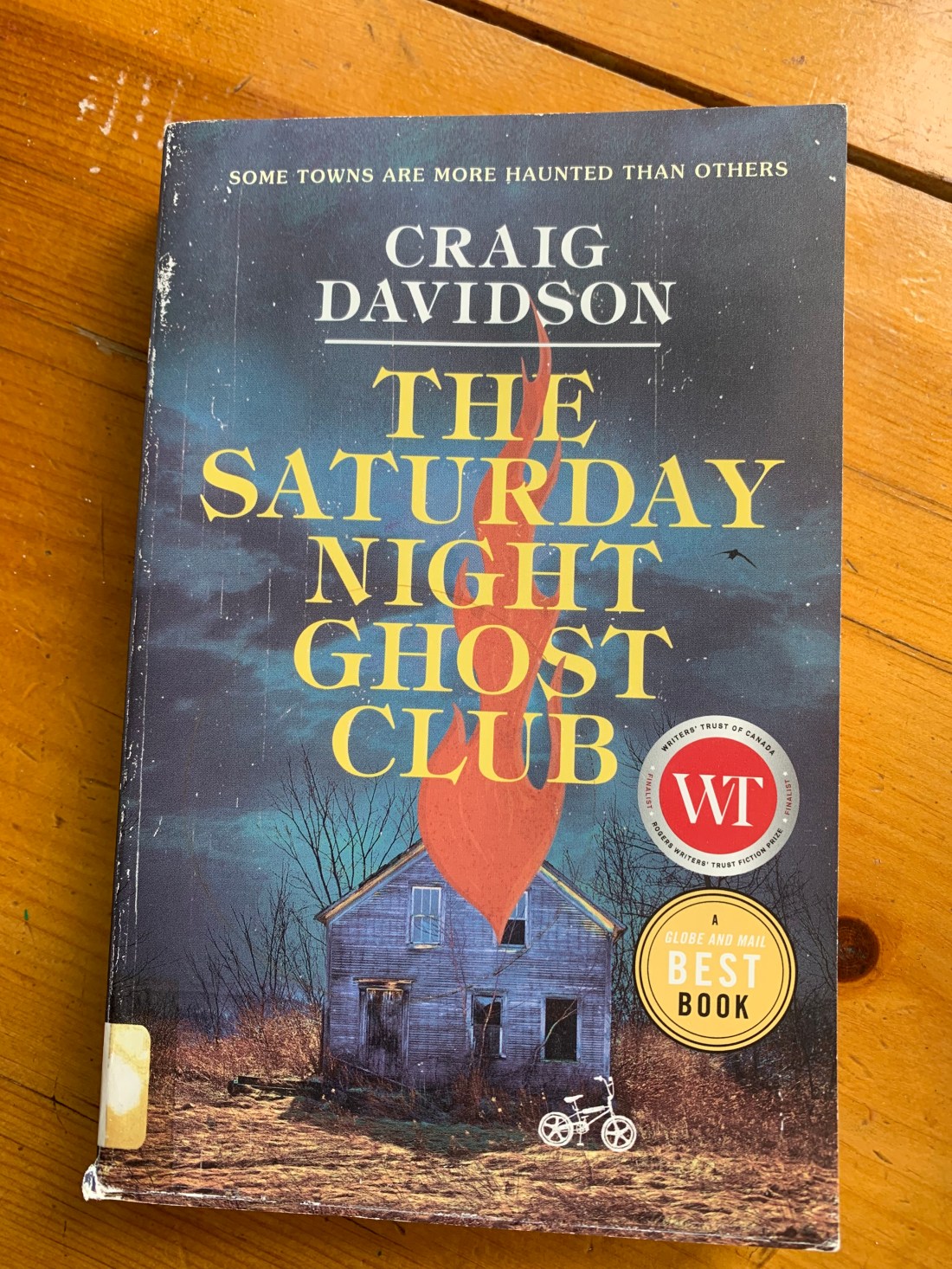
The Saturday Night Ghost Club by Craig Davidson: A Review

“we are only human, a condition of perpetual uncertainty and failure.” 

 Craig Davidson, The Saturday Night Ghost Club

As a child of the 80s, I find it really hard to resist the nostalgia of anything set at that time. Whether it’s actually 80s stuff like re-watching “The Goonies” for the thousandth time, or new things set in the 80s, like “Stranger Things”, I am a complete sucker for it. I think I especially like stories where the protagonists are kids because that’s what I can related to from that time. Enter The Saturday Night Ghost Club. Set it 1980s Niagara Falls, Davidson’s novel evokes a lot about that place and time to create the setting. Jake, a fat kid with few friends, spends a lot of his free time with his Uncle Calvin, an eccentric guy who is a die-hard believer in conspiracy theories and owner of a store dealing in occult objects. Jake recounts the experiences of one summer when he, his uncle, and a handful of others decide to initiate the Saturday Night Ghost Club – a group that visits Niagara Falls’ supposedly haunted spaces and listens to Calvin recount the stories of the gruesome events that happened there.

In a lot of ways, this is a classic coming-of-age novel that evokes writers like Stephen King. By turns funny and sad, it gets at the heart of what it feels like to start seeing the world through the eyes of the outsiders and castoffs who populate the novel. I thought this book was going to be about Jake growing up and out-growing his uncle’s ghost stories, but it turns out to be much more than that. Through the Saturday Night Ghost Club, Jake begins to realize that his uncle’s quirkiness is actually a symptom of a long-held family secret. I really like this novel, which I found both page-turning and tender. I got through it in a couple of days by reading and listening to it on audio, and the audio is worth it if you don’t want to pick up a copy.

Tomorrow look for my review of The Seven Husbands of Evelyn Hugo by Taylor Jenkins Reid which is, once again, something completely different. Until then, happy reading!

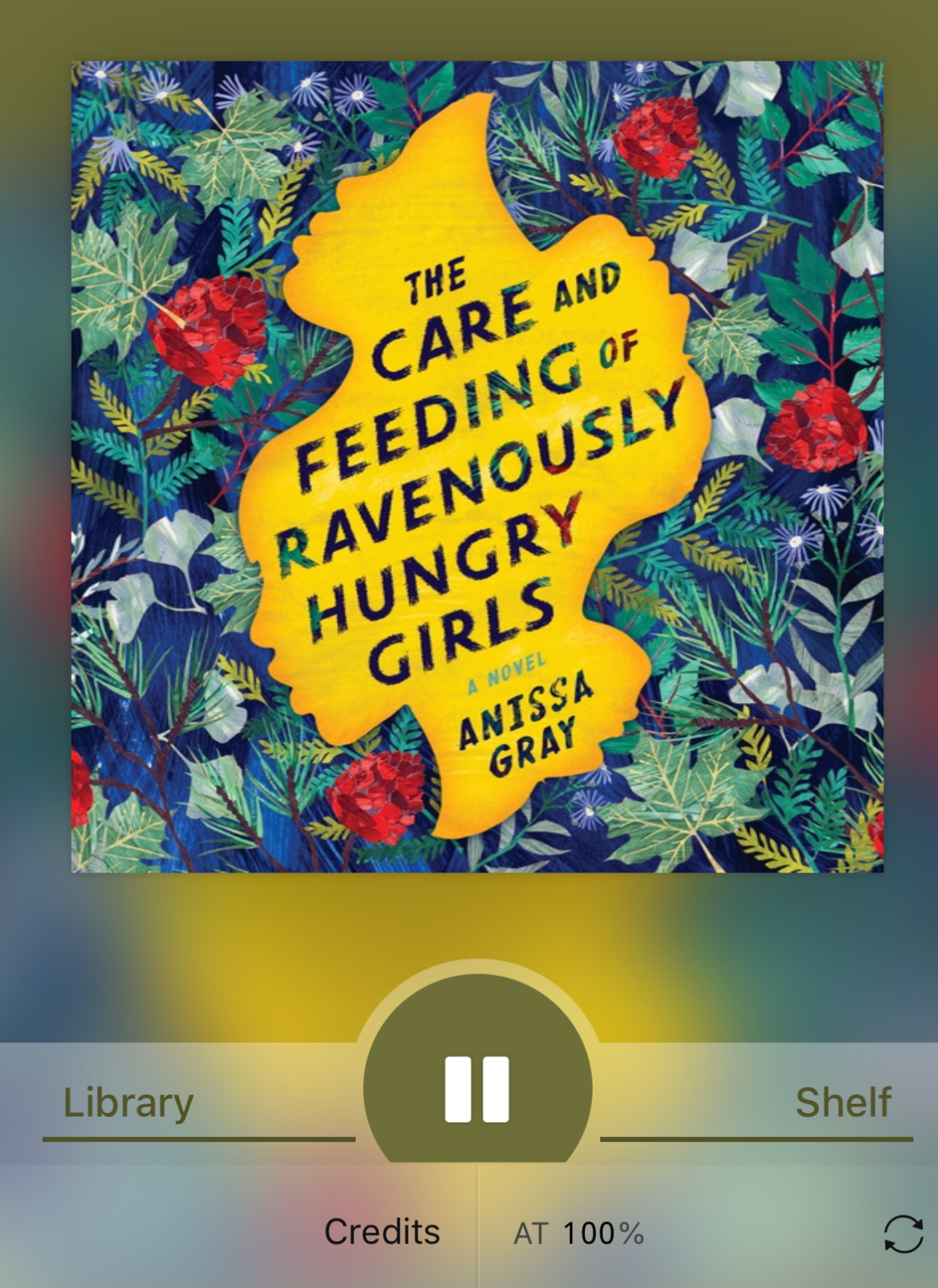
The Care and Feeding of Ravenously Hungry Girls by Anissa Gray: A Review


“That river runs through the place where I was easier to define. The place that made me who I used to be. Althea Marie Butler-Cochran: round, dimpled face; rounding, dimpled body; smooth, light brown skin; wife; mother; daughter; sister; mighty force of nature.” 

― Anissa Gray, The Care and Feeding of Ravenously Hungry Girls

The title! The cover design! But never mind, those might have been the reasons I first noticed Anissa Gray’s debut novel but it is the powerful writing that really captured me. The Care and Feeding of Ravenously Hungry Girls is the story of a family dealing with crisis. Althea and Proctor were pillars of their community; they ran a popular family restaurant and were raising their two daughters. But when the novel opens, Althea and Proctor are in prison on charges of fraud. They had been skimming money from the charities they ran and they got caught. The novel alternates between a variety of voices, those of Althea and Proctor, and Althea’s sisters, Viola and Lillian as the family tries to come to terms with their new reality. At the forefront is how to help the couple’s teenage daughters cope with what is unfolding, but the novel delves deep into family connections, especially relationships between mothers and daughters, but also between siblings. Althea, Viola and Lillian also face their own demons and through her novel Gray examines heavy subjects like eating disorders, homophobia, childhood neglect and life in the prison system.

I listened to this book on audio which enhanced the experience of having the novel told through different characters’ voices because each was read by a different performer. While it deals with subject matter similar to An American Marriage, the focus of Gray’s novel isn’t so much about the dissolution of a family as it is about the attempt to hold one together. All of the characters are flawed in their own ways but each is still striving to do what they believe to be right but old family secrets have to be brought to light in order for them to find a way forward.

Gray’s novel is not what most people would categorize as “summer reading”, especially if you prefer something light and breezy at the beach, but it is an impressive debut and is well worth the read. Tomorrow I will post about The Saturday Night Ghost Club by Craig Davidson for something completely different. Until then, happy reading!

Station Eleven by Emily St. John Mandel: A Review

“Survival is insufficient.” 

Emily St. John Mandel, Station Eleven

If categories like dystopian or science fiction scare you, please don’t let that turn you away from reading Station Eleven. The novel moves back and forth in time as civilization as we know it dissolves after the outbreak of a deadly flu pandemic. It centers around the experiences of a loosely related group of people, contrasting their lives before and after the outbreak. The world before the outbreak is one we recognize: fame and media and technologies that cushion us from the harshness of the nature (and sometimes each other). The world after is both new and old – electricity, modern communication – all of it has ceased to exist. New cults form, old forms of entertainment, such as the theater troupe known as the Travelling Symphony, perform Shakespeare in the new settlements. St. John Madel never takes us right into the horrors of the collapse, skirting it instead through the days proceeding the pandemic and the eerie years after, as the survivors try to rebuild.

The writing in this novel is beautiful. Despite the difficulties that the new world presents, the characters are largely driven by hope. The characters are connected by one man, the actor Arthur Leander who died onstage on the eve of the outbreak. The author weaves his story into the lives of those who were linked to him, knowingly or not, in the years after. The novel explores the nature of art, fame and ambition while never losing sight of good story-telling. As humanity struggles to pick up the pieces in the wake of what has been lost, the writing takes time to linger on what it means to be human, to be decent and thoughtful when everything familiar is gone.

I really enjoyed Station Eleven and I think that for readers who don’t see themselves as fans of dystopian or speculative fiction, St John Mandel’s writing challenges what the stereotypes of those categories can mean.

I’ve only got a few weeks left to meet the 52 book challenge and while I’ve been reading a lot, the posts are obviously behind so you can expect to see them coming fast and furious in the next couple weeks. Anything you think I should squeeze in before the end? Let me know! Until next time, happy reading!