Station Eleven by Emily St. John Mandel: A Review

“Survival is insufficient.” 

Emily St. John Mandel, Station Eleven

If categories like dystopian or science fiction scare you, please don’t let that turn you away from reading Station Eleven. The novel moves back and forth in time as civilization as we know it dissolves after the outbreak of a deadly flu pandemic. It centers around the experiences of a loosely related group of people, contrasting their lives before and after the outbreak. The world before the outbreak is one we recognize: fame and media and technologies that cushion us from the harshness of the nature (and sometimes each other). The world after is both new and old – electricity, modern communication – all of it has ceased to exist. New cults form, old forms of entertainment, such as the theater troupe known as the Travelling Symphony, perform Shakespeare in the new settlements. St. John Madel never takes us right into the horrors of the collapse, skirting it instead through the days proceeding the pandemic and the eerie years after, as the survivors try to rebuild.

The writing in this novel is beautiful. Despite the difficulties that the new world presents, the characters are largely driven by hope. The characters are connected by one man, the actor Arthur Leander who died onstage on the eve of the outbreak. The author weaves his story into the lives of those who were linked to him, knowingly or not, in the years after. The novel explores the nature of art, fame and ambition while never losing sight of good story-telling. As humanity struggles to pick up the pieces in the wake of what has been lost, the writing takes time to linger on what it means to be human, to be decent and thoughtful when everything familiar is gone.

I really enjoyed Station Eleven and I think that for readers who don’t see themselves as fans of dystopian or speculative fiction, St John Mandel’s writing challenges what the stereotypes of those categories can mean.

I’ve only got a few weeks left to meet the 52 book challenge and while I’ve been reading a lot, the posts are obviously behind so you can expect to see them coming fast and furious in the next couple weeks. Anything you think I should squeeze in before the end? Let me know! Until next time, happy reading!
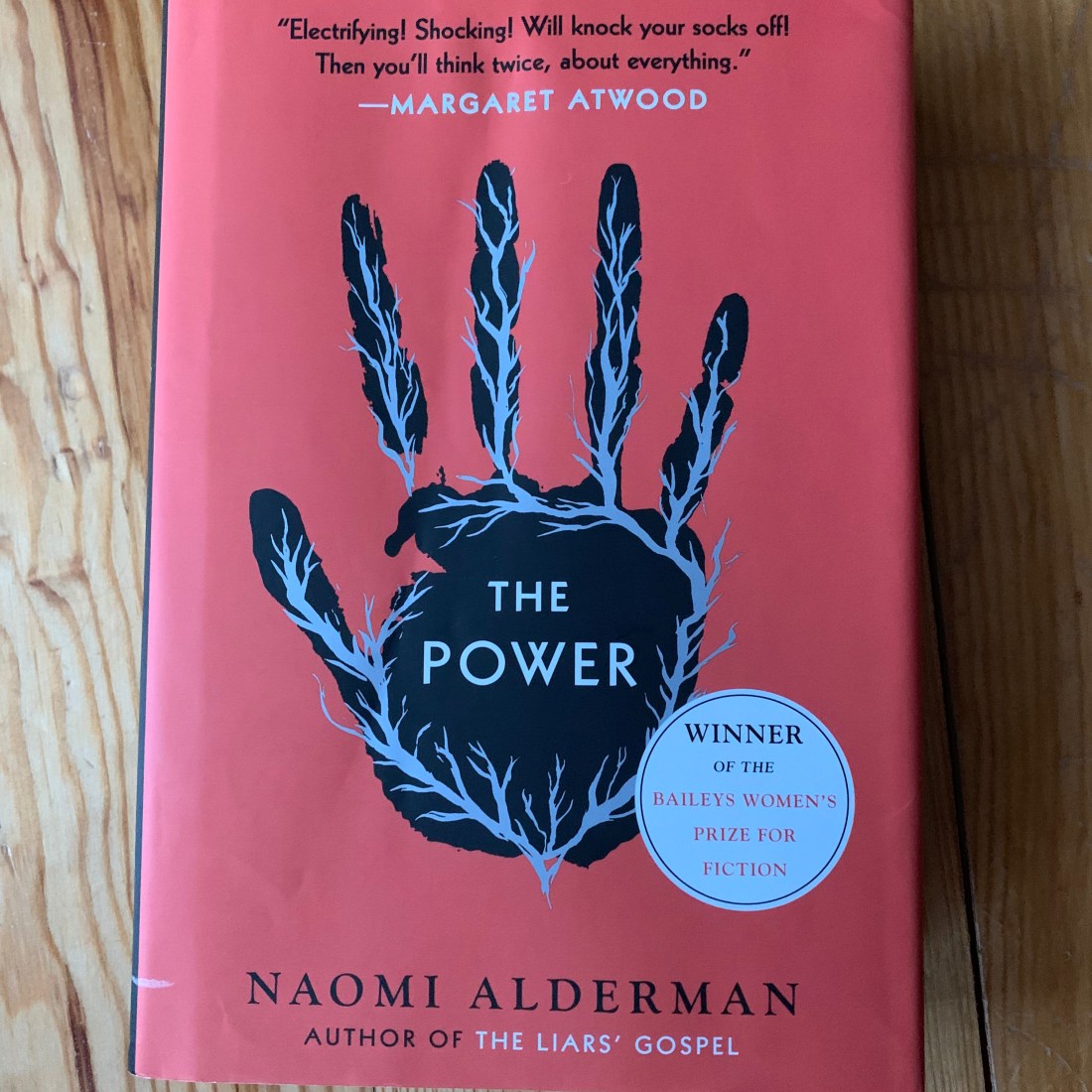
The Power by Naomi Alderman: A Review

“These things are happening all at once. These things are one thing. They are the inevitable result of all that went before. The power seeks its outlet. These things have happened before; they will happen again. These things are always happening.” – Naomi Alderman, The Power

It’s not often that you read a book that scares you and makes you laugh and think, “something about this book makes it feel important” all at the same time. The Power is the rare combination of thought-provoking and thoroughly entertaining. The story is mainly told through the voices of four main protagonists in the wake of an earth-changing event: teenage girls, and then women, are able to shoot electricity through their hands. Almost overnight, women become more physically powerful than men. There is an almost joyous sense in the beginning of the book as women who have been oppressed and exploited are able to defend and free themselves from the men who victimize them. As their power grows, there are even indications that there may be entire nations led by women, policed by women and free of the old ways of doing business. And then things, well … they kind of take a turn, but I don’t want to spoil it for you.

There are so many things to recommend The Power. It is by turns frightening and sad and thrilling and funny. Alderman is so smart – as someone with an English background, there were times when I would pause and think, “wait, how did she just do that?” and then have to go back and read through the section again. If it sounds like I’m gushing, it’s because I am. The writing has a cinematic quality to it and you can see Alderman’s descriptions unfolding in front of you. Although the novel covers a decade, the pacing is strong and there was never a point where I felt the story lag. What was most compelling to me was how real the alternative present Aldermen created felt. The ability of women to shoot electricity out of their hands aside, everything in the novel felt like it could be happening right now because by and large, it is. Alderman pulls from politics and religion, history and Internet forms, media and academia to hold a mirror up to society. As women grow more powerful in the book, some of them also grow to abuse that power. Scenes where men are attacked or afraid to walk alone at night were terrifying but with the roles were reversed, it also made me realize how desensitized we are to hearing these same stories from women. As the novel progresses it slowly becomes clear that everyone wants the same thing: to be safe; but not everyone can have what they want.

This is not a book about gender wars, nor is it casting blame on one side or another. Through the novel, Alderman seeks to explore what power does to our humanity and ultimately sees power and the desire to wield it as part of what it means to be human.

I normally don’t read a lot of speculative fiction but several people recommended this book to me and I am glad that they did. Sometimes I think as readers we need a nudge out of our comfort zones – it’s easy to run the risk of letting the genre determine what you read and what you avoid. For what it’s worth, I think The Power is worth picking up. Beyond Alderman’s clear abilities as a storyteller, the story she is telling is an important one for our times.

Until next time, happy reading!