Drunk Tank Pink by Adam Alter: A Review

“Labels, like names, shape how we view the world … the people we label as “black”, “white”, “rich”, “poor”, “smart” and “simple” seem blacker, whiter, richer, poorer, smarter and simpler merely because we’ve labelled them so.” – Adam Alter, Drunk Tank Pink

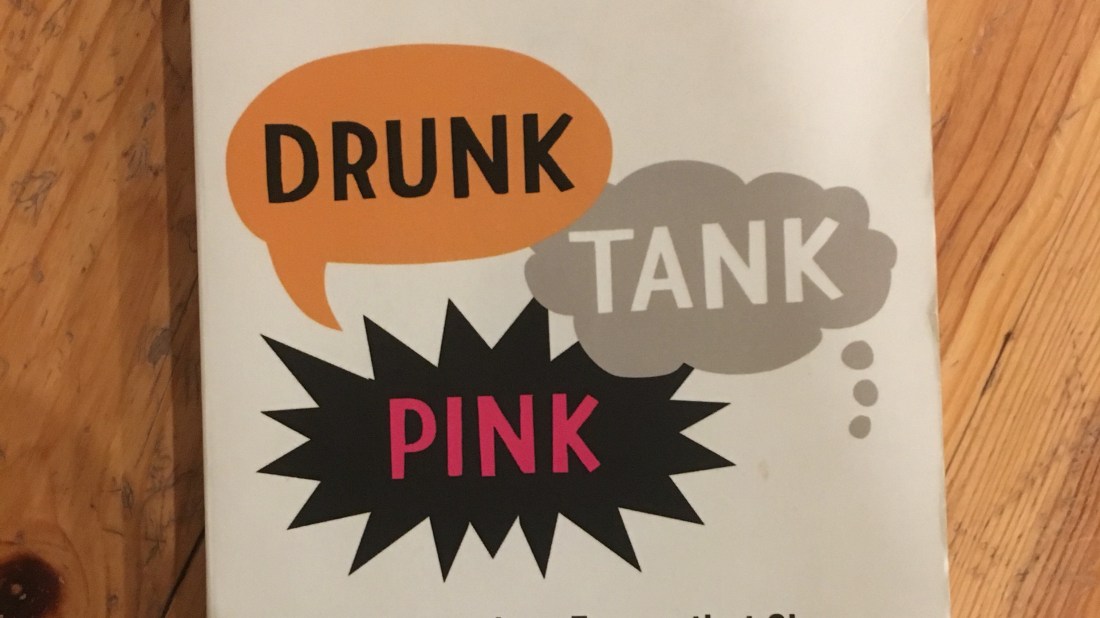
Maybe this is going to sound a bit weird because it is a science book but reading Drunk Tank Pink was kind of well, … fun. Adam Alter reveals all kinds of brain-based phenomena that are interesting, quirky and ultimately enlightening. The book is divided into three sections: The World Within Us, The World Between Us and The World Around Us. Within each section, Alter further breaks down his themes into things big and small – culture, names, colours to name a few. The purpose of the book is to reveal how subconscious forces affect how we think, feel and behave. If you have ever wondered how someone’s name shapes their identity and maybe their future, if exposure to the colour red affects for academic abilities or what makes us feel more or less competitive, these are the kinds of things Alter tackles in his book. His background is an interesting combination of marketing and psychology and his research focuses on decision-making and social psychology. He uses research from his own studies and those of many other psychologists and social scientists to reveal some pretty unexpected ways in which our brains work.

If the science scares you, it shouldn’t. Alter’s writing style is very easy to read and he connects the science to everyday things like watching TV, playing chess and choosing a paint colour to make it relevant and clear (even to an arts major like me). While he describes numerous studies that have been performed in the last several decades, his writing is straightforward and clear – you certainly don’t need a PhD in psycology to understand where he is coming from.

What I found most compelling about this book was how Alter was able to tie seemingly unrelated studies together to comment on much broader social and cultural phenomena. The kinds of issues we address as a society in terms of race and class are actually to some extent linked to the ways our brains are primed to process information. And often its unconscious. We aren’t even aware of the associations we are making or the ways in which the beliefs we already hold are shaping (and sometimes even distorting) new information our brains are presented with. While reading Drunk Tank Pink may feel like a mashup of pop culture (why do more people prefer Coke to Pepsi?) and pop science (turns out men produce more testosterone and take more risks in the presence of a beautiful woman), Alter ends each section with some bigger comments about how the trends that social scientists are identifying in their studies speak to the trends we see in the wider world. If you like books like Freakonomics or the work of writers like Malcolm Gladwell, then you will enjoy Drunk Tank Pink.

And if you’ve been waiting this whole time for me to tell you what the heck ‘drunk tank pink’ even means, well, you should probably read the book too …

Are you planning on reading any of the October line up? Drop me a comment and let me know. Until next week, happy reading!
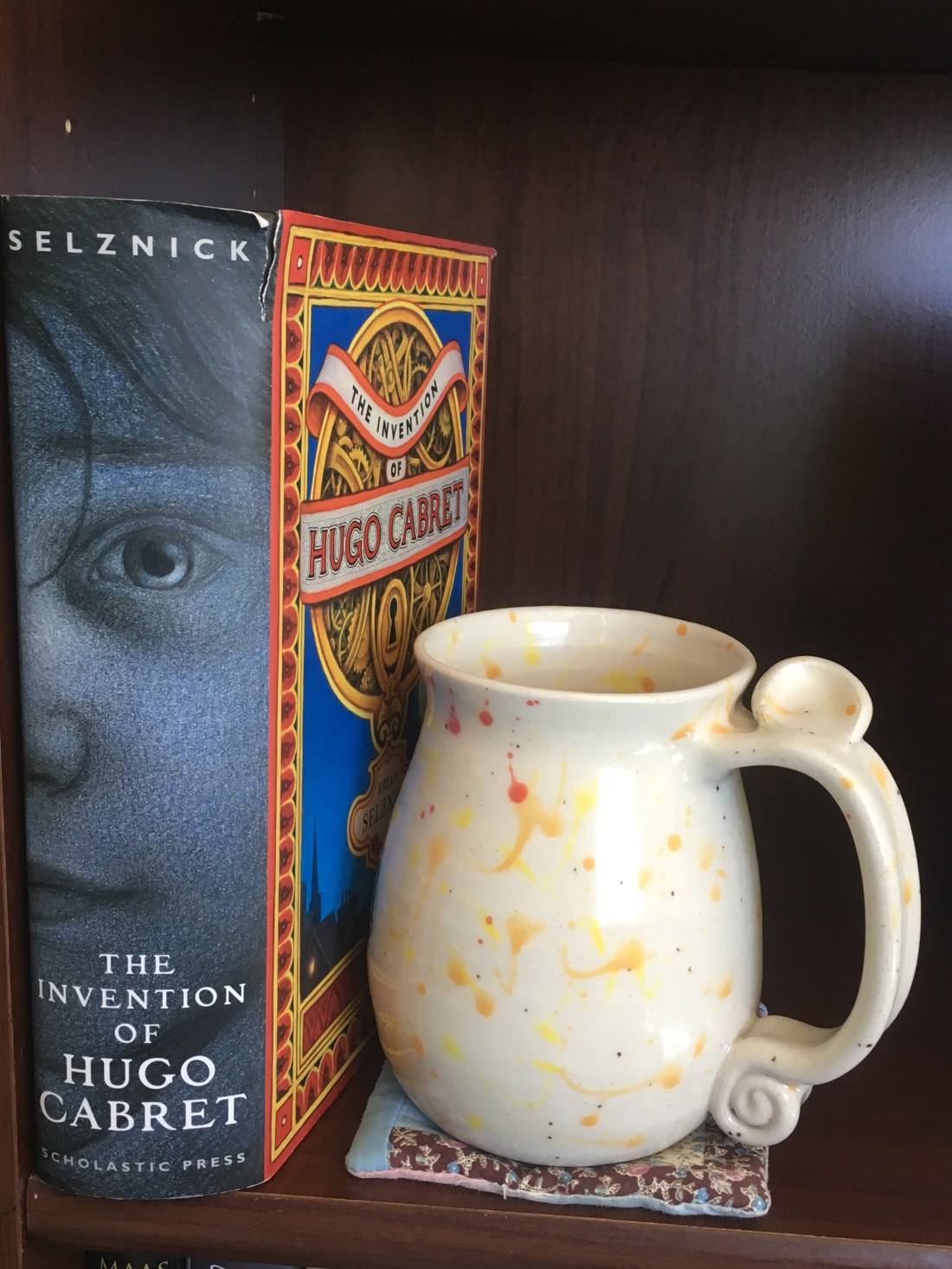
The Invention of Hugo Cabret: A Review

Throwback Thursday!

“The story I am about to share with your takes place in 1931, under the roofs of Paris. Here you will meet Hugo Cabret, who once, long ago, discovered a mysterious drawing that changed his life forever.

But before you turn the page, I want you to picture yourself sitting in the darkness, like the beginning of a movie. On screen, the sun will soon rise, and you will find yourself zooming toward a train station in the middle of the city. You will rush through the doors into a crowded lobby. You will eventually spot a boy amid the crowd, and he will start to move through the train station. Follow him, because he is Hugo Cabret. His head is full of secrets, and he’s waiting for his story to begin” – The Invention of Hugo Cabret, by Brian Selznick

Sometimes the opening of a novel has me leaning in, kind of holding my breath in anticipation of where it is about to take me. Can you feel that? Are you following Hugo through that Parisian train station in your mind? I took the opposite road into this book than I normally do; I saw the movie first. The movie is called Hugo and it was so magical and touching that after watching it last winter with my kids, I wanted to go find the novel that inspired it. The story follows a young boy, Hugo, who has been orphaned. He lives in the walls of a train station in Paris and steals to survive. He also steals to get the parts he needs to rebuild his automaton – a mechanical man that is the last thing he has that remains of his father. When Hugo is caught stealing from the toy store in the station, his life changes. What follows is ordinary magic: movies and books, friendship and family – breathing life into the past.

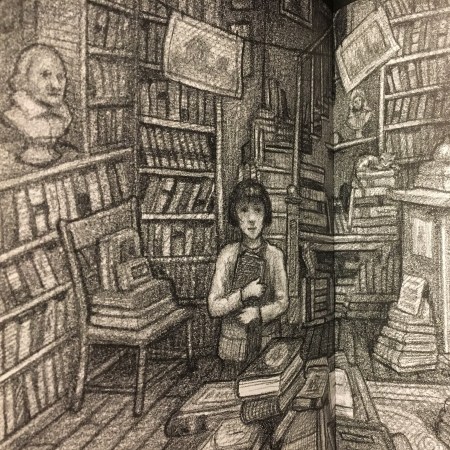
The reason I wanted to feature Hugo Cabret this month is because it made me see books in a different way. The author, Brian Selnick tells the story in traditional text and pencil drawings that are arresting in and of themselves. What makes the novel so unique is that his art doesn’t accompany the text, it replaces it –  for pages and pages – so the story is literally told in words and images. His ability to flip between the two mediums allows him to convey different aspects of the story in a way that is so compelling – he creates an intimacy through the words and drawings that is unlike conventional novels.

img_3691.jpg

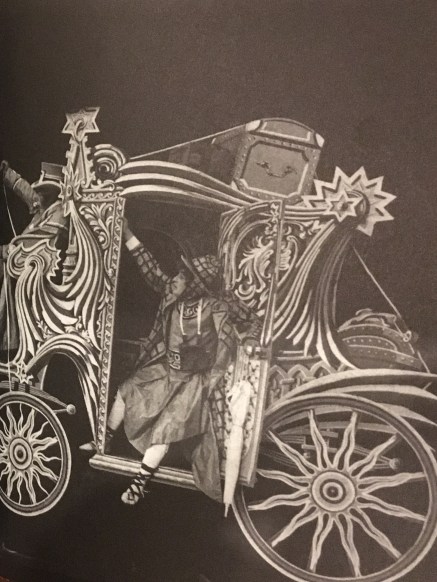
Selznick’s inspiration for the book was, ” … a book called Edison’s Eve: A Magical History of the Quest for Mechanical Life … the book told the true story of a collection of elaborate, mechanical wind-up figures (known as automata), which were donated to a museum in Paris. The collection was neglected in a damp attic and eventually had to be thrown away. I imagined a boy finding those broken, rusted machines, and at that moment, Hugo and his story were born.” In his attempt to fix the automaton, Hugo meets Isabelle and her guardian, Papa Georges. This meeting also brings Hugo into the world of movies, something his father had loved,  and Selznick includes stills from the early films Hugo and Isabelle watch to further his story.

img_3726.jpg

The combination of text, art and film all serve to reinforce the important role that stories play in our lives. Selznick’s decision to root the fantastical story of Hugo’s experience in the history of automata and early film makes it both more believable and more magical. This is a beautiful book – both in terms of the story it conveys and the ways in which Selznick is able to combine the text with his drawing and the archival photographs. Whether it is for you, or for a young person in your life, I think The Invention of Hugo Cabret is a book that can really be savored for the way it celebrates story and art by getting us to follow Hugo through that train station in Paris a long time ago.


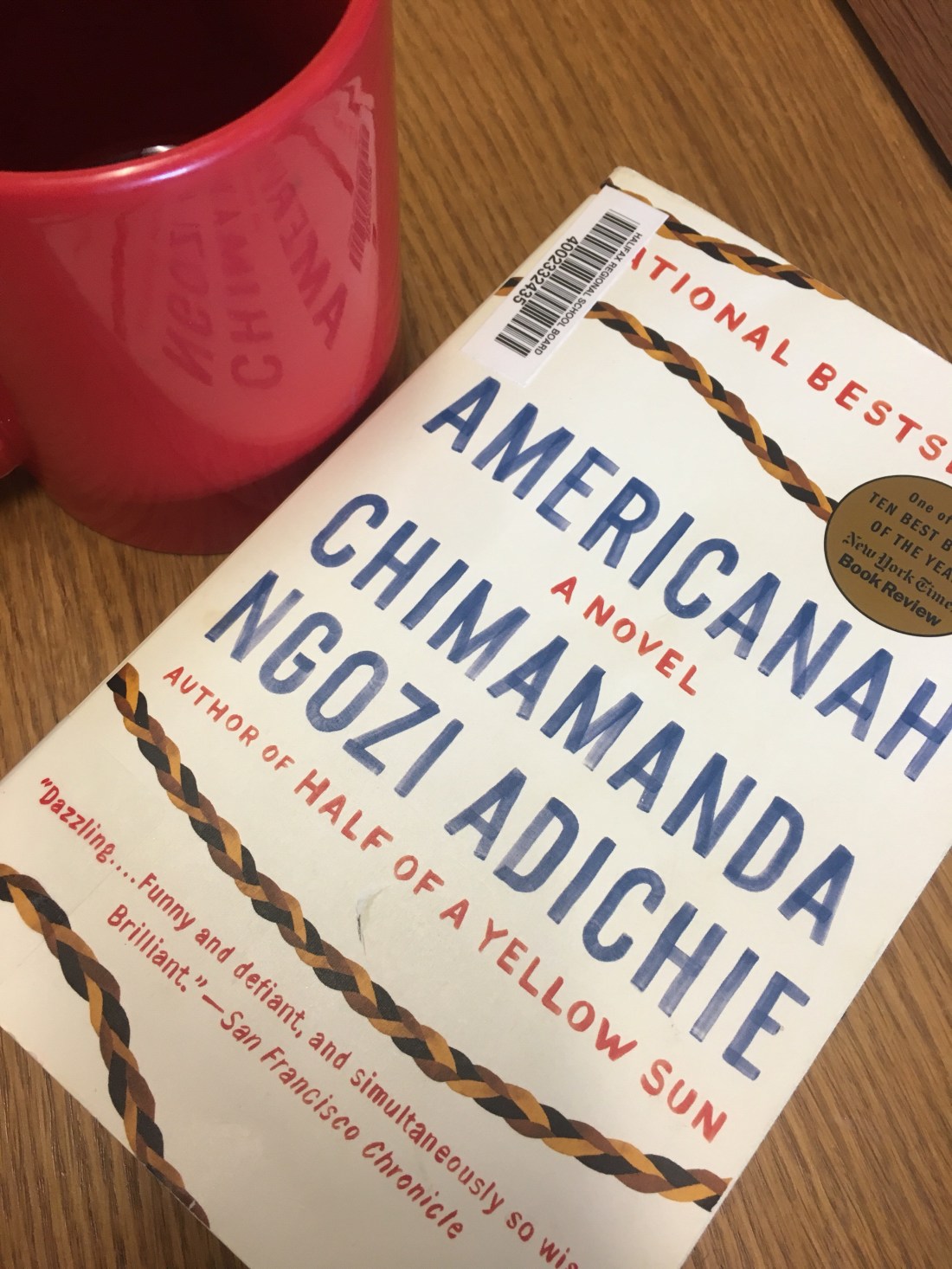
Americanah by Chimamanda Ngozi Adichie: A Review

Hello, hello, hello!

One of the things I have always thought most valuable about books is their ability to put you squarely in someone else’s shoes. As a reader, you have the opportunity to live in many places, in many times and see the world through other people’s eyes. I think readers are naturally curious and books fulfil our desire to know, “what would it be like …?” Reading makes us more empathetic, more aware of the experiences of others whose lives do not mirror our own. And this makes our world bigger and our vision clearer. That is how I felt reading Americanah.

The novel traces the experiences of Ifemelu as she moves from her native Nigeria to the United States and back again. Adichie deals with themes that are ever-present in the modern world: she explores how race, class and beliefs about immigration shape our identities. Adichie is a powerful writer. When I told someone recently that I was reading Americanah, she responded with “whoa, that is a serious book!” It is serious, but not in the sense that the writing is dense or the narrative is overly complex. Ifem’s experiences make the reader reconsider their own cultural contexts. At one point in the novel, when Ifem says she wasn’t black until she came to America, it made me think about how so much of how we see ourselves and how we are understood by others is shaped not only by our character or actions but also how the broader culture perceives people who look like us. In Nigeria, almost everyone is black so it is not race, but more often ethnicity or class that become the dividing lines and Adichie explores these divides throughout the novel.

One of my favourite aspects of Adichie’s writing is her ability to address serious issues like gender inequality, race or class-based prejudices both in Nigeria and the US but still make them feel immediate to the character’s life and therefore to the reader. Ifem blogs about what it is like to be black in America as an outsider to the African-American experience; her choice of hairstyle (whether to relax, cornrow or go natural) becomes a statement of how she sees herself as a black woman; her relationships with boyfriends come to echo her search for the American Dream and then ultimately her return to her roots in Nigeria.

Adichie’s themes are increasingly relevant in the face of the shifting political rhetoric we are witnessing on the world stage lately. Her writing is compelling and Americanah is worth reading because it pushes readers to think and feel beyond their own contexts and to consider the world from another point of view. And maybe as readers we are able to build deeper understanding along the way.

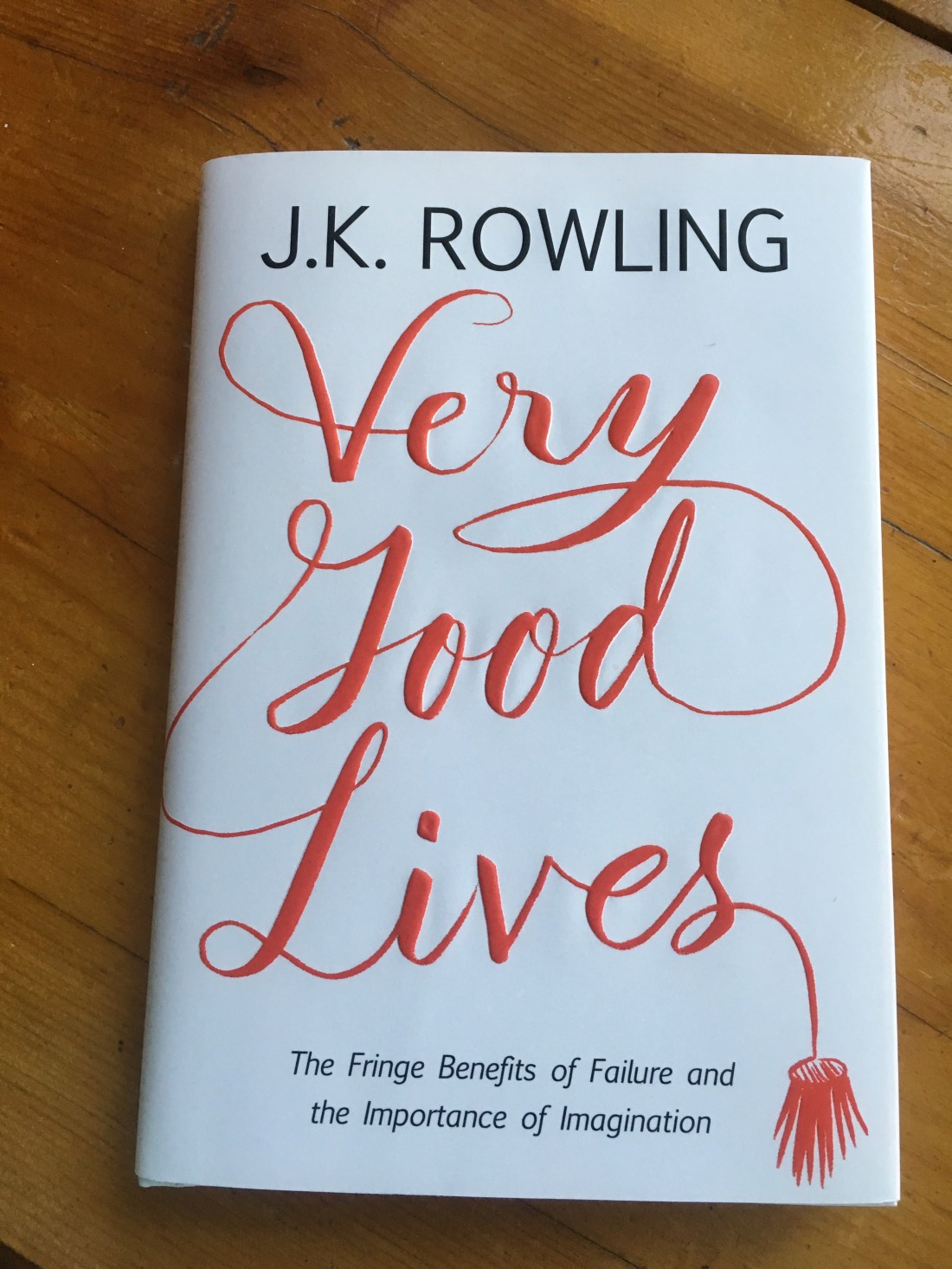
Very Good Lives by J.K. Rowling: A Review

Hello, hello, hello!

“Had I really succeeded at anything else, I might never have found the determination to succeed in the one arena where I believed I truly belonged.” – Very Good Lives, J.K. Rowling

As a high school teacher, I have sat through a lot of graduation ceremonies. A lot. Graduations, like any ceremony, tend to follow fairly prescribed routines and it is really only when someone gets up to speak – a valedictorian, a visiting dignitary – that there is a chance to make a unique mark among all the pomp and circumstance. So maybe it was as a result of having sat through all these occasions that I was interested reading what J.K. Rowling had to say when she was asked to deliver the commencement address at Harvard University.

Rowling’s rags-to-riches story is well known, so when I saw her two themes were the benefits of failure and the importance of imagination, I thought she would be speaking about her experiences writing Harry Potter and the Philosopher’s Stone as an impoverished single mom.

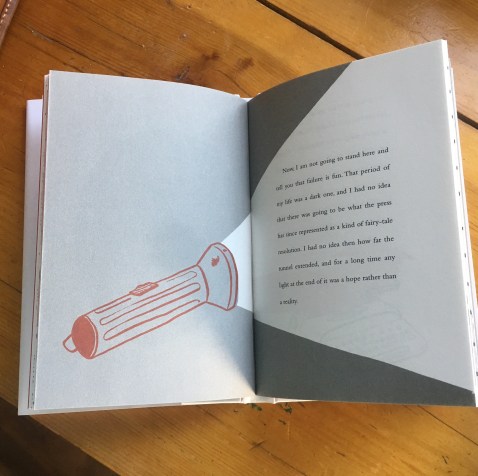
I’ll admit I was being a bit cheeky in the September Line Up about my decision to purchase this book (which can effectively be read in less than twenty minutes) but in truth, proceeds from the purchase of the book go to Lumos, a charity founded by Rowling to help disadvantaged children and to provide financial aid for students attending university. The speech is complimented by simple but appealing graphics and I couldn’t help but think as I read it about what a beautiful gift it would make, maybe for someone starting a new chapter of his or her own life (please, no more Oh, The Places You’ll Go!) or someone who might need to see a failure as a chance to start fresh, or imagination as a means of changing the world around them.


“As is a tale, so is life: not how long it is, but how good it is, is what matters.” – Seneca

Rowling’s discussion of failure does not include how many publishers turned down her manuscript before she finally landed a book deal; instead, she focuses on the failures in her own life as being opportunities. After all, once you hit rock bottom (and Rowling’s experiences included a failed marriage, trying to raise her child on her own and having no money to speak of) there is nowhere to go but up. She does not romanticize the difficult parts of her life and she reminds readers that while the media likes to portray her life as having a fairy-tale ending, there was no way she could have known at the time that there was any light at the end of the tunnel. Instead she focuses on the benefits of failure: when you have tried and failed again and again, failure helps you to see yourself and what you value more clearly. As she herself states, if she had not failed as so many other things, she may never have found the courage to do what she really wanted to – write.

Her discussion of imagination is interesting too in that it is tied to her real-life experiences. As a young woman, Rowling worked in the UK for Amnesty International. Her experiences there both exposed her to the horrors people around the world were facing (many such people went through her office on a regular basis) and to the incredible kindness and reliance people can embody despite living through trauma. Rowling argues that it is through imagination that we can put ourselves into another person’s shoes and that once done, it is impossible to be blind and deaf to the suffering of others. Imagination is not just for the conjuring of fictional worlds but also allows us to move beyond our own life experiences to connect with the experiences those outside our reach. She also underscores that when we live a life of privilege – as many in her Harvard audience that day did – it is even more important to use imagination as a tool for empathy because otherwise privilege can act to insulate one from others’ realities. In Rowling’s mind, imagination is the tool that spurs us to act, to help, and to better understand.

I’m not going to say that this should be on the top of your to read pile, but I do think the speech reveals some important insights about the roles of failure and imagination and opportunities to consider them in new ways.

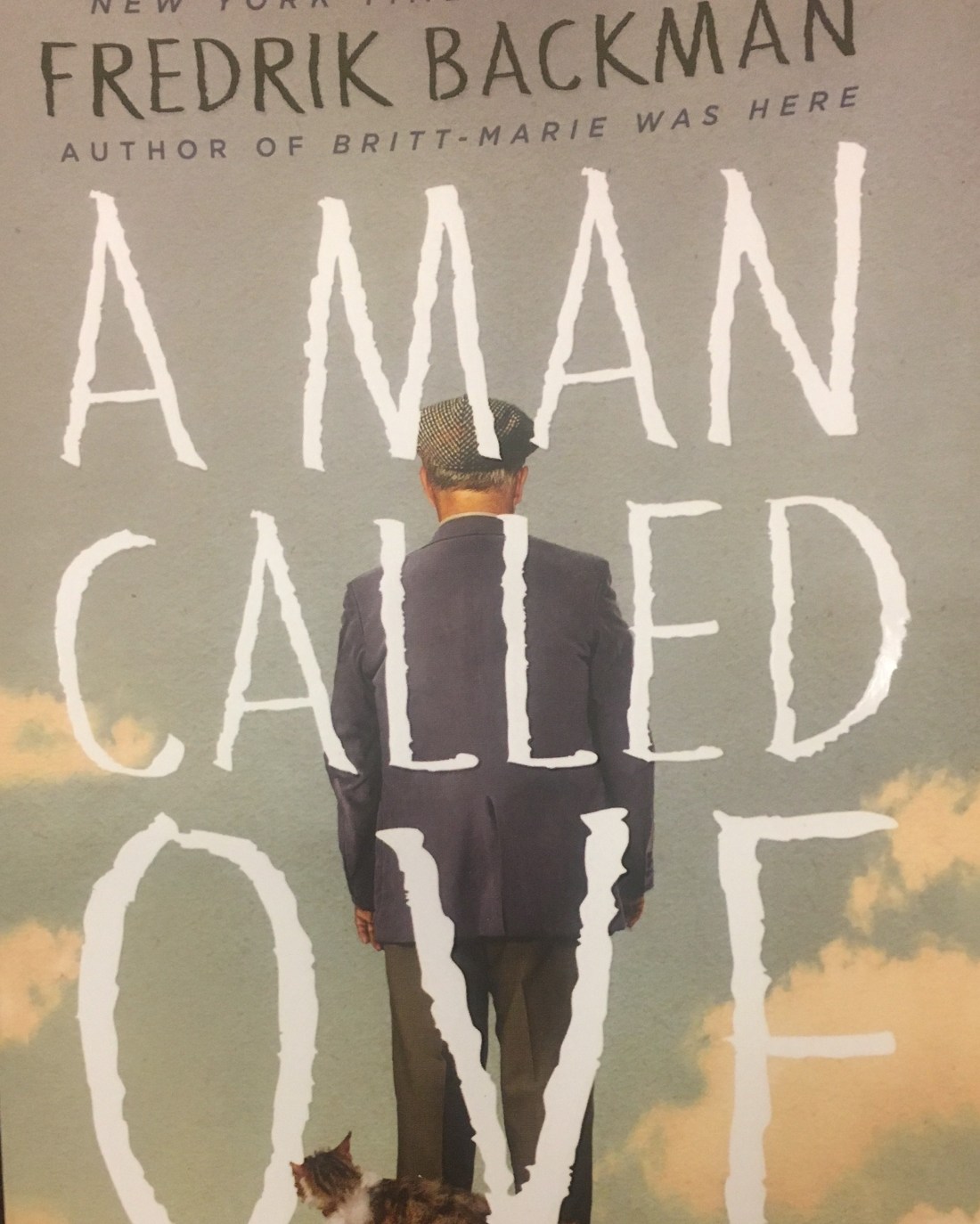
Bonus Book: A Man Called Ove by Fredrik Backman

Hello, hello, hello!

“Ove feels an instinctive skepticism towards all people taller than six feet; the blood can’t quite make it all the way up to the brain.” A Man Called Ove by Fredrik Backman

This. Book.

I loved this book. And I think you will too. Backman is a Swedish novelist but unlike all those dark, Nordic thrillers coming out of Sweden, his novels are hilarious and touching.  Ove is the classic grumpy old man. He lives his life by strict rules and he is not afraid to share his opinions with anyone who breaks them (he is the scourge of his residents’ association). He has a very short temper. He thinks everyone is an idiot. He is mean to the cat. In short, he is pretty unlikable. Except … he has just lost the love of his life, his wife, Sonja. Through his grief over her loss, we see a different side of Ove. Six months after her death, he prepares to take his own life.

Except he can’t.

Despite his careful preparations, the new next door neighbors back up their U-Haul improperly, flattening his mailbox and thus ruining his plan. He cannot leave this world with a flattened mailbox, especially one that has been flattened at the hands of idiots. What follows are a series of comic events that result in unlikely friendships. Backman had me laughing out loud at Ove’s antics and sometimes wondering what it would be like to be so free with my opinions. (Really, his manners are shocking). But the narrative also switches from the present to Ove’s backstory with Sonja which Backman describes with some beautiful images:

“Loving someone is like moving into a house,” Sonja used to say. “At first you fall in love with all the new things, amazed every morning that all this belongs to you, as if fearing that someone would suddenly come rushing in through the door to explain that a terrible mistake had been made, you weren’t actually supposed to live in a wonderful place like this. Then over the years the walls become weathered, the wood splinters here and there, and you start to love that house not so much because of all its perfection, but rather for its imperfections. You get to know all the nooks and crannies. How to avoid getting the key caught in the lock when it’s cold outside. Which of the floorboards flex slightly when one steps on them or exactly how to open the wardrobe doors without them creaking. These are the little secrets that make it your home.”

There is something about the way that Backman contrasts Ove’s gruff, cantankerous exterior with his tenderness for Sonja that makes his character so appealing. Backman strikes the perfect balance between comedy and sorrow in this novel. Like Eleanor Oliphant, Ove becomes an unexpected and unforgettable hero in his own small world. The novel explores grief but ultimately reveals how our connections to others helps us to heal.

So … I hope I’ve convinced you to read it. Go on, what’s one more book in your To Read Pile?

Have you read anything by Fredrik Backman? I’d love to hear your thoughts. Shoot me a comment or message. Until next time, happy reading!

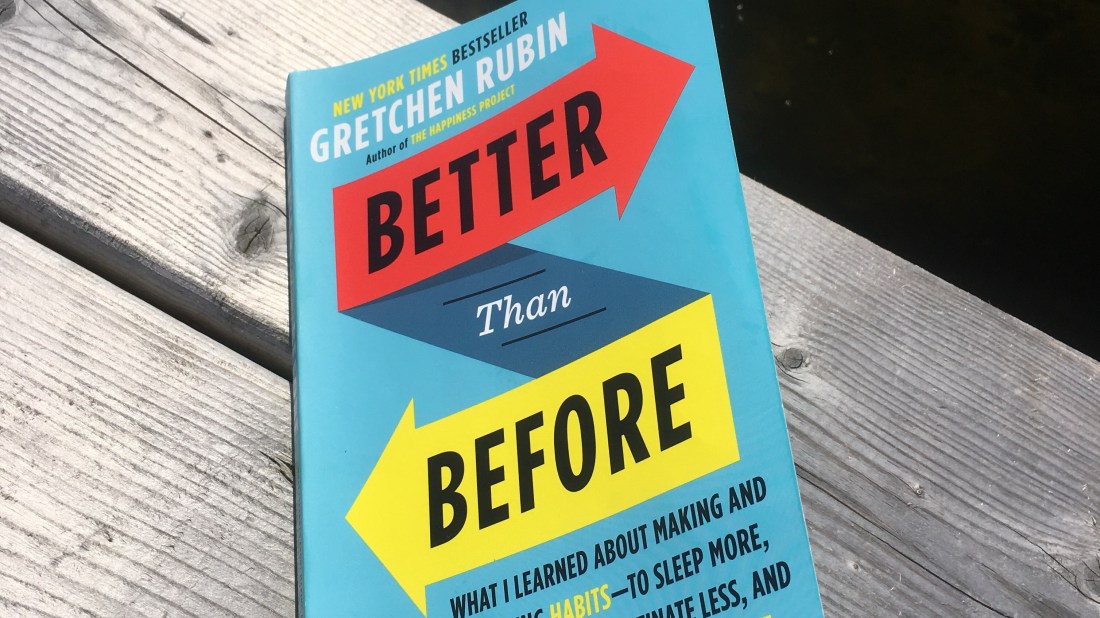
Better Than Before by Gretchen Rubin: A Review

Hello, hello, hello!

“There’s a magic in the beginning of anything. We want to begin right, and a good start feels auspicious.” – Better than Before, Gretchen Rubin

Recently, I became interested in habits. In my personal and professional life, I saw how habits, both good and bad, affect the success, confidence and happiness of those around me. And I am no exception. Like everyone else I know, my life is busy. I struggle to balance parenthood, work and finishing a degree with spending time with family and friends. The secret to maintaining this balance seems to be in cultivating good habits while the ditching bad ones. But after about a year of concerted effort when it comes to habits, I still have questions: why are some good habits easy to form but others always feel like a struggle? I can have the same healthy breakfast every morning without thinking, but I have to make myself get my workout in. Why is it so easy for some people to form certain habits when others find it so hard? A lot of people love to get up early but for me any alarm going off before 7:00 am feels like a punch in the face. The opposite is also true – why do I find it easy to manage the homework in the courses I’m taking when some of my students really struggle to hand work in on time?

Cue Gretchen.

Gretchen Rubin is like that friend who has it all together. Need to know how to carve out some time to yourself in an already hectic schedule? Wondering how to answer that tricky email at work? Trying to help your kids get more organized? Ask Gretchen. To Rubin, one of the keys to increasing happiness is simply habit. Making certain behaviors we value into habits (and avoiding pitfalls) frees us and allows us to use our energy to pursue other things. In this book, she addressed the question: how do we change our habits? And the answer, as in so many things is: it depends.

One of the strongest aspects of Better Than Before is Rubin’s framework for categorizing personalities which she calls the Four Tendencies. She claims that everyone falls into one of four very broad categories: Upholders, Questioners, Obligers and Rebels. These categories relate to how we respond to external and internal expectations. Throughout the book, Rubin uses this framework as a means of exploring why people form habits differently, and explains how understanding your own Tendency is helpful in terms of figuring out how to build or break habits. She uses research and anecdotal evidence from her own life and the lives of her family to support her ideas in ways that makes it easy for readers to relate.

Until reading this book, I didn’t think about most of the things I did on a regular basis (filling the dishwasher before leaving for work, regularly texting friends I don’t get to see very often) as habits. They were just things I did. Re-framing them as habits allows me a different perspective on the things I do and how they reflect (or sometimes fail to reflect) my values. Rubin stresses that to build a happier life, we need to build habits that reflect our values and priorities and in order to do this, we must understand ourselves better. She emphasizes that while we are more alike than we are different, the ways in which people are different are very important (she calls these Distinctions), especially when we’re talking about forming habits. She also introduces her Pillars of Habits: Monitoring, Foundation, Scheduling and Accountability as a means of helping readers establish good habits. She doesn’t shy away from acknowledging that forming habits takes energy and dedication but suggests that the use of her Pillars can help readers be more successful in meeting their habit goals.

So, what are the drawbacks? Remember when I said that Rubin is like that friend with all the answers? For the most part those answers are well thought-out and useful but sometimes she sounds a bit … relentless (which, to her credit, she acknowledges about herself) and that becomes tiresome at times. At one point she talks about going to an acquaintance’s apartment several times to help him clean up his space in order to help him with his writer’s block (she is a strong believer that an uncluttered space leads to mental clarity) and in the end he has to admit to her that the decluttering didn’t help at all. In her estimation, this is an example of how habits work differently for different people but it’s also a bit of a methaphor for the books itself. The central ideas are useful and interesting but in her quest to really get through to readers, the examples tend to get a bit repetative. At times found myself thinking, “Okay, Gretchen, I get it!”

The other thing that surprised me is that she doesn’t really consider emotional factors in the formation and maintenance of habits. This is probably because she is so disciplined herself but I think it’s an important aspect for a lot of people and it is left lacking in this book. She does give a lot of strategies for overcoming potential pitfalls – like abstaining or distracting yourself from temptations – but she doesn’t discuss the emotional connections people often have to their habits.

Overall, I think this is a book worth reading. It makes important points about the way we can connect habits to our own sense of well-being and provides practical tools to help readers work on their own habits.

Curious about which of the Four Tendencies describes you? Take this quiz from Gretchen Rubin’s site. I would love to hear what you find out – post a comment or message me and let me know. Until next week, happy reading!
The Countdown is ON!

Hello, hello, hello!

So, it is almost time for my little book project to begin. I started this as a way to motivate me to get through some of my ever-growing To Read Pile. In all honesty, it is getting out of control. I have mixed feelings about the TRP: on one hand, I really love the feeling of abundance of having all these books waiting to be read. When I choose a new book to read, I feel a bit like a kid in a candy store – I pull a bunch out and look through them and wait for one to pique my interest before putting the rest back. Sometimes, (like right now) I can’t choose and so I will have two (okay, three) books on the go at the same time.

On the other hand, sometimes my TRP makes me feel, well, guilty. Why do I keep buying books faster than I can read them? There are so many in there that I’m pretty sure reading through them could be my full-time job (which, sadly, of course, it isn’t). If someone lends me a book, I feel compelled to read it immediately because otherwise it may end up lost in all the others waiting to be read. (Once I had a friend’s book for so long that she gave up waiting for me to return it and bought herself another copy. Oops … lesson learned.) I admit that it seems a bit self-indulgent (maybe greedy?) on some level to have amassed so many unread books.

Of course, I know why I do these things. Shopping for a book is a pleasure in itself. And I’m not picky. I am equally likely to pick up a stack at a big box store, Costco, a local second-hand book shop or a flea market. The possibility of all those new stories is the opening of just as many new adventures. And I love to lend and borrow books. There is a lot of great conversation to be had about books you’ve read and why you love them. It’s nice to get personal recommendations from family and friends and I think that reading a book someone else recommends tells you a little bit more who they are and what makes them tick.

Or maybe these are just excuses to allow me to carry on with my book addiction.

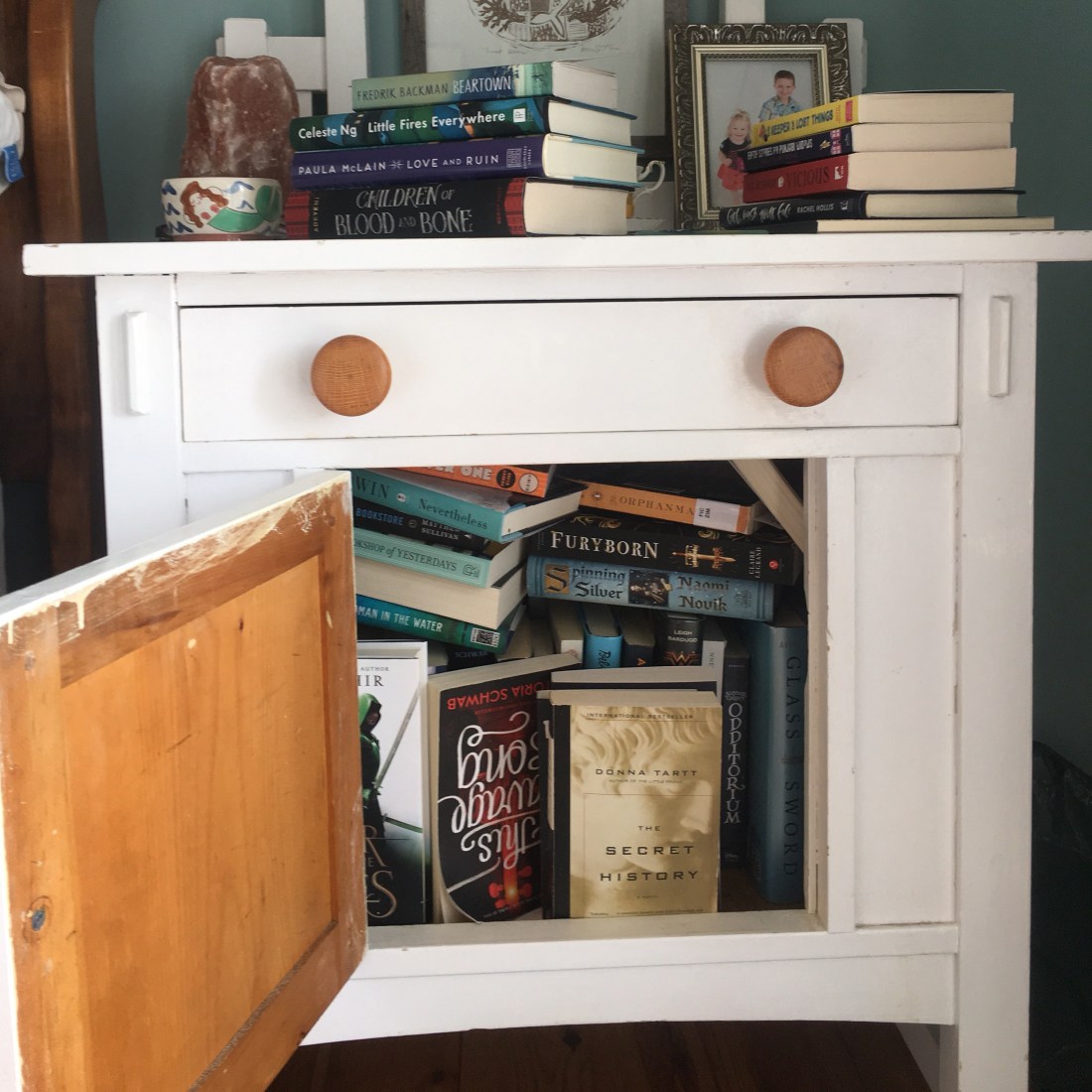
Addiction or not, I thought it might be fun to start this project by introducing you to my To Read Pile. Don’t judge me…

To Read Pile

I realize that my washstand-turned-night-table-turned-treasure-trove-of-books might offend some people’s sensibilities. Yes, there are so many that I can’t get them stacked in any neater. And yes, there are books in there that are upside down or backwards or both. But when I open that little cupboard door, I get so much joy out of seeing them all piled in there, waiting to be read. (Really, I’ve got to get a handle on myself. I know this.)

And now the fun begins …

My first review (for Better than Before) comes out on Saturday morning. I am going to imagine you drinking a leisurely cup of coffee while you read it because that also brings me joy. But feel free to go for tea or orange juice if that’s your preference. I really hope you will visit the blog throughout the year (after all, someone’s got to keep me accountable). If you like, you can follow my blog and get automatic notifications right to your inbox when a new post is up.

What’s the state of your To Read Pile? Send me a comment or post a picture! Until next time, happy reading!