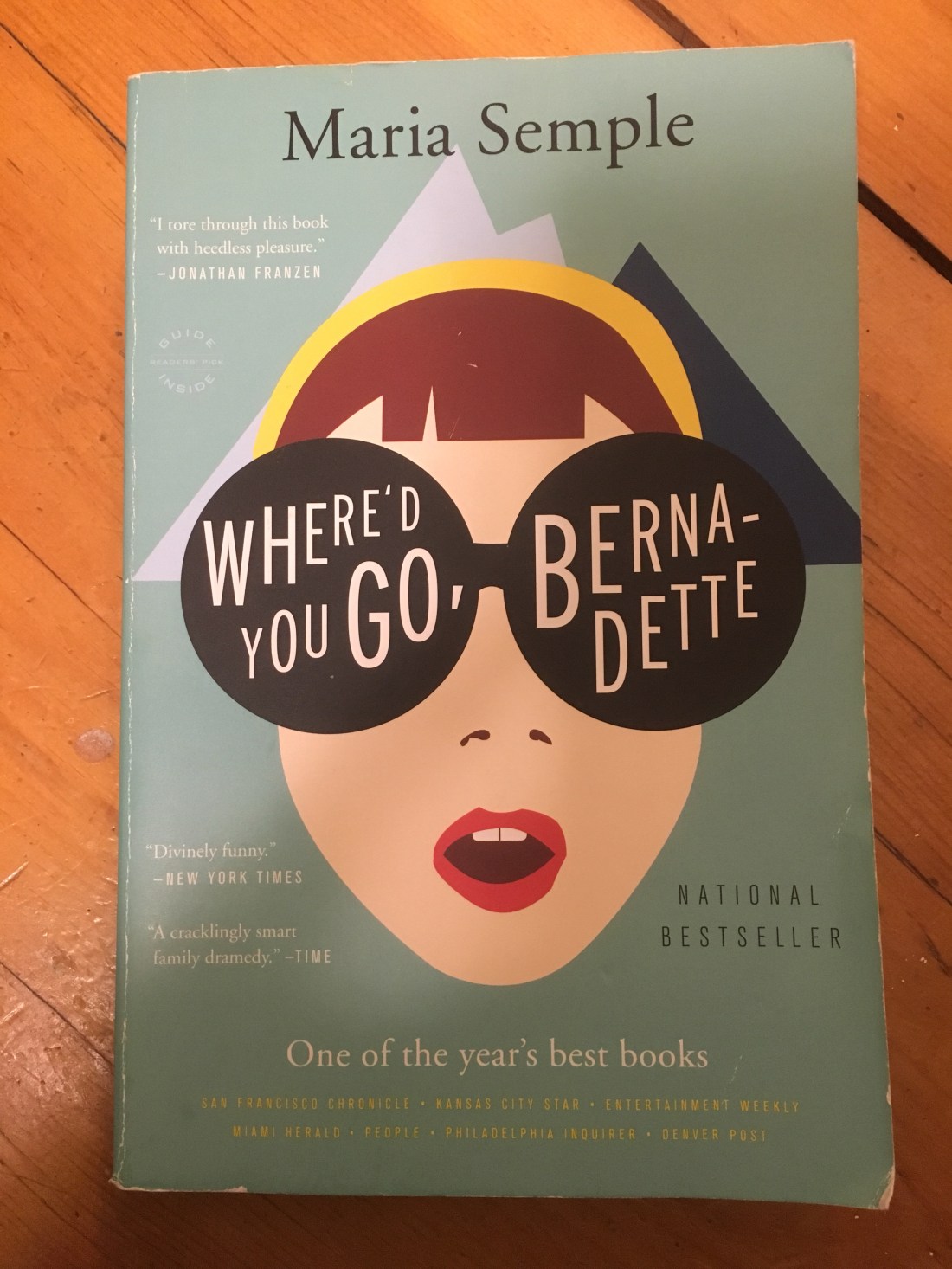
Bonus Book: Where’d You Go, Bernadette, by Maria Semple

“That’s right,’ she told the girls. ‘You are bored. And I’m going to let you in on a little secret about life. You think it’s boring now? Well, it only gets more boring. The sooner you learn it’s on you to make life interesting, the better off you’ll be.” – Maria Semple, Where’d You Go, Bernadette

In terms of getting out of here, Where’d You Go, Bernadette definitely fits the bill. It’s another novel that I find myself frequently recommending to friends and coworkers and just about anyone who will listen, really. Maria Semple, the novel’s author, was a former writer on Seinfeld and this novel sings with funny, sharp writing that touches the heart. Bernadette is a genius, an architect, mother, wife, and she is agoraphobic. Increasingly, Bernadette cannot leave her house for even the simplest errands, but when her fifteen-year-old daughter, Bee, gets straight As on her report card, Bernadette is supposed to honor her promise to take Bee on a trip to Antarctica. Then Bernadette disappears. It is left up to Bee to try to figure out what happened to Bernadette and the story follows her attempts to navigate a path that will lead her back to her mother.

I love this novel because the plot manages to be so unexpected while the themes deal with the familiar: what it means to be family; how far will we go for someone we love; how much of us is who we feel we are, and how much is how others perceive us? There is a dogged hope in Bee that just won’t give up because no matter what, she loves her mother and she is going to find out what happened to her: “I can pinpoint that as the single happiest moment of my life, because I realized then that Mom would always have my back. It made me feel giant. I raced back down the concrete ramp, faster than I ever had before, so fast I should have fallen, but I didn’t fall, because Mom was in the world.” In this novel, there is adventure and humour and tragedy and love all rolled into one.

I confess, I have never seen the movie (and I don’t really want to in case it ruins the book for me), but if you are looking for something inspiring and different to read over the holidays, you might enjoy Where’d You Go, Bernadette. That’s it, that’s my pitch. Now, go get reading.

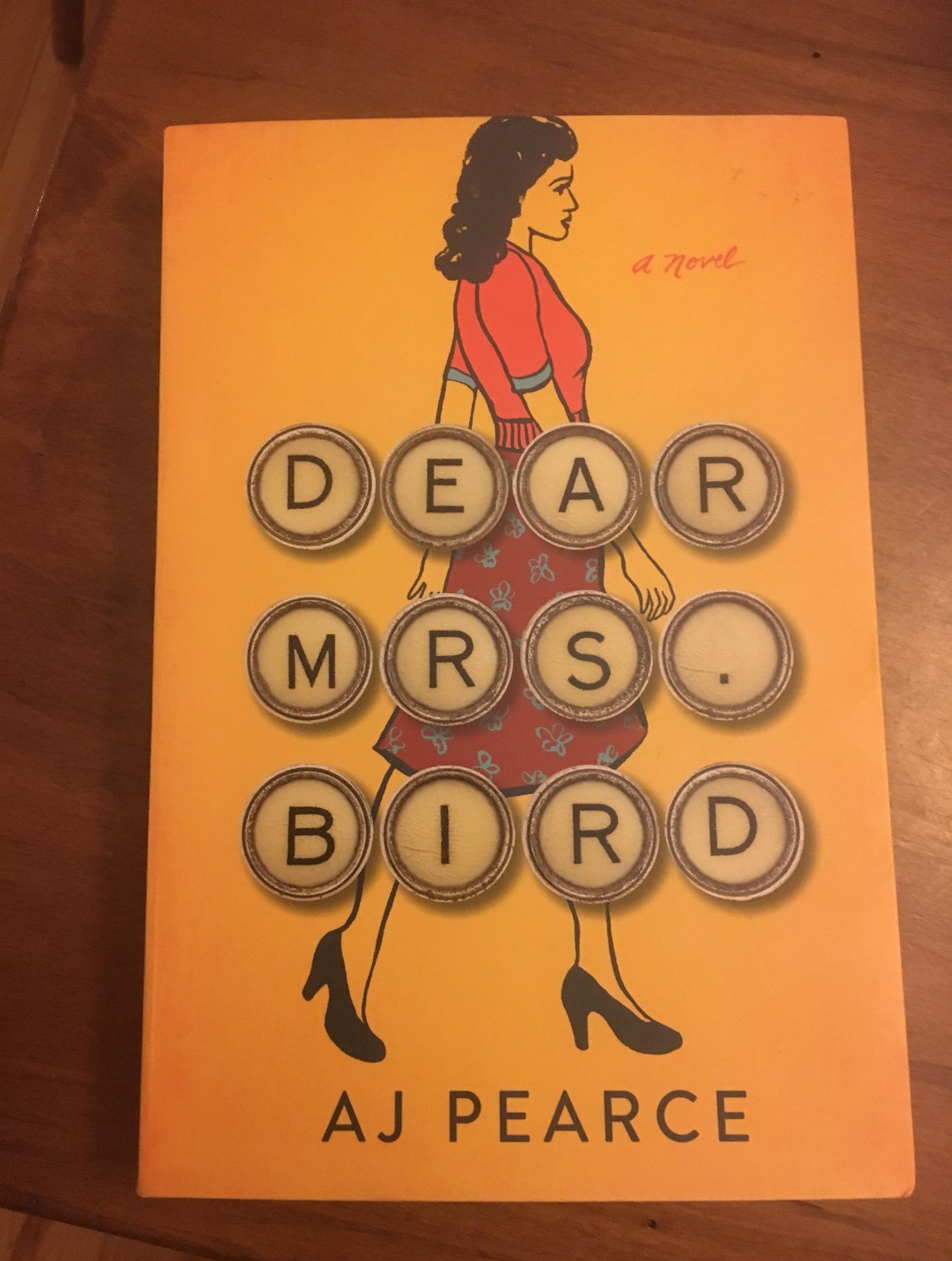
Dear Mrs. Bird by AJ Pearce: A Review

“I tried to take a deep breath and be British and brave, but it didn’t work, and instead, the tears began. Masses of them. Where did tears like that come from and how did they get there so fast? Were they always there, just waiting for something dreadful to happen? What a horrible job they had.” – AJ Pearce, Dear Mrs. Bird


This was a surprisingly touching novel to me. Dear Mrs. Bird‘s main character, Emmy, is living in London during the Blitz with her best friend Bunty, at a time when the German Luftwaffe bombed British cities regularly in an attempt to force Britain out of the war. With dreams of becoming a Lady War Correspondent, Emmy accidentally takes a job as a junior typist working for an advice column, “Henrietta Helps”, in Woman’s Friend magazine. On top of the initial embarrassment of realizing her new job is not going to have her reporting from the front lines of the war, it turns out “Henrietta” is Mrs. Bird, a woman who shouts a lot and has a long list of things that she refuses to respond to when readers write in requesting help (Affair, Amorous, Ardent, Bed, Bedroom, Bed jacket, Berlin … and it goes on). Emmy can’t stand the idea of these poor readers, many of whom are struggling with very difficult personal situations that are compounded by the war, being ignored completely by Mrs. Bird and so she begins to write back in secret, posing as Mrs. Bird. But this is only her day job; anxious to do her part in supporting the war effort, Emmy volunteers several nights a week in the Auxiliary Fire Service, dispatching fire fighters across London to deal with the fires set by the Luftwaffe’s bombs. She often gets only an hour or two of sleep between leaving the fire station and heading off to work again.

Emmy is a comedic heroine; often her big heart and a short-sighted desire to help get her into a lot of trouble but she never loses her desire to improve her own situation or help those around her in any way she can. I described this book to a friend as a 1940s Bridget Jones but with the emotional vibe of a Christmas movie (another way to say this is that I really liked it). Often it is Pearce’s funny elements that offset the tragedies of the war, like when Emmy is set up on a date with a soldier from a bomb disposal unit who constantly shouts because of the ringing in his ears. Other times, like through the letters Emmy receives at “Henrietta Helps”, characters’ fears and desperation come to the forefront, highlighting the incredibly difficult circumstances people faced on a daily basis. There were times reading this novel when I laughed out loud and other times when I had tears in my eyes.

One of the important things this novel does is to emphasize the roles of women on the British home front during the war, not just in terms of the work they did to support the war effort, but also in terms of the challenges they faced: falling out of love with husbands who had been gone for months, trying to decide whether to send children away or keep them with you and risking the bombings, having sweethearts leave you for someone they met overseas. Many of these women worked long hours in very uncertain circumstances and yet they were expected to keep their fears to themselves, the keep their chins up, a stiff upper lip and to smile, smile, smile. They were told that to do otherwise was unpatriotic and weak; that they needed to show Hitler that they could not be defeated.

Pearce’s inspiration for the novel began when she came across a copy of a women’s magazine from 1939. She was most struck by the Problem Page and she went on to read many letters from readers in wartime magazines during her research. The novel really is a tribute to the experiences of these women, told through Emmy and Bunty’s stories in a way that makes them relatable even though we are so far removed from wartime London. Pearce writes,

Many of the readers’ letters in Dear Mrs. Bird were inspired by the letters and advice, articles and features printed in those wartime magazines. I found them thought-provoking, moving, and inspirational, and my admiration for the women of that time never stops growing. Our mothers, grandmothers, great-grandmothers, and friends, some of whom I hope may even read and enjoy Emmy and Bunty’s story. It is a privilege to look into their world and remember what incredible women and girls they all were.

I would recommend Dear Mrs. Bird in a heartbeat. It is charming and touching and funny without glossing over the difficulties of the war. At its heart, it is really about friendship and finding the strength to push on, if not for yourself, then for those you love. If you read Dear Mrs. Bird, (and I know some of you plan to) I would love to know if you liked it as much as I did. Until next week, happy reading!

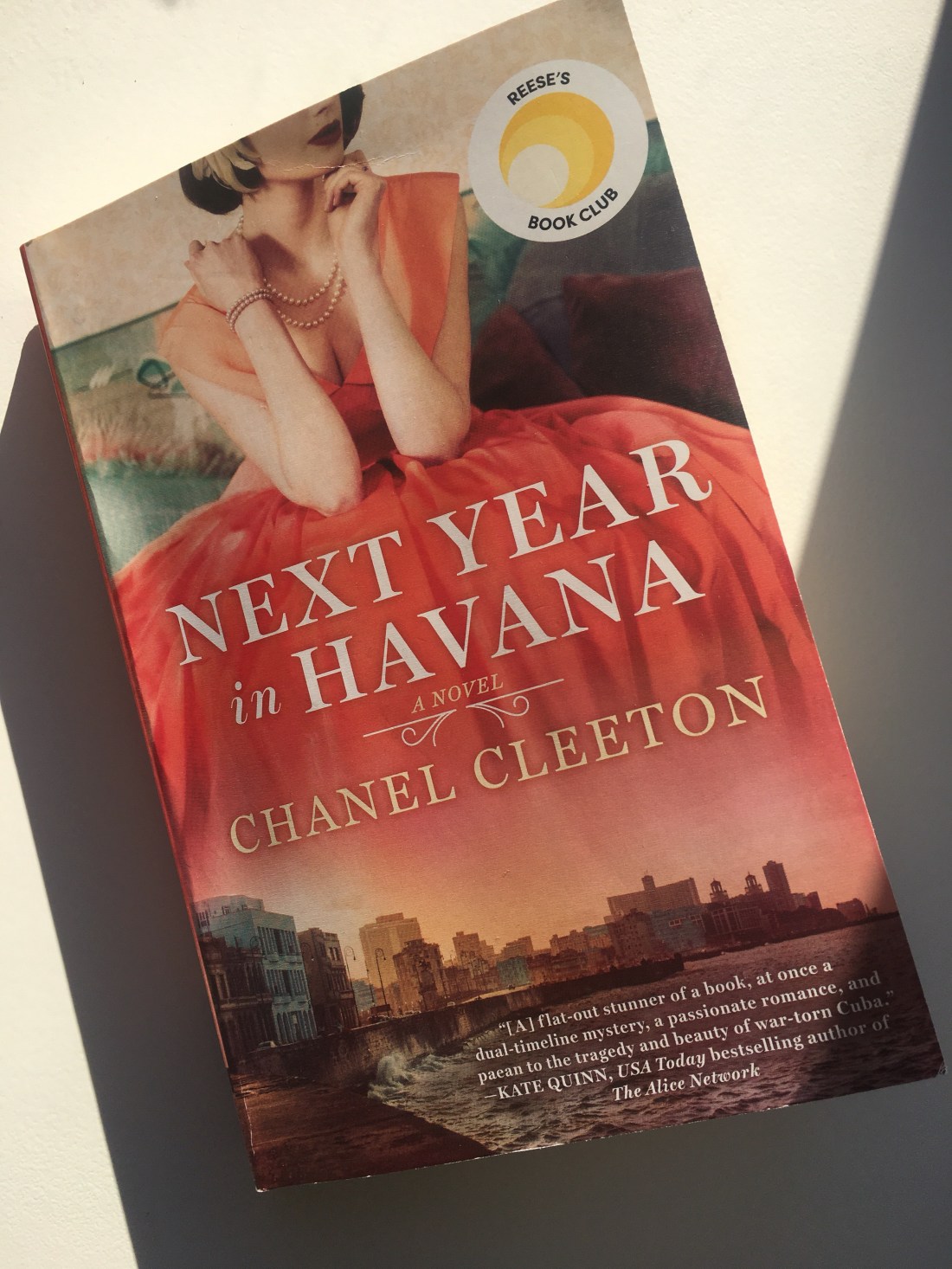
Next Year in Havana by Chanel Cleeton: A Review

“To be Cuban is to be proud – it is both our greatest gift and our biggest curse. We serve no kinds, bow no heads, bear our troubles on our backs as though they are nothing at all. There is an art to this, you see. An art to appearing as thought everything is effortless, that your world is a gilded one, when the reality is that your knees beneath your silk gown buckle from the weight of it all. We are silk and lace, and beneath them we are steel.” – Chanel Cleeton, Next Year in Havana

The phrase, “next year in Havana” is a toast used within the Cuban exile community in Miami that expresses the now generations-long desire to be able to return to their homeland. The novel is set in two time periods and follows the experiences of two very different women: Elisa, the daughter of a Cuban sugar baron on the eve of the Cuban Revolution, and Marisol, her granddaughter, who grows up in contemporary Miami as a result of Elisa’s family having fled the island years before to avoid reprisals from Fidel Castro’s regime. The novel moves between the two characters’ experiences as Elisa struggles to come to terms with the life she has always known – a world protected by wealth, influence and corruption – crumbles around her, and Marisol’s return to Cuba to spread the ashes of her grandmother on the land she loved. As the story unfolds, a number of family secrets are revealed, including Elisa’s love affair with a Cuban revolutionary that could have torn her family apart.

I really enjoyed this novel. In fact, to get through the 356 pages in a week, I decided I would get up early every day to get some reading in and I found myself looking forward to starting my day with a few chapters with a cup of coffee (let me stress, I am in no way, shape or form a “morning person”). At times, I was frustrated by how oblivious Elisa was to the suffering of the majority of Cuban people while her family lived in a bubble of high society parties, but I also appreciated the ways in which the novel revealed the complexities of being Cuban. Cleeton is the descendant of Cubans who fled after the revolution and Marisol’s character reflects that experience. There are obvious political divides within the novel like those that separate Batista’s supporters from Castro’s but the divides go much deeper. In 1959 when Castro came to power, many wealthy Cubans fled  – there is friction to this day between those who left and those who stayed. Many exiles want to see the return of Cuba as it was in their memories, decades ago, and contemporary Cubans living in Cuba are divided between those who support the government and those who seek to overthrow it. As the grandaughter of an exile, Marisol’s understanding of Cuba is shaped by her family’s memories – what they see as ‘preserving’ the Cuba that existed before it was destroyed by the revolution, but this is challenged when she goes to Cuba:

You cannot live in a museum, Marisol. The problem with your ‘preservation’ is that it fails to account for the fact that there is a real Cuba. A living, breathing Cuba. You’re all busy fighting imaginary ghosts in Miami while we’re here, bleeding on the ground, dealing with real problems … You’re still pissed because your grand mansions were taken away and are now occupied by the very men you hate the most. The rest of us are caught in the middle, worrying about how to survive.”

But this is not just a novel that deals with the history or politics of Cuba: it is also a love story. Elisa’s love for Pablo, a revolutionary fighting against everything her family stands for, has the potential to destroy her life; decades later, Marisol goes to Cuba and falls in love with a revolutionary of a sort herself, but Luis is a history professor dedicated to ending the regime of Castro and his followers. Hope and loss are a constant in the novel as each character attempts to define what it means to be Cuban against a shifting and uncertain landscape.

If you are dreaming of an escape to Cuba now that winter really feels like it’s here, then it would be worth picking up Next Year in Havana. The storyline is compelling and emotional and Cleeton’s writing brings to light the beauty of Cuba and its people. If you read this one, drop me a line and let me know what you think. And now off to World War 2 London with Dear Mrs Bird!

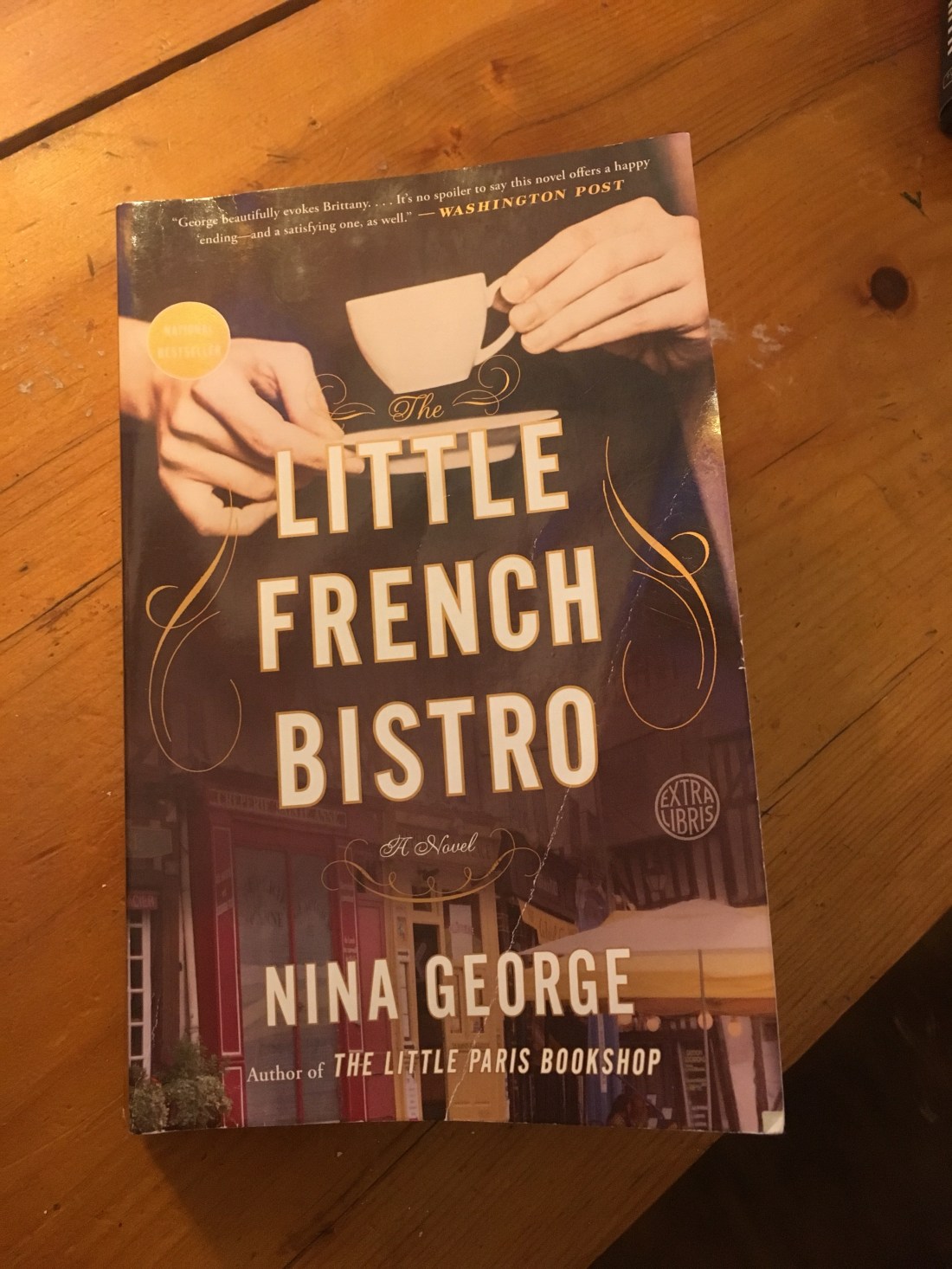
The Little French Bistro by Nina George: A Review

“Emile sat awkwardly beside her on the cold stone floor. He had known Pascale for his whole life. He had seen her in her prime, during her golden age of strength and beauty, and had enjoyed every stage. He knew every woman she’s ever been.” – Nina George, The Little French Bistro

This book has all the charm of a novel set in a small, French village: there is fresh food, fashion, art, a flock of nuns and just about every kind of love imaginable. Broken hearts, unrequited love, one true love, new love, dying love, rekindled love – you name it – The Little French Bistro has it.

The main character, a German woman in her early sixties named Marianne, goes on a bus tour of France with her odious husband, Lothar. When the group is dining at a restaurant in Paris (and Lothar is busy flirting with another woman), Marianne decides she can stand her life no longer and escapes the restaurant to make her way to the Pont Neuf to throw herself off and drown in the Seine. It is the first choice she has made for herself in decades and it exhilirates her to know that she is ending her life on her own terms. Except … she is rescued from the river and rushed to hospital. While confined in the hospital, Marianne finds a little tile with the image of a tiny Breton village, Kerdruc, painted on it and takes it as a sign. She escapes once again, this time to find the village on the west coast of France and drown herself in the sea. When she reaches the village of Kerdruc in Brittany, she finds that day by day her desire to die is replaced by a desire to live. George fills the village with a cast of charming characters who help Marianne to discover who she really is. There were aspects of the novel that reminded me of Joanne Harris’ novel, Chocolat: an outsider coming to town, a handsome young man (but this time he’s more biker than gypsy), a whiff of magic from time to time. But George’s heroine is a little sixty-year-old lady from Germany who arrives with only the clothes on her back and no faith in herself yet eventually she rebuilds her life.

George admits she loves to write about feeling but for me at times, this aspect of the book was overdone. Literally every character – I mean every character – is either in love, falling out of love, wishing for love etc. etc. Because her characters span such a wide range of ages, I think George is trying to show that romantic love is an important part of the human condition throughout our adult lives. Since the love stories are often unconventional, there are times when her characters end up in situations that left me amused or sympathic but I did find it a bit heavy-handed at times.

What I love about this book (See? Love – it’s everywhere) are George’s descriptions of Brittany. I knew nothing about this region of France before reading the book and now it’s on my bucket list. Locals call the region “the end of the world” because it sticks into the Atlantic Ocean. It’s history is old, like giant paleolithic rock structures old (think Stonehenge). The people have their own language – Breton – and can trace their roots to Celts and Druids. In fact, the Bretons consider their history linked with the peoples of Ireland, Scotland and Wales, which makes the connection between Nova Scotia (new Scotland) and Cape Breton (Breton, as in Bretagne, as in Brittany) kind of apt. And Kerdruc is a real village where George happens to live part-time. She describes the region with so much affection for its people and its culture and the land itself that Brittany almost feels like a character in the novel rather that just the setting. She weaves Breton folklore, supersition and language into the book to give the reader a sense of how distinct it is from other regions of France. I admit I was completely charmed by her descriptions.

So if you are in the mood for a love story (or a lot of love stories all at once) or maybe just a quick trip to France without every leaving your living room, you might want to check out The Little French Bistro.


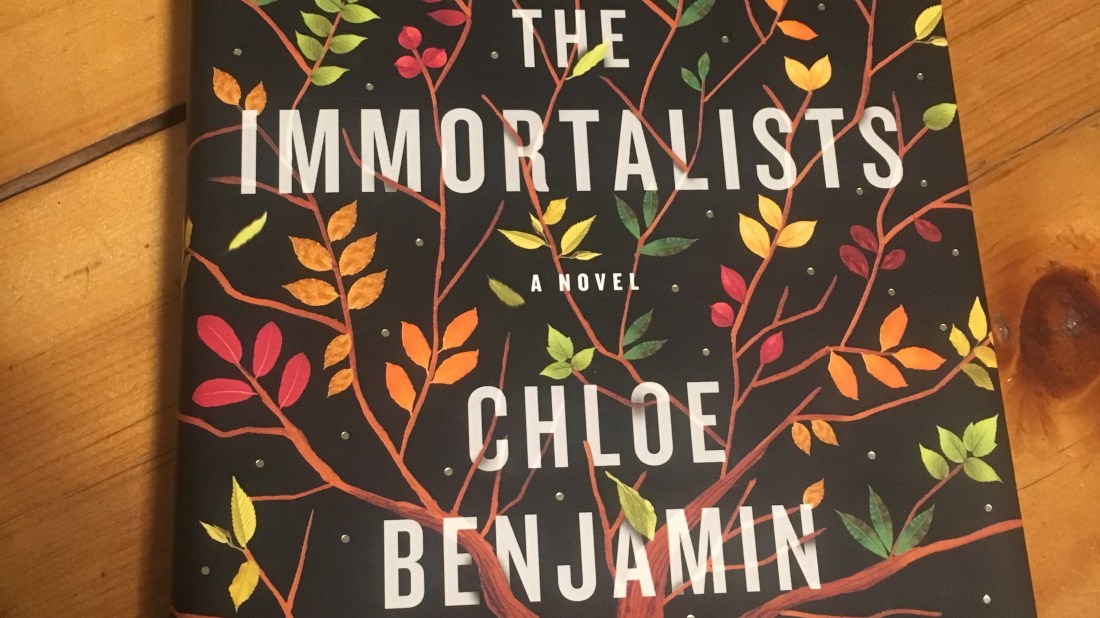
The Immortalists by Chloe Benjamin: A Review

“Most adults claim not to believe in magic, but Klara knows better. Why else would anyone play at permanence – fall in love, have children, buy a house – in the face of all evidence there’s no such thing? The trick is not to convert them. The trick is to get them to admit it.” – Chloe Benjamin, The Immortalists

Well, add this one to your Christmas lists, folks. Or maybe treat yourself a little early. The Immortalists is an imaginative, thoughtfully written book. (And I told you it has a gorgeous cover). Divided into five parts, the novel begins in New York City at the end of the 1960s. The Gold siblings – Varya, Daniel, Klara and Simon – sneak off to visit a psychic who has set up shop in an apartment on Hester Street. One by one, they enter her apartment to be told the exact day they will die. There is just one hitch: she makes them swear that they won’t tell anyone else what they’ve learned, not even each other. While they are upset by the knowledge at first, eventually they seem to leave it behind, dismissing it as a childish adventure. Except that the experience never really leaves any of them. Benjamin describes how in one way or another, each sibling struggles, but cannot let go of the prophecy the psychic has given them: ” … the memory of the woman on Hester Street is like a miniscule needle in his stomach, something he swallowed long ago and which floats, undetectable, except for moments when he moves a certain way and feels a prick.”

Each of the other four sections of the novel follow one of the four siblings as they approach the day the psychic prophesied their deaths. Benjamin renders each of the sibling’s stories so uniquely that you are completely drawn in each time. Throughout the novel she weaves in contradictions between fate and choice, religion and science, faith and reason, life and death. As their stories unfold, the siblings have to confront the fact that seeing that psychic may have consciously or unconsciously shaped the choices they made in their lives. They are forced to ask themselves, do they believe? Do the others? And ultimately: “is it more important to truly live or to survive? To dare to dream at our grandest or to play it safe?” Their answers to those questions set their lives on very different trajectories as they struggle with what it means to pursue their own dreams and still hold their family together. Distinct personalities from the outset of the novel, Benjamin never makes it clear how much of the Golds’ identities and choices are a result of their own nature, and how much was shaped by their experience with the psychic. Beautifully written and at times heart-breaking, this is a novel that you will continue to think about long after you’ve put it down.

After having read The Immortalists, I wonder which of the Gold siblings’ stories spoke the most to other readers. If you read it, drop me a note and let me know what you think. I love hearing your perspectives on the books. Until next time, happy reading!

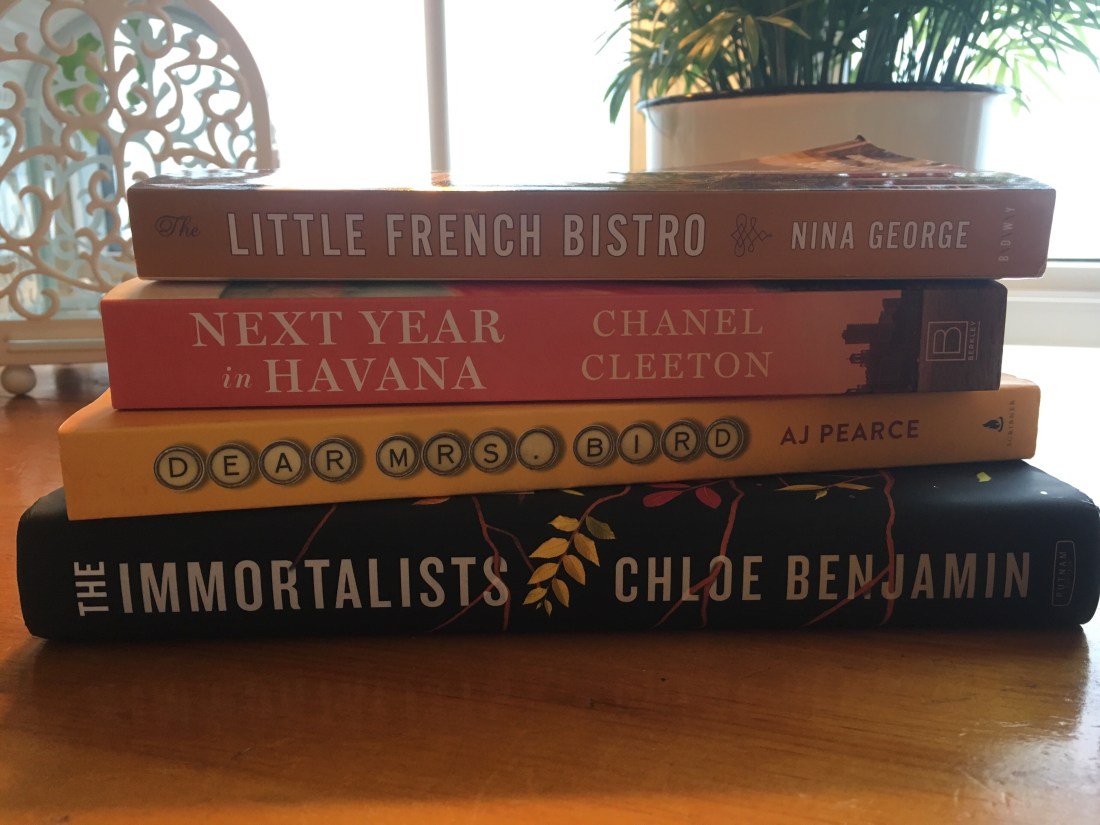
November Line Up

While I am usually happy with my home on the east coast, if there is one month I feel a little less than grateful, it’s November. It’s dark, cold, wet, dreary, gray – I could play this game for a long time, folks. So for this month, the theme is “Get Me Out of Here!” If I can’t escape the magical weather combination of drizzle and sleet that November brings in real life, at least I can travel via book. All of this month’s selections are set in other places so maybe you’ll find one in here too to help you beat the November blahs.

November 3: The Immortalists by Chloe Benjamin. I first picked this book up because I loved the cover (I know what you’re thinking but let’s all admit, sometimes beautiful books actually do have beautiful covers). The concept behind the story is really interesting: one hot summer day in 1969, four siblings in New York City visit a psychic who tell each one the exact day they will die. The rest of the novel is divided into four parts, one devoted to each sibling as Benjamin reveals how the prophecy influences each of their lives. The story zigzags across the US as the siblings move away from their childhood home in NYC in pursuit of their dreams.

November 10: The Little French Bistro by Nina George. I really enjoyed George’s other novel, The Little Paris Bookshop, which hooked me with the idea of a bookshop in a canal boat that goes floating around the rivers of France. It was totally charming and sweet, oh, and there were recipes in the back of the book for all the French food George writes about in the novel. What’s not to love? In her new novel, George’s main character, Marianne, packs it in after she can stand her unhappy marriage no longer and leaves Paris for the Brittany coast. And there are recipes again, so I will let you know if I try any…

November 17: Next Year in Havana by Chanel Cleeton. This is a recent Reese’s Book Club pick. I will admit, I really do love Reese Witherspoon. She is amazing in HBO’s Big Little Lies (if you haven’t watched it, read the book first, it is so good) and she does a lot to promote all things bookish. I also really love Cuba. The country, the people and the culture are beautiful and the island’s history is fascinating so I was sold on this book. The story is set between 1958, in the years before the revolution and in Miami in 2017 and follows two women, Elisa, a member of a wealthy Cuban family who is forced to flee during the revolution and Marisol, her granddaughter, who eventually returns to Cuba to scatter Elisa’s ashes in the country of her birth.

November 24: Dear Mrs. Bird by AJ Pearce. This novel is set in London during World War II. The main character, Emmeline, dreams of becoming a war correspondent. Instead, she ends up answering letters for Mrs. Bird, a renowned advice columnist. Mrs. Bird tells Emmy to throw any letters that involve Unpleasantness straight into the garbage but Emmy ends up reading them and answering them in secret. This book is supposed to be both funny and moving, so I am really looking forward to it.

So there we are, the continental US, France, Cuba and England. You can take your pick but while the November rain pours down, I am going to be somewhere cozy with a good book and I hope you will be too. Let me know if you plan on picking up any of November’s books!