
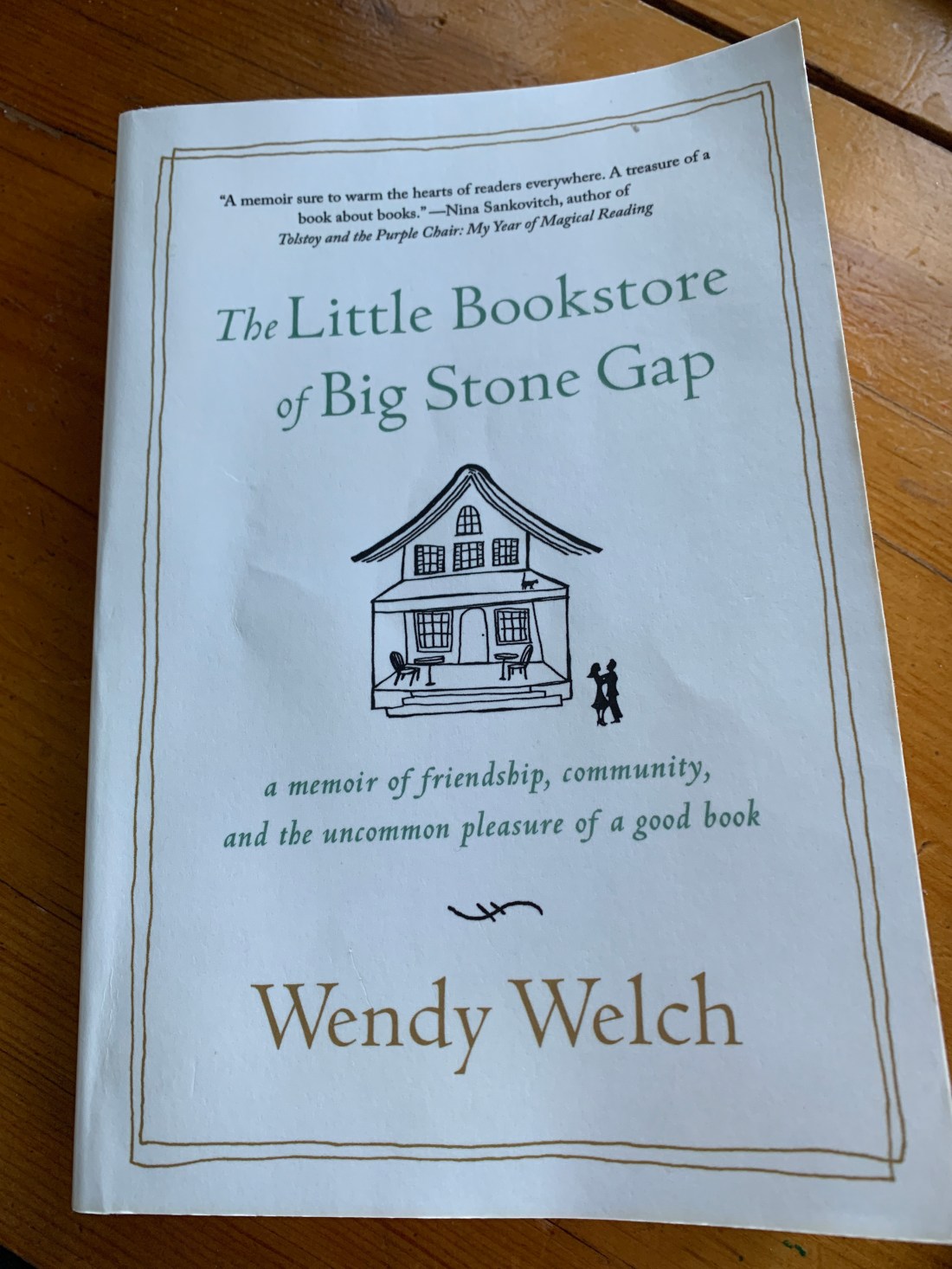
“Third places are those needed spaces, neither home nor work, where we are known by our names and valued for being whatever we decide to be — the clown, the intellectual, the quiet person. Being part of a family is a wonderful thing, and I’m all for team-building at work, but having a place where you don’t have to be anything to anyone makes a pleasant breather.”
Wendy Welch, The Little Bookstore of Big Stone Gap
Like a lot of people who love to read, sometimes I wonder what it would be like to chuck in my day job and work in a funky little bookstore somewhere. It was that kind of daydreaming that prompted me to pick up Wendy Welch’s memoir about opening Tales of Lonesome Pine Used Books in Big Stone Gap, Virginia. Wendy and her husband, Jack, might seem unlikely entrepreneurs: Jack is a Scottish folks singer, and Wendy has her Ph.D. in ethnography and neither of them is exactly, (ahem) in the spring of their youth. They made the decision to open a used book store at a time when Wendy had given up her job in what she called the “Snake Pit” (no actual snakes or pits involved) and Jack had retired. They were travelling through Big Stone Gap and fell in love with a big old house that was on the market. Over nachos and sangria at a local restaurant, they decided almost on a whim to throw all of their savings into the house, which would become both bookshop and home.
I really enjoyed Welch’s self-deprecating way of recounting their early months as booksellers. When they opened Lonesome Pine, they had no idea how to run a book store, no inventory beyond their own books and a few yard sale finds and very little money. Big Stone is a small town, and both Wendy and Jack did not realize how significant putting down roots would be in the success of their business. After some unpleasant interactions, the couple threw themselves into not only book selling, but also making their store a community space – what Welch calls a “third place” – where people could come to connect. The store hosts craft nights, music nights, semi-annual murder mysteries and a myriad of other things to make it feel like a community space. I loved reading about all the ingenuity and elbow grease it took to get the store up and running. Welch writes about her store, her community and her husband with open affection. Welch talks about how leaving a job she hated to open Lonesome Pine feels like she is, “no longer renting space inside my skin” and her writing communicates that. She is unflinching in describing the mistakes she and Jack made, their interactions with annoying customers, and unpleasantness within the town, but she is also generous in describing the bookstore’s regulars, her pleasure in talking books with others and the fun of finding a home in Big Stone. There is something very reminiscent of The Little Engine that Could in the way that the couple kept plugging away at their dream until they made it a success.
The Little Bookstore of Big Stone Gap is full of energy and charm. I love memoirs of everyday people because I think it shines a light on acts that we often take for granted. Welch is also a blogger and you can visit her here if you want to get a sense of what the store is all about.
That’s it for this post! Until next time, happy reading!
 Little Ms Word Smith