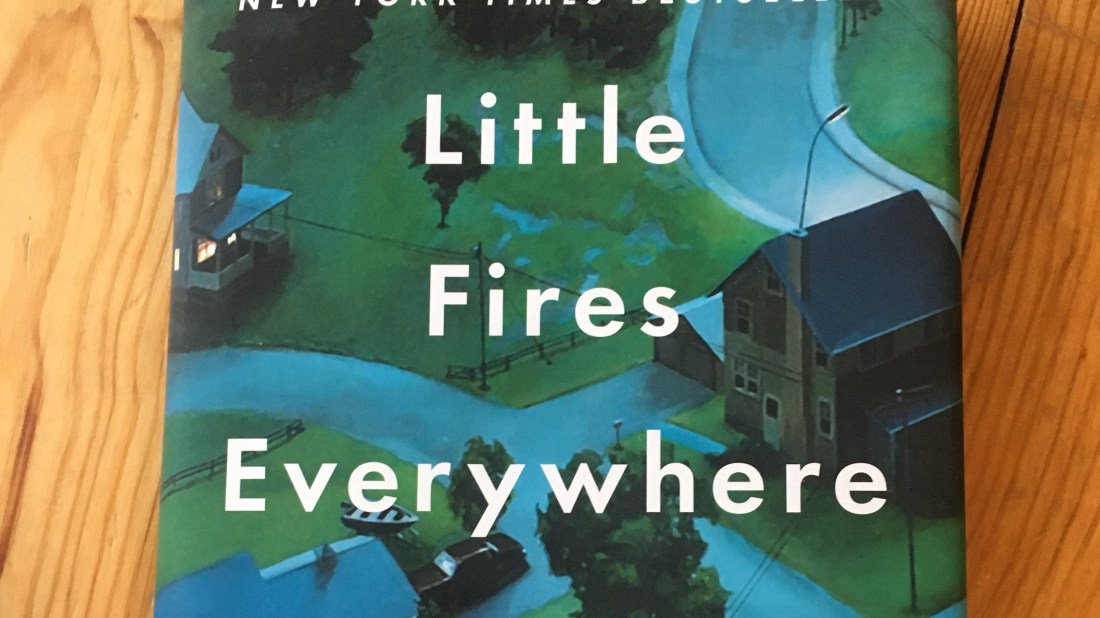
Little Fires Everywhere by Celeste Ng: A Review

“One had followed the rules, and one had not. But the problem with rules… was that they implied a right way and a wrong way to do things. When, in fact, most of the time they were simply ways, none of them quite wrong or quite right, and nothing to tell you for sure what side of the line you stood on.” – Celeste Ng, Little Fires Everywhere

I really, really liked this book. Set in the community of Shaker Heights, Little Fires Everywhere follows the story of two families: the Richardsons – a wealthy family with four teenaged children and their tenant, Mia Warren and her daughter, Pearl. Shaker Heights is a planned community where everything from the layout of the streets to the colours of the houses is carefully designed. The families of Shaker are rich, their children go on to prestigious universities, they give to the right charities, they help those in need. They follow the rules. They do what is right. Nobody embodies Shaker more than Elena Richardson, who was raised in the community and returned there to raise her own family. When Mia moves to Shaker, Elena sees the artist and her shy daughter as an opportunity to help someone deserving. Very quickly the two families become entwined via the children; Pearl becomes a fixture in the Richardson home while Izzy, Elena’s challenging youngest child, comes to idolize Mia. When a white couple in Shaker attempts to adopt a Chinese-American baby who was abandoned by her mother, a custody battle ensues that divides the community, and puts Elena and Mia on opposite sides.

One of the things I most enjoyed about this book was how unexpected so much of it was.  As the novel progresses, secrets are revealed that threaten to pull both families apart. The narrative moves between Elena, Mia and each of the five children. Ng’s writing is like a slow burn. I found myself drawn in almost without noticing, and then I couldn’t stop reading. Ng reveals the complexities of family, especially the relationships between mothers and their children. She also examines what it means to follow the rules, and what it means to break them. Both Elena and Mia are strong characters with faith that their actions are the right ones and this sets them on a path that will eventually result in heartbreak for both of them. I think the reason the novel works so well is because Ng is careful not to create heroes or villains. Each character’s choices and feeling are understandable given their circumstances and this makes the events that unfold – some of them shocking – feel inevitable. Ng’s writing creates an immersive world in the suburbs of Cleveland that feels both familiar and alien as she pushes the readers’ boundaries about who is right and who is wrong in the conflicts she creates.

If you are looking for a book to read in the new year, you should pick up Little Fires Everywhere. I would really love to hear what you think about it and if you loved it as much as I did! Until next time, happy reading!
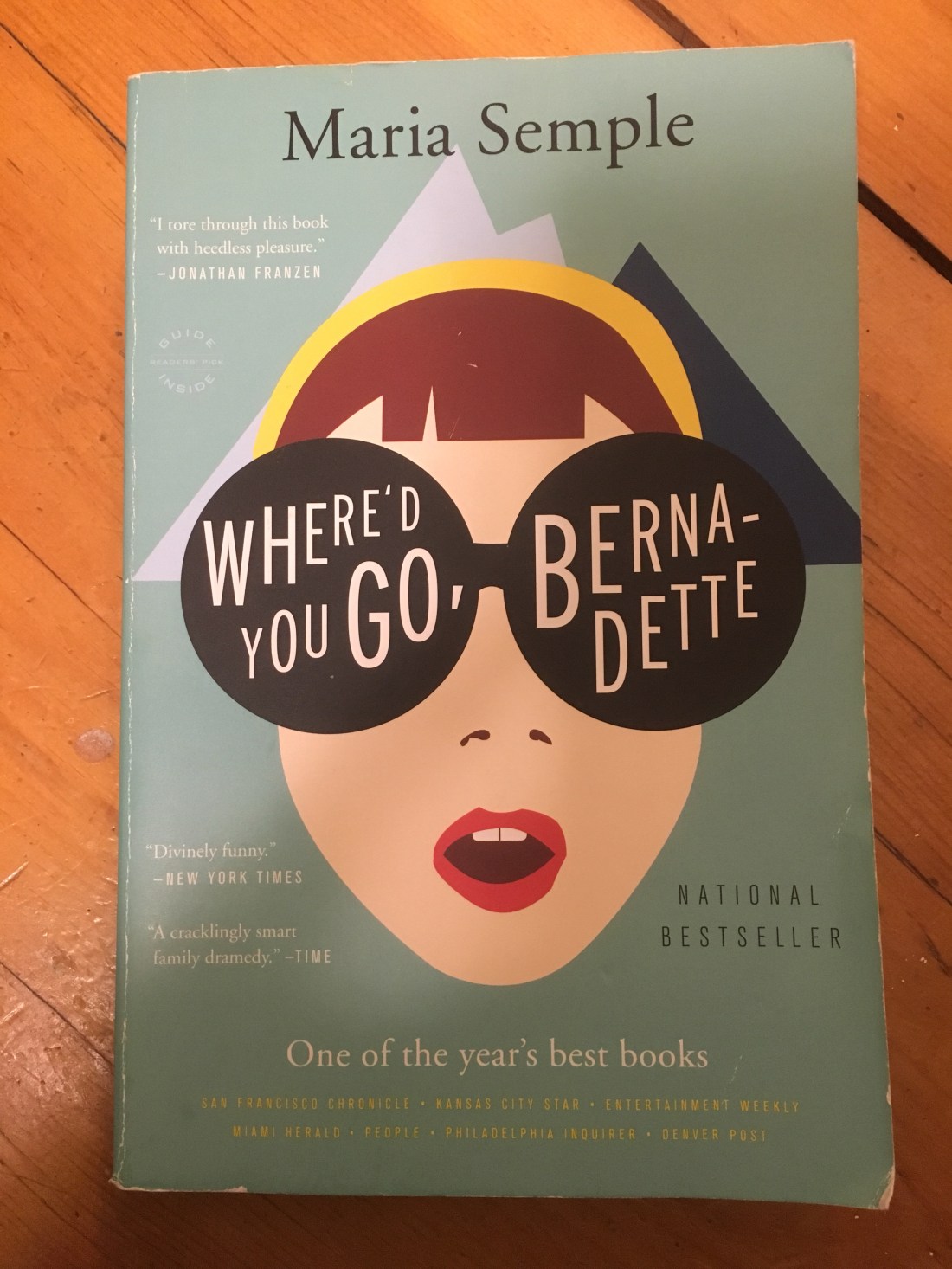
Bonus Book: Where’d You Go, Bernadette, by Maria Semple

“That’s right,’ she told the girls. ‘You are bored. And I’m going to let you in on a little secret about life. You think it’s boring now? Well, it only gets more boring. The sooner you learn it’s on you to make life interesting, the better off you’ll be.” – Maria Semple, Where’d You Go, Bernadette

In terms of getting out of here, Where’d You Go, Bernadette definitely fits the bill. It’s another novel that I find myself frequently recommending to friends and coworkers and just about anyone who will listen, really. Maria Semple, the novel’s author, was a former writer on Seinfeld and this novel sings with funny, sharp writing that touches the heart. Bernadette is a genius, an architect, mother, wife, and she is agoraphobic. Increasingly, Bernadette cannot leave her house for even the simplest errands, but when her fifteen-year-old daughter, Bee, gets straight As on her report card, Bernadette is supposed to honor her promise to take Bee on a trip to Antarctica. Then Bernadette disappears. It is left up to Bee to try to figure out what happened to Bernadette and the story follows her attempts to navigate a path that will lead her back to her mother.

I love this novel because the plot manages to be so unexpected while the themes deal with the familiar: what it means to be family; how far will we go for someone we love; how much of us is who we feel we are, and how much is how others perceive us? There is a dogged hope in Bee that just won’t give up because no matter what, she loves her mother and she is going to find out what happened to her: “I can pinpoint that as the single happiest moment of my life, because I realized then that Mom would always have my back. It made me feel giant. I raced back down the concrete ramp, faster than I ever had before, so fast I should have fallen, but I didn’t fall, because Mom was in the world.” In this novel, there is adventure and humour and tragedy and love all rolled into one.

I confess, I have never seen the movie (and I don’t really want to in case it ruins the book for me), but if you are looking for something inspiring and different to read over the holidays, you might enjoy Where’d You Go, Bernadette. That’s it, that’s my pitch. Now, go get reading.

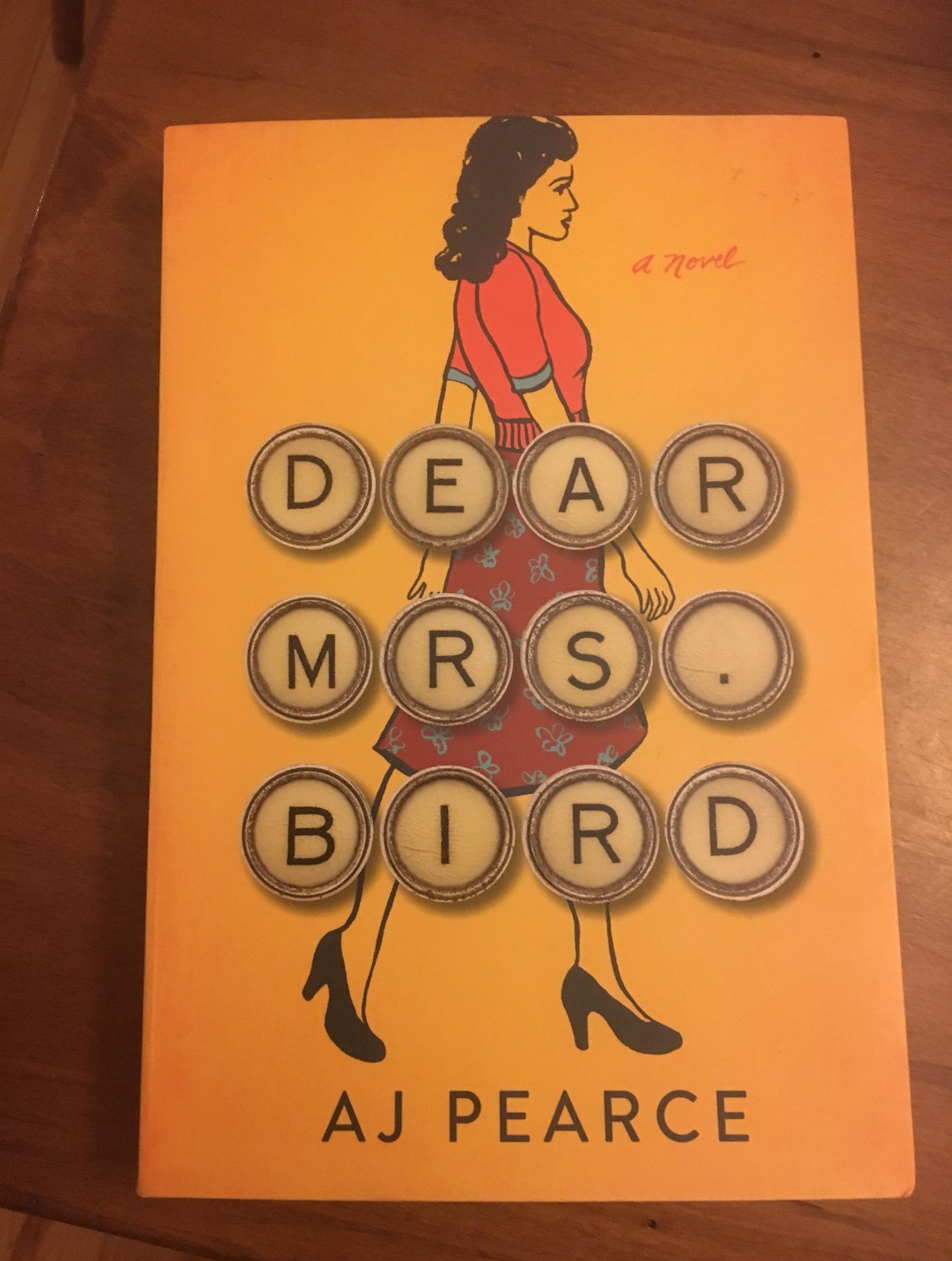
Dear Mrs. Bird by AJ Pearce: A Review

“I tried to take a deep breath and be British and brave, but it didn’t work, and instead, the tears began. Masses of them. Where did tears like that come from and how did they get there so fast? Were they always there, just waiting for something dreadful to happen? What a horrible job they had.” – AJ Pearce, Dear Mrs. Bird


This was a surprisingly touching novel to me. Dear Mrs. Bird‘s main character, Emmy, is living in London during the Blitz with her best friend Bunty, at a time when the German Luftwaffe bombed British cities regularly in an attempt to force Britain out of the war. With dreams of becoming a Lady War Correspondent, Emmy accidentally takes a job as a junior typist working for an advice column, “Henrietta Helps”, in Woman’s Friend magazine. On top of the initial embarrassment of realizing her new job is not going to have her reporting from the front lines of the war, it turns out “Henrietta” is Mrs. Bird, a woman who shouts a lot and has a long list of things that she refuses to respond to when readers write in requesting help (Affair, Amorous, Ardent, Bed, Bedroom, Bed jacket, Berlin … and it goes on). Emmy can’t stand the idea of these poor readers, many of whom are struggling with very difficult personal situations that are compounded by the war, being ignored completely by Mrs. Bird and so she begins to write back in secret, posing as Mrs. Bird. But this is only her day job; anxious to do her part in supporting the war effort, Emmy volunteers several nights a week in the Auxiliary Fire Service, dispatching fire fighters across London to deal with the fires set by the Luftwaffe’s bombs. She often gets only an hour or two of sleep between leaving the fire station and heading off to work again.

Emmy is a comedic heroine; often her big heart and a short-sighted desire to help get her into a lot of trouble but she never loses her desire to improve her own situation or help those around her in any way she can. I described this book to a friend as a 1940s Bridget Jones but with the emotional vibe of a Christmas movie (another way to say this is that I really liked it). Often it is Pearce’s funny elements that offset the tragedies of the war, like when Emmy is set up on a date with a soldier from a bomb disposal unit who constantly shouts because of the ringing in his ears. Other times, like through the letters Emmy receives at “Henrietta Helps”, characters’ fears and desperation come to the forefront, highlighting the incredibly difficult circumstances people faced on a daily basis. There were times reading this novel when I laughed out loud and other times when I had tears in my eyes.

One of the important things this novel does is to emphasize the roles of women on the British home front during the war, not just in terms of the work they did to support the war effort, but also in terms of the challenges they faced: falling out of love with husbands who had been gone for months, trying to decide whether to send children away or keep them with you and risking the bombings, having sweethearts leave you for someone they met overseas. Many of these women worked long hours in very uncertain circumstances and yet they were expected to keep their fears to themselves, the keep their chins up, a stiff upper lip and to smile, smile, smile. They were told that to do otherwise was unpatriotic and weak; that they needed to show Hitler that they could not be defeated.

Pearce’s inspiration for the novel began when she came across a copy of a women’s magazine from 1939. She was most struck by the Problem Page and she went on to read many letters from readers in wartime magazines during her research. The novel really is a tribute to the experiences of these women, told through Emmy and Bunty’s stories in a way that makes them relatable even though we are so far removed from wartime London. Pearce writes,

Many of the readers’ letters in Dear Mrs. Bird were inspired by the letters and advice, articles and features printed in those wartime magazines. I found them thought-provoking, moving, and inspirational, and my admiration for the women of that time never stops growing. Our mothers, grandmothers, great-grandmothers, and friends, some of whom I hope may even read and enjoy Emmy and Bunty’s story. It is a privilege to look into their world and remember what incredible women and girls they all were.

I would recommend Dear Mrs. Bird in a heartbeat. It is charming and touching and funny without glossing over the difficulties of the war. At its heart, it is really about friendship and finding the strength to push on, if not for yourself, then for those you love. If you read Dear Mrs. Bird, (and I know some of you plan to) I would love to know if you liked it as much as I did. Until next week, happy reading!

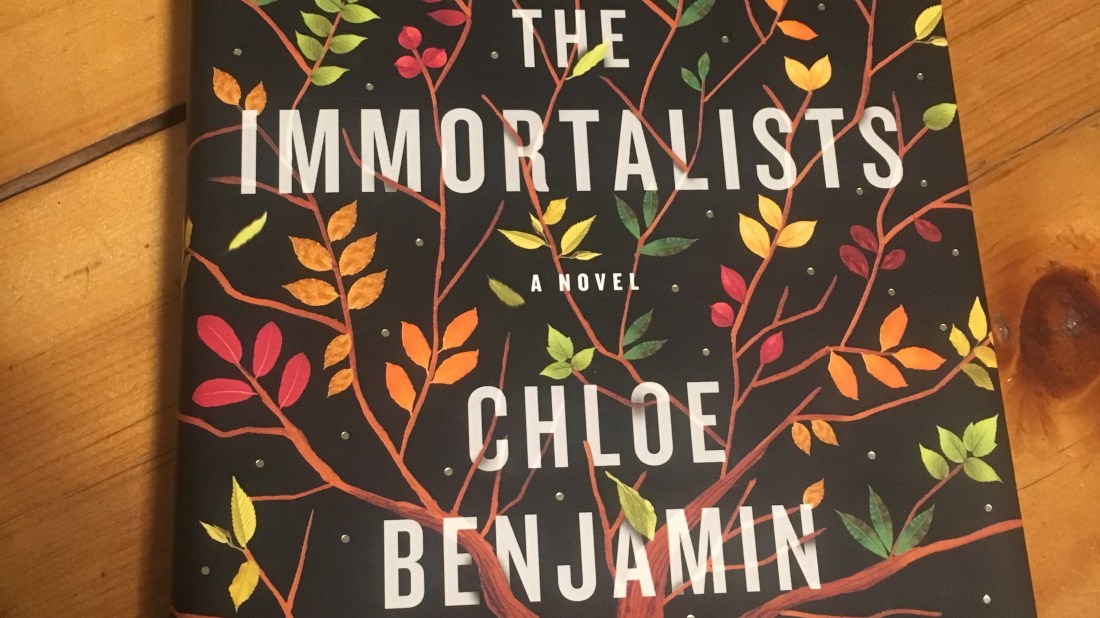
The Immortalists by Chloe Benjamin: A Review

“Most adults claim not to believe in magic, but Klara knows better. Why else would anyone play at permanence – fall in love, have children, buy a house – in the face of all evidence there’s no such thing? The trick is not to convert them. The trick is to get them to admit it.” – Chloe Benjamin, The Immortalists

Well, add this one to your Christmas lists, folks. Or maybe treat yourself a little early. The Immortalists is an imaginative, thoughtfully written book. (And I told you it has a gorgeous cover). Divided into five parts, the novel begins in New York City at the end of the 1960s. The Gold siblings – Varya, Daniel, Klara and Simon – sneak off to visit a psychic who has set up shop in an apartment on Hester Street. One by one, they enter her apartment to be told the exact day they will die. There is just one hitch: she makes them swear that they won’t tell anyone else what they’ve learned, not even each other. While they are upset by the knowledge at first, eventually they seem to leave it behind, dismissing it as a childish adventure. Except that the experience never really leaves any of them. Benjamin describes how in one way or another, each sibling struggles, but cannot let go of the prophecy the psychic has given them: ” … the memory of the woman on Hester Street is like a miniscule needle in his stomach, something he swallowed long ago and which floats, undetectable, except for moments when he moves a certain way and feels a prick.”

Each of the other four sections of the novel follow one of the four siblings as they approach the day the psychic prophesied their deaths. Benjamin renders each of the sibling’s stories so uniquely that you are completely drawn in each time. Throughout the novel she weaves in contradictions between fate and choice, religion and science, faith and reason, life and death. As their stories unfold, the siblings have to confront the fact that seeing that psychic may have consciously or unconsciously shaped the choices they made in their lives. They are forced to ask themselves, do they believe? Do the others? And ultimately: “is it more important to truly live or to survive? To dare to dream at our grandest or to play it safe?” Their answers to those questions set their lives on very different trajectories as they struggle with what it means to pursue their own dreams and still hold their family together. Distinct personalities from the outset of the novel, Benjamin never makes it clear how much of the Golds’ identities and choices are a result of their own nature, and how much was shaped by their experience with the psychic. Beautifully written and at times heart-breaking, this is a novel that you will continue to think about long after you’ve put it down.

After having read The Immortalists, I wonder which of the Gold siblings’ stories spoke the most to other readers. If you read it, drop me a note and let me know what you think. I love hearing your perspectives on the books. Until next time, happy reading!