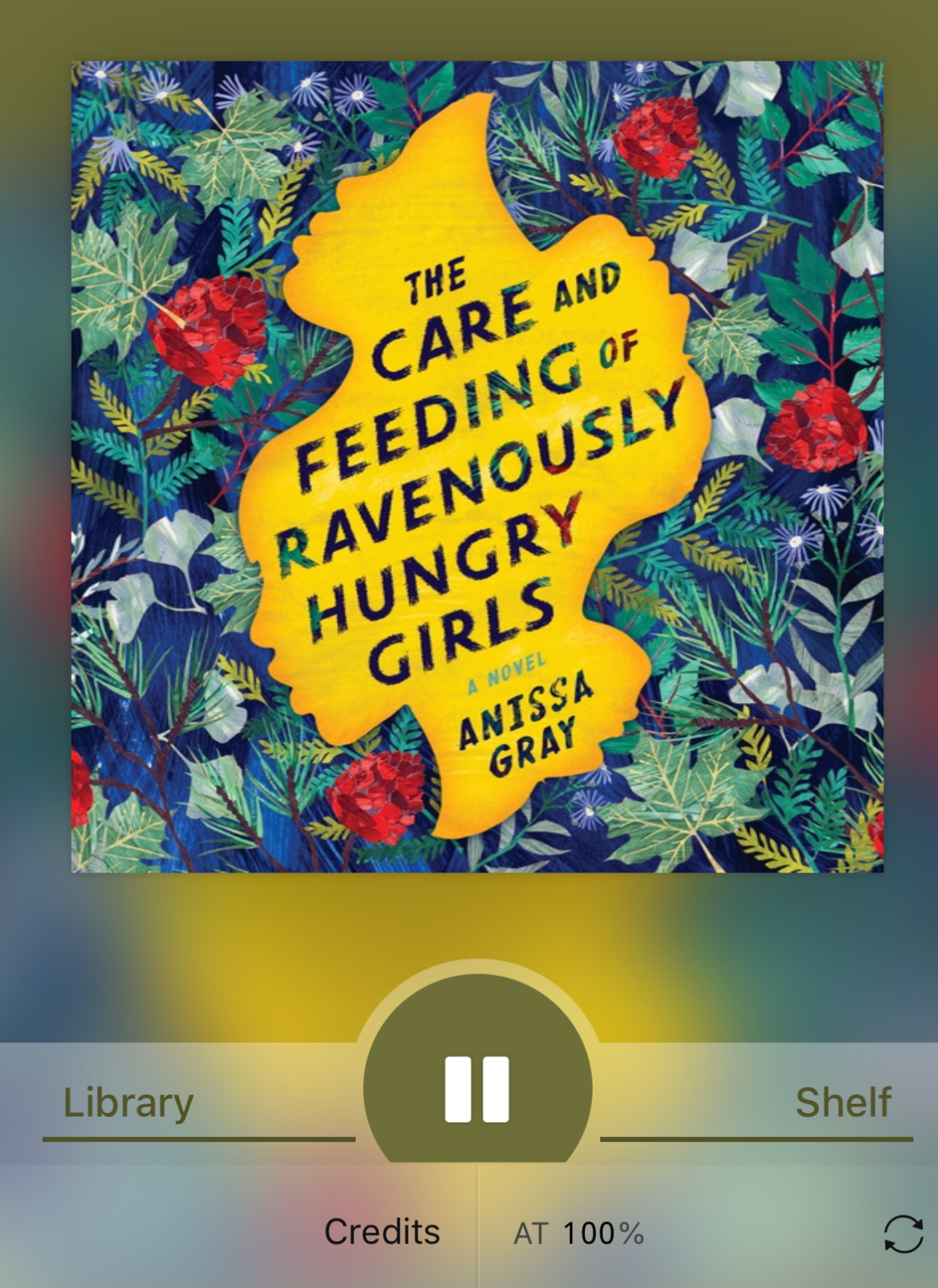
The Care and Feeding of Ravenously Hungry Girls by Anissa Gray: A Review


“That river runs through the place where I was easier to define. The place that made me who I used to be. Althea Marie Butler-Cochran: round, dimpled face; rounding, dimpled body; smooth, light brown skin; wife; mother; daughter; sister; mighty force of nature.” 

― Anissa Gray, The Care and Feeding of Ravenously Hungry Girls

The title! The cover design! But never mind, those might have been the reasons I first noticed Anissa Gray’s debut novel but it is the powerful writing that really captured me. The Care and Feeding of Ravenously Hungry Girls is the story of a family dealing with crisis. Althea and Proctor were pillars of their community; they ran a popular family restaurant and were raising their two daughters. But when the novel opens, Althea and Proctor are in prison on charges of fraud. They had been skimming money from the charities they ran and they got caught. The novel alternates between a variety of voices, those of Althea and Proctor, and Althea’s sisters, Viola and Lillian as the family tries to come to terms with their new reality. At the forefront is how to help the couple’s teenage daughters cope with what is unfolding, but the novel delves deep into family connections, especially relationships between mothers and daughters, but also between siblings. Althea, Viola and Lillian also face their own demons and through her novel Gray examines heavy subjects like eating disorders, homophobia, childhood neglect and life in the prison system.

I listened to this book on audio which enhanced the experience of having the novel told through different characters’ voices because each was read by a different performer. While it deals with subject matter similar to An American Marriage, the focus of Gray’s novel isn’t so much about the dissolution of a family as it is about the attempt to hold one together. All of the characters are flawed in their own ways but each is still striving to do what they believe to be right but old family secrets have to be brought to light in order for them to find a way forward.

Gray’s novel is not what most people would categorize as “summer reading”, especially if you prefer something light and breezy at the beach, but it is an impressive debut and is well worth the read. Tomorrow I will post about The Saturday Night Ghost Club by Craig Davidson for something completely different. Until then, happy reading!

Station Eleven by Emily St. John Mandel: A Review

“Survival is insufficient.” 

Emily St. John Mandel, Station Eleven

If categories like dystopian or science fiction scare you, please don’t let that turn you away from reading Station Eleven. The novel moves back and forth in time as civilization as we know it dissolves after the outbreak of a deadly flu pandemic. It centers around the experiences of a loosely related group of people, contrasting their lives before and after the outbreak. The world before the outbreak is one we recognize: fame and media and technologies that cushion us from the harshness of the nature (and sometimes each other). The world after is both new and old – electricity, modern communication – all of it has ceased to exist. New cults form, old forms of entertainment, such as the theater troupe known as the Travelling Symphony, perform Shakespeare in the new settlements. St. John Madel never takes us right into the horrors of the collapse, skirting it instead through the days proceeding the pandemic and the eerie years after, as the survivors try to rebuild.

The writing in this novel is beautiful. Despite the difficulties that the new world presents, the characters are largely driven by hope. The characters are connected by one man, the actor Arthur Leander who died onstage on the eve of the outbreak. The author weaves his story into the lives of those who were linked to him, knowingly or not, in the years after. The novel explores the nature of art, fame and ambition while never losing sight of good story-telling. As humanity struggles to pick up the pieces in the wake of what has been lost, the writing takes time to linger on what it means to be human, to be decent and thoughtful when everything familiar is gone.

I really enjoyed Station Eleven and I think that for readers who don’t see themselves as fans of dystopian or speculative fiction, St John Mandel’s writing challenges what the stereotypes of those categories can mean.

I’ve only got a few weeks left to meet the 52 book challenge and while I’ve been reading a lot, the posts are obviously behind so you can expect to see them coming fast and furious in the next couple weeks. Anything you think I should squeeze in before the end? Let me know! Until next time, happy reading!

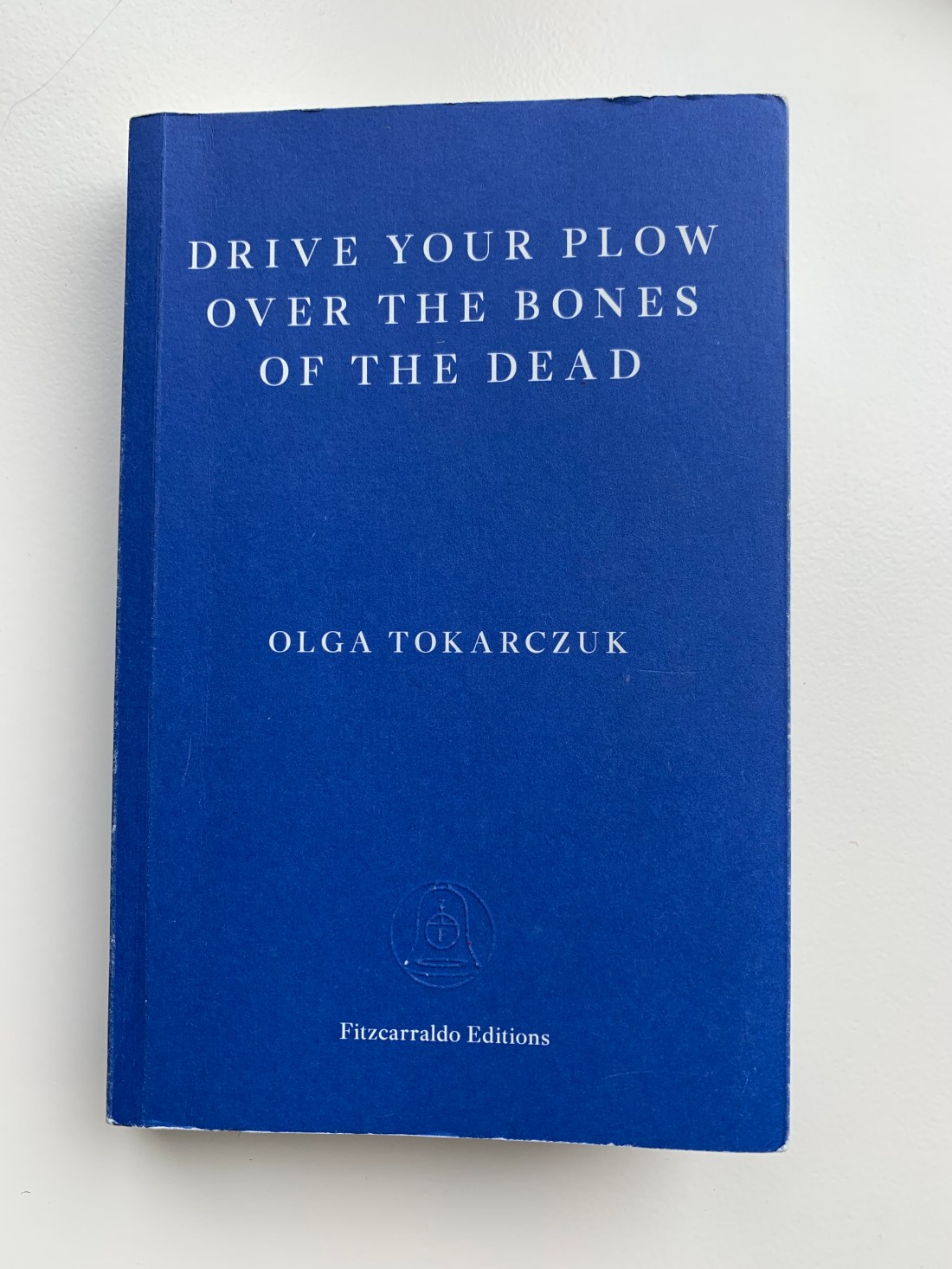
Drive Your Plow Over the Bones of the Dead by Olga Tokarczuk: A Review

One has to tell people what to think. There’s no alternative. Otherwise someone else will do it.

Olga Tokarczuk

Set in a remote Polish village, Drive Your Plow is a dark comedy wherein the protagonist, Janina Duszejko, an eccentric woman in her sixties, tries to convince her fellow villagers of her Theories. Mrs Duszejko is a firm believer in astrology, the idea that most humans are insufferable and the sanctity of animals. When several men in the village are found dead under suspicious circumstances, Mrs Duszejko believes it is the result of animals taking revenge against humans – particularly hunters – for their cruelty. Some people in the village consider her mad, others see her as an old busybody to be ignored or ridiculed for her beliefs and yet there is a very small group who look past her eccentricities to see her intelligence and keen wit and consider her a friend. This is not a murder mystery in the conventional sense, although solving the murders of the three dead men is central to the plot.

Tokarczuk is a literary superstar in her native Poland. This is the first novel I have read by her. She covers a lot of ground in this book, examining everything from perceptions of madness to animal rights to religious hypocrisy. The story was very original compared to other novels that I have read in that it was part thriller, part dark comedy and part political and social commentary. At times, I found the text to be dense and had to reread passages on more than one occasion. As sometimes is the case with works in translation, I’m not sure if it is how the novel was originally written, or if it is a function of translating Polish into English. Mrs Duszejko and her friend Dizzy deal with this issue themselves to some extent as they struggle to translate the poetry of William Blake (from whose work the book gets its title) from English into Polish. The nuance and challenge of expressing oneself clearly to another is repeatedly examined in the novel.

Despite the somewhat heavy subject matter, the novel is truly funny. Mrs Duszejko refuses to refer to most of the local villagers by their actual names and instead calls them by names she has given them – her neighbours, for example are Oddball and Big Foot. She has a forceful personality and refuses to be put aside by those who would laugh at her or scorn her. It is also in many ways a novel about friendship and holding on to what you value, despite the rules of society. While I did struggle through it at times, I was glad to have read it.

I’ll be putting up posts more frequently this month and next so I am skipping the monthly line-ups and giving myself the freedom to read whatever I feel like next but in case you are missing knowing what is up-coming, I will be posting about The Wonderling, Station Eleven, The Saturday Night Ghost Club, The Care and Feeding of Ravenously Hungry Girls and The Seven Husbands of Evelyn Hugo in the next week or so.

I’d love to hear what is on your summer reading list – let me know what you’ve been reading!

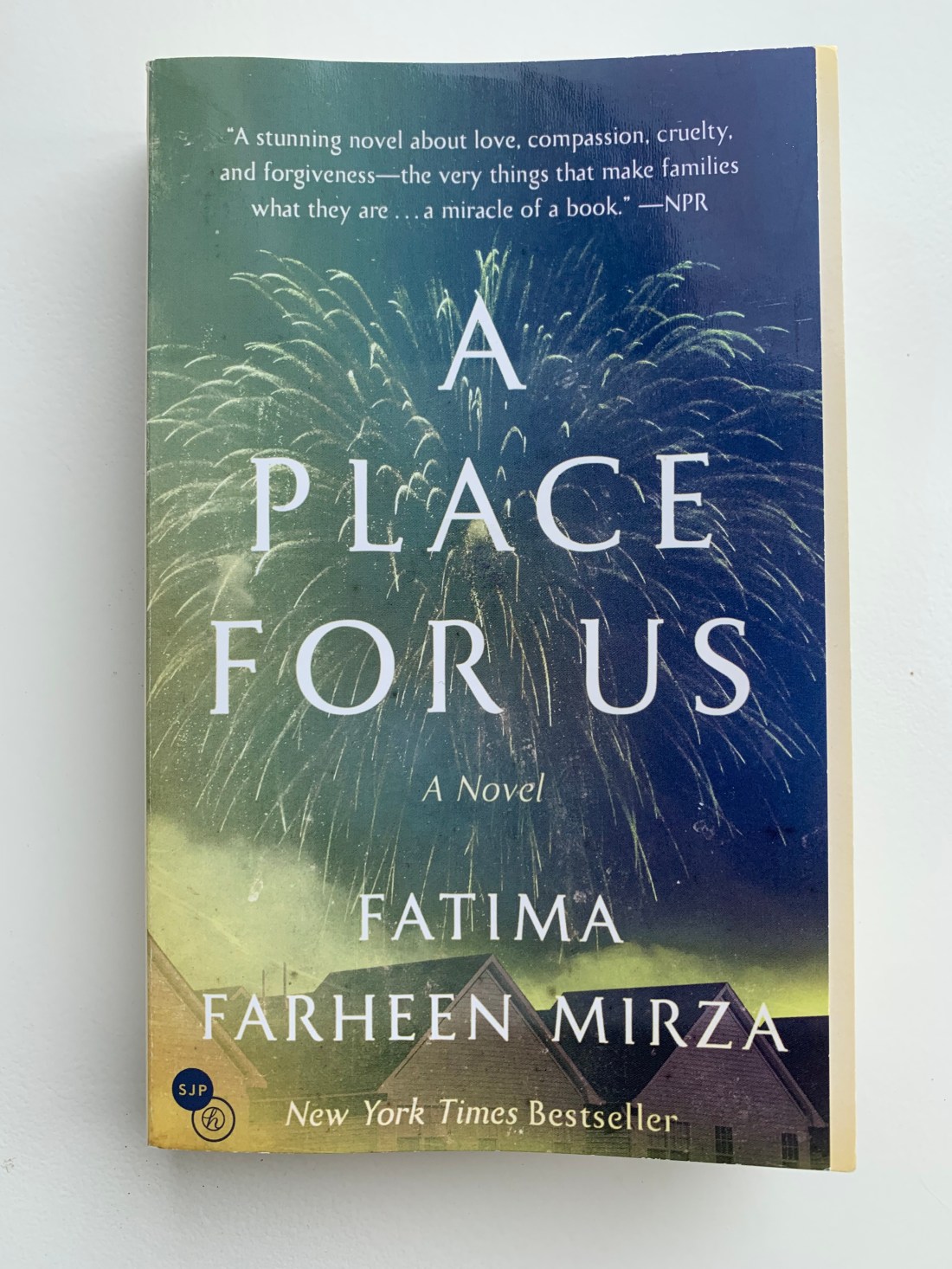
A Place for Us by Fatima Farheen Mirza: A Review

Afsoos was the word in Urdu. There was no equivalent in English. It was a specific kind of regret – not wishing he had acted differently, but a helpless sadness at the situation as it was, a sense that it could not have been another way.” 

Fatima Farheen Mirza, A Place for Us

If I say the words, “sweeping family saga” and you perk up, this might be a novel for you. Set in contemporary California, it opens at the wedding of Hadia, the oldest child in an Indian Muslim family. Her estranged brother, Amar has returned for the wedding and the story circles back into the family’s past, tracing the reasons why Amar chose to leave and that decision’s impact on his family. This novel is very much driven by character and events often take time to fully reveal themselves, as they are revisited through the experiences and memories of the family members.

As the title indicates, the novel largely centers on themes of acceptance and many of the characters question their place within their families, and their religious and cultural communities. Mirza is able to explore the ways in which faith, gender and tradition influences the way her characters understand themselves and their place within the family. There is a very contemplative feel to the novel and Mirza avoids tropes of “happily ever after”, instead allowing her characters to live with their questions and regrets. She depicts a family that is trying to heal around a wound, trying to push forward a build a good life despite what has happened. Like any good family story, there are many interpretations of why events unfolded as they did. The reader can see Amar and his family trying to decided: was this just how he is? Did we make him this way? Was there something different we could have said, could have done, to prevent this from happening? Mirza also explores what it means to leave some questions unanswered as her characters try to come to terms with things they cannot fully explain. Ultimately the novel is about acceptance, belonging, hope, and the ties that bind families together.

This debut made a lot of Best Books of 2018 lists and while I certainly appreciate the beauty of Mirza’s writing, I have to admit that I found this book a little slow. There were times when we seemed to be going over the same ground again and again and while I think that her narrative style did add depth and complexity to her characters’ experiences, I wanted it to move a little faster most of the time.

I am way behind on my posts but I will be trying to get caught up this week so if A Place for Us doesn’t ring your bell, stay tuned! Until next time, happy reading!

June Line Up

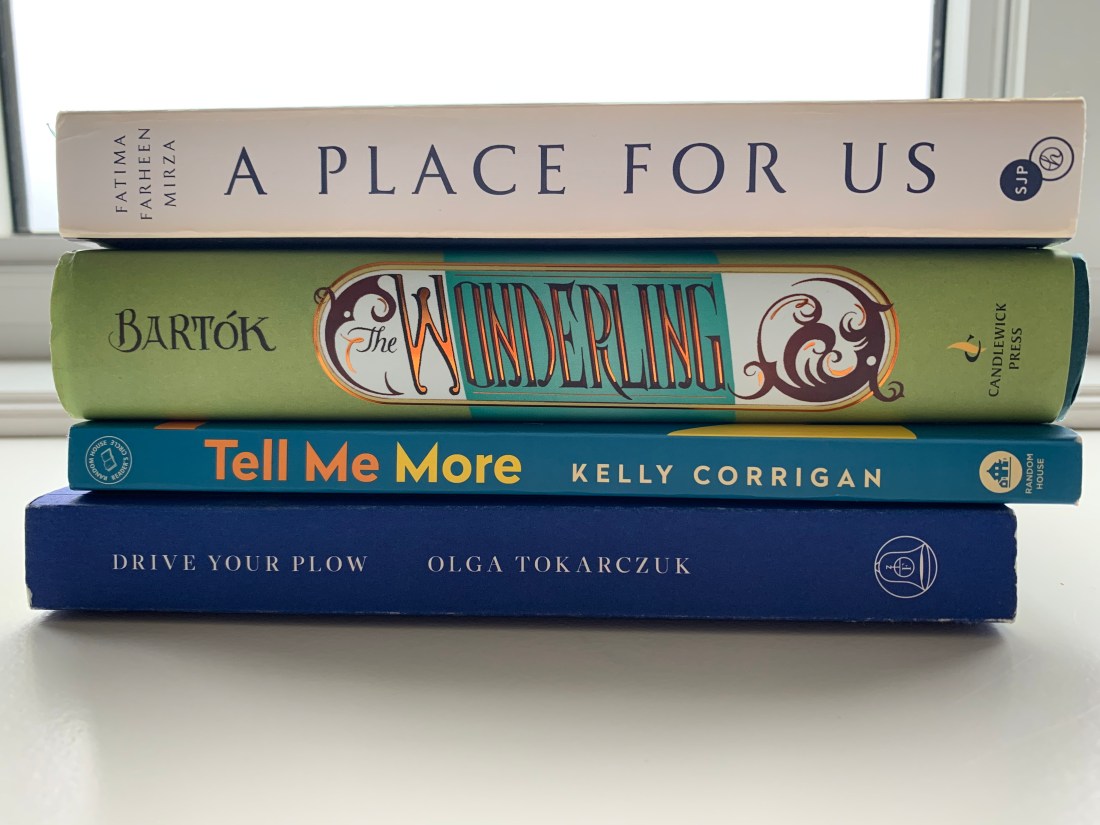
Okay, they say better late than never, right? Apologies for getting this post up after June has already begun but this month kind of crept up on me. When June comes around I usually start anticipating what I’m going to be reading over the summer. This year, I had a really hard time settling into what kind of books I felt like reading so I picked up a few with the idea that I would read a chapter or two and then make up my mind. It resulted it me reading five books at once, which is something I never do. Because I am rotating between books, the theme for this month is In No Particular Order. As I finish each book, I will post about it.

gods in Alabama by Joshilyn Jackson: This is the first audio book in my reading challenge (which is why it’s not in the picture). It’s another novel set in the South. The story follows the main character, Lena as she returns to her hometown in Alabama for the first time since she left it ten years before. The novel is contemporary fiction and mixes mystery with family drama. Listening to it adds an extra element of fun because the narrator has an Alabama accent so it really helps to capture the sense of place in a way that reading it in my head probably wouldn’t.

A Place for Us by Fatima Farheen Mirza: If you are keeping score at home, I was supposed to have read this book in May, that didn’t quite work out but I am enjoying it so far. It’s a fairly long novel and I don’t want to rush through it. Some books are page turners and some are meant to be savoured. I promise though – I will finish it this month.

The Wonderling by Mira Bartok: This is a middle grade novel. I confess to reading young adult and middle grade fiction on a fairly regular basis. There are a lot of great books written in these genres that I think adults pass over because they are marketed as being for younger audiences. The Wonderling is set in a world where there are humans and groundlings –  characters that are hybrids of humans and animals or animals and animals. The story begins with Number 13, a groundling who has lived his whole life at the Home for Wayward and Misbegotten Creatures. Number 13 manages to escape, and then sets off to find what happened to his real family. And so far, it’s good.

Tell Me More by Kelly Corrigan: I just learned about Kelly Corrigan recently. She writes memoirs but this is a collection of essays based on the twelve hardest things that Corrigan has learned to say. Things like, onward, and I was wrong, and I don’t know. She approaches each phrase with the stories from her own life that taught her the importance of having to say things even when you struggle for the words. She writes about her experiences in ways that are funny and heart-breaking on the same page. The essays are short enough that you can easily read one in a single sitting. Between Corrigan and Sedaris, I may be a convert to essays as a genre.

Drive Your Plow Over The Bones of the Dead by Olga Tokarczuk: I recently learned that compared to other parts of the world, North Americans read very few translated works. It made me wonder what kinds of things people were writing in other languages, and then I had a crippling case of FOMO (fear of missing out). I’ve started to look for more works in translation lately and this one caught my eye because of the title. It’s originally written in Polish and the main character, Janina, is an elderly woman living in a remote Polish village. When bodies start turning up, Janina is sure she knows who did it but no one will listen to her because of her reputation as cranky and maybe a little crazy. This is the first Tokarczuk novel I have ever read, but according to Google, she is a very big deal on the international writing scene.

So this is me for the month of June. If you have any recommendations for some great summer reads, I’d love to hear them! Until next time, happy reading!


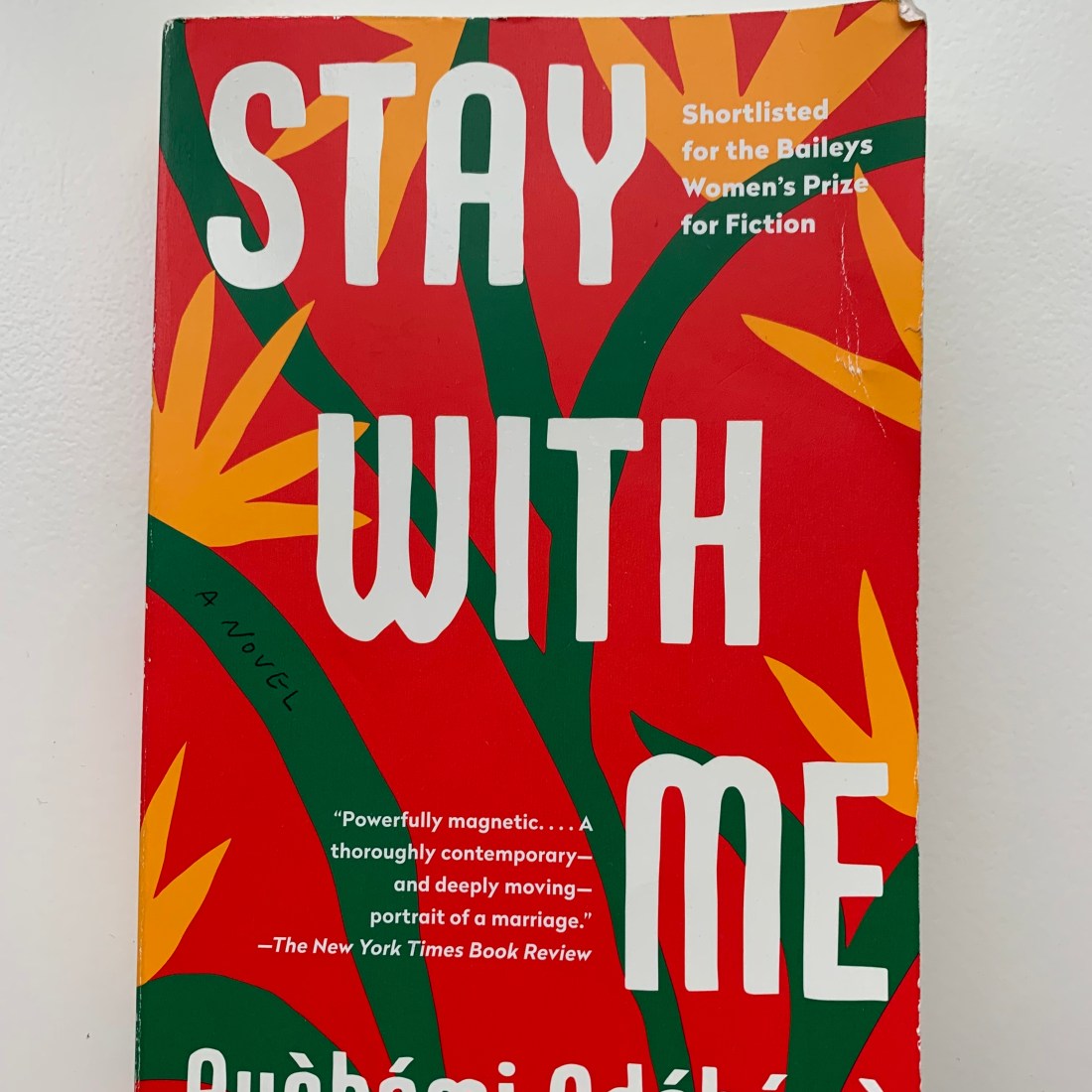
Stay With Me by Ayọ̀bámi Adébáyọ̀: A Review

“Besides, what would be left of love without truth stretched beyond its limits, without those better versions of ourselves that we present as the only ones that exist?”
― Ayọ̀bámi Adébáyọ̀, Stay With Me

Adébáyọ̀’s novel opens with a premise few North Americans could imagine: Yejide’s family has come to present her with her husband’s second wife – a woman and a marriage that Yejide knew nothing about until this woman showed up in her living room.

Yejide and her husband, Akin, married for love. They were professionally successful and happy in their relationship. But four years into their marriage, Yejide has not borne any children. Presuming her barren (despite medical tests to the contrary) Yejide and Akin’s families conspire to marry him to another woman. In Nigeria in the 1980s, where the novel is set, polygamy was no longer the norm but it was also not unheard of. It is amid this cultural context that Adébáyọ̀ begins a story that will go back and forth over the decades of Yejide and Akin’s relationship to examine the price that people will pay for love.

Before I started this novel, I assumed it would center around the introduction of a second wife and how that impacted Yejide and Akin’s marriage, but the book is about so much more than that. (If you are looking for a novelization of Big Love or Sister Wives, you have come to the wrong place.) The couple is committed to saving their marriage but the pressures put on them by their families and their society drive them to increasingly desperate acts that eventually warp and twist their relationship out of all recognition. Most affected is Yejide, who is blamed for the couple’s barrenness and manipulated by people she believed cared about her and her well-being. Neither spouse is blameless in the events that unfold and Adébáyọ̀ is careful to make their reasoning understandable, even as they make choices that are difficult to defend. It’s an emotionally powerful novel that could be compared to An American Marriage in the sense that the corruption of marriage in both books is used as a vehicle to critique society’s prejudices.

Ultimately, the Stay With Me asks difficult questions about how far we are willing to go for love. Often the characters make choices that they tell themselves out of love for another but are actually self-serving and at times cruel. It examines the role of the individual within family and asks how far an individual should be willing to reshape themselves for the sake of duty.  Adébáyọ̀ also takes aim at particular aspects of Nigerian culture – especially as they apply to women and expectations of motherhood.

If you like Chimamanda Ngoza Adiche or Tayari Jones, Adébáyọ̀’s writing has a similar quality and her subject matter evokes that same unblinking intimacy between the reader and the characters. 

Next week, we are off to Alabama! Until then, happy reading!


May Line Up

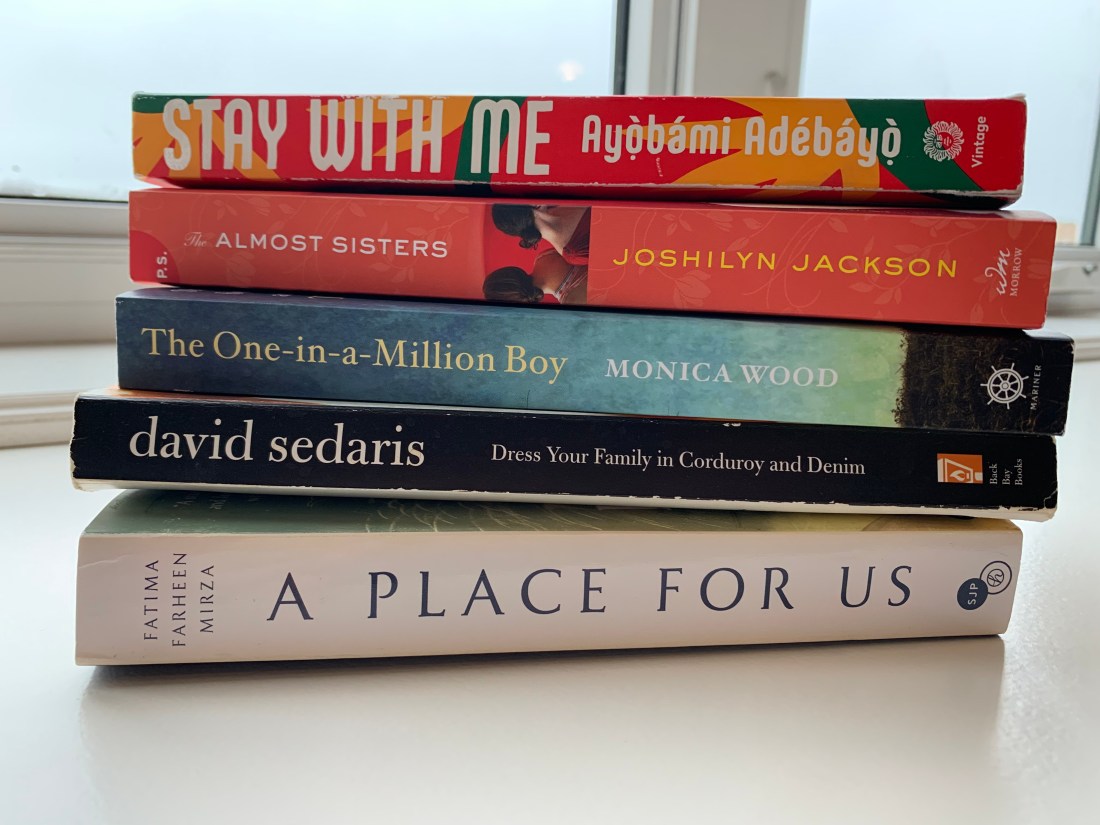
This month, the theme is Family Matters. I think family dynamics make for great reading and it’s interesting to read about situations that can be similar enough to your own to feel familiar yet different enough to make you feel like you’ve stepped into another life for a while. Regardless of how you define your family, it is often through these relationships that we learn to navigate our world and understand ourselves in relation to others. For May I have tried to choose works that explore notions of family in unexpected ways.

If you look at the list and it seems like I’ve added an extra weekend to May (I wish), I am trying to make up for lost time. There have been two weeks since I started this challenge that I didn’t make my reading goal, so I am going to add a book this month and next to get back on track (32 down … 20 more to go). Wish me luck.

May 4, 2019: Stay With Me by Ayobami Adebayo

Since discovering Chimamanda Adiche, I feel like my eyes have been opened to all this great fiction coming out of Nigeria. Recommended by one of my colleagues, Adebayo is a new author to me. The novel is set in Ilesa, Nigeria and follows the relationship of a couple who seem like they should be happy and secure in their marriage. Despite being deeply in love, Yejide and Akin are unable to have a child. The increasing pressure put on the couple to have a family begins to test the strength of the marriage. When Akin is coerced into taking a second wife, Yejide knows that she must get pregnant at any cost in order to save her marriage. Before picking up this book I hadn’t realized that polygamy used to be common practice in Nigeria; although it doesn’t seem to have had the same religious connection that it has in other cultures and I will admit that I am very curious about how it plays out on the page.

May 11, 2019: The Almost Sisters by Joshilyn Jackson

Leia Birch Briggs is a comic book artist. She is also 38 and pregnant for the first time. The father is an anonymous Batman she met at a comi-con. Before Leia can tell her traditional Alabama family about her impending single-motherhood, her stepsister Rachel’s marriage falls apart. To add to the chaos, Leia’s beloved grandmother begins suffering from dementia and Leia must return home to help her put her affairs in order. Jackson’s writing sounds witty and has that wry sense of humour that I like with the added bonus of inter-generational family drama.

May 18, 2019: The One-in-a-Million Boy by Monica Wood

Ona is 104 years old. Every Saturday morning, an eleven year old boy comes to help her out. As he goes about his chores, Ona finds herself telling him the story of her life including secrets she’s held on to for years. One morning, the boy doesn’t show up and Ona thinks perhaps he wasn’t the person she believed him to be. But then the boy’s father arrives, determined to finish his son’s work, and his mother isn’t far behind. I have a feeling this one is going to be a bit of a heart breaker…

May 25, 2019: Dress Your Family in Corduroy and Denim by David Sedaris

Despite hearing his name probably dozens of times, I’ve never read anything by David Sedaris. He’s a regular contributor to NPR’s This American Life (again, heard great things but I’ve never listened myself). In this collection of essays, he recounts stories from his own family that show the absurdity in the everyday. Sedaris is one of the most renowned humour writers in America today so if you love to laugh, you might want to read along with this one.

May 31, 2019: A Place for Us by Fatima Farheen Mirza

A wedding is often a time for families to come together and it serves as the linchpin for Mirza’s debut novel. Hadia, the daughter of an Indian Muslim family, is getting married but as everyone gathers for the wedding, the focus is not on Hadia so much as her estranged younger brother, Amar, who is returning to the family fold for the first time in three years. The novel delves into the family’s tensions and secrets that drove a wedge between them as they struggle to try to find their way back to each other.

One of my favourite things about blogging about books is the conversations I get to have with other readers. I love hearing what others are reading. So now that you know what I’ll be reading for May, it’s your turn – what’s next in your TBR pile? Let me know if there is anything you think I should add to my summer reading list!


The Seven Deaths of Evelyn Hardcastle by Stuart Turton: A Review

“How lost do you have to be to let the devil lead you home?”
― Stuart Turton, The Seven Deaths of Evelyn Hardcastle

First of all I have to say, the whole time I was reading The Seven Deaths of Evelyn Hardcastle I was thinking, ‘Stuart Turton is so much smarter than me.’ In this novel, Turton surprised me again and again with the ways he was able to weave a very intricate and intelligent story line into compulsively readable fiction. I love books with interesting narrative structures and I’ve never really read a book like this before. I will try very hard not to reveal anything about the plot that you couldn’t glean from the dust jacket but this book is so page-turning that I just want to shove it into everyone’s hands and say: “read this next!” Turton is able to take genres that feel really familiar and combine them in ways that make his novel fresh and unique. There are big twists in the plot but they never feel gimmicky or unnecessary. There are a lot of lose threads in the story and when they are brought together at the end it just made me sit back and marvel at how Turton was able to do that.

So, no spoilers but how is this for an opening: you suddenly find yourself in the woods with no idea how you got there or who you are. The only thing you think you know for sure is that there are two other people in the forest – a woman named Anna and someone who is trying to kill her. You are terrified and lost. And then the murderer gives you the means to find your way out of the woods and back to the manor house where you are staying. That night, the daughter of the house, Evelyn Hardcastle, will be killed during a lavish party. You have to figure out who her killer is. And you will wake up every day and live the events leading up to Evelyn’s murder over and over until you know who did it.

What made The Seven Deaths of Evelyn Hardcastle so interesting is that Turton moves it beyond a genre-bending murder mystery. As the main character, Aiden, is forced to live the same day again and again, the novel really makes the reader start to question the forces that shape our lives and actions: how much is down to our nature? Can we change or are we following prescribed paths laid out by fate? How far can we trust other people and to what extent should we rely only on ourselves?

I love when a novel can manage to feel suspenseful and smart all at once. Seven Deaths is certainly one I would recommend, especially if like me, you love mysteries and old manor houses and books that take you by surprise. Until next week, happy reading everybody!

Daisy Jones and the Six by Taylor Jenkins Reid: A Review

“No matter who you choose to go down the road with, you’re gonna get hurt. That’s just the nature of caring about someone. No matter who you love, they will break your heart along the way.” – Taylor Jenkins Reid, Daisy Jones and the Six

Do I like 70s rock? No.

Do I really care about behind-the-band stories? No.

To be honest, I don’t even really like sex, drugs and rock’n’roll stories (and yes, I am aware of how square that sounds). So I wasn’t very confident that a novel about a 1970s stadium rock band would really be very appealing to me. But here is what surprised me:

Did I like Daisy Jones and the Six? Yes. Yes. Yes.

I read it in a day. Now granted, on this particular day I didn’t have to go to work but once I started it, I couldn’t put it down. The premise behind the novel follows two stories that eventually converge: Daisy Jones is the daughter of an artist and a model who are more interested in their work than they are in their daughter. She is stunningly beautiful, a natural talent and by her early teens, she is sneaking out to bars. She could have ended up a groupie, but her talent and desire to be a song-writer push her to take control of her own life. The Six is a rock band just starting out at the beginning of the book. They write and perform rock and dream of being the biggest band in the country. Eventually Daisy opens for them on tour, and then joins the band. At the height of their success, the band splits and no one ever knows why.

The book is written like an oral history where the band mates and others associated with Daisy and The Six are telling the story years later. Jenkins Reid’s writing style makes this a fast read but what I really like about it was how it allows for so much perspective. Each character is alone when they are being interviewed and then their stories are pieced together into more or less a chronology of the band’s rise and sudden end. Depending on which character is speaking, you get very different – and sometimes conflicting – takes on what happened. The feeling of a tell-all was so well developed that despite the fact that it clearly says, ‘a novel’ on the cover, I Googled it just to make sure that it wasn’t a real band.

Jenkin Reid includes a lot of details that will appeal to actual fans of 70s rock (like a all the lyrics of the band’s hit album Aurora at the back) but it is such a compelling story that you could know nothing about the music scene at the time and still really enjoy it. Jenkins Reid’s writing is so convincing of place and time and the story changes course in unexpected ways. The novel explores the nature of music and fame, the price of addiction and the power of relationships while still setting the story firmly in the 1970s music scene. It’s fun and smart which is a combination that I love. And while I won’t reveal the secret of why the band broke up – which Jenkins Reid makes you wait for until the very end – I will admit that I didn’t see it coming but found very satisfying.

Next week, a very different kind of mystery. Until then, happy reading!

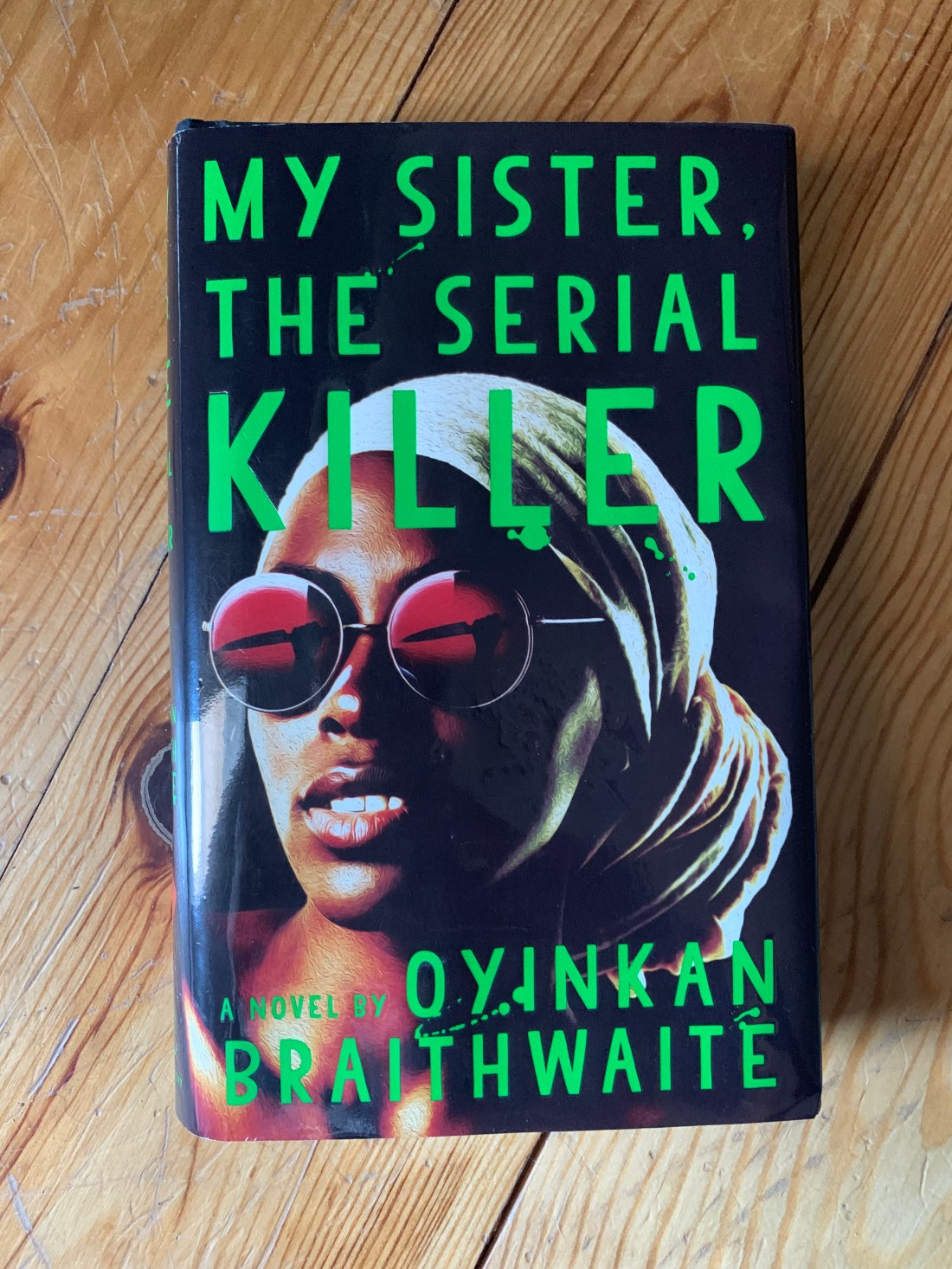
My Sister, the Serial Killer by Oyinkan Braithwaite: A Review

“Ayoola summons me with these words—Korede, I killed him.”
― Oyinkan Braithwaite, My Sister, the Serial Killer

I think I suffer from a kind of genre fatigue. I can never read too much of the same kind of book without itching for something different. This doesn’t seem to affect me with fiction in general (which I read way more than non-fiction) but I can’t read a whole lot of mysteries, or a whole lot of historical fiction or whatever in a row without feeling like I need a break. To cleanse my palette, so to speak, with something different. So after several weeks of reading novels that involved a lot of heavy lifting thematically and emotionally, I was ready for something lighter. If it seems odd that I am describing a novel about a serial killer as “light”, let me explain…

My Sister, the Serial Killer is the debut novel of Nigerian writer Oyinkan Braithwaite. The main character is Korede, a practical, no-nonsense nurse who lives at home with her mother and younger sister, Ayoola. Ayoola is beautiful and talented. She works as a clothing designer, and because of her beauty, everything in life comes easily to her. Korede is in love with a doctor who works at her hospital and she has hopes that their friendship might turn into something more – until he meets Ayoola. You could be excused for thinking what I’ve described so far sounds like a classic love triangle with a healthy dose of sibling rivalry on the side. But there is one critical difference. Ayoola murders her boyfriends. This is not a spoiler because the novel opens with Korede helping her seemingly “perfect” sister dispose of a body … for the third time. And according to Korede’s research, three murders is what defines a serial killer. From the beginning of the book, Korede seems resigned to the fact that there is no help for Ayoola and ultimately has to ask herself how far she is willing to go to protect her little sister, even when she knows her sister is entirely in the wrong.

Ayoola’s stunning levels of self-interest mean that she is largely unconcerned with the greater moral implications of what she has done and Korede is left to wrestle with the guilt and worry in the wake of their actions. While Korede is trying to comes to terms with her decision to help Ayoola cover up her crimes, her sister is posting selfies on Instagram and lining up her next date. Korede’s frustrations with Ayoola and her jealousy of her have a darkly comic effect in the novel. Braithwaite plays with many conventions of so-called “chick lit” novels but then adds in this completely unexpected element of making Ayoola a serial killer. It doesn’t seem like it should be funny and yet it is.

This novel is a very fast read and I found it pretty entertaining. The best way I can describe it is to say, think Bridget Jones meets Dexter. If that makes any kind of sense to you and sounds appealing, it’s worth picking up. Korede is a really good character and while her sister’s actions are extreme, in many ways Braithwaite juxtaposes this with completely relatable family dynamics that make you feel like you know this family. Except, you know, the bits where the younger sister stabs her ex-boyfriends.

Tomorrow I will post April’s Line Up. Until then, happy reading!