The Seven Husbands of Evelyn Hugo by Taylor Jenkins Reid: A Review

“You do not know how fast you have been running, how hard you have been working, how truly exhausted you are, until somewhat stands behind you and says, “It’s OK, you can fall down now. I’ll catch you.” 

Taylor Jenkins Reid, The Seven Husbands of Evelyn Hugo

There is a lot to dig into in the novel. Evelyn Hugo was a Hollywood star during its Golden Age. She became increasingly reclusive in her old age and was famous not just for her movie roles but also for her seven marriages. She chooses Monique Grant, an unknown journalist to write her tell-all biography that can only be published after her death. The narrative bounces between Evelyn’s retelling of her rise in Hollywood and Monique’s struggle to come to understand why Evelyn chose her of all people to write the book.

I picked this up because of how much I enjoyed Daisy Jones and the Six. The narrative structure and setting are very different in Evelyn Hugo, but Reid’s ability to create complex characters is common to both novels. Evelyn especially is both captivating and ruthless, drawing the reader into her experiences as she reveals her life’s secrets to Monique. Another thing I appreciated about this novel was how Reid presented the difficult choices that members of the gay community working in Hollywood had to face at the time. Reid is unflinching about how perilous being openly gay would be been to her character’s careers but also to their reputations and possibly to their personal safety. Evelyn’s time in Hollywood is set when people were still being sent to mental asylums for being gay. Reid examines the price of fame through portraying the choices her characters had to make in order to keep their careers afloat in the cut-throat world of the film industry at a time when studios basically “owned” the actors who were contracted to them.

I think Reid does a great job of capturing the eras in which she writes. She is able to create characters that are flawed yet still sympathetic. In the same way that I thought that Daisy Jones read like the transcripts of a real rock biography, Evelyn Hugo feels like a real celebrity tell-all but Reid is able to build strong characters and thus avoids plots that seem superficial or stale.

As a side note, what it with all of the books with “seven” in the title lately? The Seven Deaths of Evelyn Hardcastle, The Seven Husbands of Evelyn Hugo, A Brief History of Seven Killings …

The next post will be a memoir, The Little Bookstore of Big Stone Gap by Wendy Welch. Stay tuned! Until then, happy reading!
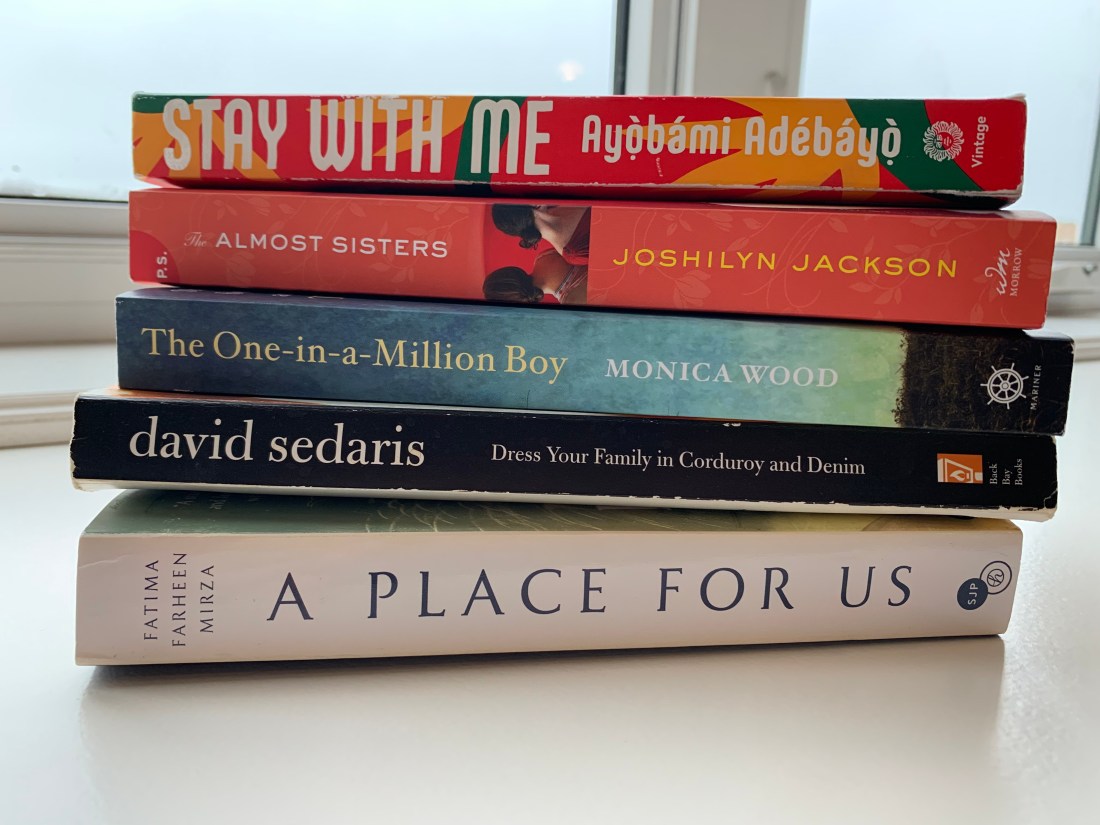
May Line Up

This month, the theme is Family Matters. I think family dynamics make for great reading and it’s interesting to read about situations that can be similar enough to your own to feel familiar yet different enough to make you feel like you’ve stepped into another life for a while. Regardless of how you define your family, it is often through these relationships that we learn to navigate our world and understand ourselves in relation to others. For May I have tried to choose works that explore notions of family in unexpected ways.

If you look at the list and it seems like I’ve added an extra weekend to May (I wish), I am trying to make up for lost time. There have been two weeks since I started this challenge that I didn’t make my reading goal, so I am going to add a book this month and next to get back on track (32 down … 20 more to go). Wish me luck.

May 4, 2019: Stay With Me by Ayobami Adebayo

Since discovering Chimamanda Adiche, I feel like my eyes have been opened to all this great fiction coming out of Nigeria. Recommended by one of my colleagues, Adebayo is a new author to me. The novel is set in Ilesa, Nigeria and follows the relationship of a couple who seem like they should be happy and secure in their marriage. Despite being deeply in love, Yejide and Akin are unable to have a child. The increasing pressure put on the couple to have a family begins to test the strength of the marriage. When Akin is coerced into taking a second wife, Yejide knows that she must get pregnant at any cost in order to save her marriage. Before picking up this book I hadn’t realized that polygamy used to be common practice in Nigeria; although it doesn’t seem to have had the same religious connection that it has in other cultures and I will admit that I am very curious about how it plays out on the page.

May 11, 2019: The Almost Sisters by Joshilyn Jackson

Leia Birch Briggs is a comic book artist. She is also 38 and pregnant for the first time. The father is an anonymous Batman she met at a comi-con. Before Leia can tell her traditional Alabama family about her impending single-motherhood, her stepsister Rachel’s marriage falls apart. To add to the chaos, Leia’s beloved grandmother begins suffering from dementia and Leia must return home to help her put her affairs in order. Jackson’s writing sounds witty and has that wry sense of humour that I like with the added bonus of inter-generational family drama.

May 18, 2019: The One-in-a-Million Boy by Monica Wood

Ona is 104 years old. Every Saturday morning, an eleven year old boy comes to help her out. As he goes about his chores, Ona finds herself telling him the story of her life including secrets she’s held on to for years. One morning, the boy doesn’t show up and Ona thinks perhaps he wasn’t the person she believed him to be. But then the boy’s father arrives, determined to finish his son’s work, and his mother isn’t far behind. I have a feeling this one is going to be a bit of a heart breaker…

May 25, 2019: Dress Your Family in Corduroy and Denim by David Sedaris

Despite hearing his name probably dozens of times, I’ve never read anything by David Sedaris. He’s a regular contributor to NPR’s This American Life (again, heard great things but I’ve never listened myself). In this collection of essays, he recounts stories from his own family that show the absurdity in the everyday. Sedaris is one of the most renowned humour writers in America today so if you love to laugh, you might want to read along with this one.

May 31, 2019: A Place for Us by Fatima Farheen Mirza

A wedding is often a time for families to come together and it serves as the linchpin for Mirza’s debut novel. Hadia, the daughter of an Indian Muslim family, is getting married but as everyone gathers for the wedding, the focus is not on Hadia so much as her estranged younger brother, Amar, who is returning to the family fold for the first time in three years. The novel delves into the family’s tensions and secrets that drove a wedge between them as they struggle to try to find their way back to each other.

One of my favourite things about blogging about books is the conversations I get to have with other readers. I love hearing what others are reading. So now that you know what I’ll be reading for May, it’s your turn – what’s next in your TBR pile? Let me know if there is anything you think I should add to my summer reading list!


The Seven Deaths of Evelyn Hardcastle by Stuart Turton: A Review

“How lost do you have to be to let the devil lead you home?”
― Stuart Turton, The Seven Deaths of Evelyn Hardcastle

First of all I have to say, the whole time I was reading The Seven Deaths of Evelyn Hardcastle I was thinking, ‘Stuart Turton is so much smarter than me.’ In this novel, Turton surprised me again and again with the ways he was able to weave a very intricate and intelligent story line into compulsively readable fiction. I love books with interesting narrative structures and I’ve never really read a book like this before. I will try very hard not to reveal anything about the plot that you couldn’t glean from the dust jacket but this book is so page-turning that I just want to shove it into everyone’s hands and say: “read this next!” Turton is able to take genres that feel really familiar and combine them in ways that make his novel fresh and unique. There are big twists in the plot but they never feel gimmicky or unnecessary. There are a lot of lose threads in the story and when they are brought together at the end it just made me sit back and marvel at how Turton was able to do that.

So, no spoilers but how is this for an opening: you suddenly find yourself in the woods with no idea how you got there or who you are. The only thing you think you know for sure is that there are two other people in the forest – a woman named Anna and someone who is trying to kill her. You are terrified and lost. And then the murderer gives you the means to find your way out of the woods and back to the manor house where you are staying. That night, the daughter of the house, Evelyn Hardcastle, will be killed during a lavish party. You have to figure out who her killer is. And you will wake up every day and live the events leading up to Evelyn’s murder over and over until you know who did it.

What made The Seven Deaths of Evelyn Hardcastle so interesting is that Turton moves it beyond a genre-bending murder mystery. As the main character, Aiden, is forced to live the same day again and again, the novel really makes the reader start to question the forces that shape our lives and actions: how much is down to our nature? Can we change or are we following prescribed paths laid out by fate? How far can we trust other people and to what extent should we rely only on ourselves?

I love when a novel can manage to feel suspenseful and smart all at once. Seven Deaths is certainly one I would recommend, especially if like me, you love mysteries and old manor houses and books that take you by surprise. Until next week, happy reading everybody!

Homegoing by Yaa Gyasi: A Review

“This is the problem of history. We cannot know that which we were not there to see and hear and experience for ourselves. We must rely upon the words of others.”  -Yaa Gyasi, Homegoing

Homegoing is a novel that reads like a series of vignettes. It spans eight generations, beginning in Ghana in the late 1700s with the stories of Effia and Esi – two sisters who don’t even know the other exists. Effia is forced to marry a British officer stationed at the notorious Cape Coast Castle, where people were imprisoned before being sold on into the slave markets of the Americas. Esi is captured in a raid on her village and sold as a slave, eventually ending up on a plantation in America. The novel alternates between tracing the experiences of Effia and Esi’s descendents – one family in Ghana and the other in America. Each chapter sheds light on a moment in time in a single character’s life, although sometimes there is intersection between the stories of parents and children. Although it is a relatively short novel, it has the feeling of a sweeping epic because Gyasi covers so much ground in terms of both Ghanan and African American experiences from the height of the slave trade until the present day.

What struck me the most in reading Homegoing was how Gyasi was exploring choice and consequences through her characters. Although each character is only part of the novel for a brief time, their choices often impact their children and their children’s children. Gyasi examines the role of choice – or lack of choice – in shaping her character’s lives that moves beyond family relationships to much broader issues, like the decision of Fante leaders to traffic slaves for the British, and the impact of the slave trade on those sent to the Americas but also on those who remained in west Africa. In many ways, it is a novel about power and how people are forced to conform to the expectations of those in power or face the consequences of their choices. Another major theme in the novel is the search for identity within both families and larger cultures and the desire to belong. Effia is forced from her family, where she was always treated differently, and into a marriage with a man she didn’t choose; her son, Quey does not belong in London, his father’s home, but neither does he truly belong in his mother’s Ghanan village. Being “other” in the worlds Gyasi contructs is dangerous – but conforming often comes at too high a cost.

While Gyasi ends the novel with a sense of hope for reconcilation despite the painful history the families have endured, much of the writing is haunting in its descriptions of the inhumanity that marginalized people face. Whether it was because of race, gender, sexual orientation or class, the weight of being disempowered is felt throughout the novel. Gyasi doesn’t pull back from the historical realities her characters face and I think she is playing to some degree with our expectations as readers – each chapter opens and closes on a single character and we keep waiting for a happy ending that doesn’t come. As I read, I kept waiting for it to “work out” for one of the characters and then I realized:  there weren’t going to be happy endings. And that was the point.

I have heard some people say that Homegoing is the best book they have read in recent years and while I wouldn’t say that’s true for me, it’s worth picking up. I like to “sit” with my characters for a while so the format of the novel was challenging because just as I felt I was getting to know a character, we were on to the next one. That being said, I know other people really liked that about the book’s style.

After what feels like weeks of pretty serious novels, the next one on my list, My Sister the Serial Killer should be a dose of something completely different. Drop me a line and let me know what you’re reading lately! Until next time, happy reading!


Where the Crawdads Sing by Delia Owens: A Review

“The marsh did not confine them but defined them and, like any sacred ground, kept their secrets deep.” – Delia Owens, Where the Crawdads Sing

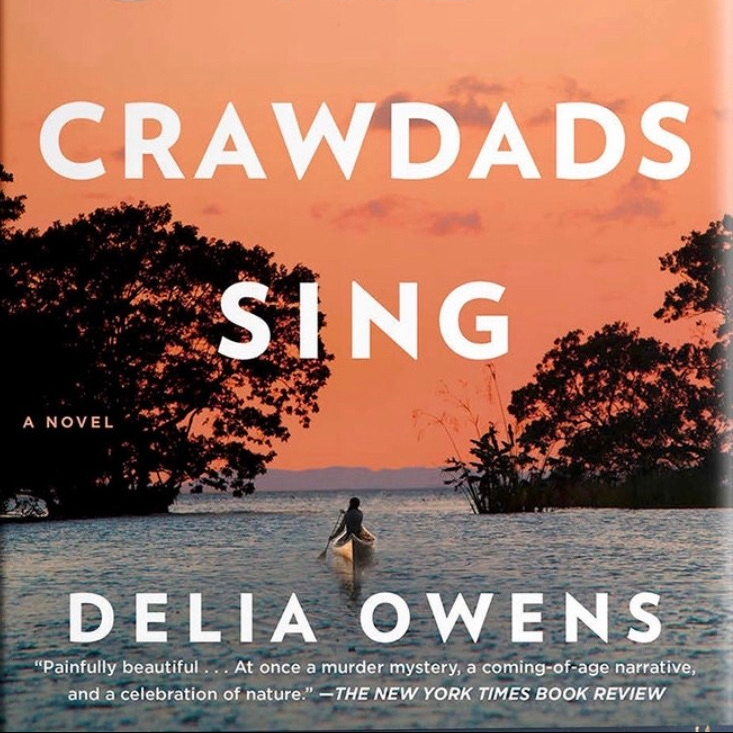
Sorry for the stock photo on this post, folks, but I already lent my copy of Where the Crawdads Sing away before I remembered to snap a picture for the blog. I guess it speaks to how good the novel is that I was handing it over to a friend before I even got my review done. The story opens with the discovery of the body of Chase Andrews, a local hero – handsome, star of his football team back in high school, heir to a properous family business – his death becomes the source of speculation and gossip. The circumstances of Chase’s death don’t add up, and quickly the sheriff starts to suspect foul play. The town’s eyes turn to Kya Clark, known by residents as the ‘Marsh Girl’. The narrative moves back and forth between the on-going police investigation into Chase’s death and Kya’s experiences growing up alone in the marsh.

Most of  Where the Crawdads Sing is set in a coastal marsh in North Carolina in the 1960s where Kya makes her home. It is a story of isolation and loss, but also of redemption and hope. As a child, Kya is poor and ends up abandoned by her family. Having lost everyone she loves and terrified of ending up in foster care and taken from her beloved marsh, Kya fends for herself and shies away from the company of others. Living in her family’s shack on the edge of a lagoon, her experiences are largely coloured by loneliness and isolation as she struggles to survive. Her greatest desire is to connect to other people but her unconventional life and the prejudices of the town against the ‘marsh people’ make it seemingly impossible for her to develop relationships. Despite the adversity of her circumstances, in many ways Kya is able to triumph and seems on the verge of finally making a life for herself when Chase’s body was found.

While the framework of the novel seems to be a basic murder mystery in the beginning, this book is so much more. Owens writes poignently about the marsh that sustains Kya over the years and rather than just the setting, the marsh seems to permeate every aspect of the novel. I am not someone normally drawn to nature writing, but Owens’ depictions of the marsh are beautifully handled and evoke a deep sense of place and time. The novel centers around big themes like love, hope and betrayal without becoming sentimental or sacchrine. Owens grounds the reader so well in Kya’s world that you are pulling for her right from the beginning and the novel’s turns mean that the storyline continues to surprise.

I originally bought my copy of Where the Crawdads Sing months ago and then kind of relegated it to my To Read Pile because the blurb made it sound a bit trite. I am so glad that a recommendation encouraged me to bump it up on my reading list because I thouroughly enjoyed it. It’s a really interesting exploration of human nature in all its cruelty and kindness but mostly, I think it’s Owens love letter to the landscape in which the book is set. If you read Where the Crawdads Sing, let me know what you thought. Also, if you, like me, weren’t one hundred percent sure what a crawdad is, they’re crayfish (and they don’t really sing, but they do kind of make a clicking sound). Thanks, Google.


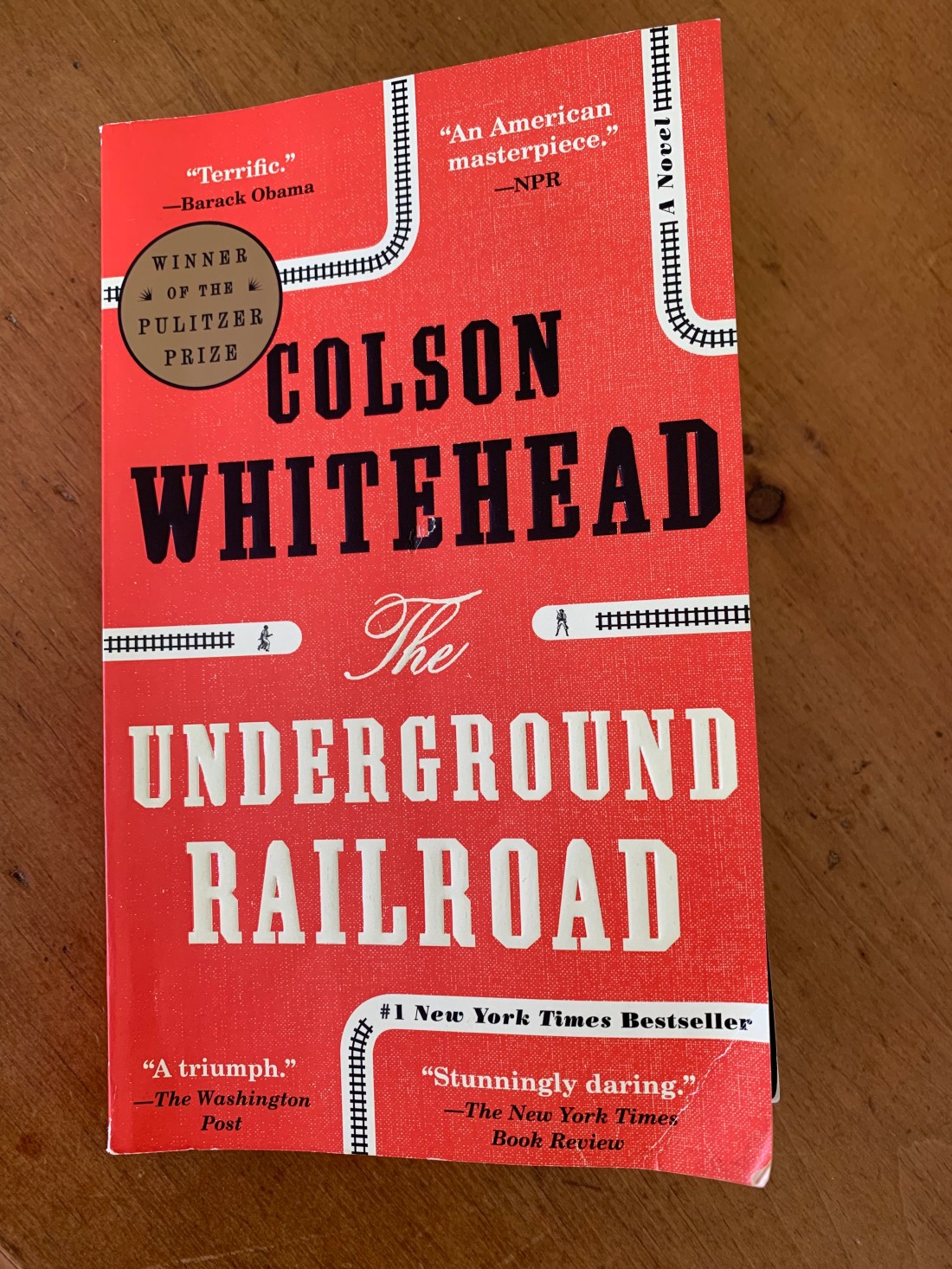
The Underground Railroad by Colson Whitehead: A Review

“If you want to see what this nation is all about, you have to ride the rails. Look outside as you speed through, and you’ll find the true face of America. It was a joke, then, from the start. There was only darkness outside the windows on her journeys, and only ever would be darkness.” – Colson Whitehead, The Underground Railroad

Most of us know the history of the underground railroad, but not as Colson Whitehead has reimagined it. The novel opens on a cotton plantation in Georgia. Cora is a third-generation slave; her grandmother is dead and her mother ran off years ago, meaning that Cora has grown up a ‘stray’ – a child with no family around her – and has had to learn to protect her own interests. Whitehead’s rendering of the plantation where Cora lives is bleak and heartbreaking. She is without prospects or hope until Caesar, another slave, talks her into running north with him.

What follows is an escape that leads through South Carolina, North Carolina and eventually into Tennessee and Indiana. There are many things that make the novel unique. Whitehead has chosen to make the underground railroad an actual set of tunnels and tracks running beneath the South where free blacks and sympathetic whites risk their lives to help enslaved people escape to freedom. This fantastic element in the novel means that the reader’s focus is more on the individual states where Cora surfaces, rather than on the journeys between states. In Colson Whitehead’s America, each state is unique in trying to “deal” with its black population – South Carolina invests in what it calls “negro uplift” to try to integrate black Americans into white society; North Carolina introduces race laws to drive black people from the state and replace them with cheap white labor from Europe. In Indiana, black people have gained a degree of freedom and prosperity but their security is always threatened by the shadow of racism. While the railroad that ferries Cora away from the plantation is the stuff of imagination, many of the other seemingly fantastical elements Whitehead introduces are not: there were attempts by health agencies in the US to sterilize members of the black community (and others) in order to reduce the numbers of black children being born; black men were unknowingly a part of studies on the impact of syphilis but led to believe they were receiving free health care from the US government. Black people were regularly lynched by mobs who went largely unpunished for their murders. Whitehead meddles with history in terms of locations and time frames so that each state Cora flees to represents an amalgam of ways in which white America tried to use, manipulate and sometimes terrorize the black population.

Given its heavy subject matter, it may be surprising to learn how readable this novel is. It is fast-paced and the characters are sympathetic and their sacrifices are many. Whitehead reveals how black and white Americans came together in unexpected ways to reinforce or fight against the systems of oppression that America was built on. While it covers much of the history dealt with in other novels, like Lawrence Hill’s Book of Negroes, Whitehead’s feels like a commentary on the racial undercurrents of contemporary American society. The book poses compelling questions about the country’s past and its present; according to one of Whitehead’s characters, America is a delusion but, “sometimes a useful delusion is better than a useless truth.” Despite the suffering and injustice the novel reveals, there is always hope. The number of people who help Cora along her journey at significant risk to themselves reinforces that the system can be beaten, and may someday finally be broken.

If fantasy isn’t your genre, I wouldn’t let it deter you from The Underground Railroad. It reads far more like historical fiction and the railroad itself is a negligible part of the plot, despite its significance as a metaphor. Cora is a character to root for and Whitehead’s writing is powerful and page-turning. If you read this novel, I’d love to hear what you think. Until next time, happy reading!


January Line Up

Happy 2019 everybody! I hope you rang in the New Year in style. Thank you for all the comments and support in December – I was way behind schedule and you were very patient as I got back on track. It has been incredibly cool to hear all the people who have been reading and sharing the blog and I am really grateful to you for following along with me and sharing the books you are excited about.

I really enjoyed a lot of the books I reviewed last month and I hope my luck holds out for January. The theme for this month is going to be “keeping secrets” for no reason other than that all the books I really want to read next have secrets as a common feature. If you have read any of them, I would love to hear from you!

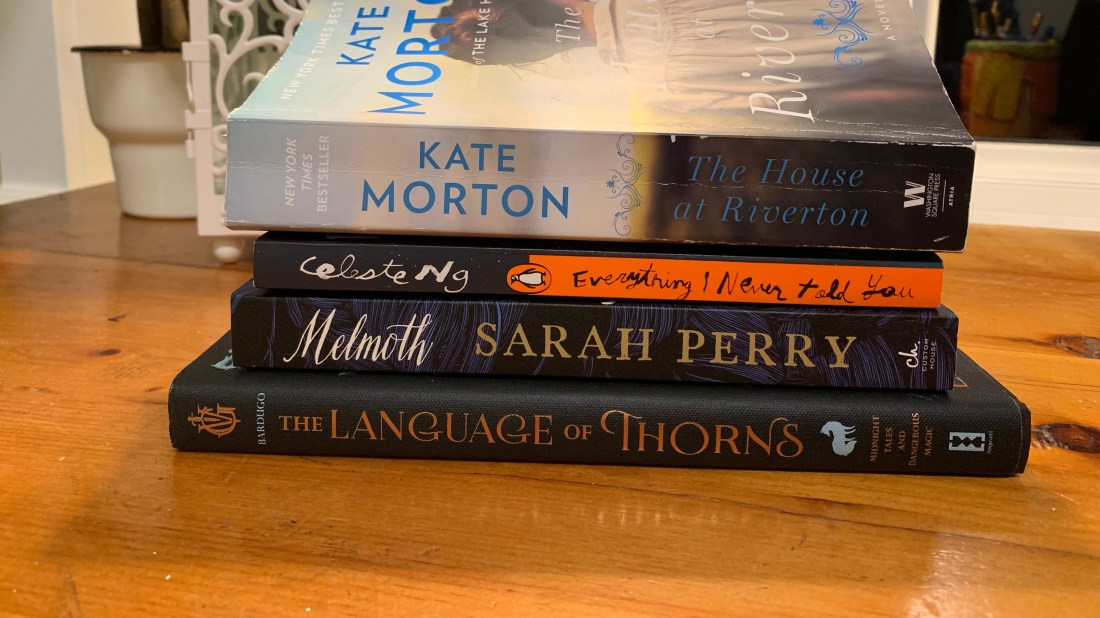
January 5, 2019 – The House at Riverton by Kate Morton

If you are following along at home, you might be thinking, “hey, she was supposed to review that last month.” And you would be right dear reader, but December was a month with 5 Saturdays and the novel is 471 pages long (I already started and it’s really good by the way) and well, I just couldn’t get through it all on time. Luckily, this is my blog and I get to make up the rules as I go along so I am reviewing it as my first book of 2019. (And I will catch up. I promise. Probably not until July though.)

January 12, 2019 – Everything I Never Told You by Celeste Ng

I enjoyed Little Fires Everywhere so much that when I dug Ng’s other novel out of my pile, I couldn’t resist adding it to the January list. The story centers around the death of Lydia, the favorite child of the Lee family. Her death brings secrets to the surface and unravels the bonds that hold the Lees together.

January 19, 2019 – Melmoth by Sarah Perry

This novel is set in Prague but also jumps time and space to 1930s Cairo, the Ottoman Empire during the First World War, Nazi-occupied Czechoslovakia, Manila, central Africa and London. It is modern Gothic (which, if you haven’t noticed yet, I kind of have a weakness for) but seriously – there is a mysterious letter found in a Czech library, a surprise confession, the legend of Melmoth, a dark creature who seeks out the cowardly and complicit across history and a sudden disappearance – how can I resist all that? It seems like a perfect dark story for such a dark month.

January 26 – The Language of Thorns: Midnight Tales and Dangerous Magic by Leigh Bardugo

I am normally not a fan of short stories but I have read Bardugo’s YA fiction and she is a first-rate story teller. Her work infuses elements of fairy tales, folk lore, religion and magic in a world of her own creation. This new book is a collection of modern fairy tales influenced by the stories Bardugo read in her youth. While her subject matter is very different from Ami McKay’s, their writing shares that same quality of stories told by firelight with darkness all around.

I hope there is something here that inspires you to pick up one of these books this month. If you plan on reading any of them along with me, comment and let everything know your thoughts.

Now I have to go – there are still 300 more pages of The House at Riverton to get through before Saturday! Until then, happy reading!


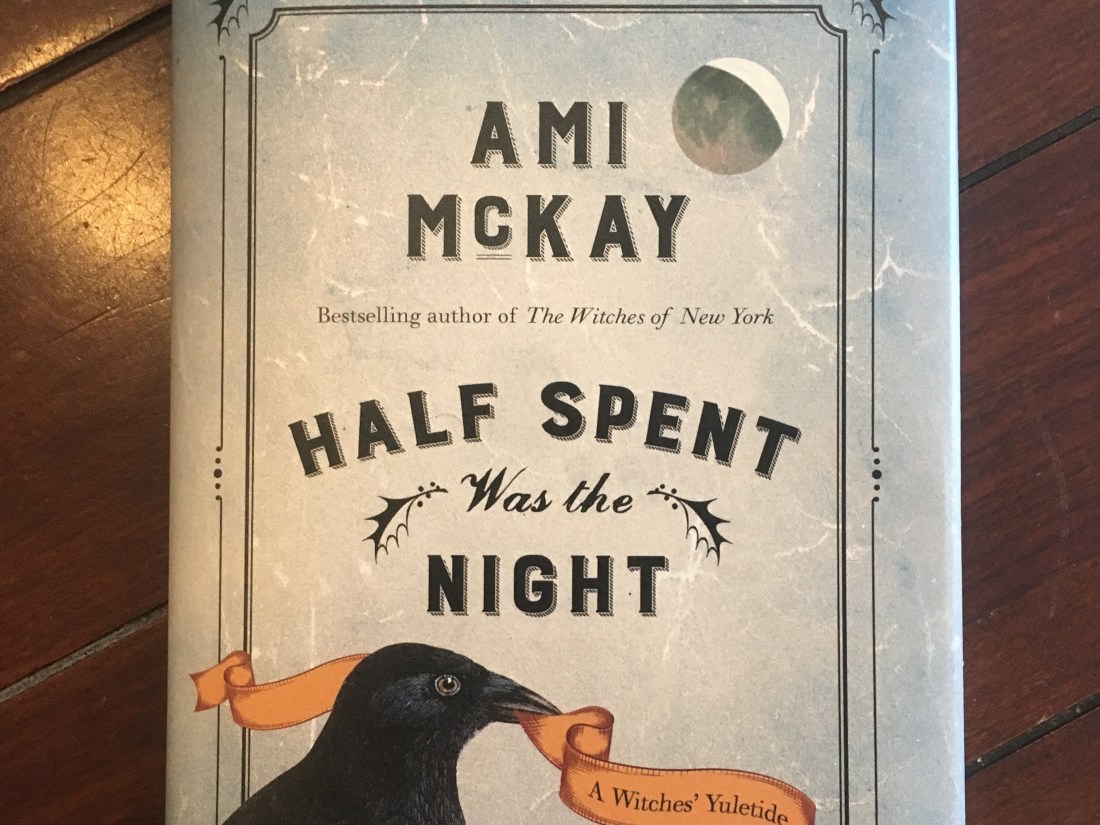
Half Spent was the Night by Ami McKay: A Review

“Christmas Day has come and gone, the New Year lies ahead. Strange things happen Between the Years, in the days outside of time. Minutes go wild, hours vanish. Idleness becomes a clever thief, stealing the names of the days of the week, muting the steady tick of watches and clocks. These are the hours when angels, ghosts, demons and meddlers ride howling wind and flickering candlelight, keen to stir unguarded hearts and restless minds.” Ami McKay, Half Spent was the Night: A Witches’ Yuletide

It is fitting to be posting about this book now as it is set in the “dead days” between Christmas and New Year’s Eve. If you have read McKay’s novels The Virgin Cure or Witches of New York, then you will already be familiar with the three witches, Adelaide, Eleanor and Beatrice. The novella is a bit of a Christmas ghost story that includes divinations, a mysterious Baroness, a New Year’s ball, a demon and some “ghosts” from the witches’ past that they would rather forget. The story is charming and full of fun touches like recipes that McKay includes of her characters’ Christmas dishes. I like how McKay is able to create an atmosphere that is both cozy and mysterious at times. There are a lot of beautiful details in this story (not to mention that the book itself is gorgeous – I am a sucker for fancy end papers).

I read The Virgin Cure but Witches of New York is still hanging out in my TRP and I wish I had read it first. There are a lot of references to the witches’ backstories from the other novels and I think the story would be more meaningful if I had more understanding of those events. Someone told me (after I read Half Spent was the Night) that the novella finishes a lot of plot developments that McKay started in Witches so I guess that’s what I get for jumping ahead. For me, the plot moved too fast, especially when it came to the events of the ball. It felt like McKay was trying to wrap up several story lines as quickly as she could and I would have preferred a longer book to give the story a chance to develop a little further. Especially as the plot reached it’s climax, it felt like the clock struck midnight, the story ended and I was thinking, “that’s it? But I wanted more!” The character of the baroness is really interesting and I would have loved to see McKay develop her story further.

If you are a fan of McKay’s writing, I think you will like this book. It has all the richness you associate with her novels and evokes that feeling of hearing stories around the fire on a winter’s night. Let me know your thoughts if you read it!

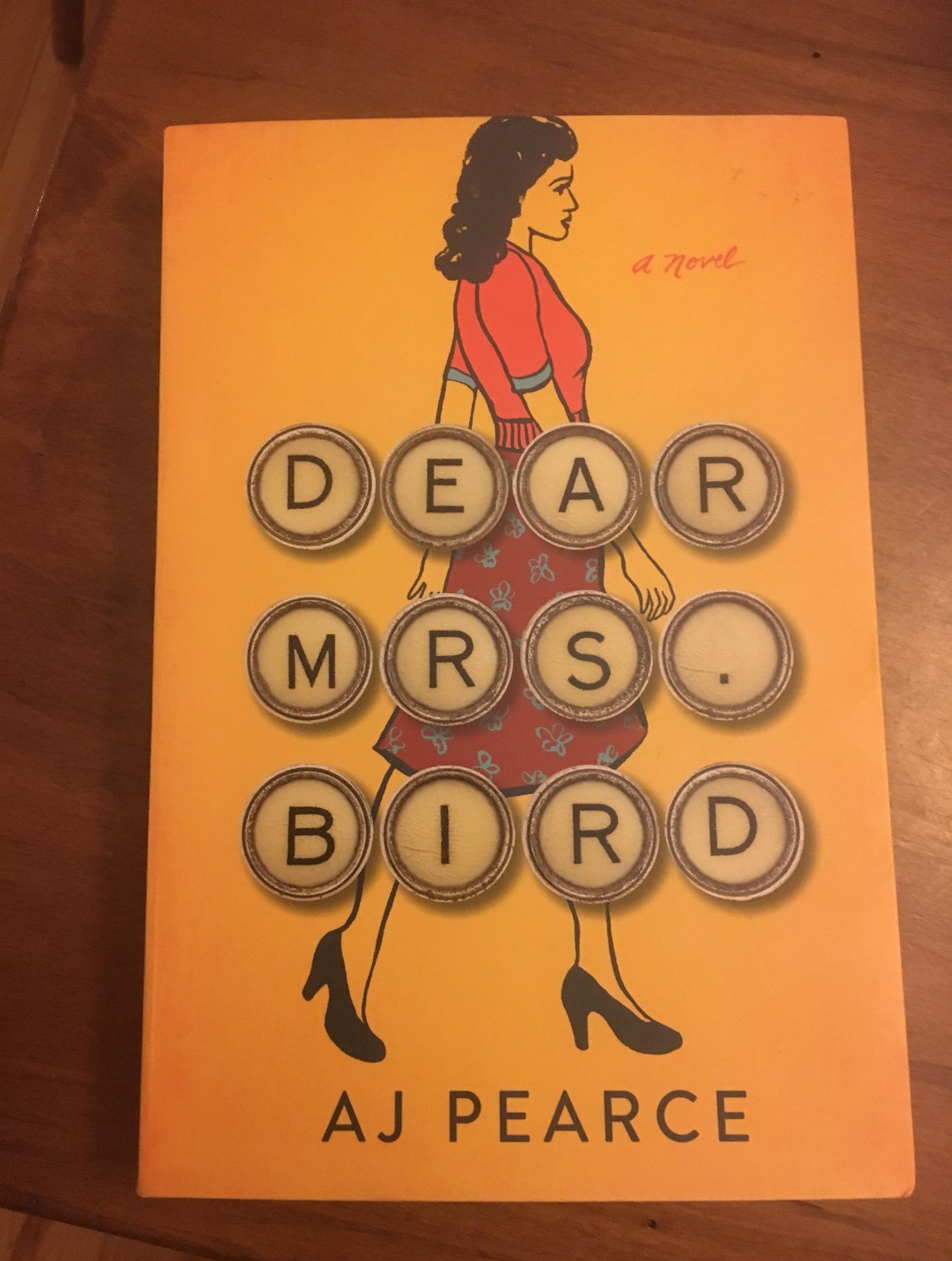
Dear Mrs. Bird by AJ Pearce: A Review

“I tried to take a deep breath and be British and brave, but it didn’t work, and instead, the tears began. Masses of them. Where did tears like that come from and how did they get there so fast? Were they always there, just waiting for something dreadful to happen? What a horrible job they had.” – AJ Pearce, Dear Mrs. Bird


This was a surprisingly touching novel to me. Dear Mrs. Bird‘s main character, Emmy, is living in London during the Blitz with her best friend Bunty, at a time when the German Luftwaffe bombed British cities regularly in an attempt to force Britain out of the war. With dreams of becoming a Lady War Correspondent, Emmy accidentally takes a job as a junior typist working for an advice column, “Henrietta Helps”, in Woman’s Friend magazine. On top of the initial embarrassment of realizing her new job is not going to have her reporting from the front lines of the war, it turns out “Henrietta” is Mrs. Bird, a woman who shouts a lot and has a long list of things that she refuses to respond to when readers write in requesting help (Affair, Amorous, Ardent, Bed, Bedroom, Bed jacket, Berlin … and it goes on). Emmy can’t stand the idea of these poor readers, many of whom are struggling with very difficult personal situations that are compounded by the war, being ignored completely by Mrs. Bird and so she begins to write back in secret, posing as Mrs. Bird. But this is only her day job; anxious to do her part in supporting the war effort, Emmy volunteers several nights a week in the Auxiliary Fire Service, dispatching fire fighters across London to deal with the fires set by the Luftwaffe’s bombs. She often gets only an hour or two of sleep between leaving the fire station and heading off to work again.

Emmy is a comedic heroine; often her big heart and a short-sighted desire to help get her into a lot of trouble but she never loses her desire to improve her own situation or help those around her in any way she can. I described this book to a friend as a 1940s Bridget Jones but with the emotional vibe of a Christmas movie (another way to say this is that I really liked it). Often it is Pearce’s funny elements that offset the tragedies of the war, like when Emmy is set up on a date with a soldier from a bomb disposal unit who constantly shouts because of the ringing in his ears. Other times, like through the letters Emmy receives at “Henrietta Helps”, characters’ fears and desperation come to the forefront, highlighting the incredibly difficult circumstances people faced on a daily basis. There were times reading this novel when I laughed out loud and other times when I had tears in my eyes.

One of the important things this novel does is to emphasize the roles of women on the British home front during the war, not just in terms of the work they did to support the war effort, but also in terms of the challenges they faced: falling out of love with husbands who had been gone for months, trying to decide whether to send children away or keep them with you and risking the bombings, having sweethearts leave you for someone they met overseas. Many of these women worked long hours in very uncertain circumstances and yet they were expected to keep their fears to themselves, the keep their chins up, a stiff upper lip and to smile, smile, smile. They were told that to do otherwise was unpatriotic and weak; that they needed to show Hitler that they could not be defeated.

Pearce’s inspiration for the novel began when she came across a copy of a women’s magazine from 1939. She was most struck by the Problem Page and she went on to read many letters from readers in wartime magazines during her research. The novel really is a tribute to the experiences of these women, told through Emmy and Bunty’s stories in a way that makes them relatable even though we are so far removed from wartime London. Pearce writes,

Many of the readers’ letters in Dear Mrs. Bird were inspired by the letters and advice, articles and features printed in those wartime magazines. I found them thought-provoking, moving, and inspirational, and my admiration for the women of that time never stops growing. Our mothers, grandmothers, great-grandmothers, and friends, some of whom I hope may even read and enjoy Emmy and Bunty’s story. It is a privilege to look into their world and remember what incredible women and girls they all were.

I would recommend Dear Mrs. Bird in a heartbeat. It is charming and touching and funny without glossing over the difficulties of the war. At its heart, it is really about friendship and finding the strength to push on, if not for yourself, then for those you love. If you read Dear Mrs. Bird, (and I know some of you plan to) I would love to know if you liked it as much as I did. Until next week, happy reading!

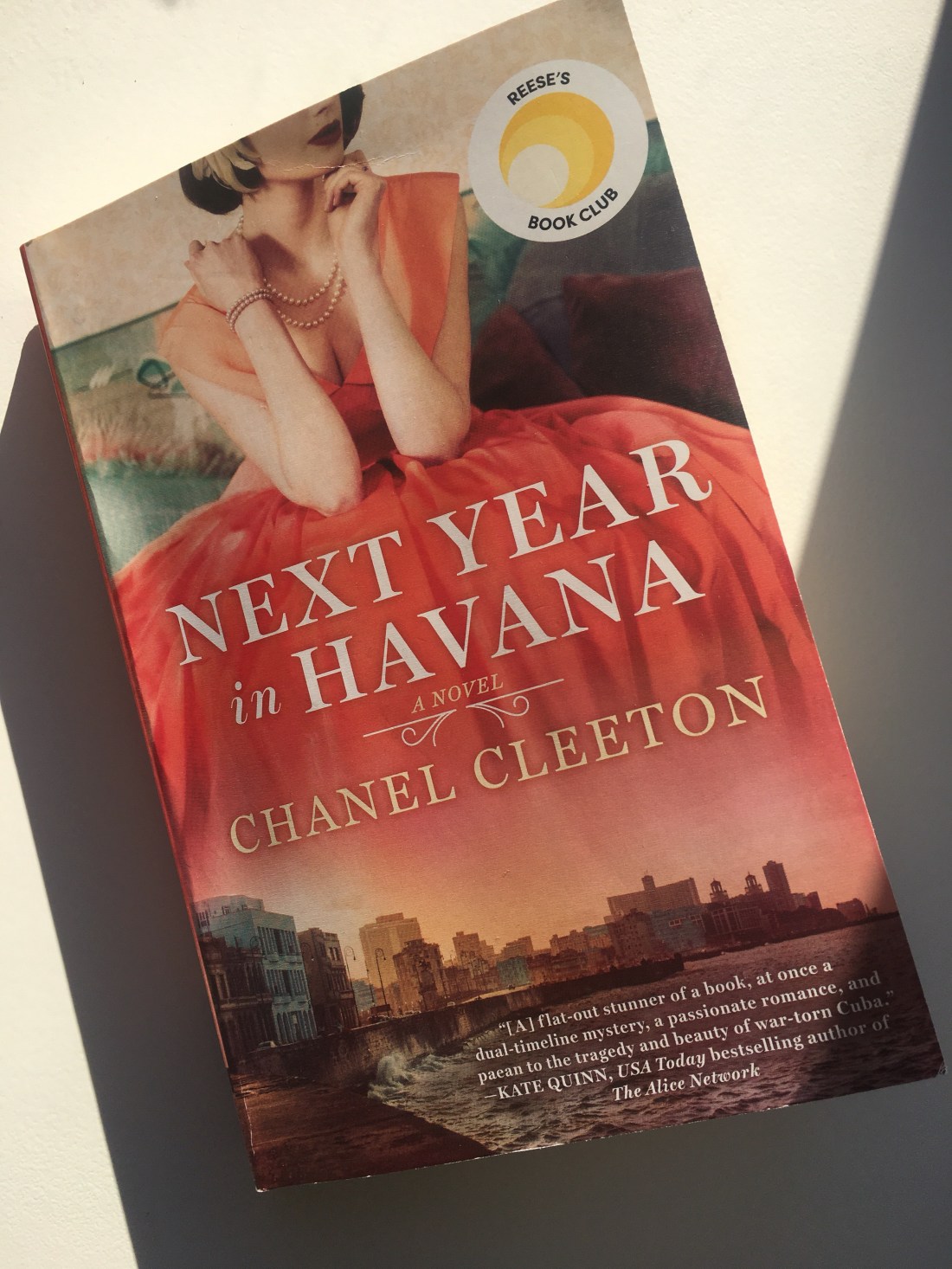
Next Year in Havana by Chanel Cleeton: A Review

“To be Cuban is to be proud – it is both our greatest gift and our biggest curse. We serve no kinds, bow no heads, bear our troubles on our backs as though they are nothing at all. There is an art to this, you see. An art to appearing as thought everything is effortless, that your world is a gilded one, when the reality is that your knees beneath your silk gown buckle from the weight of it all. We are silk and lace, and beneath them we are steel.” – Chanel Cleeton, Next Year in Havana

The phrase, “next year in Havana” is a toast used within the Cuban exile community in Miami that expresses the now generations-long desire to be able to return to their homeland. The novel is set in two time periods and follows the experiences of two very different women: Elisa, the daughter of a Cuban sugar baron on the eve of the Cuban Revolution, and Marisol, her granddaughter, who grows up in contemporary Miami as a result of Elisa’s family having fled the island years before to avoid reprisals from Fidel Castro’s regime. The novel moves between the two characters’ experiences as Elisa struggles to come to terms with the life she has always known – a world protected by wealth, influence and corruption – crumbles around her, and Marisol’s return to Cuba to spread the ashes of her grandmother on the land she loved. As the story unfolds, a number of family secrets are revealed, including Elisa’s love affair with a Cuban revolutionary that could have torn her family apart.

I really enjoyed this novel. In fact, to get through the 356 pages in a week, I decided I would get up early every day to get some reading in and I found myself looking forward to starting my day with a few chapters with a cup of coffee (let me stress, I am in no way, shape or form a “morning person”). At times, I was frustrated by how oblivious Elisa was to the suffering of the majority of Cuban people while her family lived in a bubble of high society parties, but I also appreciated the ways in which the novel revealed the complexities of being Cuban. Cleeton is the descendant of Cubans who fled after the revolution and Marisol’s character reflects that experience. There are obvious political divides within the novel like those that separate Batista’s supporters from Castro’s but the divides go much deeper. In 1959 when Castro came to power, many wealthy Cubans fled  – there is friction to this day between those who left and those who stayed. Many exiles want to see the return of Cuba as it was in their memories, decades ago, and contemporary Cubans living in Cuba are divided between those who support the government and those who seek to overthrow it. As the grandaughter of an exile, Marisol’s understanding of Cuba is shaped by her family’s memories – what they see as ‘preserving’ the Cuba that existed before it was destroyed by the revolution, but this is challenged when she goes to Cuba:

You cannot live in a museum, Marisol. The problem with your ‘preservation’ is that it fails to account for the fact that there is a real Cuba. A living, breathing Cuba. You’re all busy fighting imaginary ghosts in Miami while we’re here, bleeding on the ground, dealing with real problems … You’re still pissed because your grand mansions were taken away and are now occupied by the very men you hate the most. The rest of us are caught in the middle, worrying about how to survive.”

But this is not just a novel that deals with the history or politics of Cuba: it is also a love story. Elisa’s love for Pablo, a revolutionary fighting against everything her family stands for, has the potential to destroy her life; decades later, Marisol goes to Cuba and falls in love with a revolutionary of a sort herself, but Luis is a history professor dedicated to ending the regime of Castro and his followers. Hope and loss are a constant in the novel as each character attempts to define what it means to be Cuban against a shifting and uncertain landscape.

If you are dreaming of an escape to Cuba now that winter really feels like it’s here, then it would be worth picking up Next Year in Havana. The storyline is compelling and emotional and Cleeton’s writing brings to light the beauty of Cuba and its people. If you read this one, drop me a line and let me know what you think. And now off to World War 2 London with Dear Mrs Bird!