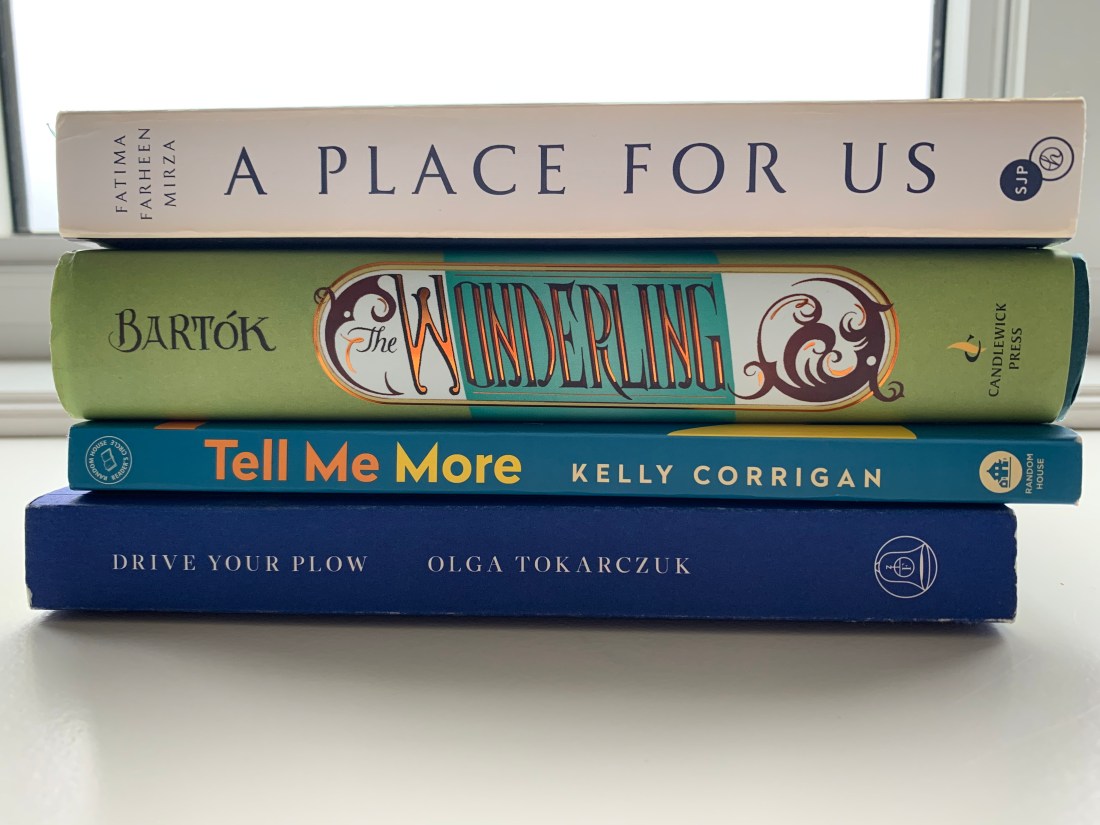
June Line Up

Okay, they say better late than never, right? Apologies for getting this post up after June has already begun but this month kind of crept up on me. When June comes around I usually start anticipating what I’m going to be reading over the summer. This year, I had a really hard time settling into what kind of books I felt like reading so I picked up a few with the idea that I would read a chapter or two and then make up my mind. It resulted it me reading five books at once, which is something I never do. Because I am rotating between books, the theme for this month is In No Particular Order. As I finish each book, I will post about it.

gods in Alabama by Joshilyn Jackson: This is the first audio book in my reading challenge (which is why it’s not in the picture). It’s another novel set in the South. The story follows the main character, Lena as she returns to her hometown in Alabama for the first time since she left it ten years before. The novel is contemporary fiction and mixes mystery with family drama. Listening to it adds an extra element of fun because the narrator has an Alabama accent so it really helps to capture the sense of place in a way that reading it in my head probably wouldn’t.

A Place for Us by Fatima Farheen Mirza: If you are keeping score at home, I was supposed to have read this book in May, that didn’t quite work out but I am enjoying it so far. It’s a fairly long novel and I don’t want to rush through it. Some books are page turners and some are meant to be savoured. I promise though – I will finish it this month.

The Wonderling by Mira Bartok: This is a middle grade novel. I confess to reading young adult and middle grade fiction on a fairly regular basis. There are a lot of great books written in these genres that I think adults pass over because they are marketed as being for younger audiences. The Wonderling is set in a world where there are humans and groundlings –  characters that are hybrids of humans and animals or animals and animals. The story begins with Number 13, a groundling who has lived his whole life at the Home for Wayward and Misbegotten Creatures. Number 13 manages to escape, and then sets off to find what happened to his real family. And so far, it’s good.

Tell Me More by Kelly Corrigan: I just learned about Kelly Corrigan recently. She writes memoirs but this is a collection of essays based on the twelve hardest things that Corrigan has learned to say. Things like, onward, and I was wrong, and I don’t know. She approaches each phrase with the stories from her own life that taught her the importance of having to say things even when you struggle for the words. She writes about her experiences in ways that are funny and heart-breaking on the same page. The essays are short enough that you can easily read one in a single sitting. Between Corrigan and Sedaris, I may be a convert to essays as a genre.

Drive Your Plow Over The Bones of the Dead by Olga Tokarczuk: I recently learned that compared to other parts of the world, North Americans read very few translated works. It made me wonder what kinds of things people were writing in other languages, and then I had a crippling case of FOMO (fear of missing out). I’ve started to look for more works in translation lately and this one caught my eye because of the title. It’s originally written in Polish and the main character, Janina, is an elderly woman living in a remote Polish village. When bodies start turning up, Janina is sure she knows who did it but no one will listen to her because of her reputation as cranky and maybe a little crazy. This is the first Tokarczuk novel I have ever read, but according to Google, she is a very big deal on the international writing scene.

So this is me for the month of June. If you have any recommendations for some great summer reads, I’d love to hear them! Until next time, happy reading!
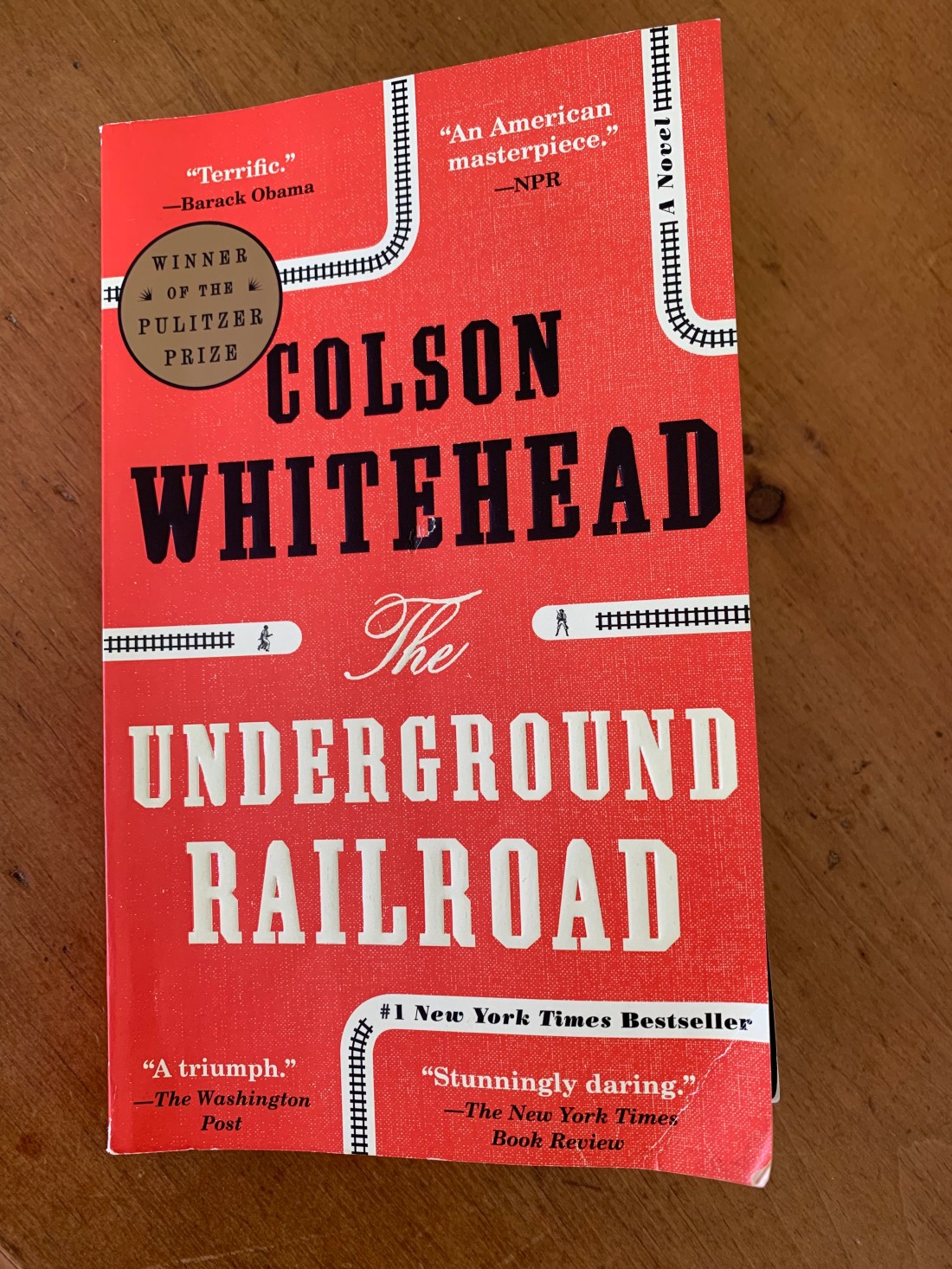


The Underground Railroad by Colson Whitehead: A Review

“If you want to see what this nation is all about, you have to ride the rails. Look outside as you speed through, and you’ll find the true face of America. It was a joke, then, from the start. There was only darkness outside the windows on her journeys, and only ever would be darkness.” – Colson Whitehead, The Underground Railroad

Most of us know the history of the underground railroad, but not as Colson Whitehead has reimagined it. The novel opens on a cotton plantation in Georgia. Cora is a third-generation slave; her grandmother is dead and her mother ran off years ago, meaning that Cora has grown up a ‘stray’ – a child with no family around her – and has had to learn to protect her own interests. Whitehead’s rendering of the plantation where Cora lives is bleak and heartbreaking. She is without prospects or hope until Caesar, another slave, talks her into running north with him.

What follows is an escape that leads through South Carolina, North Carolina and eventually into Tennessee and Indiana. There are many things that make the novel unique. Whitehead has chosen to make the underground railroad an actual set of tunnels and tracks running beneath the South where free blacks and sympathetic whites risk their lives to help enslaved people escape to freedom. This fantastic element in the novel means that the reader’s focus is more on the individual states where Cora surfaces, rather than on the journeys between states. In Colson Whitehead’s America, each state is unique in trying to “deal” with its black population – South Carolina invests in what it calls “negro uplift” to try to integrate black Americans into white society; North Carolina introduces race laws to drive black people from the state and replace them with cheap white labor from Europe. In Indiana, black people have gained a degree of freedom and prosperity but their security is always threatened by the shadow of racism. While the railroad that ferries Cora away from the plantation is the stuff of imagination, many of the other seemingly fantastical elements Whitehead introduces are not: there were attempts by health agencies in the US to sterilize members of the black community (and others) in order to reduce the numbers of black children being born; black men were unknowingly a part of studies on the impact of syphilis but led to believe they were receiving free health care from the US government. Black people were regularly lynched by mobs who went largely unpunished for their murders. Whitehead meddles with history in terms of locations and time frames so that each state Cora flees to represents an amalgam of ways in which white America tried to use, manipulate and sometimes terrorize the black population.

Given its heavy subject matter, it may be surprising to learn how readable this novel is. It is fast-paced and the characters are sympathetic and their sacrifices are many. Whitehead reveals how black and white Americans came together in unexpected ways to reinforce or fight against the systems of oppression that America was built on. While it covers much of the history dealt with in other novels, like Lawrence Hill’s Book of Negroes, Whitehead’s feels like a commentary on the racial undercurrents of contemporary American society. The book poses compelling questions about the country’s past and its present; according to one of Whitehead’s characters, America is a delusion but, “sometimes a useful delusion is better than a useless truth.” Despite the suffering and injustice the novel reveals, there is always hope. The number of people who help Cora along her journey at significant risk to themselves reinforces that the system can be beaten, and may someday finally be broken.

If fantasy isn’t your genre, I wouldn’t let it deter you from The Underground Railroad. It reads far more like historical fiction and the railroad itself is a negligible part of the plot, despite its significance as a metaphor. Cora is a character to root for and Whitehead’s writing is powerful and page-turning. If you read this novel, I’d love to hear what you think. Until next time, happy reading!