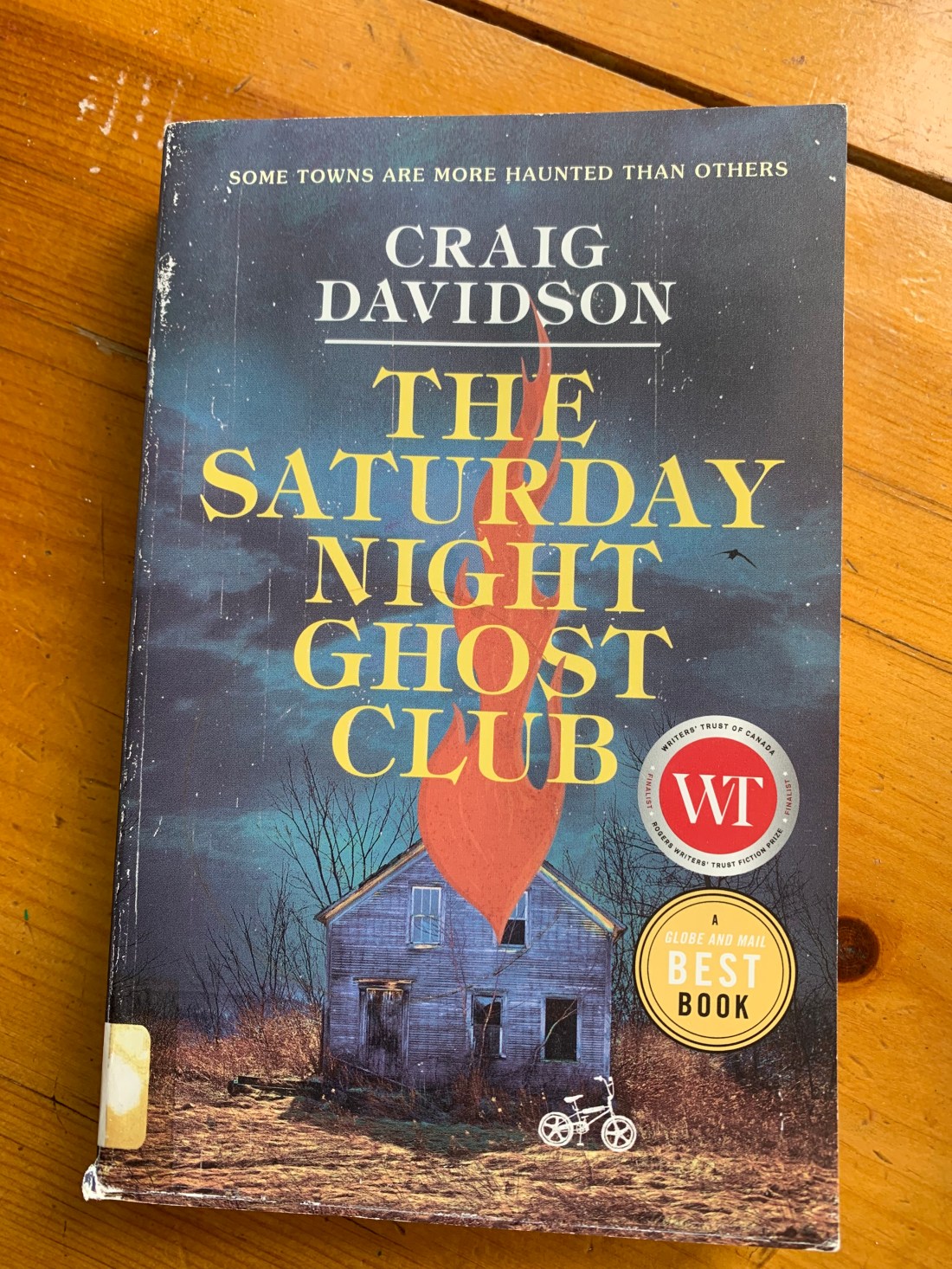
The Saturday Night Ghost Club by Craig Davidson: A Review

“we are only human, a condition of perpetual uncertainty and failure.” 

 Craig Davidson, The Saturday Night Ghost Club

As a child of the 80s, I find it really hard to resist the nostalgia of anything set at that time. Whether it’s actually 80s stuff like re-watching “The Goonies” for the thousandth time, or new things set in the 80s, like “Stranger Things”, I am a complete sucker for it. I think I especially like stories where the protagonists are kids because that’s what I can related to from that time. Enter The Saturday Night Ghost Club. Set it 1980s Niagara Falls, Davidson’s novel evokes a lot about that place and time to create the setting. Jake, a fat kid with few friends, spends a lot of his free time with his Uncle Calvin, an eccentric guy who is a die-hard believer in conspiracy theories and owner of a store dealing in occult objects. Jake recounts the experiences of one summer when he, his uncle, and a handful of others decide to initiate the Saturday Night Ghost Club – a group that visits Niagara Falls’ supposedly haunted spaces and listens to Calvin recount the stories of the gruesome events that happened there.

In a lot of ways, this is a classic coming-of-age novel that evokes writers like Stephen King. By turns funny and sad, it gets at the heart of what it feels like to start seeing the world through the eyes of the outsiders and castoffs who populate the novel. I thought this book was going to be about Jake growing up and out-growing his uncle’s ghost stories, but it turns out to be much more than that. Through the Saturday Night Ghost Club, Jake begins to realize that his uncle’s quirkiness is actually a symptom of a long-held family secret. I really like this novel, which I found both page-turning and tender. I got through it in a couple of days by reading and listening to it on audio, and the audio is worth it if you don’t want to pick up a copy.

Tomorrow look for my review of The Seven Husbands of Evelyn Hugo by Taylor Jenkins Reid which is, once again, something completely different. Until then, happy reading!
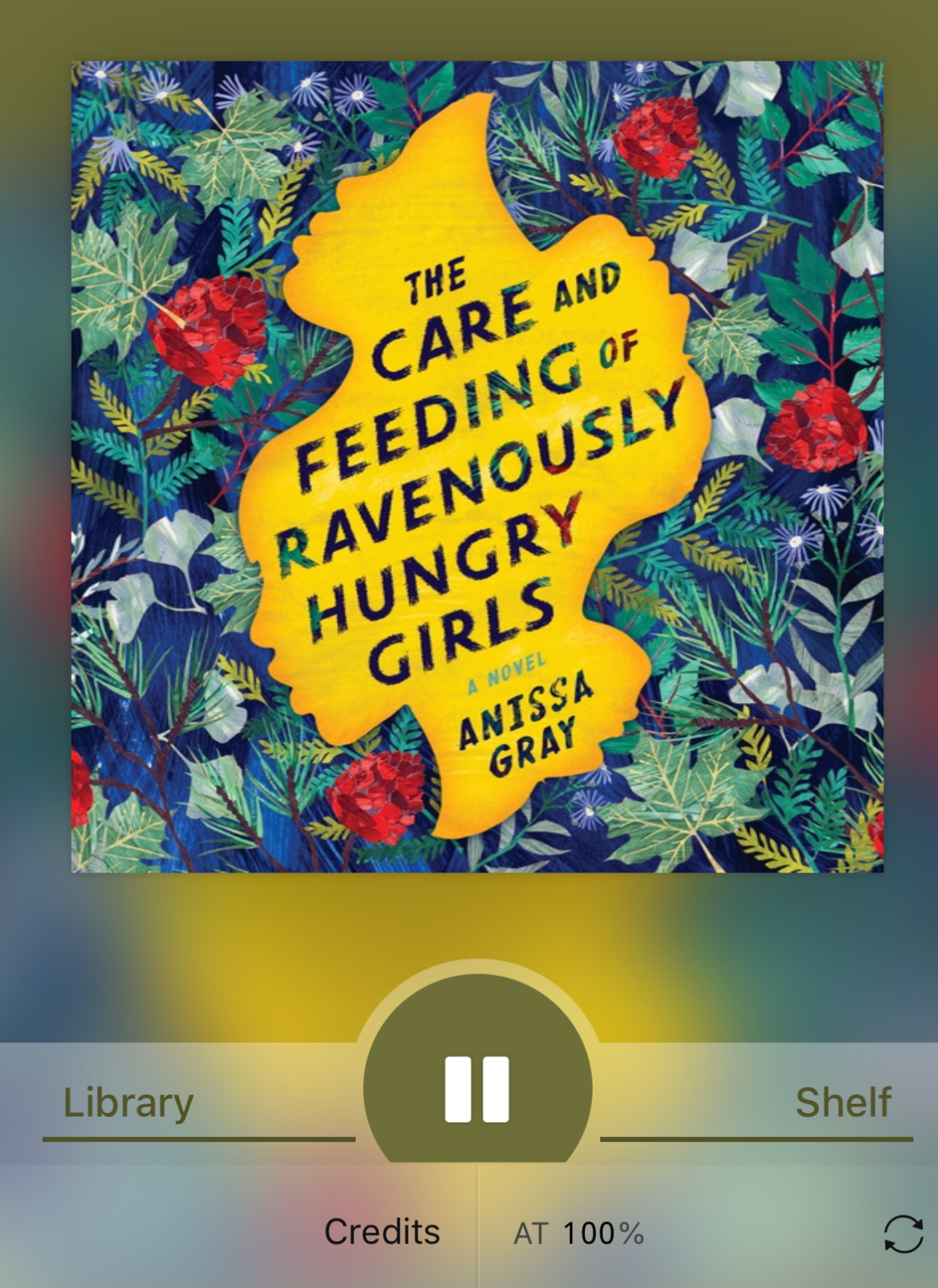
The Care and Feeding of Ravenously Hungry Girls by Anissa Gray: A Review


“That river runs through the place where I was easier to define. The place that made me who I used to be. Althea Marie Butler-Cochran: round, dimpled face; rounding, dimpled body; smooth, light brown skin; wife; mother; daughter; sister; mighty force of nature.” 

― Anissa Gray, The Care and Feeding of Ravenously Hungry Girls

The title! The cover design! But never mind, those might have been the reasons I first noticed Anissa Gray’s debut novel but it is the powerful writing that really captured me. The Care and Feeding of Ravenously Hungry Girls is the story of a family dealing with crisis. Althea and Proctor were pillars of their community; they ran a popular family restaurant and were raising their two daughters. But when the novel opens, Althea and Proctor are in prison on charges of fraud. They had been skimming money from the charities they ran and they got caught. The novel alternates between a variety of voices, those of Althea and Proctor, and Althea’s sisters, Viola and Lillian as the family tries to come to terms with their new reality. At the forefront is how to help the couple’s teenage daughters cope with what is unfolding, but the novel delves deep into family connections, especially relationships between mothers and daughters, but also between siblings. Althea, Viola and Lillian also face their own demons and through her novel Gray examines heavy subjects like eating disorders, homophobia, childhood neglect and life in the prison system.

I listened to this book on audio which enhanced the experience of having the novel told through different characters’ voices because each was read by a different performer. While it deals with subject matter similar to An American Marriage, the focus of Gray’s novel isn’t so much about the dissolution of a family as it is about the attempt to hold one together. All of the characters are flawed in their own ways but each is still striving to do what they believe to be right but old family secrets have to be brought to light in order for them to find a way forward.

Gray’s novel is not what most people would categorize as “summer reading”, especially if you prefer something light and breezy at the beach, but it is an impressive debut and is well worth the read. Tomorrow I will post about The Saturday Night Ghost Club by Craig Davidson for something completely different. Until then, happy reading!

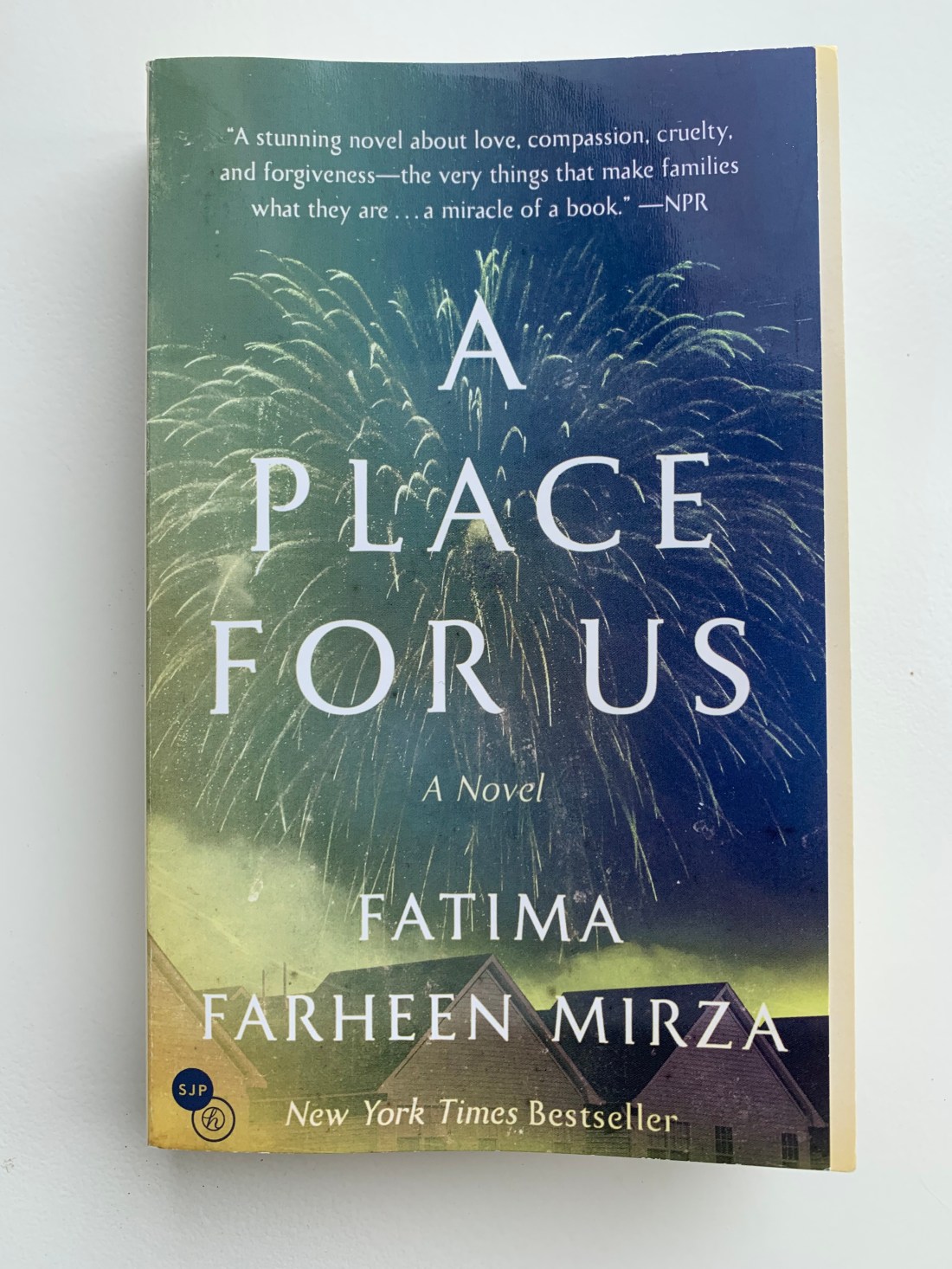
A Place for Us by Fatima Farheen Mirza: A Review

Afsoos was the word in Urdu. There was no equivalent in English. It was a specific kind of regret – not wishing he had acted differently, but a helpless sadness at the situation as it was, a sense that it could not have been another way.” 

Fatima Farheen Mirza, A Place for Us

If I say the words, “sweeping family saga” and you perk up, this might be a novel for you. Set in contemporary California, it opens at the wedding of Hadia, the oldest child in an Indian Muslim family. Her estranged brother, Amar has returned for the wedding and the story circles back into the family’s past, tracing the reasons why Amar chose to leave and that decision’s impact on his family. This novel is very much driven by character and events often take time to fully reveal themselves, as they are revisited through the experiences and memories of the family members.

As the title indicates, the novel largely centers on themes of acceptance and many of the characters question their place within their families, and their religious and cultural communities. Mirza is able to explore the ways in which faith, gender and tradition influences the way her characters understand themselves and their place within the family. There is a very contemplative feel to the novel and Mirza avoids tropes of “happily ever after”, instead allowing her characters to live with their questions and regrets. She depicts a family that is trying to heal around a wound, trying to push forward a build a good life despite what has happened. Like any good family story, there are many interpretations of why events unfolded as they did. The reader can see Amar and his family trying to decided: was this just how he is? Did we make him this way? Was there something different we could have said, could have done, to prevent this from happening? Mirza also explores what it means to leave some questions unanswered as her characters try to come to terms with things they cannot fully explain. Ultimately the novel is about acceptance, belonging, hope, and the ties that bind families together.

This debut made a lot of Best Books of 2018 lists and while I certainly appreciate the beauty of Mirza’s writing, I have to admit that I found this book a little slow. There were times when we seemed to be going over the same ground again and again and while I think that her narrative style did add depth and complexity to her characters’ experiences, I wanted it to move a little faster most of the time.

I am way behind on my posts but I will be trying to get caught up this week so if A Place for Us doesn’t ring your bell, stay tuned! Until next time, happy reading!