The Seven Husbands of Evelyn Hugo by Taylor Jenkins Reid: A Review

“You do not know how fast you have been running, how hard you have been working, how truly exhausted you are, until somewhat stands behind you and says, “It’s OK, you can fall down now. I’ll catch you.” 

Taylor Jenkins Reid, The Seven Husbands of Evelyn Hugo

There is a lot to dig into in the novel. Evelyn Hugo was a Hollywood star during its Golden Age. She became increasingly reclusive in her old age and was famous not just for her movie roles but also for her seven marriages. She chooses Monique Grant, an unknown journalist to write her tell-all biography that can only be published after her death. The narrative bounces between Evelyn’s retelling of her rise in Hollywood and Monique’s struggle to come to understand why Evelyn chose her of all people to write the book.

I picked this up because of how much I enjoyed Daisy Jones and the Six. The narrative structure and setting are very different in Evelyn Hugo, but Reid’s ability to create complex characters is common to both novels. Evelyn especially is both captivating and ruthless, drawing the reader into her experiences as she reveals her life’s secrets to Monique. Another thing I appreciated about this novel was how Reid presented the difficult choices that members of the gay community working in Hollywood had to face at the time. Reid is unflinching about how perilous being openly gay would be been to her character’s careers but also to their reputations and possibly to their personal safety. Evelyn’s time in Hollywood is set when people were still being sent to mental asylums for being gay. Reid examines the price of fame through portraying the choices her characters had to make in order to keep their careers afloat in the cut-throat world of the film industry at a time when studios basically “owned” the actors who were contracted to them.

I think Reid does a great job of capturing the eras in which she writes. She is able to create characters that are flawed yet still sympathetic. In the same way that I thought that Daisy Jones read like the transcripts of a real rock biography, Evelyn Hugo feels like a real celebrity tell-all but Reid is able to build strong characters and thus avoids plots that seem superficial or stale.

As a side note, what it with all of the books with “seven” in the title lately? The Seven Deaths of Evelyn Hardcastle, The Seven Husbands of Evelyn Hugo, A Brief History of Seven Killings …

The next post will be a memoir, The Little Bookstore of Big Stone Gap by Wendy Welch. Stay tuned! Until then, happy reading!
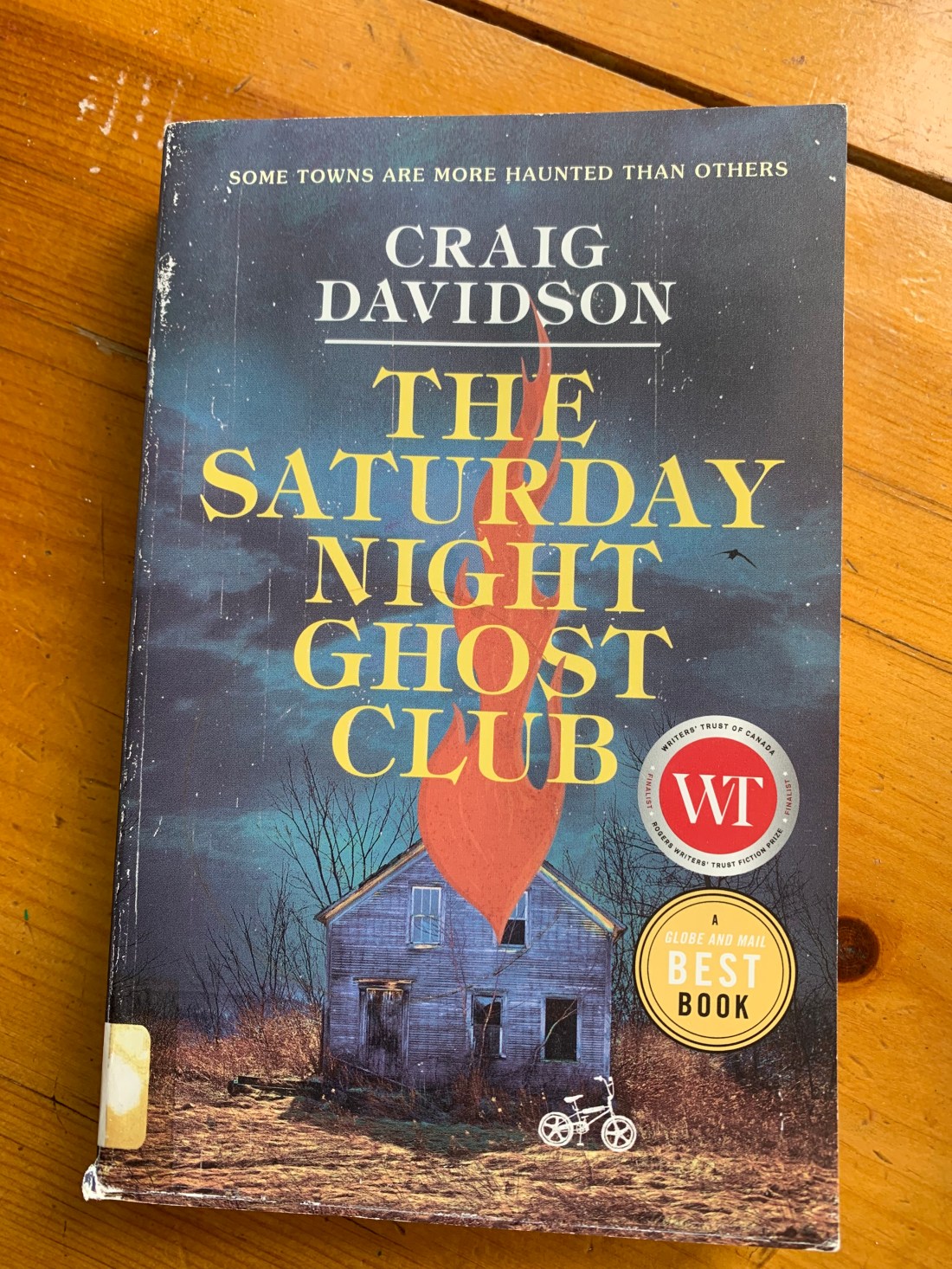
The Saturday Night Ghost Club by Craig Davidson: A Review

“we are only human, a condition of perpetual uncertainty and failure.” 

 Craig Davidson, The Saturday Night Ghost Club

As a child of the 80s, I find it really hard to resist the nostalgia of anything set at that time. Whether it’s actually 80s stuff like re-watching “The Goonies” for the thousandth time, or new things set in the 80s, like “Stranger Things”, I am a complete sucker for it. I think I especially like stories where the protagonists are kids because that’s what I can related to from that time. Enter The Saturday Night Ghost Club. Set it 1980s Niagara Falls, Davidson’s novel evokes a lot about that place and time to create the setting. Jake, a fat kid with few friends, spends a lot of his free time with his Uncle Calvin, an eccentric guy who is a die-hard believer in conspiracy theories and owner of a store dealing in occult objects. Jake recounts the experiences of one summer when he, his uncle, and a handful of others decide to initiate the Saturday Night Ghost Club – a group that visits Niagara Falls’ supposedly haunted spaces and listens to Calvin recount the stories of the gruesome events that happened there.

In a lot of ways, this is a classic coming-of-age novel that evokes writers like Stephen King. By turns funny and sad, it gets at the heart of what it feels like to start seeing the world through the eyes of the outsiders and castoffs who populate the novel. I thought this book was going to be about Jake growing up and out-growing his uncle’s ghost stories, but it turns out to be much more than that. Through the Saturday Night Ghost Club, Jake begins to realize that his uncle’s quirkiness is actually a symptom of a long-held family secret. I really like this novel, which I found both page-turning and tender. I got through it in a couple of days by reading and listening to it on audio, and the audio is worth it if you don’t want to pick up a copy.

Tomorrow look for my review of The Seven Husbands of Evelyn Hugo by Taylor Jenkins Reid which is, once again, something completely different. Until then, happy reading!

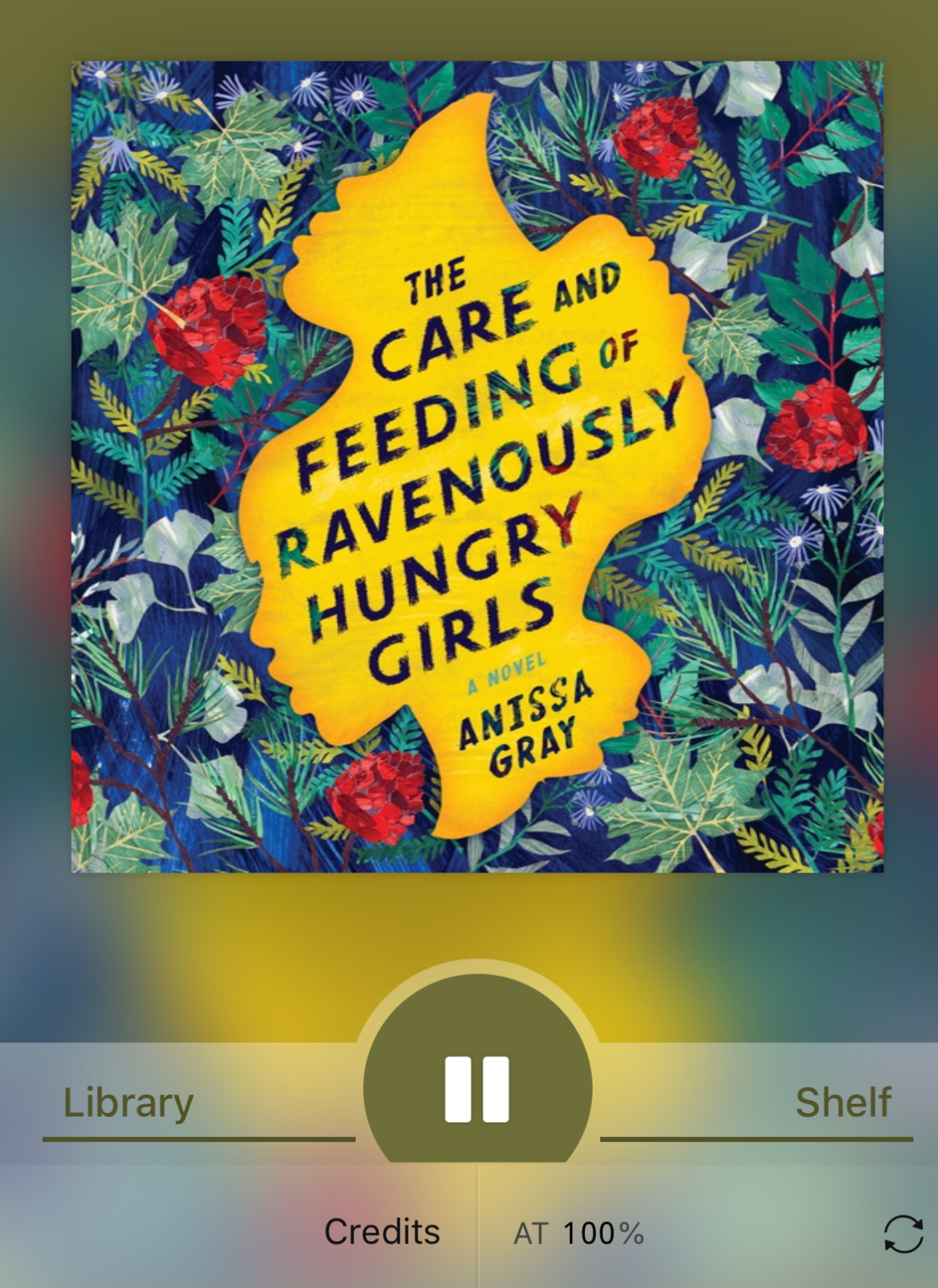
The Care and Feeding of Ravenously Hungry Girls by Anissa Gray: A Review


“That river runs through the place where I was easier to define. The place that made me who I used to be. Althea Marie Butler-Cochran: round, dimpled face; rounding, dimpled body; smooth, light brown skin; wife; mother; daughter; sister; mighty force of nature.” 

― Anissa Gray, The Care and Feeding of Ravenously Hungry Girls

The title! The cover design! But never mind, those might have been the reasons I first noticed Anissa Gray’s debut novel but it is the powerful writing that really captured me. The Care and Feeding of Ravenously Hungry Girls is the story of a family dealing with crisis. Althea and Proctor were pillars of their community; they ran a popular family restaurant and were raising their two daughters. But when the novel opens, Althea and Proctor are in prison on charges of fraud. They had been skimming money from the charities they ran and they got caught. The novel alternates between a variety of voices, those of Althea and Proctor, and Althea’s sisters, Viola and Lillian as the family tries to come to terms with their new reality. At the forefront is how to help the couple’s teenage daughters cope with what is unfolding, but the novel delves deep into family connections, especially relationships between mothers and daughters, but also between siblings. Althea, Viola and Lillian also face their own demons and through her novel Gray examines heavy subjects like eating disorders, homophobia, childhood neglect and life in the prison system.

I listened to this book on audio which enhanced the experience of having the novel told through different characters’ voices because each was read by a different performer. While it deals with subject matter similar to An American Marriage, the focus of Gray’s novel isn’t so much about the dissolution of a family as it is about the attempt to hold one together. All of the characters are flawed in their own ways but each is still striving to do what they believe to be right but old family secrets have to be brought to light in order for them to find a way forward.

Gray’s novel is not what most people would categorize as “summer reading”, especially if you prefer something light and breezy at the beach, but it is an impressive debut and is well worth the read. Tomorrow I will post about The Saturday Night Ghost Club by Craig Davidson for something completely different. Until then, happy reading!

Station Eleven by Emily St. John Mandel: A Review

“Survival is insufficient.” 

Emily St. John Mandel, Station Eleven

If categories like dystopian or science fiction scare you, please don’t let that turn you away from reading Station Eleven. The novel moves back and forth in time as civilization as we know it dissolves after the outbreak of a deadly flu pandemic. It centers around the experiences of a loosely related group of people, contrasting their lives before and after the outbreak. The world before the outbreak is one we recognize: fame and media and technologies that cushion us from the harshness of the nature (and sometimes each other). The world after is both new and old – electricity, modern communication – all of it has ceased to exist. New cults form, old forms of entertainment, such as the theater troupe known as the Travelling Symphony, perform Shakespeare in the new settlements. St. John Madel never takes us right into the horrors of the collapse, skirting it instead through the days proceeding the pandemic and the eerie years after, as the survivors try to rebuild.

The writing in this novel is beautiful. Despite the difficulties that the new world presents, the characters are largely driven by hope. The characters are connected by one man, the actor Arthur Leander who died onstage on the eve of the outbreak. The author weaves his story into the lives of those who were linked to him, knowingly or not, in the years after. The novel explores the nature of art, fame and ambition while never losing sight of good story-telling. As humanity struggles to pick up the pieces in the wake of what has been lost, the writing takes time to linger on what it means to be human, to be decent and thoughtful when everything familiar is gone.

I really enjoyed Station Eleven and I think that for readers who don’t see themselves as fans of dystopian or speculative fiction, St John Mandel’s writing challenges what the stereotypes of those categories can mean.

I’ve only got a few weeks left to meet the 52 book challenge and while I’ve been reading a lot, the posts are obviously behind so you can expect to see them coming fast and furious in the next couple weeks. Anything you think I should squeeze in before the end? Let me know! Until next time, happy reading!

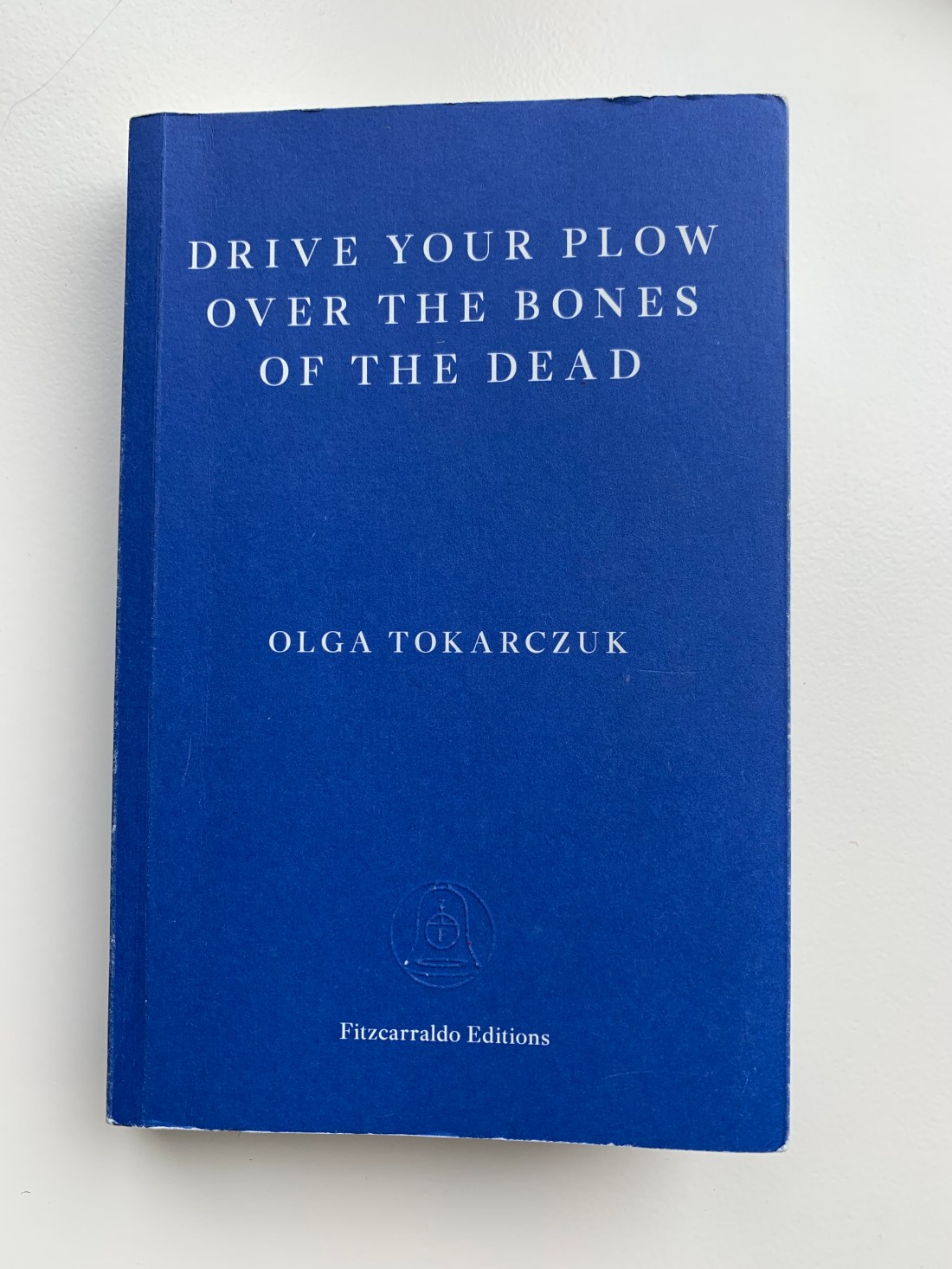
Drive Your Plow Over the Bones of the Dead by Olga Tokarczuk: A Review

One has to tell people what to think. There’s no alternative. Otherwise someone else will do it.

Olga Tokarczuk

Set in a remote Polish village, Drive Your Plow is a dark comedy wherein the protagonist, Janina Duszejko, an eccentric woman in her sixties, tries to convince her fellow villagers of her Theories. Mrs Duszejko is a firm believer in astrology, the idea that most humans are insufferable and the sanctity of animals. When several men in the village are found dead under suspicious circumstances, Mrs Duszejko believes it is the result of animals taking revenge against humans – particularly hunters – for their cruelty. Some people in the village consider her mad, others see her as an old busybody to be ignored or ridiculed for her beliefs and yet there is a very small group who look past her eccentricities to see her intelligence and keen wit and consider her a friend. This is not a murder mystery in the conventional sense, although solving the murders of the three dead men is central to the plot.

Tokarczuk is a literary superstar in her native Poland. This is the first novel I have read by her. She covers a lot of ground in this book, examining everything from perceptions of madness to animal rights to religious hypocrisy. The story was very original compared to other novels that I have read in that it was part thriller, part dark comedy and part political and social commentary. At times, I found the text to be dense and had to reread passages on more than one occasion. As sometimes is the case with works in translation, I’m not sure if it is how the novel was originally written, or if it is a function of translating Polish into English. Mrs Duszejko and her friend Dizzy deal with this issue themselves to some extent as they struggle to translate the poetry of William Blake (from whose work the book gets its title) from English into Polish. The nuance and challenge of expressing oneself clearly to another is repeatedly examined in the novel.

Despite the somewhat heavy subject matter, the novel is truly funny. Mrs Duszejko refuses to refer to most of the local villagers by their actual names and instead calls them by names she has given them – her neighbours, for example are Oddball and Big Foot. She has a forceful personality and refuses to be put aside by those who would laugh at her or scorn her. It is also in many ways a novel about friendship and holding on to what you value, despite the rules of society. While I did struggle through it at times, I was glad to have read it.

I’ll be putting up posts more frequently this month and next so I am skipping the monthly line-ups and giving myself the freedom to read whatever I feel like next but in case you are missing knowing what is up-coming, I will be posting about The Wonderling, Station Eleven, The Saturday Night Ghost Club, The Care and Feeding of Ravenously Hungry Girls and The Seven Husbands of Evelyn Hugo in the next week or so.

I’d love to hear what is on your summer reading list – let me know what you’ve been reading!

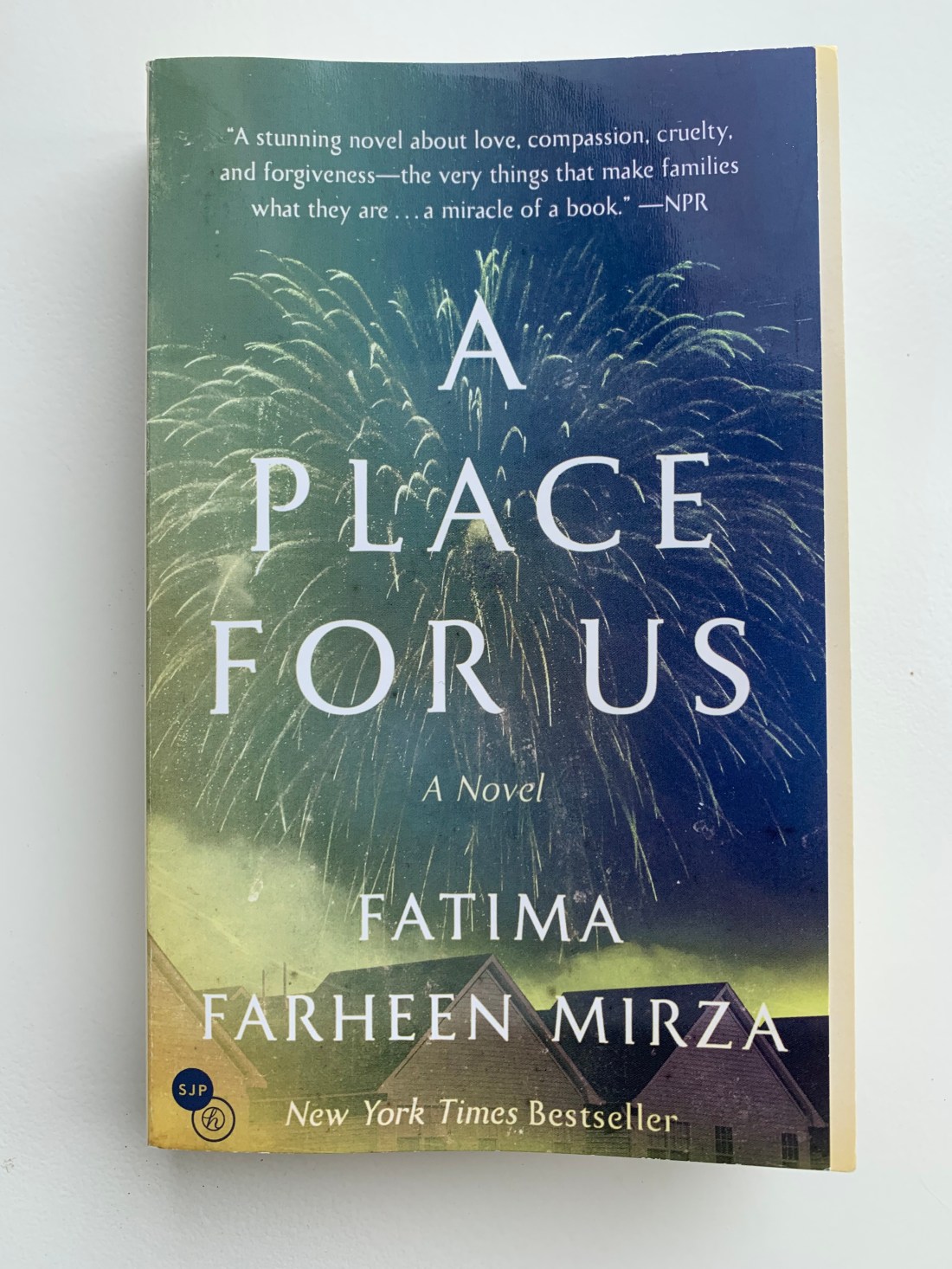
A Place for Us by Fatima Farheen Mirza: A Review

Afsoos was the word in Urdu. There was no equivalent in English. It was a specific kind of regret – not wishing he had acted differently, but a helpless sadness at the situation as it was, a sense that it could not have been another way.” 

Fatima Farheen Mirza, A Place for Us

If I say the words, “sweeping family saga” and you perk up, this might be a novel for you. Set in contemporary California, it opens at the wedding of Hadia, the oldest child in an Indian Muslim family. Her estranged brother, Amar has returned for the wedding and the story circles back into the family’s past, tracing the reasons why Amar chose to leave and that decision’s impact on his family. This novel is very much driven by character and events often take time to fully reveal themselves, as they are revisited through the experiences and memories of the family members.

As the title indicates, the novel largely centers on themes of acceptance and many of the characters question their place within their families, and their religious and cultural communities. Mirza is able to explore the ways in which faith, gender and tradition influences the way her characters understand themselves and their place within the family. There is a very contemplative feel to the novel and Mirza avoids tropes of “happily ever after”, instead allowing her characters to live with their questions and regrets. She depicts a family that is trying to heal around a wound, trying to push forward a build a good life despite what has happened. Like any good family story, there are many interpretations of why events unfolded as they did. The reader can see Amar and his family trying to decided: was this just how he is? Did we make him this way? Was there something different we could have said, could have done, to prevent this from happening? Mirza also explores what it means to leave some questions unanswered as her characters try to come to terms with things they cannot fully explain. Ultimately the novel is about acceptance, belonging, hope, and the ties that bind families together.

This debut made a lot of Best Books of 2018 lists and while I certainly appreciate the beauty of Mirza’s writing, I have to admit that I found this book a little slow. There were times when we seemed to be going over the same ground again and again and while I think that her narrative style did add depth and complexity to her characters’ experiences, I wanted it to move a little faster most of the time.

I am way behind on my posts but I will be trying to get caught up this week so if A Place for Us doesn’t ring your bell, stay tuned! Until next time, happy reading!

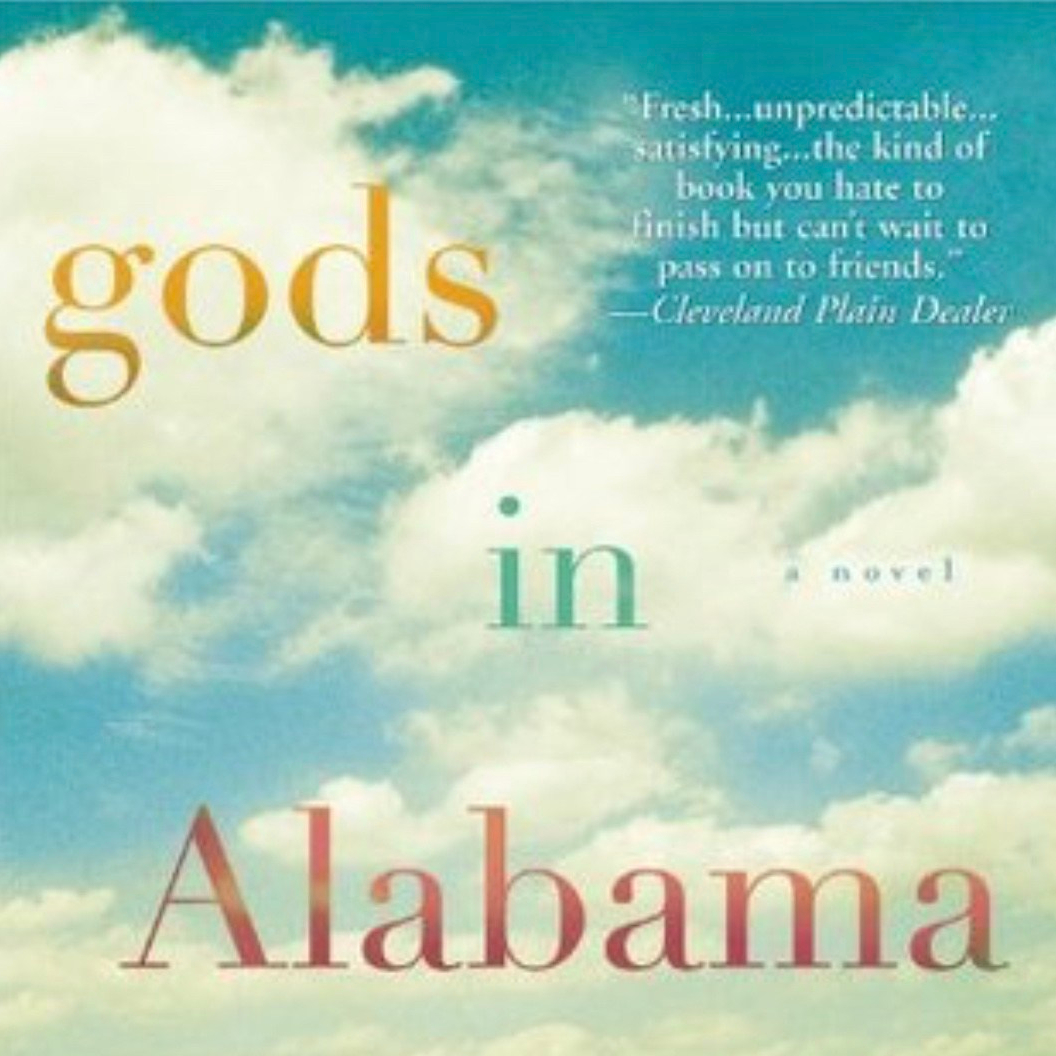
gods in Alabama by Joshilyn Jackson: A Review

“There are gods in Alabama: Jack Daniel’s, high school quarterbacks, trucks, big tits, and also Jesus.” – Joshilyn Jackson, gods in Alabama

Full disclosure: I read this book on audio, which is something I wouldn’t have said until this year. I am not a stranger to audio books – my partner listens to them from time to time on his commute to work, and on long car trips, I always try to have a couple queued up for the kids (this is a genius parenting hack by the way, the are silent the entire time the book is playing). I don’t know why it took me so long to make the connection that I could increase my reading time by using audio books myself. Maybe it’s because it feels a little bit like cheating, but after trying it, I think I’m a convert. There are times when reading a physical book just isn’t convenient and there are a lot of times when it’s not even possible – driving and folding my family’s unending piles of laundry come to mind – but those are perfect times to listen to books on audio. Before I downloaded one, I got some tips from people who make audio books a regular part of their reading lives. I think different people have different preferences, but here are some general rules I think are safe: listen to the clip on your app before you download – if you don’t like the reader’s voice in that 60 seconds, you probably don’t want to hear another 6 hours of it. Choose books that work well for hearing rather than seeing – novels, memoirs,  or histories are all good choices. It’s a great way to increase how much you read and may make things like housework or waiting for an appointment just a little more enjoyable.

gods in Alabama was a good choice for audio. I already knew I liked Joshilyn Jackson, having read The Almost Sisters. She is also an actor and reads some of her own works on audio, but this one was read by Catherine Taber. Most of the novel is set in Alabama and I think it added an element to the experience to hear the story in the proper accent. The novel centers around Lena (known as Arlene to her family back in Alabama) who fled her hometown after high school and never looked back. Her uncle’s retirement party, coupled with the fact that her long-time boyfriend won’t marry her until he has met her family forces her to take the trip home for the first ten years later. As the story unfolds, there are many complications both past and present: Lena’s boyfriend, Burr is black, and her family is not exactly progressive in their views of interracial relationships. Lena’s mother is not well and her aunt is furious that it has taken a decade for Lena to come home.

Bit by bit, Jackson reveals Lena’s motivations for fleeing the South in the first place, and why she is so reluctant to return home. There is an element of mystery to the novel but it is really about family, and how far families will go to protect their own. It is also about how dangerous it can be for people to go against what Lena refers to as the “gods of Alabama” and how much pressure their is to fit into certain ‘types’ in their small Alabama town. A characteristic of Jackson’s writing that I really appreciate it that her female characters are really strong but still flawed in ways that make them relatable. Lena is secretive and sometimes purposely misleads people without outright lying, her Aunt Flo is sharp and not afraid to show her temper, Burr’s mother is kind to Lena but makes no bones about the fact that her loyalties lie with her son. Jackson’s writing touches on so many elements of the South: religion, racism, the internal dynamics of small town life. The story moves quickly but the quality of the writing doesn’t suffer for it. Jackson is adept at making you think one thing is happening before pulling back the curtain and showing you what has actually been going on the entire time.

Do you ever read books on audio? I would love some recommendations if you have any!


June Line Up

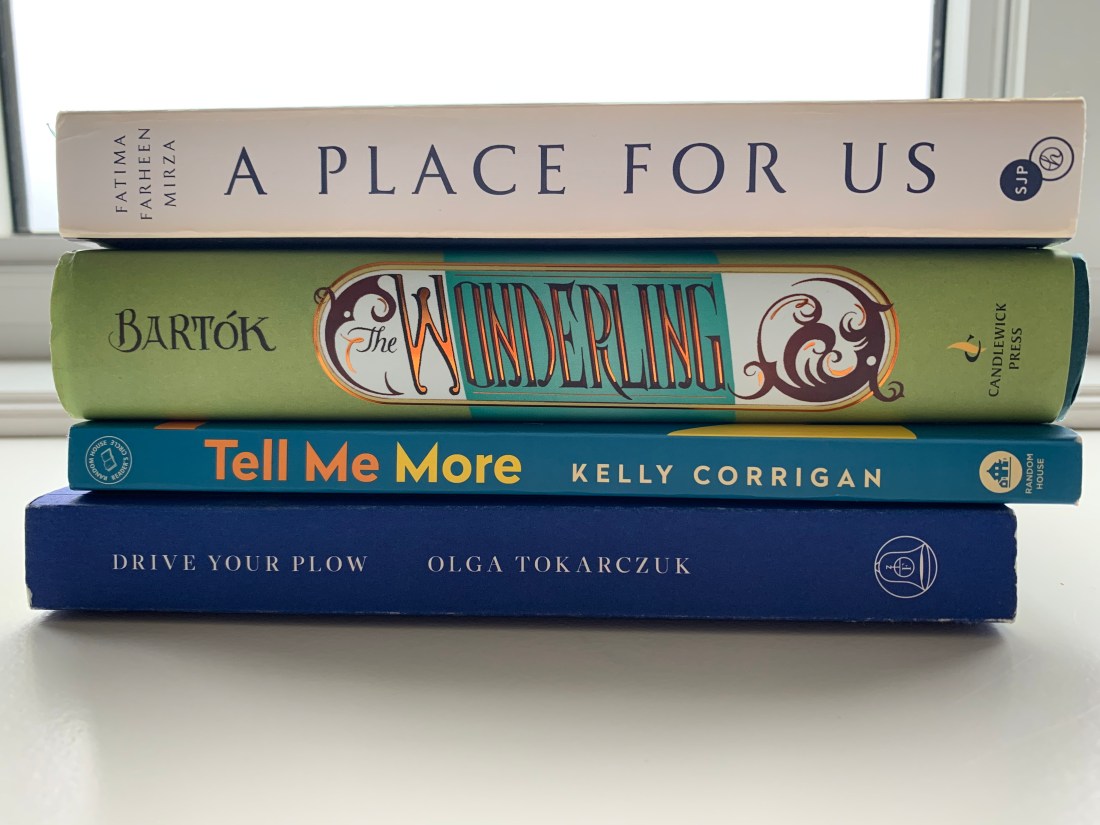
Okay, they say better late than never, right? Apologies for getting this post up after June has already begun but this month kind of crept up on me. When June comes around I usually start anticipating what I’m going to be reading over the summer. This year, I had a really hard time settling into what kind of books I felt like reading so I picked up a few with the idea that I would read a chapter or two and then make up my mind. It resulted it me reading five books at once, which is something I never do. Because I am rotating between books, the theme for this month is In No Particular Order. As I finish each book, I will post about it.

gods in Alabama by Joshilyn Jackson: This is the first audio book in my reading challenge (which is why it’s not in the picture). It’s another novel set in the South. The story follows the main character, Lena as she returns to her hometown in Alabama for the first time since she left it ten years before. The novel is contemporary fiction and mixes mystery with family drama. Listening to it adds an extra element of fun because the narrator has an Alabama accent so it really helps to capture the sense of place in a way that reading it in my head probably wouldn’t.

A Place for Us by Fatima Farheen Mirza: If you are keeping score at home, I was supposed to have read this book in May, that didn’t quite work out but I am enjoying it so far. It’s a fairly long novel and I don’t want to rush through it. Some books are page turners and some are meant to be savoured. I promise though – I will finish it this month.

The Wonderling by Mira Bartok: This is a middle grade novel. I confess to reading young adult and middle grade fiction on a fairly regular basis. There are a lot of great books written in these genres that I think adults pass over because they are marketed as being for younger audiences. The Wonderling is set in a world where there are humans and groundlings –  characters that are hybrids of humans and animals or animals and animals. The story begins with Number 13, a groundling who has lived his whole life at the Home for Wayward and Misbegotten Creatures. Number 13 manages to escape, and then sets off to find what happened to his real family. And so far, it’s good.

Tell Me More by Kelly Corrigan: I just learned about Kelly Corrigan recently. She writes memoirs but this is a collection of essays based on the twelve hardest things that Corrigan has learned to say. Things like, onward, and I was wrong, and I don’t know. She approaches each phrase with the stories from her own life that taught her the importance of having to say things even when you struggle for the words. She writes about her experiences in ways that are funny and heart-breaking on the same page. The essays are short enough that you can easily read one in a single sitting. Between Corrigan and Sedaris, I may be a convert to essays as a genre.

Drive Your Plow Over The Bones of the Dead by Olga Tokarczuk: I recently learned that compared to other parts of the world, North Americans read very few translated works. It made me wonder what kinds of things people were writing in other languages, and then I had a crippling case of FOMO (fear of missing out). I’ve started to look for more works in translation lately and this one caught my eye because of the title. It’s originally written in Polish and the main character, Janina, is an elderly woman living in a remote Polish village. When bodies start turning up, Janina is sure she knows who did it but no one will listen to her because of her reputation as cranky and maybe a little crazy. This is the first Tokarczuk novel I have ever read, but according to Google, she is a very big deal on the international writing scene.

So this is me for the month of June. If you have any recommendations for some great summer reads, I’d love to hear them! Until next time, happy reading!


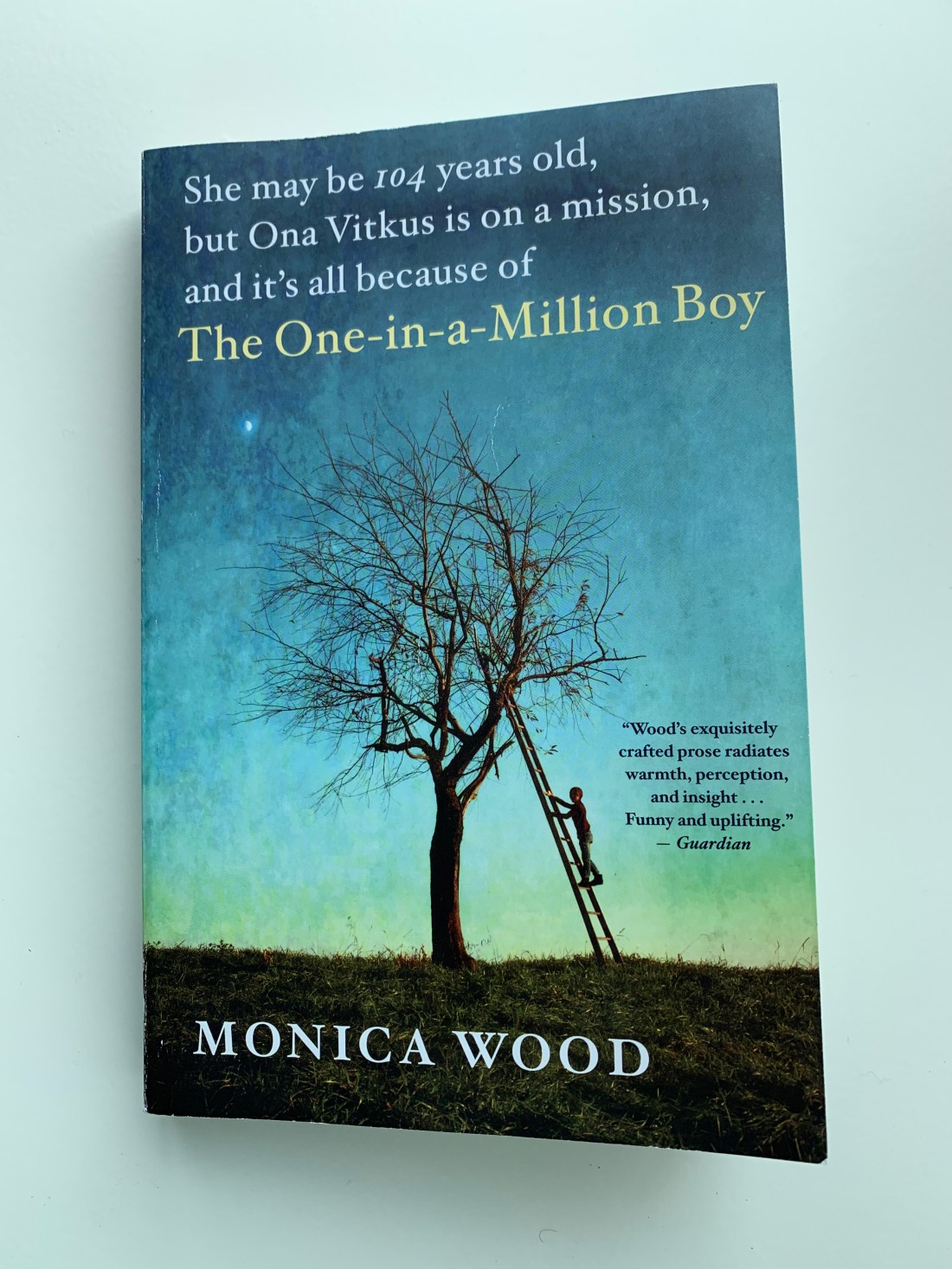
The One-in-a-Million Boy by Monica Wood: A Review

“These signs of care made him careful. He wanted to be generous – no to appear generous, but to be so.” – Monica Wood, The One-in-a-Million Boy


The One-in-a-Million Boy defines the word bittersweet. In many ways, this novel is about grieving but ultimately it is about how through a life remembered, we can become more than who we were before.

The boy, who is never named, dies of a one-in-a-million complication with his medication. Left behind are a 104 year-old woman named Ona, who had befriended the boy just months before his death, and his twice-divorced parents, Belle and Quinn. In case your are worried about the premise of this novel, I will say right off the bat that I am not interested in books that use the death of a child as a kind of cheap trick to invoke an emotional response in the reader.

But this is not that kind of book.

Although Woods is certainly using the boy’s death as a way of exploring heavy subject like grief and regret, she does this with a high degree of sensitivity and at no point did I feel that she was trying to exploit the reader’s emotions. On the contrary, I think the book does an excellent job of making the reader understand why the boy was so special to the adults in his life in ways that felt very real. The boy dies before the novel opens, but he feels very present throughout because of the people who cared about him. Wood uses his loss to gently probe the ways her characters react to their grief: Ona becomes determined to see through the plans she and the boy had made to get her into his beloved Guinness Book of World Records, Belle is completely undone by the loss of her son and Quinn feels he has no right to grieve because he was a largely absent father who struggled to connect to his quirky son while he was alive.

A novel like this risks tipping into sentimentality but Woods keeps this from happening by using moments of humor and sadness in equal measure. We get a sense of the boy through Ona’s memories of him, and the meticulous lists he kept to help him navigate his world. Ona is first introduced to the boy as a Scout who is tasked to help her around her house for 10 Saturdays. When the boy doesn’t show up one week, his father arrives instead, dedicated to seeing his son’s task through to completion. The relationship that develops between Ona and Quinn is the driving force behind the plot, but the boy’s influence is a constant undercurrent as the events of the novel unfold.

If heart-warming stories appeal to you, then I think it’s hard to go wrong with The One-in-a-Million Boy. It will have you laughing and crying, sometimes on the same page. Until next time, happy reading!