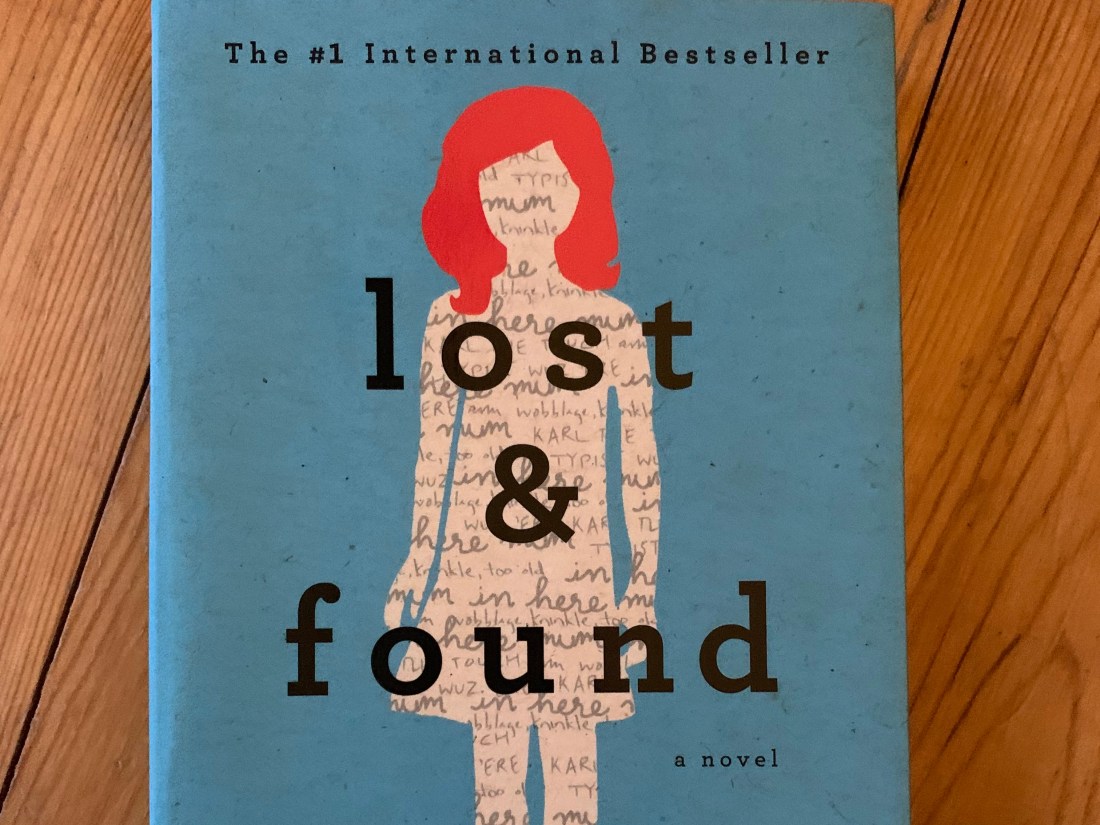
Bonus Book: Lost & Found by Brooke Davis

“The start date and the end date are always the important bits on the gravestones, written in big letters. The dash in between is always so small you can barely see it. Surely the dash should be big and bright and amazing, or not, depending on how you had lived.” – Brooke Davis, Lost and Found

This novel opens with three characters: seven-year old Millie Bird has red hair and wears red rain boots and is otherwise a pretty normal kid until her mother abandons her in a department store.  Agatha Pantha is eighty-two and hasn’t left her home since she was widowed seven years ago. She fills her days following a strict schedule and yelling her criticisms of passers-by from her living room window. Karl the Touch Typist is eighty-seven and escapes from a nursing home. This unlikely trio are brought together in search of Millie’s mother and a kind of coming-of-age road trip ensues.

I looked at some reviews for this book and some people criticized it because it’s not realistic. I want to be clear from the start – the story line isn’t meant to be particularly realistic. I mean, who expects a story of a seven-year old and her two octogenarian sidekicks taking off across Australia to find a mother who left her own daughter under a rack of ginormous women’s underwear in a local store to be realistic? But I digress.

This novel is heart-warming and funny and sad. In their search for Millie’s mom, all three characters learn more about themselves and the value of friendship than they anticipated.  The chapters move between the three main characters and through their narration, the reader gets a sense of Millie’s fear and loss, Karl’s kindness and Agatha’s fierce, cranky determination. Their voices come together to weave a quirky story about all things lost and found.

Is it too late to pick it up as a belated Jolabokaflod gift to yourself? I think not. I hope you read it and enjoy it as much as I did.
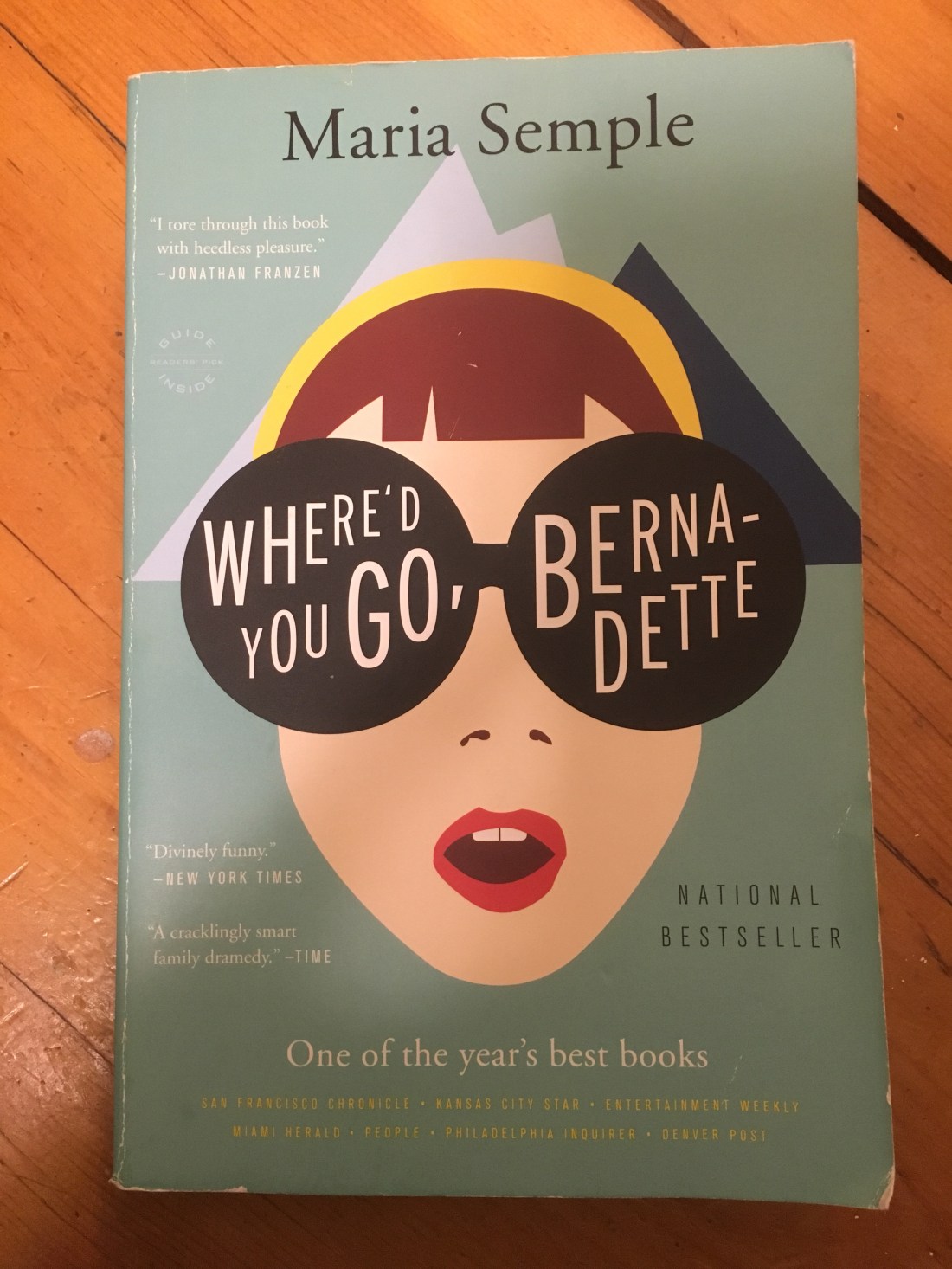
Bonus Book: Where’d You Go, Bernadette, by Maria Semple

“That’s right,’ she told the girls. ‘You are bored. And I’m going to let you in on a little secret about life. You think it’s boring now? Well, it only gets more boring. The sooner you learn it’s on you to make life interesting, the better off you’ll be.” – Maria Semple, Where’d You Go, Bernadette

In terms of getting out of here, Where’d You Go, Bernadette definitely fits the bill. It’s another novel that I find myself frequently recommending to friends and coworkers and just about anyone who will listen, really. Maria Semple, the novel’s author, was a former writer on Seinfeld and this novel sings with funny, sharp writing that touches the heart. Bernadette is a genius, an architect, mother, wife, and she is agoraphobic. Increasingly, Bernadette cannot leave her house for even the simplest errands, but when her fifteen-year-old daughter, Bee, gets straight As on her report card, Bernadette is supposed to honor her promise to take Bee on a trip to Antarctica. Then Bernadette disappears. It is left up to Bee to try to figure out what happened to Bernadette and the story follows her attempts to navigate a path that will lead her back to her mother.

I love this novel because the plot manages to be so unexpected while the themes deal with the familiar: what it means to be family; how far will we go for someone we love; how much of us is who we feel we are, and how much is how others perceive us? There is a dogged hope in Bee that just won’t give up because no matter what, she loves her mother and she is going to find out what happened to her: “I can pinpoint that as the single happiest moment of my life, because I realized then that Mom would always have my back. It made me feel giant. I raced back down the concrete ramp, faster than I ever had before, so fast I should have fallen, but I didn’t fall, because Mom was in the world.” In this novel, there is adventure and humour and tragedy and love all rolled into one.

I confess, I have never seen the movie (and I don’t really want to in case it ruins the book for me), but if you are looking for something inspiring and different to read over the holidays, you might enjoy Where’d You Go, Bernadette. That’s it, that’s my pitch. Now, go get reading.

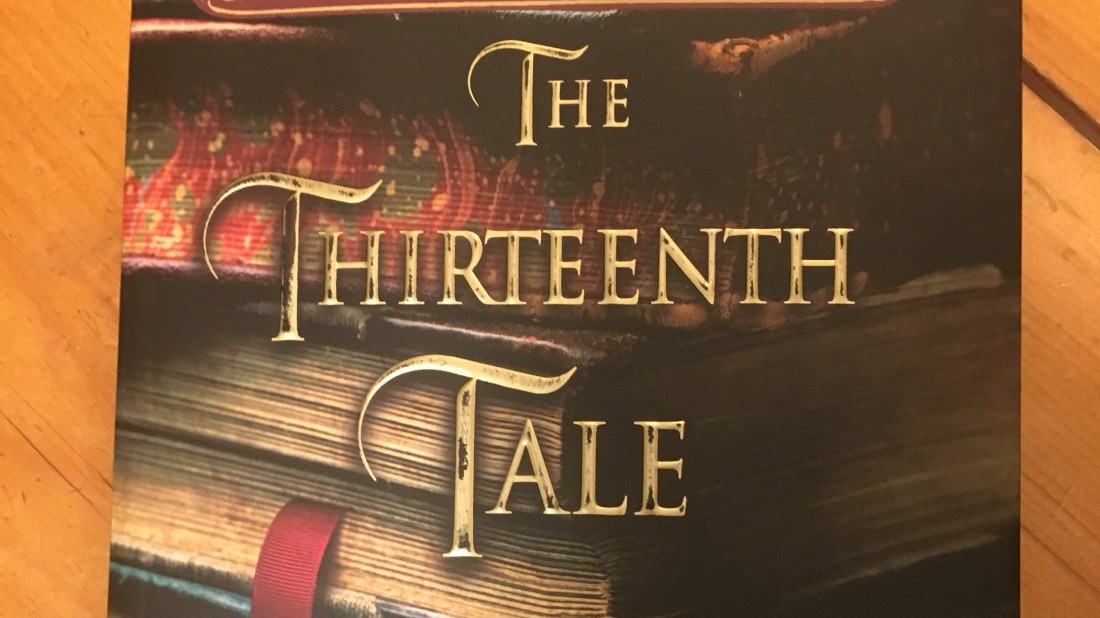
Bonus Book: The Thirteenth Tale by Diane Setterfield

“There is something about words. In expert hands, manipulated deftly, they take you prisoner. Wind themselves around your limbs like spider silk, and when you are so enthralled you cannot move, they pierce your skin, enter your blood, numb your thoughts. Inside you they work their magic.”
― Diane Setterfield, The Thirteenth Tale

This novel is by turns beautiful and disturbing. The narrative is set as a story-within-a-story as Margaret Lea, the main character, is asked to write the biography of Vida Winter, a bestselling author. Winter is notorious for making up conflicting accounts of her past to interviewers but her life is revealed through her interviews with Margaret, and some detective work Margaret does to ensure that she too, is not falling victim to Winter’s stories.

The book is a nod to the works of writers like the Bronte sisters and Victorian Gothic novels. There is a reclusive family, secrets, a sprawling country estate, twins who are doomed to be driven apart and even a few mad women for good measure (although these ones are not locked up in the attic). As Margaret untangles the truth of Winter’s past, she also makes peace with her own. Despite relying on classic elements of mystery and horror stories, Setterfield’s writing is unique and each piece of the past that is revealed keeps the reader guessing what will come next.

As a mystery novel, The Thirteenth Tale stands on its own but I think it really captured me because it is also a love letter to stories. Setterfield is a beautiful writer and much of the novel revolves around story – how her characters use it to create, reinvent, comfort and deceive:

“People disappear when they die. Their voice, their laughter, the warmth of their breath. Their flesh. Eventually their bones. All living memory of them ceases. This is both dreadful and natural. Yet for some there is an exception to this annihilation. For in the books they write they continue to exist. We can rediscover them. Their humor, their tone of voice, their moods. Through the written word they can anger you or make you happy. They can comfort you. They can perplex you. They can alter you. All this, even though they are dead. Like flies in amber, like corpses frozen in the ice, that which according to the laws of nature should pass away is, by the miracle of ink on paper, preserved. It is a kind of magic.”

I have recommended The Thirteenth Tale to a lot of people over the years. There is a kind of terrible beauty to the novel that left me thinking about it long after I had finished it. I hope it can make its way into your “To Read Pile” too.

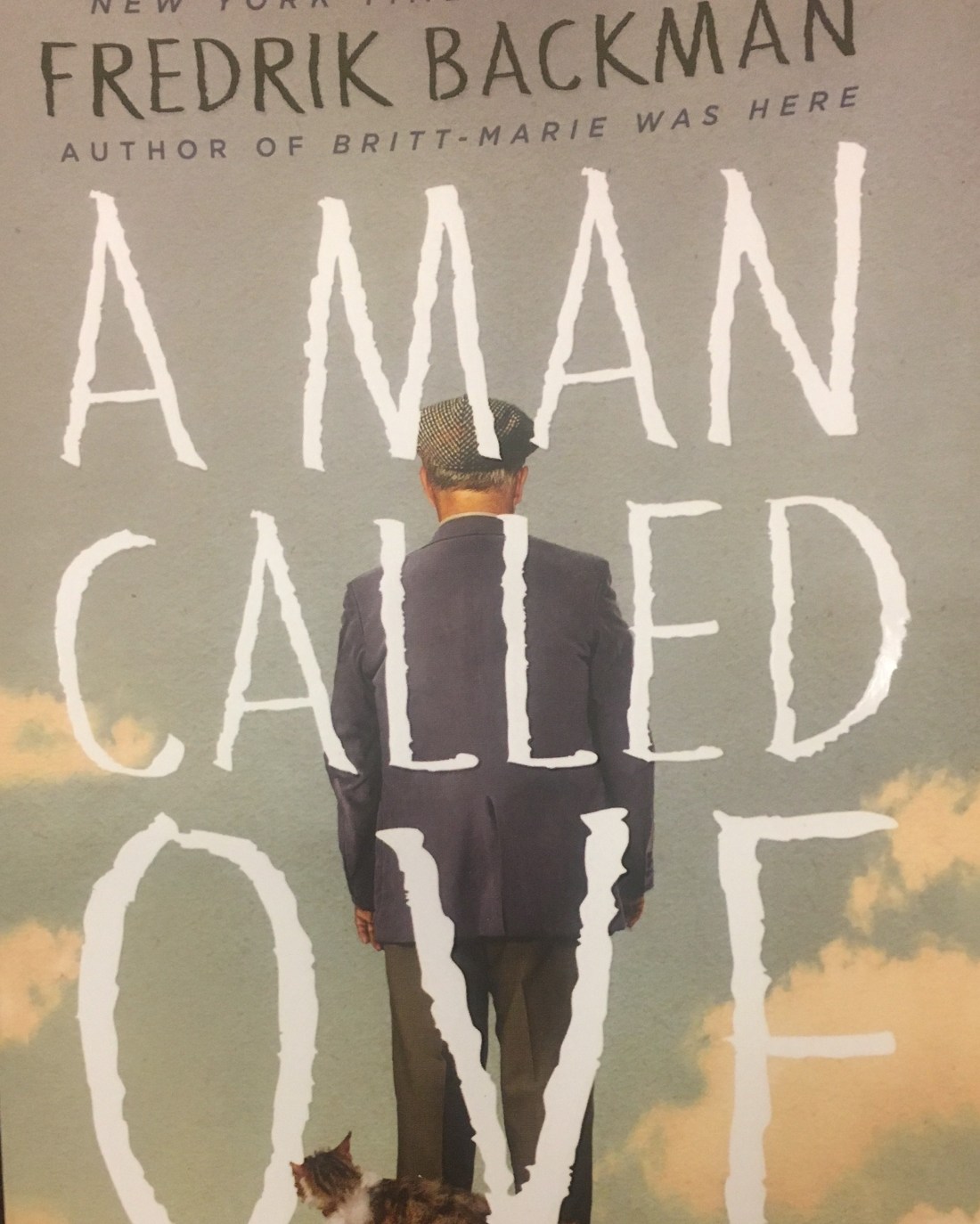
Bonus Book: A Man Called Ove by Fredrik Backman

Hello, hello, hello!

“Ove feels an instinctive skepticism towards all people taller than six feet; the blood can’t quite make it all the way up to the brain.” A Man Called Ove by Fredrik Backman

This. Book.

I loved this book. And I think you will too. Backman is a Swedish novelist but unlike all those dark, Nordic thrillers coming out of Sweden, his novels are hilarious and touching.  Ove is the classic grumpy old man. He lives his life by strict rules and he is not afraid to share his opinions with anyone who breaks them (he is the scourge of his residents’ association). He has a very short temper. He thinks everyone is an idiot. He is mean to the cat. In short, he is pretty unlikable. Except … he has just lost the love of his life, his wife, Sonja. Through his grief over her loss, we see a different side of Ove. Six months after her death, he prepares to take his own life.

Except he can’t.

Despite his careful preparations, the new next door neighbors back up their U-Haul improperly, flattening his mailbox and thus ruining his plan. He cannot leave this world with a flattened mailbox, especially one that has been flattened at the hands of idiots. What follows are a series of comic events that result in unlikely friendships. Backman had me laughing out loud at Ove’s antics and sometimes wondering what it would be like to be so free with my opinions. (Really, his manners are shocking). But the narrative also switches from the present to Ove’s backstory with Sonja which Backman describes with some beautiful images:

“Loving someone is like moving into a house,” Sonja used to say. “At first you fall in love with all the new things, amazed every morning that all this belongs to you, as if fearing that someone would suddenly come rushing in through the door to explain that a terrible mistake had been made, you weren’t actually supposed to live in a wonderful place like this. Then over the years the walls become weathered, the wood splinters here and there, and you start to love that house not so much because of all its perfection, but rather for its imperfections. You get to know all the nooks and crannies. How to avoid getting the key caught in the lock when it’s cold outside. Which of the floorboards flex slightly when one steps on them or exactly how to open the wardrobe doors without them creaking. These are the little secrets that make it your home.”

There is something about the way that Backman contrasts Ove’s gruff, cantankerous exterior with his tenderness for Sonja that makes his character so appealing. Backman strikes the perfect balance between comedy and sorrow in this novel. Like Eleanor Oliphant, Ove becomes an unexpected and unforgettable hero in his own small world. The novel explores grief but ultimately reveals how our connections to others helps us to heal.

So … I hope I’ve convinced you to read it. Go on, what’s one more book in your To Read Pile?

Have you read anything by Fredrik Backman? I’d love to hear your thoughts. Shoot me a comment or message. Until next time, happy reading!

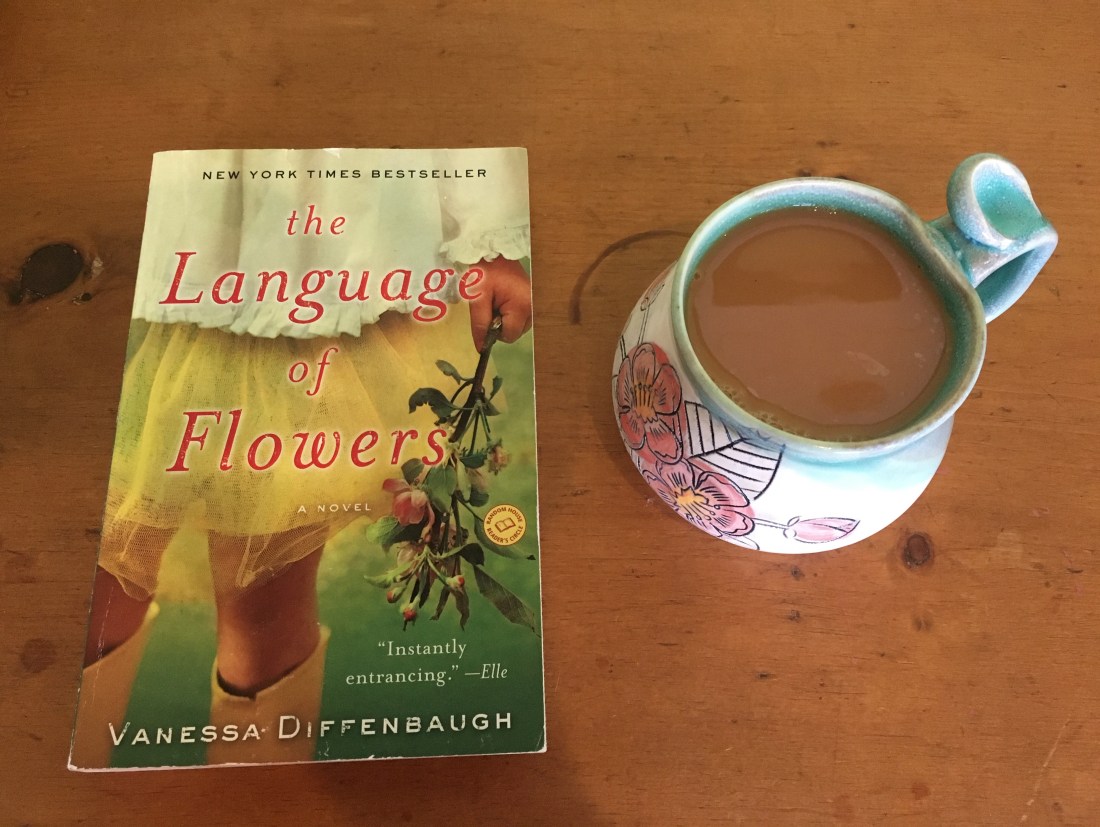
Bonus Book: The Language of Flowers by Vanessa Diffenbaugh

Hello, hello, hello!

“I’m more of a thistle-peony-basil kind of girl.” – The Language of Flowers, Vanessa Diffenbaugh

Thank you for stopping by to check out the first-ever Bonus Book post on my blog!  These are the books that I have read, loved and end up recommending to people over and over again. I hope that you find something here that appeals to you so you can add it to your own “To Read Pile”. Bonus Book posts will be short – they are essentially my elevator pitch to convince (or beg) you to read these books. So, here goes…

Why I love The Language of Flowers (and you should too):

My favorite novels usually have unusual main characters or story lines – this book has both. The protagonist, Victoria, has aged-out of the foster care system and the novel traces her experiences trying to navigate the world on her own. Victoria’s interest in the Victorian practice of using flowers to express emotion connects the reader to the characters and creates a surprisingly beautiful juxtaposition to the often difficult situations she has to overcome. The shifts in narrative from Victoria’s past to present are compelling and Diffenbaugh’s writing immersed me in the story from the first chapter. This is a novel about healing, human connection and struggling to overcome the past. By choosing to have Victoria grow up in foster care, Diffenbaugh also gives voice to that experience, often overlooked in our society, in a way that is deeply empathetic. When I first picked up The Language of Flowers, I could not get through it fast enough; Victoria’s story has stayed with me for years and I think it’s because through her, Diffenbaugh creates an unexpected story of strength and redemption that is both unique and ultimately very human.

So there it is – my pitch to you. I hope some of you go pick up The Language of Flowers and if you do, please let me know what you think!

I’d would really like to hear which books you love to recommend to others – maybe one will appear in another Bonus Book post. Post a comment or message me and let me know. Until next time, happy reading!

P.S. Pottery mugs are the other thing I just can’t resist. The one pictured above is one of my favourites created by Wabi Scotia Pottery.