Fear by Dirk Kurbjuweit: A Review


“We always live at least two lives, especially after a big decision: The life we decided on and the life we decided against. In our minds we let that other life play out, comparing it with our actual situation.” – Dirk Kurbjuweit, Fear.

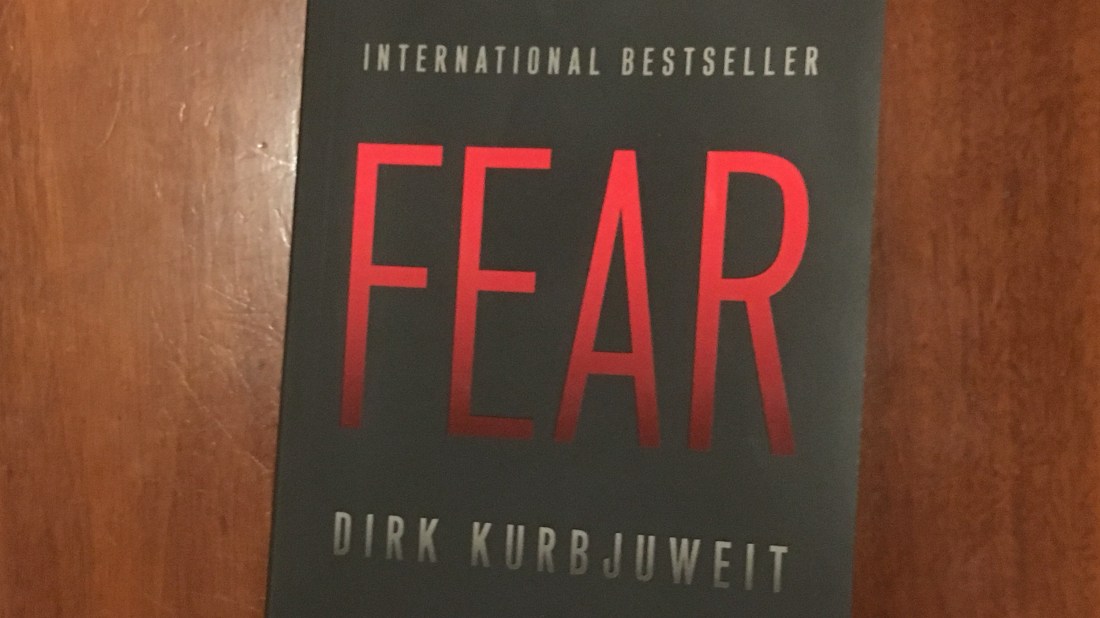
Happy weekend everybody! This week’s book was an interesting one. Fear is a German novel that poses the question: how far would you go if you were afraid for your family? Randolf Tiefenthaler, the narrator, is a relatively successful architect in Berlin. He has an intelligent and entertaining wife, Rebecca, two children and lives in a nice ground-floor flat. He thinks of himself as a law-abiding citizen, someone who values law over disorder, intellect over action, words over force: a modern man.

The novel unfolds as Randolf records the events that led up to his father being found guilty of manslaughter in the death of Dieter Tiberius. A man who grew up in the foster system and is essentially a shut-in, Tiberius lived in the flat below the Tiefenthalers and became obsessed with Rebecca. He writes letters and poems that both threaten and disgust the Tiefenthalers; he accuses them of abusing the children, he calls the police on them repeatedly. He watches Randolf’s children when they play outside on their trampoline. He peers in their windows at night. The Tiefenthalers become increasingly afraid for themselves and their children. What if Tiberius does something to the children? What if the police believe his stories? The problem is, despite terrorizing the family, Tiberius has not broken any laws – the lawyers, the police, and their landlord claim that their hands are tied. Until Tiberius breaks the law, there is no one who can help the Tiefenthalers.

The situation forces Randolf to reevaluate himself and his life. He had long written off his father and brother (neither of whom are opposed to violence) as being lesser. As Tiberius continues to harass the family, Randolf questions himself as a father, a husband and ultimately a man. As a young person he rejected his father’s enthusiasm for guns and his brother’s preference for solving problems with his fists. He put his faith in law and logic. But then the law fails. Not knowing what else to do, Randolf turns to his father, knowing what he is asking him to do. When the story begins, Tiberius is dead and Randolf’s father is serving a jail sentence for his killing.

The author forces the reader to confront a lot of questions about morality throughout the novel. Dieter Tiberius is the obvious villain but Randolf and Rebecca are flawed as well, they have characteristics that are not very appealing: Randolf lies to his wife and shirks his family responsibilities, Rebecca throws screaming fits. Their marriage is falling apart. And then Tiberius comes into their lives and somehow they become better people – and worse – because of their experiences with him. They pull together as a family in a way that was unlikely before the harassment began: and then the characters must ask themselves, what does it mean if the good you experience in your life is a direct consequence of the evil? How far would you go to protect that goodness?

I think this novel is really much more intellectual that the genre would lead readers to expect. It is a thriller but the fear isn’t so much driven from the plot, but from the kinds of questions it poses: what would you do if your spouse was threatened? Your children? What kind of person does it make you if you couldn’t make yourself do what it took to protect them? Dieter Tiberius is like a nightmare figure – the threat he poses is the fear he creates in the characters’ minds. For me, this was a much more satisfying book than last week’s in a dark, dark wood. The way the narrative is structured make it feel very real, like this was something that could happen to anyone at any time. That is what makes it so compelling as a reader because as Randolf questions his decisions and tries to make sense of what happened, the reader can’t help but ask themselves the same questions.

If you read Fear, drop me a note and let me know what you think. Until next week, happy reading!
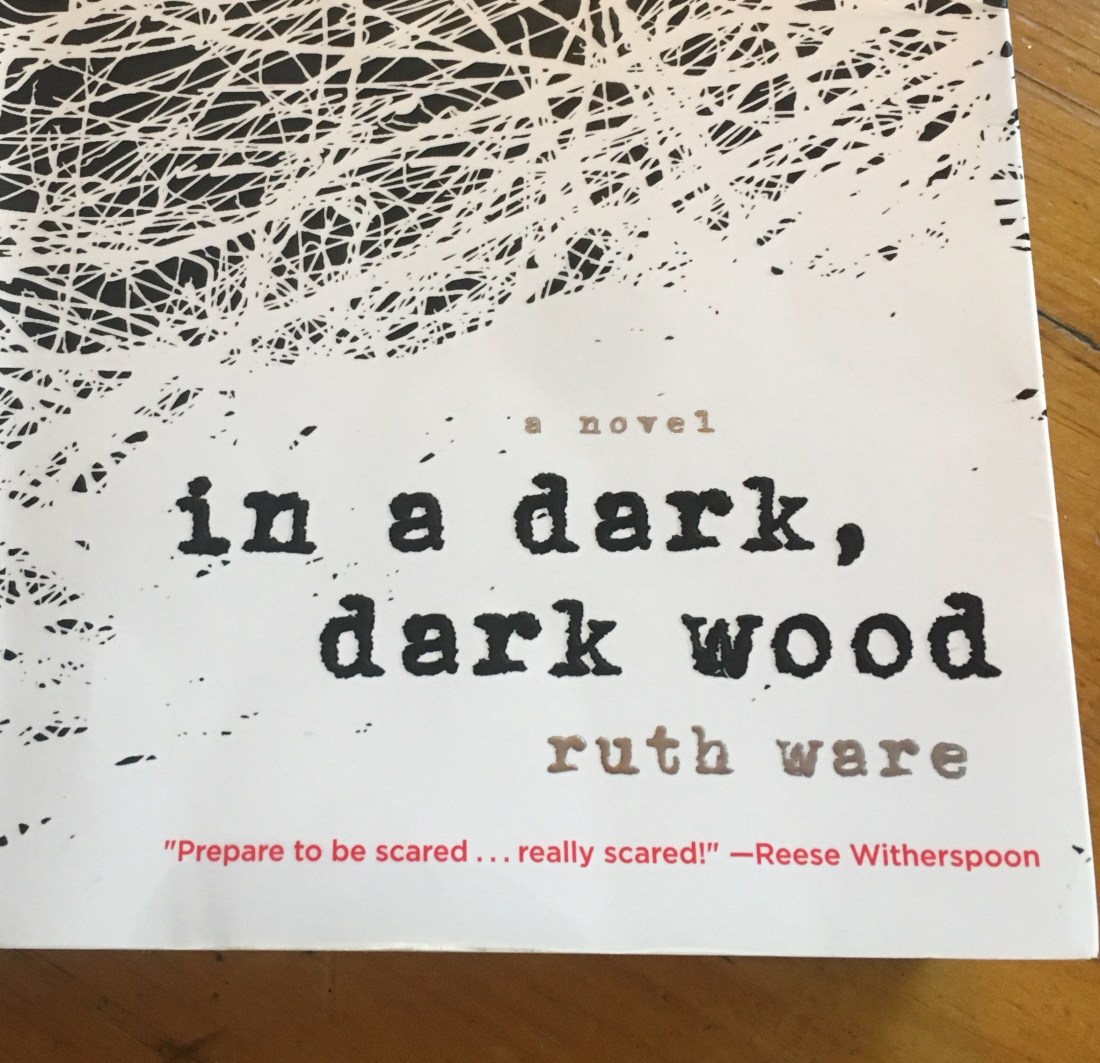


in a dark, dark wood by Ruth Ware: A Review

“For some reason his words made me shiver. Perhaps it was the tree trunks, like silent watchers in the growing dark.” in a dark, dark wood, Ruth Ware

I will give Ruth Ware this: in a dark dark wood begins with a compelling hook. Imagine one day you get an invitation. Imagine that your childhood best friend is getting married and her maid of honor has invited you and a select group of other people to spend a weekend away for her hen do (that’s British-speak for a 48 hour bachelorette party). Now imagine you haven’t seen or spoken to that childhood friend since you skipped town a decade ago. Would you go? Oh, and the hen weekend is in a glass house in the woods in the middle of nowhere. That is the choice that faces Nora, the main character, in the opening chapters of the book.

In some ways, this novel follows the same patterns as a lot of contemporary domestic thrillers like Girl on the Train or The Woman in Cabin 10. When the novel opens, Nora is in hospital. There has been an accident but she can’t remember what happened; she thinks someone might be dead. The story line moves back and forth between Nora’s present, trying to piece together what happened, and her past when she reluctantly agreed to go on the hen weekend. As the novel shifts from present to past and back again, Ware does the same with Nora’s character development, revealing her solitary life in London and eventually her back story as a girl (known as Lee to her friends) growing up in Reading. As the reader pieces together the fragments that Nora remembers with her past experiences as Lee, darker secrets are revealed. What’s interesting is that despite following the popular style of genre, Ware also gives a nod to classic locked room mysteries – six guests in a house in the woods, no cell reception, everyone seems to know something that the others don’t, and then something very bad happens…

I don’t want to say too much about the plot in case you are planning on reading in a dark, dark wood but I did like the interplay between classic and contemporary thrillers in this novel.  (And Flo, the maid of honor and bride’s bff who turns out to be a little Single White Female, is pitch perfect). The one issue I had with the book is that much of the plot hinges on a romantic relationship that has left Nora brokenhearted and explains why she lives such a solitary life. That would be understandable, except that the relationship ended ten years ago when she was sixteen. Maybe I’m just not a romantic, but to me that was a little hard to believe and left me feeling a little apathetic about some of the events that occurred as a result.

If you have read in a dark, dark wood, send me a note and let me know what you thought. Until next time, happy reading!

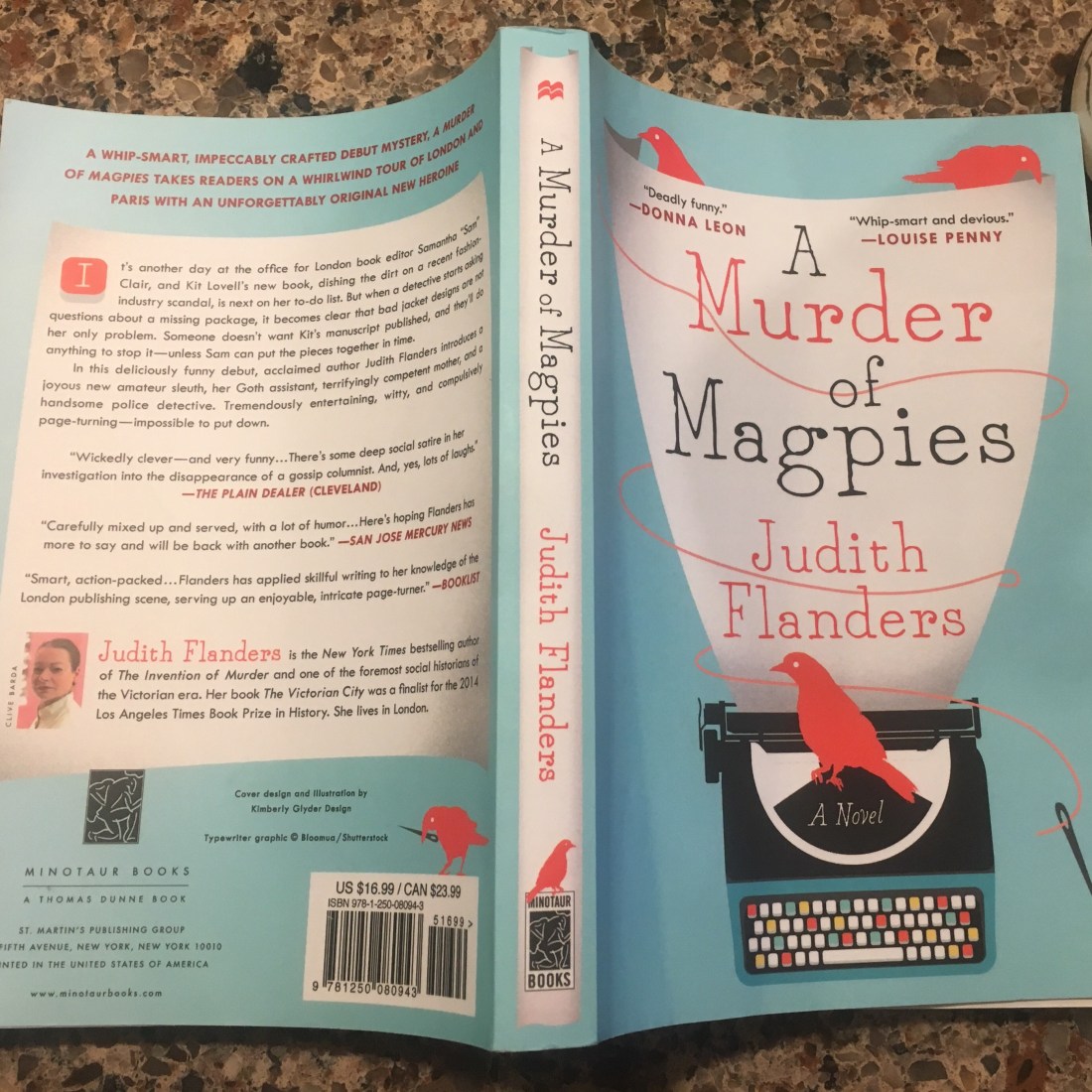
A Murder of Magpies by Judith Flanders: A Review

“I couldn’t really summon any enthusiasm for the idea that Kit’s disappearance had anything to do with his journalistic life. I was sure plenty of people disliked him, or were jealous – he was successful and he didn’t suffer fools gladly. Although who did? Were there fool sufferers who lined up, panicked there might not be enough fools to go around?” – A Murder of Magpies, by Judith Flanders

Happy October, everyone! If you like mystery, then A Murder of Magpies might be for you. The main character, Samantha Clair, works in publishing but becomes an amateur sleuth after one of her authors suddenly disappears. For the most part, the book follows the conventional lines of a whodunnit but Flanders incorporates a lot of elements that keeps her mystery feeling fresh rather than clichéd. Sam is a fiercely independent woman with a self-deprecating sense of humor. Her witty observations about her own actions and the actions of other characters give the story a tongue-in-cheek feel as Flanders pokes fun at the publishing industry, office politics, lawyers, mother/daughter relationships and just about anything else that crosses her path.

The mystery itself has a very contemporary feeling: a successful fashion journalist, Kit Lovell, disappears after preparing to publish a book connecting the suspicious death of a leading fashion designer to corruption and organized crime in the world of haute couture. In her attempt to find out what happened to Kit, Sam uncovers fraud, money laundering and has to consider that her friend has been murdered for uncovering the story. And at the same time, Sam has to figure how to tell her most successful author that the “blockbuster” she just handed in for editing is a complete dud. It is easy to get through this book quickly because the pace of the novel keeps you turning the page as Sam tries to simultaneous balance her full-time job as an editor with her newfound role as an amateur detective.

Two dimensional characters can be a pitfall of the mystery novels, but Flanders’ characters are well-developed and appealing. Sam’s mother is a very successful lawyer who is willing to help her daughter bend (ok, break) a few laws to help find Kit. Sam’s personal assistant is a goth millennial, her biggest rival at work is a pompous jerk named Ben. The officer assigned to the case is Jake Fields, who is by turns impressed and exasperated by the intelligence and tenacity of Sam and her mother as they mostly ignore his demands that they leave the detective work to the police. At every turn, the female characters in this book are clever, strong and resourceful. Sam goes toe-to-toe with high-powered attournies, the CEO of an international congolmerate and suspected criminals. If Inspector Field is looking for a damsal in distress to rescue, he won’t find her in this novel.

I won’t say much more because I don’t want to spoil it for anyone who wants to read A Murder of Magpies but as mysteries go, this one is bright and fun – equally as readable for its compelling characters and dry humour as for its complex mystery.

Are you reading a good mystery this fall? Drop me a comment and let me know! Until next week, happy reading!

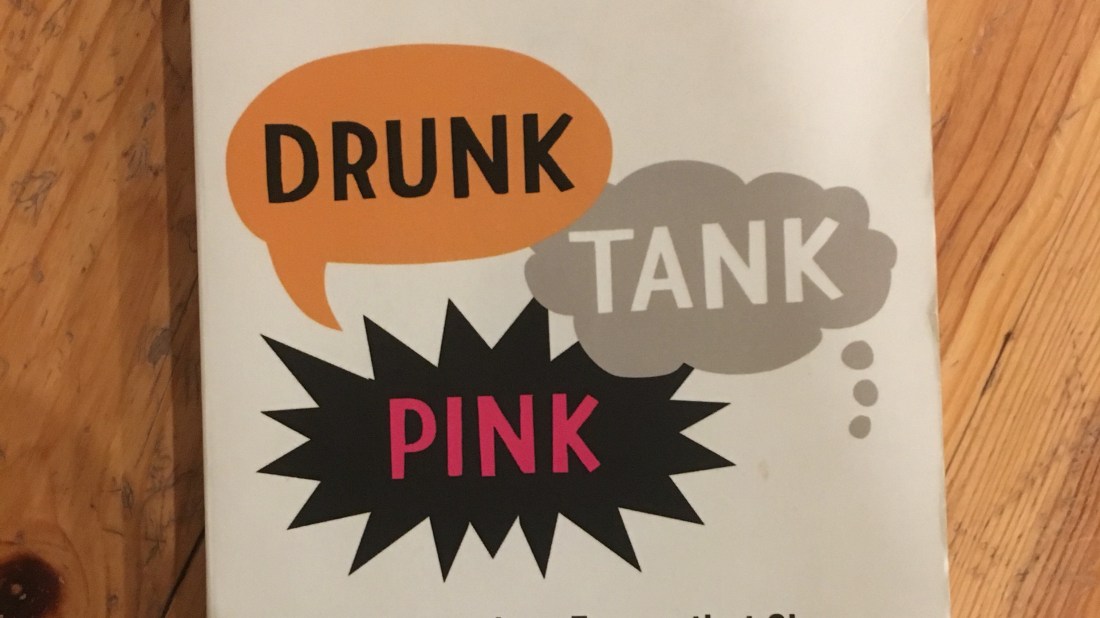
Drunk Tank Pink by Adam Alter: A Review

“Labels, like names, shape how we view the world … the people we label as “black”, “white”, “rich”, “poor”, “smart” and “simple” seem blacker, whiter, richer, poorer, smarter and simpler merely because we’ve labelled them so.” – Adam Alter, Drunk Tank Pink

Maybe this is going to sound a bit weird because it is a science book but reading Drunk Tank Pink was kind of well, … fun. Adam Alter reveals all kinds of brain-based phenomena that are interesting, quirky and ultimately enlightening. The book is divided into three sections: The World Within Us, The World Between Us and The World Around Us. Within each section, Alter further breaks down his themes into things big and small – culture, names, colours to name a few. The purpose of the book is to reveal how subconscious forces affect how we think, feel and behave. If you have ever wondered how someone’s name shapes their identity and maybe their future, if exposure to the colour red affects for academic abilities or what makes us feel more or less competitive, these are the kinds of things Alter tackles in his book. His background is an interesting combination of marketing and psychology and his research focuses on decision-making and social psychology. He uses research from his own studies and those of many other psychologists and social scientists to reveal some pretty unexpected ways in which our brains work.

If the science scares you, it shouldn’t. Alter’s writing style is very easy to read and he connects the science to everyday things like watching TV, playing chess and choosing a paint colour to make it relevant and clear (even to an arts major like me). While he describes numerous studies that have been performed in the last several decades, his writing is straightforward and clear – you certainly don’t need a PhD in psycology to understand where he is coming from.

What I found most compelling about this book was how Alter was able to tie seemingly unrelated studies together to comment on much broader social and cultural phenomena. The kinds of issues we address as a society in terms of race and class are actually to some extent linked to the ways our brains are primed to process information. And often its unconscious. We aren’t even aware of the associations we are making or the ways in which the beliefs we already hold are shaping (and sometimes even distorting) new information our brains are presented with. While reading Drunk Tank Pink may feel like a mashup of pop culture (why do more people prefer Coke to Pepsi?) and pop science (turns out men produce more testosterone and take more risks in the presence of a beautiful woman), Alter ends each section with some bigger comments about how the trends that social scientists are identifying in their studies speak to the trends we see in the wider world. If you like books like Freakonomics or the work of writers like Malcolm Gladwell, then you will enjoy Drunk Tank Pink.

And if you’ve been waiting this whole time for me to tell you what the heck ‘drunk tank pink’ even means, well, you should probably read the book too …

Are you planning on reading any of the October line up? Drop me a comment and let me know. Until next week, happy reading!
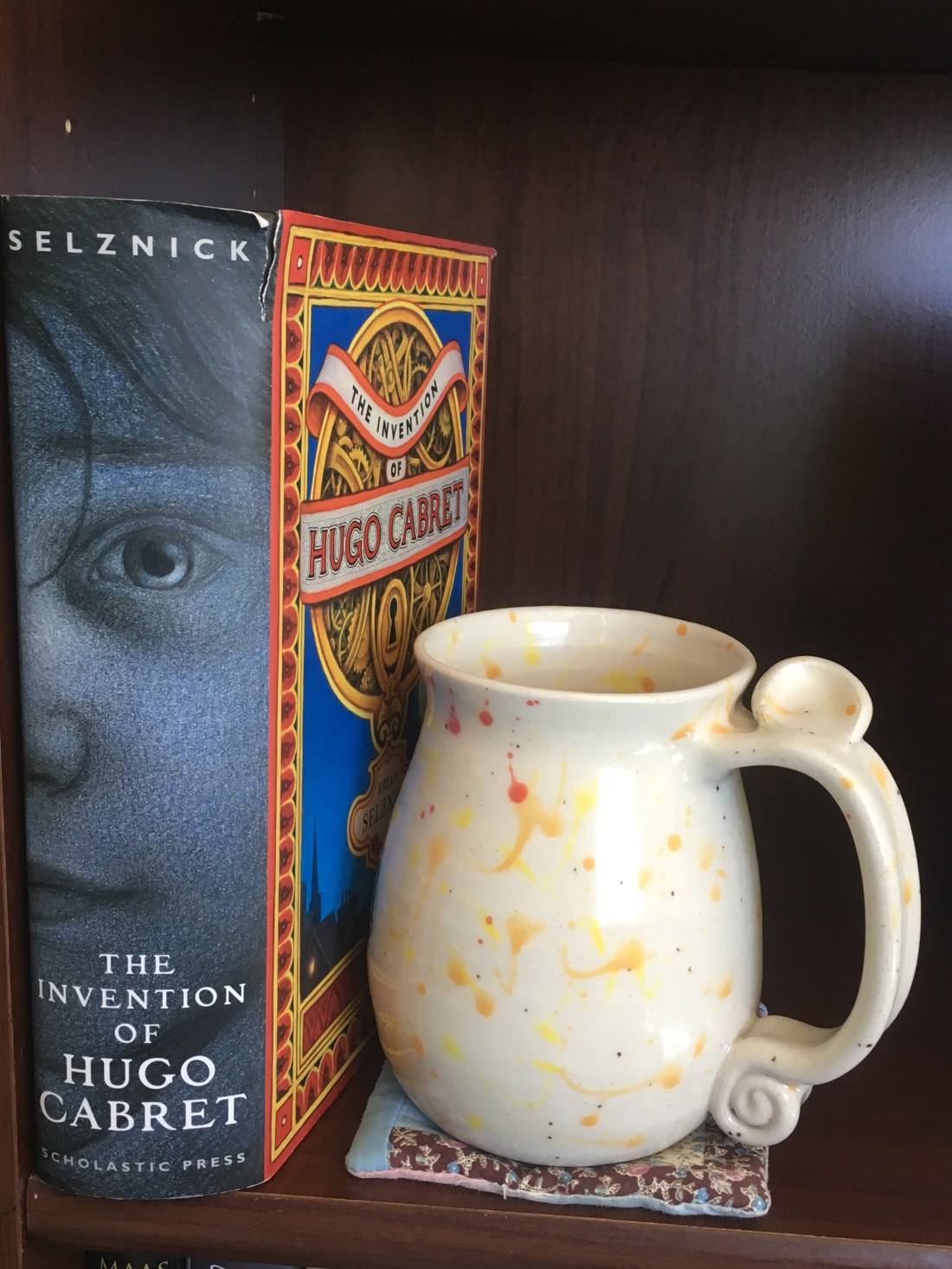
The Invention of Hugo Cabret: A Review

Throwback Thursday!

“The story I am about to share with your takes place in 1931, under the roofs of Paris. Here you will meet Hugo Cabret, who once, long ago, discovered a mysterious drawing that changed his life forever.

But before you turn the page, I want you to picture yourself sitting in the darkness, like the beginning of a movie. On screen, the sun will soon rise, and you will find yourself zooming toward a train station in the middle of the city. You will rush through the doors into a crowded lobby. You will eventually spot a boy amid the crowd, and he will start to move through the train station. Follow him, because he is Hugo Cabret. His head is full of secrets, and he’s waiting for his story to begin” – The Invention of Hugo Cabret, by Brian Selznick

Sometimes the opening of a novel has me leaning in, kind of holding my breath in anticipation of where it is about to take me. Can you feel that? Are you following Hugo through that Parisian train station in your mind? I took the opposite road into this book than I normally do; I saw the movie first. The movie is called Hugo and it was so magical and touching that after watching it last winter with my kids, I wanted to go find the novel that inspired it. The story follows a young boy, Hugo, who has been orphaned. He lives in the walls of a train station in Paris and steals to survive. He also steals to get the parts he needs to rebuild his automaton – a mechanical man that is the last thing he has that remains of his father. When Hugo is caught stealing from the toy store in the station, his life changes. What follows is ordinary magic: movies and books, friendship and family – breathing life into the past.

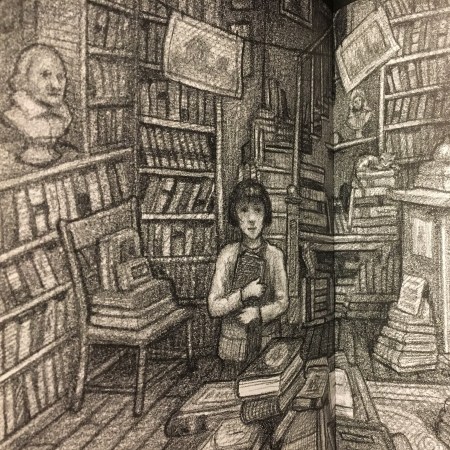
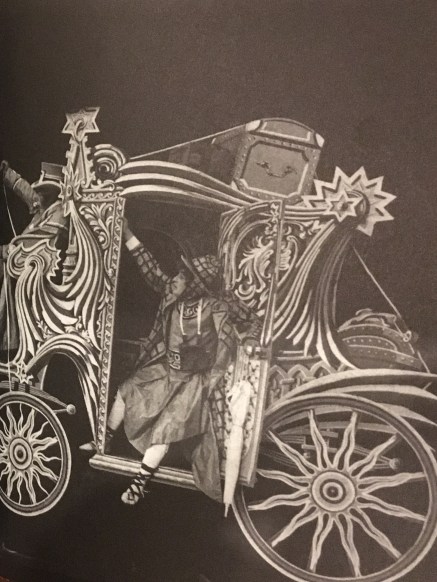
The reason I wanted to feature Hugo Cabret this month is because it made me see books in a different way. The author, Brian Selnick tells the story in traditional text and pencil drawings that are arresting in and of themselves. What makes the novel so unique is that his art doesn’t accompany the text, it replaces it –  for pages and pages – so the story is literally told in words and images. His ability to flip between the two mediums allows him to convey different aspects of the story in a way that is so compelling – he creates an intimacy through the words and drawings that is unlike conventional novels.

img_3691.jpg

Selznick’s inspiration for the book was, ” … a book called Edison’s Eve: A Magical History of the Quest for Mechanical Life … the book told the true story of a collection of elaborate, mechanical wind-up figures (known as automata), which were donated to a museum in Paris. The collection was neglected in a damp attic and eventually had to be thrown away. I imagined a boy finding those broken, rusted machines, and at that moment, Hugo and his story were born.” In his attempt to fix the automaton, Hugo meets Isabelle and her guardian, Papa Georges. This meeting also brings Hugo into the world of movies, something his father had loved,  and Selznick includes stills from the early films Hugo and Isabelle watch to further his story.

img_3726.jpg

The combination of text, art and film all serve to reinforce the important role that stories play in our lives. Selznick’s decision to root the fantastical story of Hugo’s experience in the history of automata and early film makes it both more believable and more magical. This is a beautiful book – both in terms of the story it conveys and the ways in which Selznick is able to combine the text with his drawing and the archival photographs. Whether it is for you, or for a young person in your life, I think The Invention of Hugo Cabret is a book that can really be savored for the way it celebrates story and art by getting us to follow Hugo through that train station in Paris a long time ago.


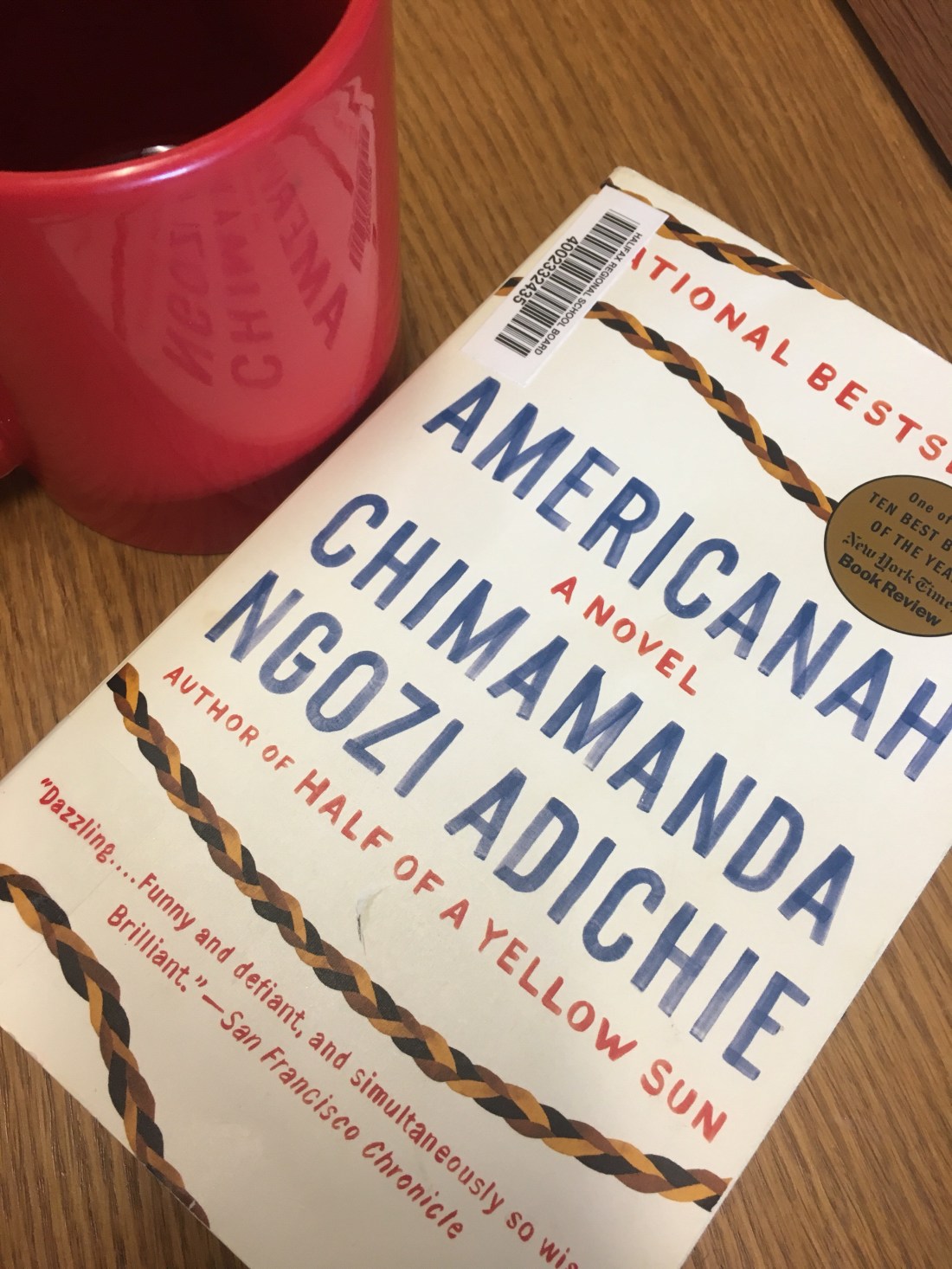
Americanah by Chimamanda Ngozi Adichie: A Review

Hello, hello, hello!

One of the things I have always thought most valuable about books is their ability to put you squarely in someone else’s shoes. As a reader, you have the opportunity to live in many places, in many times and see the world through other people’s eyes. I think readers are naturally curious and books fulfil our desire to know, “what would it be like …?” Reading makes us more empathetic, more aware of the experiences of others whose lives do not mirror our own. And this makes our world bigger and our vision clearer. That is how I felt reading Americanah.

The novel traces the experiences of Ifemelu as she moves from her native Nigeria to the United States and back again. Adichie deals with themes that are ever-present in the modern world: she explores how race, class and beliefs about immigration shape our identities. Adichie is a powerful writer. When I told someone recently that I was reading Americanah, she responded with “whoa, that is a serious book!” It is serious, but not in the sense that the writing is dense or the narrative is overly complex. Ifem’s experiences make the reader reconsider their own cultural contexts. At one point in the novel, when Ifem says she wasn’t black until she came to America, it made me think about how so much of how we see ourselves and how we are understood by others is shaped not only by our character or actions but also how the broader culture perceives people who look like us. In Nigeria, almost everyone is black so it is not race, but more often ethnicity or class that become the dividing lines and Adichie explores these divides throughout the novel.

One of my favourite aspects of Adichie’s writing is her ability to address serious issues like gender inequality, race or class-based prejudices both in Nigeria and the US but still make them feel immediate to the character’s life and therefore to the reader. Ifem blogs about what it is like to be black in America as an outsider to the African-American experience; her choice of hairstyle (whether to relax, cornrow or go natural) becomes a statement of how she sees herself as a black woman; her relationships with boyfriends come to echo her search for the American Dream and then ultimately her return to her roots in Nigeria.

Adichie’s themes are increasingly relevant in the face of the shifting political rhetoric we are witnessing on the world stage lately. Her writing is compelling and Americanah is worth reading because it pushes readers to think and feel beyond their own contexts and to consider the world from another point of view. And maybe as readers we are able to build deeper understanding along the way.

October Line Up

Hello, hello, hello!

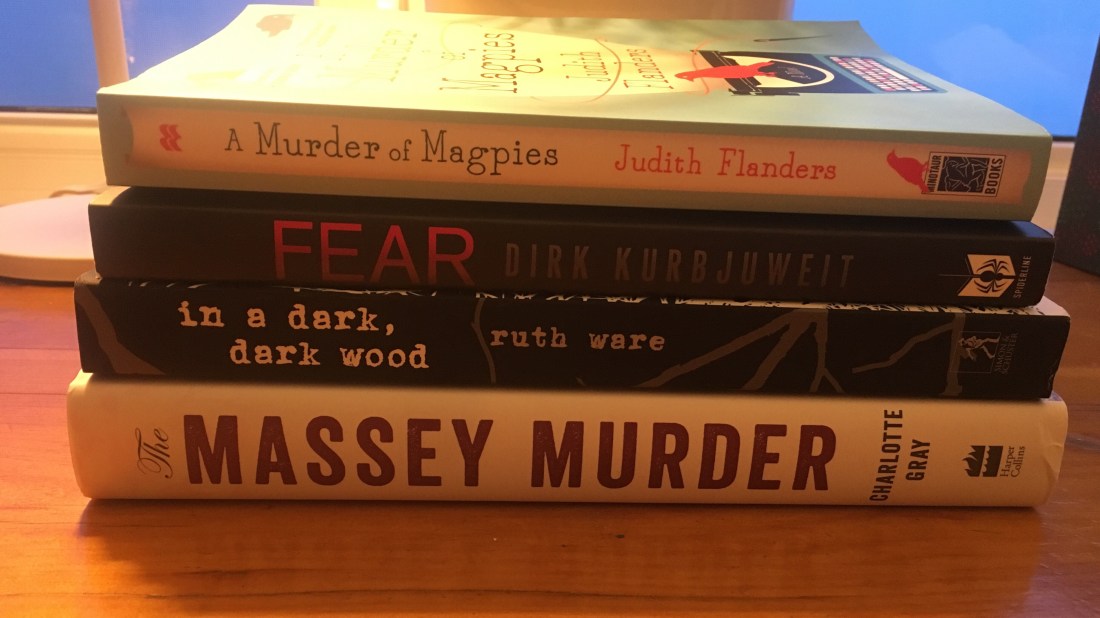
Welcome back! I hope you are ready for things that go bump in the night. October is one of my very favourite months: I love seeing the leaves changing, the nights getting longer, and there is something about an October moon that is equal parts eerie and enchanting. Winter is not quite upon us, Halloween is creeping in, and I start to feel that pull to find a cozy chair, curl up in a blanket and read some scary stories. Maybe you are like me and as a kid you stayed awake reading late into the night by flashlight because the book you were reading was just too scary and you couldn’t possibly go to sleep. I still love that shiver of fear that I get when I read a good mystery or thriller so this month for some All Hallow’s Eve fun, the theme is mystery and murder.

October 6: A Murder of Magpies by Judith Flanders. One of my best friends gave me this for my birthday and I’m really looking forward to reading it. I love mystery novels that feature a good amateur sleuth. I still get excited  (like, too excited) if someone brings up Nancy Drew. Seriously, do not mention Nancy to me unless you are ready for a chat: consider yourself warned. This book follows in that tradition. Its main character is middle-aged Samantha Clair, who works in publishing. One of her authors is about to release a tell-all on a scandal within the fashion industry and someone is willing to go to desperate lengths to make sure that doesn’t happen … and – you guessed it – Sam has to get to the bottom of it. As a bonus, this book is supposed to be really funny. What’s not to love?

October 13: Fear by Dirk Kurbjuweit. This book seems reminiscent of Herman Koch’s The Dinner, another clever and disturbing mystery which definitely had me up reading way past my bedtime. Fear begins with the father of the main character, Randolph, being imprisoned for murder. The narrative then follows the events leading up to the father’s incarceration. The story line is unsettling and questions the moral codes of middle class life. I like stories like this because they push the expectations of the genre and this often makes them resonate longer with me. (And if that hasn’t sold you, there is an obsessive neighbour named – wait for it – Dieter. I’m assuming you’re sold now.)

October 20: in a dark, dark wood by Ruth Ware. Okay, this one I just want to read because of the title. I confess that I am someone who will pick up a book because I like the cover, or the title, or even the endorsement (in this case, Reese Witherspoon). But listen to that title: in a dark, dark wood. There is something about the notion of a dark forest that elicits the unknown, the fear that you are not alone and that unseen eyes are watching – that something is coming. That fear that makes you want to turn on the light and double-check that you locked the front door. This book features a reclusive writer, an eerie glass house in the middle of the woods and mystery … just perfect before Halloween.

October 27: The Massey Murder by Charlotte Gray. I have read several excellent historical novels based on real crimes: Alias Grace by Margaret Atwood, Burial Rites by Hannah Kent, and Slammerkin by Emma Donoghue to name a few. I am always interested in how the authors were able to weave together the actual events in such a way that brought history to life and that interest lead me to The Massey Murders. This book is non-fiction and recounts the murder of a member of one of Canada’s wealthiest families in 1915. His eighteen-year-old maid quickly confessed and what followed was a sensational trial. The history buff in me couldn’t leave this one on the pile.

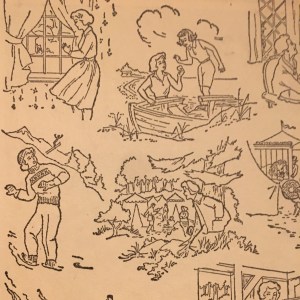
So, that’s it for this coming month. Please let me know if you plan to read along with any of this month’s books, or if you’ve already read them – I love hearing what you think! Bonus points for anyone who can recognize the end papers in the picture below – post a comment! Happy reading, everyone – don’t stay up too late…

img_3153
Book blog mystery …

Very Good Lives by J.K. Rowling: A Review

Hello, hello, hello!

“Had I really succeeded at anything else, I might never have found the determination to succeed in the one arena where I believed I truly belonged.” – Very Good Lives, J.K. Rowling

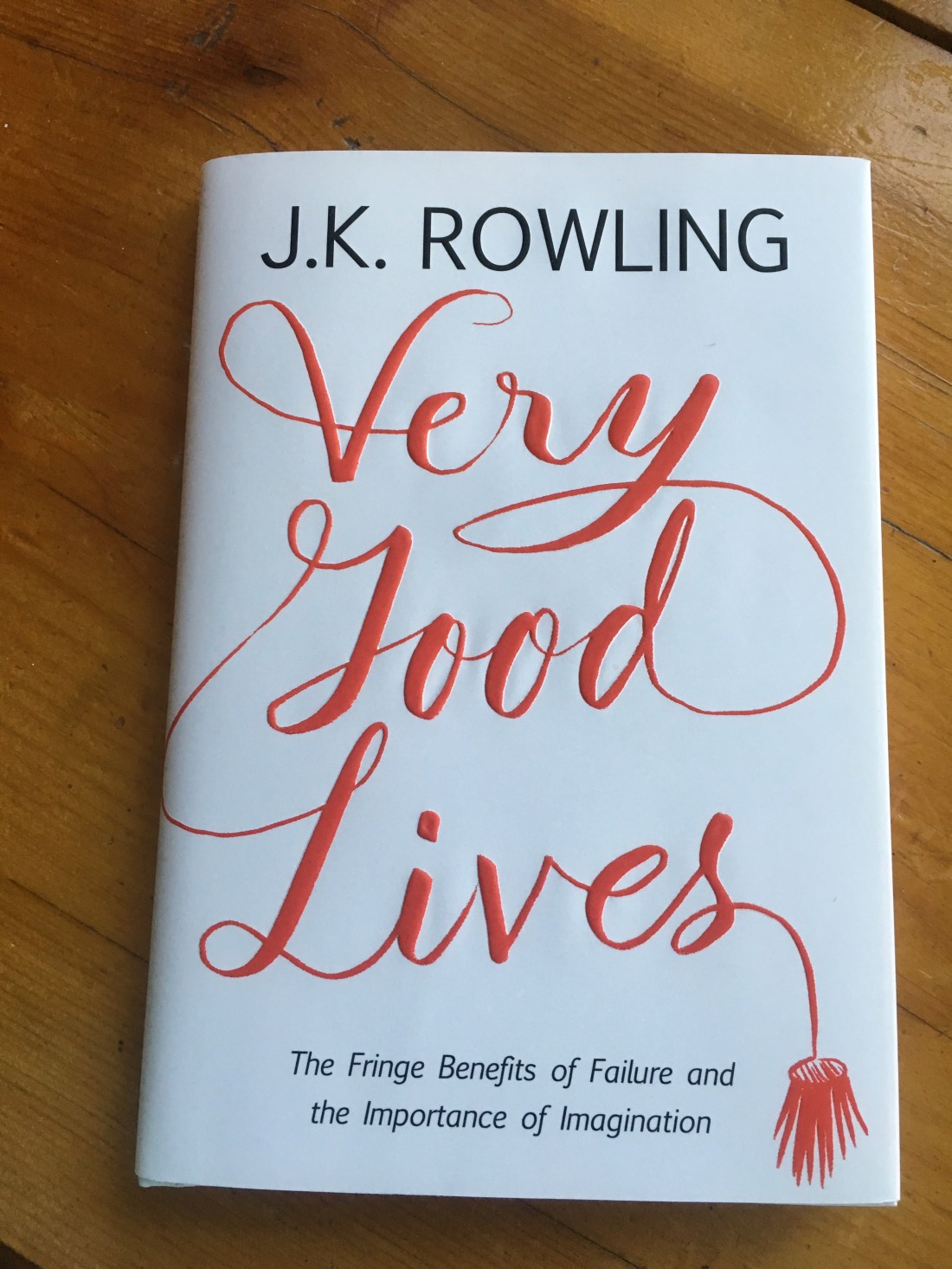
As a high school teacher, I have sat through a lot of graduation ceremonies. A lot. Graduations, like any ceremony, tend to follow fairly prescribed routines and it is really only when someone gets up to speak – a valedictorian, a visiting dignitary – that there is a chance to make a unique mark among all the pomp and circumstance. So maybe it was as a result of having sat through all these occasions that I was interested reading what J.K. Rowling had to say when she was asked to deliver the commencement address at Harvard University.

Rowling’s rags-to-riches story is well known, so when I saw her two themes were the benefits of failure and the importance of imagination, I thought she would be speaking about her experiences writing Harry Potter and the Philosopher’s Stone as an impoverished single mom.

I’ll admit I was being a bit cheeky in the September Line Up about my decision to purchase this book (which can effectively be read in less than twenty minutes) but in truth, proceeds from the purchase of the book go to Lumos, a charity founded by Rowling to help disadvantaged children and to provide financial aid for students attending university. The speech is complimented by simple but appealing graphics and I couldn’t help but think as I read it about what a beautiful gift it would make, maybe for someone starting a new chapter of his or her own life (please, no more Oh, The Places You’ll Go!) or someone who might need to see a failure as a chance to start fresh, or imagination as a means of changing the world around them.


“As is a tale, so is life: not how long it is, but how good it is, is what matters.” – Seneca

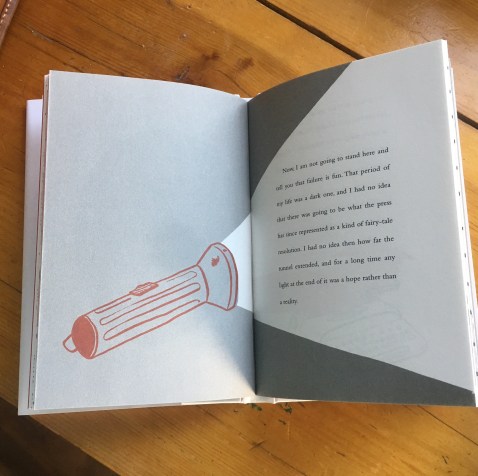
Rowling’s discussion of failure does not include how many publishers turned down her manuscript before she finally landed a book deal; instead, she focuses on the failures in her own life as being opportunities. After all, once you hit rock bottom (and Rowling’s experiences included a failed marriage, trying to raise her child on her own and having no money to speak of) there is nowhere to go but up. She does not romanticize the difficult parts of her life and she reminds readers that while the media likes to portray her life as having a fairy-tale ending, there was no way she could have known at the time that there was any light at the end of the tunnel. Instead she focuses on the benefits of failure: when you have tried and failed again and again, failure helps you to see yourself and what you value more clearly. As she herself states, if she had not failed as so many other things, she may never have found the courage to do what she really wanted to – write.

Her discussion of imagination is interesting too in that it is tied to her real-life experiences. As a young woman, Rowling worked in the UK for Amnesty International. Her experiences there both exposed her to the horrors people around the world were facing (many such people went through her office on a regular basis) and to the incredible kindness and reliance people can embody despite living through trauma. Rowling argues that it is through imagination that we can put ourselves into another person’s shoes and that once done, it is impossible to be blind and deaf to the suffering of others. Imagination is not just for the conjuring of fictional worlds but also allows us to move beyond our own life experiences to connect with the experiences those outside our reach. She also underscores that when we live a life of privilege – as many in her Harvard audience that day did – it is even more important to use imagination as a tool for empathy because otherwise privilege can act to insulate one from others’ realities. In Rowling’s mind, imagination is the tool that spurs us to act, to help, and to better understand.

I’m not going to say that this should be on the top of your to read pile, but I do think the speech reveals some important insights about the roles of failure and imagination and opportunities to consider them in new ways.

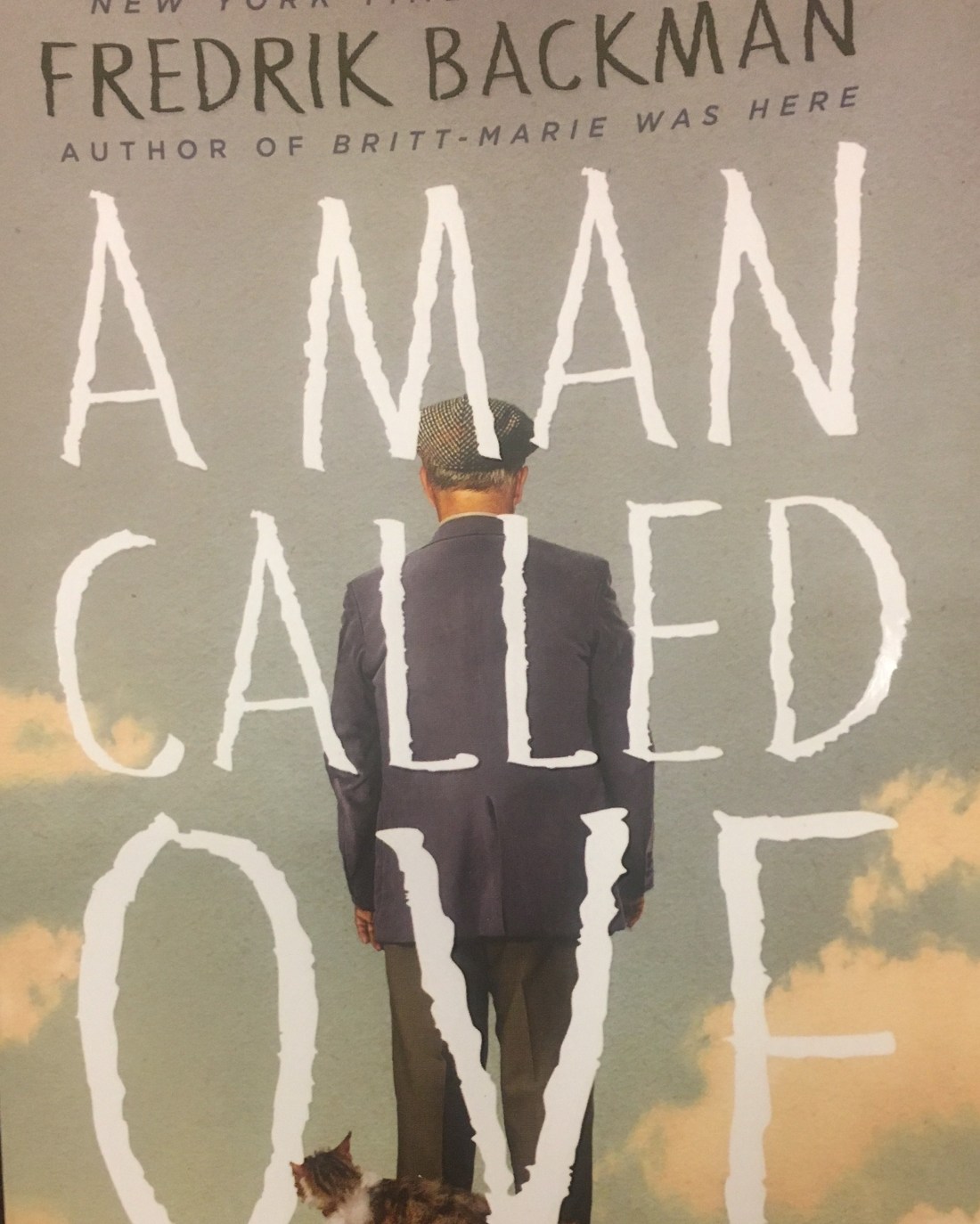
Bonus Book: A Man Called Ove by Fredrik Backman

Hello, hello, hello!

“Ove feels an instinctive skepticism towards all people taller than six feet; the blood can’t quite make it all the way up to the brain.” A Man Called Ove by Fredrik Backman

This. Book.

I loved this book. And I think you will too. Backman is a Swedish novelist but unlike all those dark, Nordic thrillers coming out of Sweden, his novels are hilarious and touching.  Ove is the classic grumpy old man. He lives his life by strict rules and he is not afraid to share his opinions with anyone who breaks them (he is the scourge of his residents’ association). He has a very short temper. He thinks everyone is an idiot. He is mean to the cat. In short, he is pretty unlikable. Except … he has just lost the love of his life, his wife, Sonja. Through his grief over her loss, we see a different side of Ove. Six months after her death, he prepares to take his own life.

Except he can’t.

Despite his careful preparations, the new next door neighbors back up their U-Haul improperly, flattening his mailbox and thus ruining his plan. He cannot leave this world with a flattened mailbox, especially one that has been flattened at the hands of idiots. What follows are a series of comic events that result in unlikely friendships. Backman had me laughing out loud at Ove’s antics and sometimes wondering what it would be like to be so free with my opinions. (Really, his manners are shocking). But the narrative also switches from the present to Ove’s backstory with Sonja which Backman describes with some beautiful images:

“Loving someone is like moving into a house,” Sonja used to say. “At first you fall in love with all the new things, amazed every morning that all this belongs to you, as if fearing that someone would suddenly come rushing in through the door to explain that a terrible mistake had been made, you weren’t actually supposed to live in a wonderful place like this. Then over the years the walls become weathered, the wood splinters here and there, and you start to love that house not so much because of all its perfection, but rather for its imperfections. You get to know all the nooks and crannies. How to avoid getting the key caught in the lock when it’s cold outside. Which of the floorboards flex slightly when one steps on them or exactly how to open the wardrobe doors without them creaking. These are the little secrets that make it your home.”

There is something about the way that Backman contrasts Ove’s gruff, cantankerous exterior with his tenderness for Sonja that makes his character so appealing. Backman strikes the perfect balance between comedy and sorrow in this novel. Like Eleanor Oliphant, Ove becomes an unexpected and unforgettable hero in his own small world. The novel explores grief but ultimately reveals how our connections to others helps us to heal.

So … I hope I’ve convinced you to read it. Go on, what’s one more book in your To Read Pile?

Have you read anything by Fredrik Backman? I’d love to hear your thoughts. Shoot me a comment or message. Until next time, happy reading!

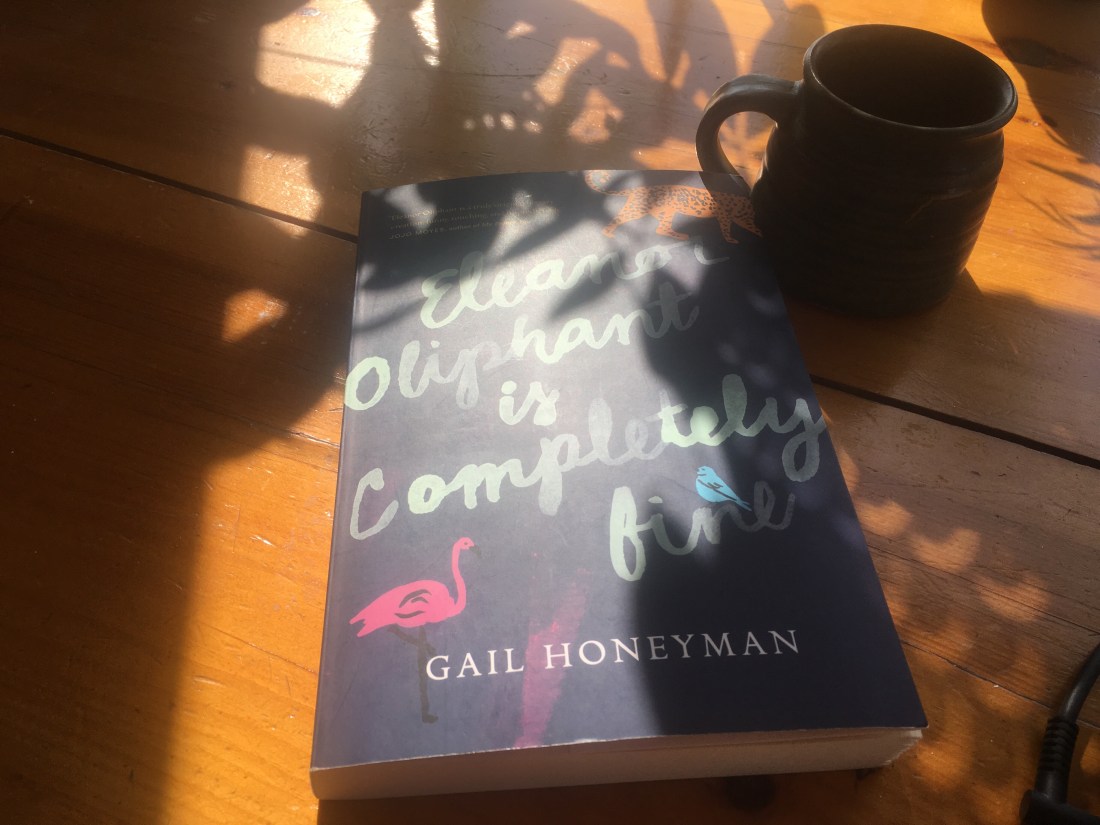
Eleanor Oliphant is Completely Fine by Gail Honeyman: A Review

Hello, hello, hello!

“‘How brave are you prepared to be, Eleanor?’ Laura asked. This was the correct question. I am brave. I am brave, courageous, Eleanor Oliphant.” Eleanor Oliphant by Gail Honeyman

Thanks for stopping by! Some of you have been kind enough to share my blog with your book clubs so maybe today I can return the favour by giving you a good recommendation. If you are looking for a book to read this fall, I think it should be Eleanor Oliphant in Completely Fine by Gail Honeyman. The story follows Eleanor Oliphant, an entirely original main character. From the beginning, Honeyman hooked me with Eleanor’s dry wit. Her character is socially awkward to say the least but often Honeyman’s depictions of Eleanor’s attempts to puzzle out social situations had me laughing out loud (there is one scene with dancing … you’ll know it when you see it. I read it three times it was so funny).

At first, Eleanor’s character brought to mind The Rosie Project or maybe Sheldon from “The Big Bang Theory” but Honeyman creates a backstory for Eleanor that makes the novel more powerful than just laughing along at Eleanor’s social faux pas. Eleanor was raised in foster care and aside from her job and biannual visits from her social worker, she lives her life alone. She has no family, no friends. Eleanor’s frank voice reveals a tragedy in her past that in her own quirky and sometimes startling way, she attempts to overcome. Honeyman’s use of humour provides a sharp contrast to the events of Eleanor’s past in a way that allows the reader to develop a deep empathy for the character. In her attempts to find true love, make friends and carve out a little community around her, I found myself rooting for Eleanor as an unlikely anti-heroine.

Honeyman populates the little world of her novel with characters who feel familiar without being stale. One of my favourite things about Honeyman’s characters is that with the exception of Eleanor herself, they are so well, ordinary. But it is through these ordinary,  everyday people that Honeyman is able to reveal the power that simple acts of kindness can have. Helping Sammy, an old man who falls in the street, brings Eleanor together with Raymond, an IT guy from her office, and this chance encounter becomes the catalyst for change.  This, along with Eleanor’s off-beat observations about those around her and her attempt to transform herself, serve to create a narrative that is at times funny, and at other times heart-breaking. Ultimately, Honeyman explores how what we perceive to be true shapes everything around us and how others can act as a mirror to help us understand ourselves more clearly.

There is a lot to recommend about Eleanor Oliphant is Completely Fine – Honeyman’s writing is tight, the plot is unpredictable, and Eleanor is a character who will stay with you long after you’ve put down the book. And without giving anything away, I don’t think I will ever look at “Y.M.C.A.” by the Village People quite the same way again …

If you read Eleanor Oliphant, post a comment and let me know what you thought. Until next week, happy reading!